

Plateau-Mont-Royal (Montreal) Travel Guide - Free
Explore Plateau-Mont-Royal in Montreal with Evendo's free guide. Find the best shops, historic streets, restaurants, and gems on web or mobile.


Plateau-Mont-Royal in Montreal blends colourful staircases, historic duplexes, Mount Royal views, independent cafés, markets, murals and lively nightlife.
Urban Character and Architecture
Plateau-Mont-Royal occupies an elevated stretch north of central Montreal, where long residential streets, painted brick façades and external iron staircases create one of the city’s most recognisable urban landscapes. Its characteristic duplexes and triplexes, many dating from the late nineteenth and early twentieth centuries, place front doors above street level and give the pavements an intimate, almost theatrical quality. Avenue du Mont-Royal, Rue Rachel and Boulevard Saint-Laurent form busy commercial spines, while quieter side streets reveal small gardens, balconies and vividly coloured houses.Read more about Plateau-Mont-Royal
Public Spaces and Everyday Life
Culture, Food and Evening Atmosphere
Best attractions in Plateau-Mont-Royal
Plateau-Mont-Royal’s attractions are woven into its streets rather than concentrated in one monumental complex. Parc La Fontaine is the neighbourhood’s principal green space, with broad paths, mature trees, lawns and a pond that becomes a focal point for seasonal recreation. Square Saint-Louis offers a more intimate setting, framed by colourful Victorian-era houses and a landscaped square near the southern Plateau. Avenue du Mont-Royal and Boulevard Saint-Laurent provide contrasting sightseeing walks: the former combines cafés, shops and local street life, while the latter is known for murals, independent businesses and a long history as Montreal’s Main. Visitors can also explore the area’s external staircases, balconies and tightly packed triplexes, particularly on the quieter residential streets between the commercial corridors. The western boundary approaches Mile End and Parc Jeanne-Mance, but these should be treated as adjoining areas rather than assumed to be part of the Plateau proper.
-
Tourist attraction
Plateau Mont-Royal Tourist Scavenger Hunt
Explore the vibrant culture and artistic allure of Plateau Mont-Royal with a captivating scavenger hunt that reveals the heart of Montreal.
18 min walk · 1.4 km from neighbourhood centre
-
Tourist attraction
Murale
Explore Murale in Montreal: A stunning outdoor gallery showcasing vibrant street art that reflects the city's rich cultural heritage and creativity.
5 min drive · 1.6 km from neighbourhood centre


Best landmarks in Plateau-Mont-Royal
Plateau-Mont-Royal’s landmarks are principally architectural and civic rather than monumental. Square Saint-Louis is recognised for its landscaped urban setting and the ornate late-nineteenth-century houses that line its edges, while Parc La Fontaine provides a major public landscape and an important marker of the eastern Plateau. The neighbourhood’s rows of brick duplexes and triplexes, with exterior metal staircases, balconies and narrow frontages, express the practical housing culture created during Montreal’s nineteenth-century expansion. Boulevard Saint-Laurent functions as a historic urban landmark in its own right: known as the Main, it has long connected commercial life, migration and cultural exchange across the island. The old theatres, churches, schools and shopfronts along the wider streetscape add further layers, although individual buildings and heritage designations should be understood through their specific locations rather than treated as one uniform historic district.
-
 Park
La Fontaine Park
Explore La Fontaine Park, a lush urban park in Montreal with beautiful landscapes, cultural events, and endless outdoor activities for everyone.
17 min walk · 1.4 km from neighbourhood centre
-
Park
Sir-Wilfrid-Laurier Park
Discover Montreal's Plateau gem: Sir-Wilfrid-Laurier Park, offering year-round recreation, green spaces, and community spirit in a vibrant urban setting.
14 min walk · 1.1 km from neighbourhood centre
-
Mountain peak
Mount Royal
Experience the breathtaking views and lush landscapes of Mount Royal, Montreal's iconic urban mountain, perfect for nature lovers and outdoor enthusiasts.
5 min drive · 1.7 km from neighbourhood centre
-
Monument
Monument to Sir George-Étienne Cartier
A majestic Montreal monument honoring Sir George-Étienne Cartier, a Father of Confederation, with stunning bronze sculptures and historical significance.
11 min walk · 0.9 km from neighbourhood centre


Explore Plateau-Mont-Royal on the map
A handpicked selection of must-see spots in Plateau-Mont-Royal, mapped for you.
Best hotels in Plateau-Mont-Royal
Best restaurants in Plateau-Mont-Royal
Eating in Plateau-Mont-Royal means moving through a broad, informal dining landscape shaped by Montreal’s francophone culture, immigrant histories and contemporary independent businesses. Saint-Denis, Avenue du Mont-Royal and the streets around Boulevard Saint-Laurent contain cafés, bakeries, brunch rooms, bistros, vegetarian restaurants and casual eateries, with more intimate options tucked into converted ground-floor dwellings. The Main retains associations with Jewish-Montreal food culture, including long-established sandwich and bakery traditions, while newer restaurants draw on influences from across Quebec and the wider world. Bagels, smoked-meat sandwiches and poutine are strongly associated with Montreal as a whole rather than the Plateau alone, but they are readily encountered around its western corridors. Dining tends to be closely connected to street life: patios fill in warmer months, and compact rooms make reservations or early arrival sensible for popular venues without relying on unverified opening schedules.
-
French
L'Express
Experience authentic French cuisine at L'Express in Montreal's vibrant Le Plateau-Mont-Royal neighborhood, where classic flavors meet elegant ambiance.
12 min walk · 1.0 km from neighbourhood centre
-
Venezuelan
Arepera
Experience authentic Venezuelan cuisine at Arepera in Montreal - a vibrant eatery offering gluten-free and vegan options in a welcoming atmosphere.
17 min walk · 1.4 km from neighbourhood centre
-
Canadian
Au Pied de Cochon
Experience the essence of Canadian cuisine at Au Pied de Cochon in Montreal's Plateau-Mont-Royal district - where tradition meets innovation.
12 min walk · 0.9 km from neighbourhood centre
-
Restaurant
Nil Bleu (Le) Restaurant
Discover the vibrant flavors of Montreal at Nil Bleu Restaurant – where tradition meets innovation in every bite.
16 min walk · 1.3 km from neighbourhood centre


Best bars in Plateau-Mont-Royal
Plateau-Mont-Royal has one of Montreal’s most varied evening scenes, though it is more a collection of bars, music rooms and late-opening restaurants than a single nightclub district. Saint-Denis and Avenue du Mont-Royal offer pubs, wine bars, cocktail rooms and casual venues, while Boulevard Saint-Laurent is associated with a broader mix of nightlife, live music and late-evening entertainment. Smaller venues often occupy former shops or narrow ground-floor spaces, giving the area an intimate atmosphere that changes from quiet conversation early in the evening to busier pavement life later on. The neighbourhood’s cultural identity also connects nightlife with comedy, independent performance and music, although programmes and opening arrangements change frequently. Visitors should remember that many bars sit directly beside homes: keep noise down when leaving, respect queues and avoid treating residential streets as extensions of the venue.
-
Bar
Le Darling
Experience the vibrant nightlife at Le Darling, a trendy bar in Montreal's Le Plateau-Mont-Royal, offering craft cocktails and a lively atmosphere.
5 min walk · 0.4 km from neighbourhood centre
-
Cocktail bar
Bootlegger cocktail bar & cuisine
Discover Bootlegger: Montreal's premier cocktail bar and jazz hub, where exquisite drinks and vibrant live music create unforgettable nights.
5 min drive · 1.6 km from neighbourhood centre
-
Pub
Pub Bishop & Bagg
Discover the heart of Montreal's nightlife at Pub Bishop & Bagg, a vibrant bar and brunch restaurant in Le Plateau-Mont-Royal.
13 min walk · 1.1 km from neighbourhood centre
-
Bar
Bar Waverly
Experience the vibrant nightlife at Bar Waverly, Montreal's premier cocktail bar with an eclectic drink menu and lively atmosphere.
13 min walk · 1.1 km from neighbourhood centre


Best nightclubs in Plateau-Mont-Royal
Plateau-Mont-Royal has one of Montreal’s most varied evening scenes, though it is more a collection of bars, music rooms and late-opening restaurants than a single nightclub district. Saint-Denis and Avenue du Mont-Royal offer pubs, wine bars, cocktail rooms and casual venues, while Boulevard Saint-Laurent is associated with a broader mix of nightlife, live music and late-evening entertainment. Smaller venues often occupy former shops or narrow ground-floor spaces, giving the area an intimate atmosphere that changes from quiet conversation early in the evening to busier pavement life later on. The neighbourhood’s cultural identity also connects nightlife with comedy, independent performance and music, although programmes and opening arrangements change frequently. Visitors should remember that many bars sit directly beside homes: keep noise down when leaving, respect queues and avoid treating residential streets as extensions of the venue.
-
Night club
Palazo
Discover the vibrant nightlife at Palazo, Montreal's premier night club offering unforgettable experiences and eclectic music in a lively atmosphere.
5 min drive · 1.7 km from neighbourhood centre
-
Night club
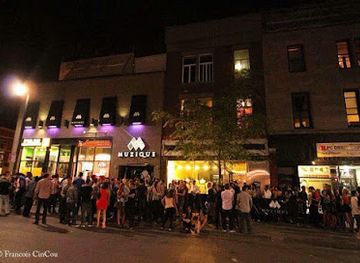
Muzique
Experience the heartbeat of Montreal nightlife at Muzique, a cultural landmark where music and excitement collide in a vibrant atmosphere.
14 min walk · 1.1 km from neighbourhood centre
-
Night club
Rockette Bar
Discover the energetic nightlife of Rockette Bar in Montreal's Le Plateau-Mont-Royal, where music, fun, and culture collide.
5 min walk · 0.4 km from neighbourhood centre
-
Night club
Bar Datcha
Discover the vibrant nightlife at Bar Datcha, where eclectic cocktails, live music, and dancing await in Montreal's Plateau-Mont-Royal.
7 min walk · 0.6 km from neighbourhood centre



Best shops in Plateau-Mont-Royal
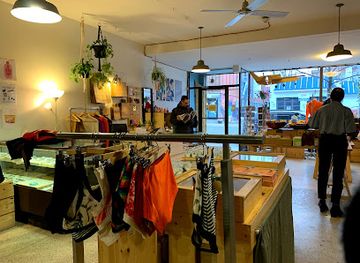
Shopping in Plateau-Mont-Royal is concentrated along Saint-Denis, Avenue du Mont-Royal and Boulevard Saint-Laurent, with side streets supplying smaller boutiques and specialist businesses. The mix includes independent fashion, homeware, design, books, records, gifts and everyday services rather than one enclosed retail centre. Saint-Denis is particularly associated with pedestrian-friendly storefronts and cafés, while the Main offers a more layered commercial landscape shaped by long-established immigrant businesses, vintage shops, furnishings and newer creative enterprises. Seasonal public markets and food shops are useful for experiencing Montreal’s local produce culture, although the largest market destinations lie beyond the neighbourhood and should not be confused with Plateau retail. The area’s appeal lies in browsing at street level, where refurbished ground floors sit beneath residential triplexes and where stock, tenants and mural decoration change over time. Visitors should distinguish the Plateau from adjoining Mile End when following shopping recommendations west of Saint-Laurent.
-
Gift shop
Artpop Montréal
Discover the essence of Montreal at Artpop, a charming gift shop offering unique art-inspired gifts and souvenirs in the heart of Le Plateau-Mont-Royal.
2 min walk · 0.1 km from neighbourhood centre
-
Gift shop
Annex Vintage
Explore Annex Vintage in Montreal for unique gifts, stylish vintage clothing, and an unforgettable shopping experience in Le Plateau-Mont-Royal.
11 min walk · 0.9 km from neighbourhood centre
-
Record store
A Paul Boutique
Explore A Paul Boutique, Montreal's vibrant record store, for an eclectic collection of vinyl, CDs, and music memorabilia in a cozy atmosphere.
2 min walk · 0.1 km from neighbourhood centre
-
Women's clothing store
Le Trunkshop
Explore Le Trunkshop in Montreal for a unique collection of women's fashion that celebrates local and international styles.
2 min walk · 0.2 km from neighbourhood centre



Plateau-Mont-Royal essentials
Local Tips

From Eve
Local phrases worth knowing
You don't need to get them perfect. A few words go a long way, and locals appreciate the effort.
Basics
| English | Local | Say it |
|---|---|---|
| Hello | Bonjour | [bon-zhoor] |
| Goodbye | Au revoir | [oh ruh-vwahr] |
| Yes | Oui | [wee] |
| No | Non | [nohn] |
| Please/You're welcome | S'il vous plaît/De rien | [seel voo pleh/duh ryen] |
| Thank you | Merci | [mehr-see] |
| Excuse me/Sorry | Excusez-moi/Désolé | [ex-kew-zay mwah/deh-zoh-lay] |
| How are you? | Comment ça va? | [koh-mohn sah vah] |
| Fine. And you? | Bien. Et toi? | [byen/eh twah] |
| Do you speak English? | Parlez-vous anglais? | [par-lay voo ahn-glay] |
| I don't understand | Je ne comprends pas | [zhuh nuh kohm-prahnd pah] |
Eating & Drinking
| English | Local | Say it |
|---|---|---|
| I'd like to see the menu, please | Je voudrais voir le menu, s'il vous plaît | [zhuh voo-dray vwahr luh meh-nyoo/seel voo pleh] |
| I don't eat meat | Je ne mange pas de viande | [zhuh nuh mahnj pah duh vyand] |
| Cheers! | Santé! | [sahn-tay] |
| I would like to pay, please | Je voudrais payer, s'il vous plaît | [zhuh voo-dray pay-yay/seel voo pleh] |
Emergencies
| English | Local | Say it |
|---|---|---|
| Help! | À l'aide! | [ah layd] |
| Go away! | Allez-vous en! | [ah-lay vooz ahn] |
| Call the Police! | Appelez la police! | [ah-peh-lay lah poh-lees] |
| Call a doctor! | Appelez un médecin! | [ah-peh-lay ahn mayd-sahn] |
| I'm lost | Je suis perdu | [zhuh swee pair-dew] |
| I'm ill | Je suis malade | [zhuh swee mah-lahd] |
Shopping
| English | Local | Say it |
|---|---|---|
| I'd like to buy... | Je voudrais acheter... | [zhuh voo-dray zheh-tshay] |
| I'm just looking | Je regarde juste | [zhuh ruh-gard zhewst] |
| How much is it? | Combien ça coûte? | [kohm-byen sah koot] |
| That's too expensive | C'est trop cher | [say troh shehr] |
| Can you lower the price? | Pouvez-vous baisser le prix? | [poo-veh voo beh-say luh pree] |
Time & Numbers
| English | Local | Say it |
|---|---|---|
| What time is it? | Quelle heure est-il? | [kell uhr eh-teel] |
| It's one o'clock | Il est une heure | [eel eh tewn uhr] |
| Half past (10) | Dix heures et demie | [dees uhrz ay duh-mee] |
| Morning | Matin | [mah-tan] |
| Afternoon | Après-midi | [ahp-ray mee-dee] |
| Evening | Soir | [swahr] |
| Yesterday | Hier | [yehr] |
| Today | Aujourd'hui | [oh-zhoor-dwee] |
| Tomorrow | Demain | [duh-man] |
| 1 | Un | [uhn] |
| 2 | Deux | [duh] |
| 3 | Trois | [twah] |
| 4 | Quatre | [kah-truh] |
| 5 | Cinq | [sank] |
| 6 | Six | [sees] |
| 7 | Sept | [sept] |
| 8 | Huit | [weet] |
| 9 | Neuf | [nuhf] |
| 10 | Dix | [dees] |
Transport & Directions
| English | Local | Say it |
|---|---|---|
| Where's a/the...? | Où est un/le...? | [oo eh uh/luh] |
| What's the address? | Quelle est l'adresse? | [kell eh lah-dress] |
| Can you show me (on the map)? | Pouvez-vous me montrer (sur la carte)? | [poo-veh voo muh mohn-tray/sur lah kart] |
| When's the next (bus)? | Quand est le prochain (bus)? | [kahnd eh luh proh-shahn/bus] |
| A ticket (to ....) | Un billet (pour...) | [uhn bee-yay/poor] |
History of Plateau-Mont-Royal
From Rural Land to Village Fringe
Before dense urban construction, the area north of Montreal’s older centre consisted largely of farmland and scattered settlement associated with the island’s seigneurial landscape. Coteau-Saint-Louis, one of the small communities north of the fortified city, gradually became more urban as Montreal expanded during the nineteenth century. Roads leading north, including routes that developed into today’s Saint-Denis and Saint-Laurent corridors, encouraged houses, workshops and small businesses to replace agricultural land. The name Plateau reflects the area’s higher ground, while Mont-Royal refers to its position near the mountain and its eastern approaches.
Nineteenth-Century Urban Growth
Industrialisation, population growth and the extension of Montreal’s street network transformed the Plateau during the second half of the nineteenth century. Working families moved into increasingly dense rows of brick and stone housing, and villages such as Coteau-Saint-Louis were absorbed into the expanding municipality. The duplex and triplex became practical forms of urban housing, combining compact lots with separate dwellings and exterior staircases. Commercial streets developed alongside these residences, while churches, schools and public spaces helped establish neighbourhood life beyond the older city centre.
Migration and Commercial Corridors
During the late nineteenth and twentieth centuries, the Plateau’s streets reflected Montreal’s changing communities. Boulevard Saint-Laurent, known as the Main, became an important commercial and cultural corridor where Jewish, Eastern European and other immigrant businesses operated alongside francophone institutions. Bakeries, delicatessens, clothing shops and small restaurants gave the avenue a layered identity, while surrounding residential streets continued to house working- and middle-class families. The neighbourhood’s built form changed less dramatically than its social composition, allowing successive communities to adapt existing shops and dwellings to new uses.
Cultural Renewal and Contemporary Change
From the later twentieth century, the Plateau became increasingly associated with independent arts, music, cafés and design, attracting students, artists and new businesses as well as long-established residents. The rise of Avenue du Mont-Royal and the continuing cultural importance of Saint-Laurent helped make the area prominent in Montreal’s urban imagination. Rising property values and renovation have since altered parts of the housing market, bringing debates about affordability and displacement alongside the neighbourhood’s creative reputation. Today, its architectural character, francophone institutions, immigrant histories and street-level commerce remain closely interwoven.
Plateau-Mont-Royal in Photos
Browse through our photo collection highlighting the charm and character of the destination.
Neighbourhoods near Plateau-Mont-Royal
The closest neighbourhoods to Plateau-Mont-Royal, if you have time for more than one stop.
-

-

-

-

-


Swipe for more neighbourhoods
Explore more

Explore more of Montreal
Montreal combines Old World architecture, Quebec culture, renowned museums, lively markets, Mount Royal views and memorable food across a welcoming island city.
Explore Montreal