

Free Denver Travel Guide & Mobile App
Plan your Denver trip with Evendo. Get free guides to top attractions, restaurants, hotels, and bars. Web access or download the mobile app.




Denver pairs Rocky Mountain views with a walkable downtown, celebrated museums, historic districts, craft breweries and easy access to Colorado's outdoors.
A Mountain-Framed Western City
Denver stands at the meeting point of the Great Plains and the Rocky Mountains, with its downtown streets rising more than 1,600 metres above sea level. Although the high peaks lie beyond the city, their snow-bright ridges shape Denver's identity, weather, skyline and outdoor culture. The city centre is compact enough for much exploration on foot, while broad avenues, leafy parks and an extensive network of trails give the urban landscape a spacious, open quality. Downtown districts range from the Victorian-era buildings of Larimer Square and Lower Downtown to the galleries, breweries and converted warehouses of RiNo, the River North Art District.Read more about Denver
Culture, History and Neighbourhood Life
Urban Outdoors and Contemporary Denver
When is the best time to visit Denver?
Best: May–June, September · 22–28°C| Month | High (°C) | Rainfall (mm) |
|---|---|---|
| January | 5 | 13 |
| February | 8 | 11 |
| March | 13 | 17 |
| April | 17 | 27 |
| May (best) | 22 | 46 |
| June (best) | 28 | 36 |
| July | 31 | 46 |
| August | 29 | 43 |
| September (best) | 25 | 24 |
| October | 18 | 26 |
| November | 11 | 16 |
| December | 6 | 14 |
Getting to and around Denver
How to get there
Transportation
Best attractions in Denver
Denver's attractions range from major cultural institutions to neighbourhoods shaped by art, food and old railway commerce. The Denver Art Museum presents international and American collections in a striking pair of buildings, while the nearby Clyfford Still Museum offers an intimate encounter with one of the leading figures of abstract expressionism. At the Denver Museum of Nature & Science, natural history, anthropology and space exhibitions appeal to a broad audience. Larimer Square preserves some of the city's earliest commercial buildings and leads towards Lower Downtown, where Union Station anchors restaurants, public spaces and rail services. RiNo adds large-scale murals, galleries and converted industrial buildings, while the Denver Botanic Gardens provides themed landscapes and seasonal plant displays. City Park combines open lawns, water views and cultural institutions, and the Cherry Creek Trail offers a more active way to see the urban landscape. Red Rocks Park is outside Denver in nearby Morrison, not within the city itself.
-
Park
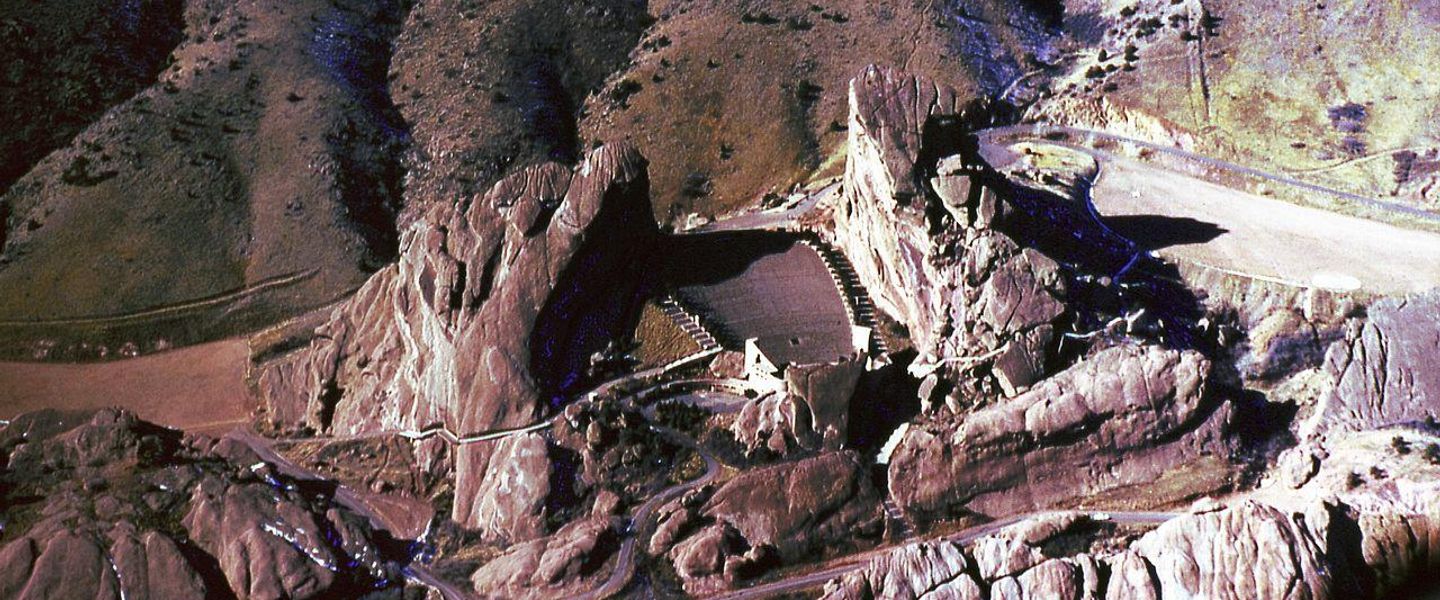
Red Rocks Park and Amphitheatre
Experience world-class music and stunning natural beauty at Red Rocks Park and Amphitheatre, a legendary Colorado landmark.
40 min drive · 20 km from city centre
-
Stadium
Coors Field
Experience baseball at its peak in Denver's Coors Field, home of the Rockies, where stunning views meet thrilling games.
6 min drive · 1.9 km from city centre
-
Tourist attraction
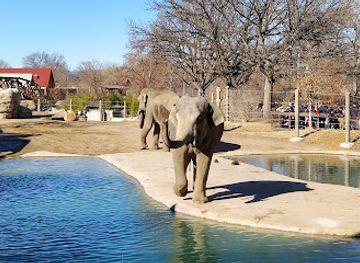
Denver Zoo
Discover wildlife from around the globe at Denver Zoo, a leading conservation and education center in the heart of Denver's City Park.
11 min drive · 3.6 km from city centre
-
Botanical garden
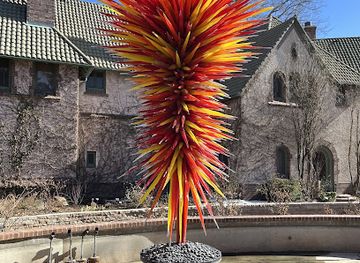
Denver Botanic Gardens
Discover a vibrant urban oasis: explore diverse gardens, art, and conservation at Denver Botanic Gardens.
8 min drive · 2.6 km from city centre



Best landmarks in Denver
The Colorado State Capitol, crowned by a gold-plated dome, overlooks Civic Center and symbolises Denver's role as Colorado's political capital; its grounds also mark the approximate elevation of one mile above sea level. Nearby, the Denver City and County Building and Civic Center's formal landscape express the early twentieth-century City Beautiful movement. Denver Union Station combines a historic Beaux-Arts-style façade with a thoroughly modern transport hall, linking the city's railway past with its present regional role. The Brown Palace Hotel, opened in 1892, is a notable downtown example of late nineteenth-century hotel architecture, while the Molly Brown House Museum preserves a Capitol Hill residence associated with the philanthropist and Titanic survivor Margaret Brown. The restored Daniels and Fisher Tower remains a recognisable downtown vertical landmark, and Larimer Square's nineteenth-century façades recall the commercial settlement that preceded Denver's modern skyline.
-
Botanical garden
Denver Botanic Gardens
Discover the enchanting beauty of the Denver Botanic Gardens, a stunning oasis of flora, art, and tranquility in the heart of the Mile High City.
8 min drive · 2.6 km from city centre
-
Aquarium
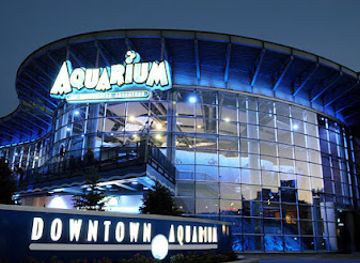
Downtown Aquarium
Explore a world of aquatic wonders at the Downtown Aquarium in Denver, where adventure meets education in a stunning marine environment.
7 min drive · 2.5 km from city centre
-
Historical landmark
Larimer Square
Explore Larimer Square - Denver's Historic Landmark for Shopping, Dining, and Cultural Experiences in a Vibrant Atmosphere.
15 min walk · 1.2 km from city centre
-
Park
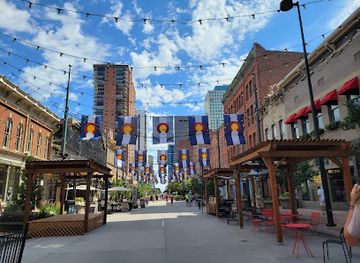
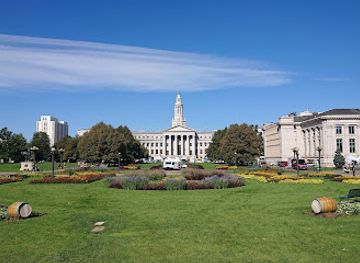
Civic Center Park
Discover the beauty and culture of Civic Center Park, Denver's urban oasis, where history and nature blend seamlessly for a memorable experience.
1 min walk · 0.1 km from city centre
Explore Denver on the map
Plan your Denver trip on one map. See where the top attractions, landmarks, restaurants, bars and hotels are, find what's near where you're staying, and book hotels and experiences in a few clicks.
Neighbourhoods in Denver
-

-

-

-

-


Swipe for more neighbourhoods
Best hotels in Denver
Best restaurants in Denver
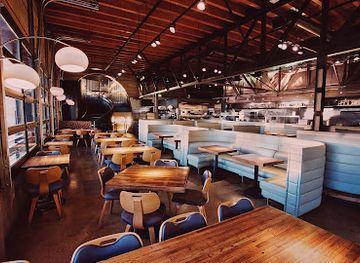
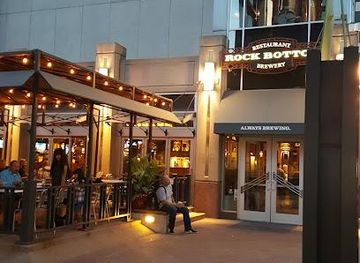
Denver's dining scene reflects Colorado's western, Hispanic, Indigenous and immigrant influences while making strong use of regional produce, meat, grains and craft beverages. Green chile, often served with breakfast or over burritos and fries, is a familiar local flavour, while Mexican and New Mexican traditions are represented in neighbourhood taquerias and long-established casual restaurants. The city's food culture also includes independent coffee shops, bakeries, farmers' markets, food halls and a substantial craft-beer presence. Larimer Square, Union Station, RiNo, Highland and South Broadway offer varied concentrations of restaurants, from contemporary tasting menus to relaxed counter-service cooking. Seasonal produce from Colorado farms appears on many menus, and newer restaurants increasingly draw on global communities established in the metropolitan area. Visitors should distinguish Denver's local style from broader Rocky Mountain stereotypes: game meats and mountain cuisine exist, but they are only part of the city's much wider food culture.
-
Restaurant
Atomic Cowboy home of Denver Biscuit Co & Fat Sully's NY Pizza
Experience a culinary gem in Denver with Atomic Cowboy's unique blend of breakfast delights and authentic NY pizza.
11 min drive · 3.5 km from city centre
-
American
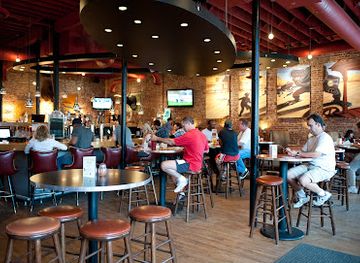
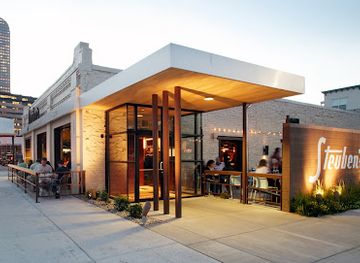
Steuben's Uptown
Discover Steuben's Uptown in Denver: Where classic American comfort food meets vibrant dining experiences.
12 min walk · 1.0 km from city centre
-
Restaurant
Linger
Discover Linger: A unique dining destination blending global street food flavors with stunning views in Denver's Highland neighborhood.
9 min drive · 2.9 km from city centre
-
Steak
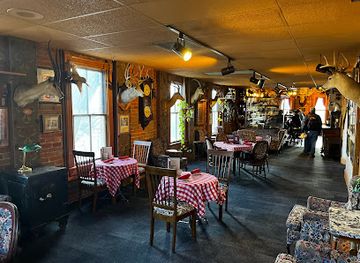
Buckhorn Exchange
Experience Denver's historic steakhouse offering exquisite game meats and steaks in a rustic setting filled with Western charm.
19 min walk · 1.5 km from city centre
Best bars in Denver
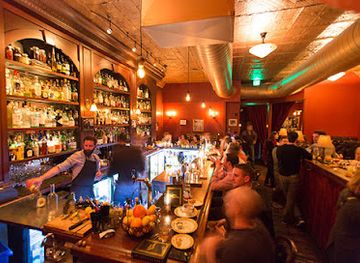
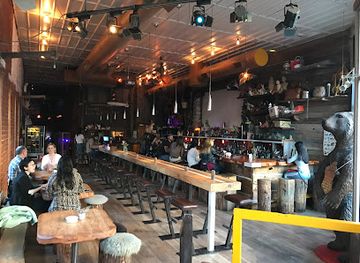
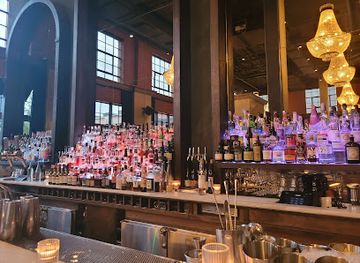
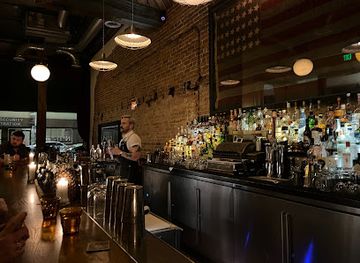
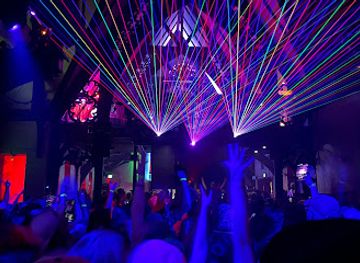
Denver's evening life is spread across several districts rather than confined to one entertainment quarter. Lower Downtown has cocktail bars, sports bars, live-music rooms and venues around Union Station, while RiNo combines breweries, taprooms, dance spaces and concert venues in former industrial buildings. Capitol Hill and South Broadway are associated with independent bars, LGBTQ+ nightlife, small music venues and late-evening socialising. Five Points retains an important connection to Denver's jazz history, with live performance remaining part of the area's cultural identity. The city is better known for craft beer and music than for a dense concentration of large nightclubs, although larger dance venues and touring concerts operate in the metropolitan area. Theatre, comedy, galleries and seasonal performances provide alternatives to drinking. US licensing rules apply, and age and identification requirements are enforced at bars and clubs.
-
Bar
Williams & Graham
Discover Williams & Graham, a speakeasy-inspired cocktail bar in Denver that offers exquisite drinks and a cozy atmosphere for unforgettable nights.
9 min drive · 3.1 km from city centre
-
Lounge
Forest Room 5
Discover the enchanting Forest Room 5 in Denver, where art meets mixology in a unique lounge atmosphere perfect for socializing and relaxation.
8 min drive · 2.7 km from city centre
-
Cocktail bar
Death & Co Denver
Discover exquisite cocktails and a vibrant lounge atmosphere at Death & Co Denver, a must-visit for cocktail aficionados and casual drinkers alike.
6 min drive · 2.0 km from city centre
-
Cocktail bar
Union Lodge No.1
Discover the art of mixology at Union Lodge No.1, Denver's premier cocktail bar offering expertly crafted drinks and a sophisticated atmosphere.
11 min walk · 0.9 km from city centre
Best nightclubs in Denver
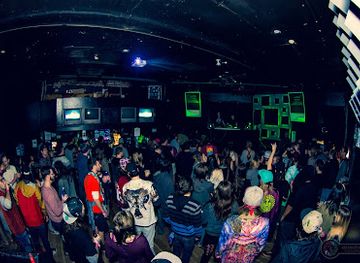
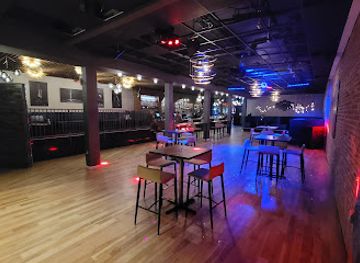
Denver's evening life is spread across several districts rather than confined to one entertainment quarter. Lower Downtown has cocktail bars, sports bars, live-music rooms and venues around Union Station, while RiNo combines breweries, taprooms, dance spaces and concert venues in former industrial buildings. Capitol Hill and South Broadway are associated with independent bars, LGBTQ+ nightlife, small music venues and late-evening socialising. Five Points retains an important connection to Denver's jazz history, with live performance remaining part of the area's cultural identity. The city is better known for craft beer and music than for a dense concentration of large nightclubs, although larger dance venues and touring concerts operate in the metropolitan area. Theatre, comedy, galleries and seasonal performances provide alternatives to drinking. US licensing rules apply, and age and identification requirements are enforced at bars and clubs.
-
Night club
The Black Box
Discover Denver's vibrant nightlife at The Black Box, a premier live music venue and night club featuring electrifying performances and creative cocktails.
8 min walk · 0.7 km from city centre
-
Night club
Blue Ice
Discover the electrifying nightlife at Blue Ice, Denver's premier night club, where music, cocktails, and fun collide for an unforgettable experience.
7 min drive · 2.5 km from city centre
-
Night club
The Church Nightclub
Discover the unique fusion of historic charm and electrifying nightlife at The Church Nightclub in Denver.
7 min walk · 0.6 km from city centre
-
Night club
Milk Bar
Dive into Denver's nightlife at Milk Bar, a vibrant club offering great drinks, music, and unforgettable experiences in the heart of the city.
9 min walk · 0.7 km from city centre
Best shops in Denver
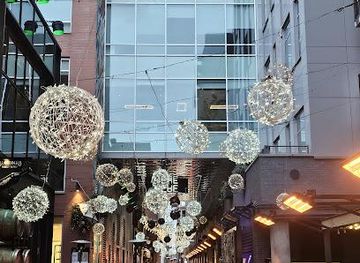
Denver shopping ranges from independent design and clothing stores to historic commercial streets, farmers' markets and large contemporary retail districts. Larimer Square and Lower Downtown offer boutiques, galleries and speciality shops among nineteenth-century buildings, while Cherry Creek is the city's established destination for department stores, national brands, galleries and higher-end retail. South Broadway has a more eclectic character, with vintage clothing, used books, records, antiques and independent businesses. RiNo combines studios, design-led shops, galleries and food venues in a former industrial setting, though its retail mix continues to change. Visitors looking for regional products may find Colorado-made food, outdoor equipment, craft goods and locally produced art across these districts and at seasonal markets. Denver's shopping culture is less about one traditional bazaar than about exploring distinct neighbourhoods, each with its own balance of independent commerce and larger retailers.
-
Historical landmark
Larimer Square
Explore the historic Larimer Square in Denver, a vibrant shopping and dining destination showcasing the city's rich culture and charming architecture.
15 min walk · 1.2 km from city centre
-
Shopping mall
Denver Pavilions
Explore the vibrant shopping and entertainment scene at Denver Pavilions, a must-visit destination in the heart of Denver.
6 min walk · 0.5 km from city centre
-
Shopping mall
16th Street Mall
Discover the heart of Denver at the 16th Street Mall, a bustling shopping hub filled with shops, restaurants, and vibrant culture.
13 min walk · 1.1 km from city centre
-
Market
Dairy Block
Experience the charm of Dairy Block, Denver's vibrant marketplace filled with unique shops, delectable dining, and artistic flair.
5 min drive · 1.7 km from city centre


Get your free copy of our complete guide to Denver, delivered straight to you.
Everything on this page, from attractions and restaurants to essentials and local phrases, in one PDF you can read offline, print or share.
Already have an account? Sign in
Your Denver guide is ready.
We'll send it to · Not you? Sign out

Getting your guide ready…
We are putting together a fresh copy of the Denver guide. This can take up to a minute.
This can take a few moments. If your browser asks, choose Allow so the download can start. You'll find the guide in your Downloads folder.
Nothing happened? Download it again
Sorry, the guide is taking longer than usual. Please try again in a minute, or get it by email instead.
Denver essentials
Currency and Payment
Safety
Emergency Situations
Do's and Don'ts
Local Tips
From Eve
Local phrases worth knowing
You don't need to get them perfect. A few words go a long way, and locals appreciate the effort.
Basics
| English | Local | Say it |
|---|---|---|
| Hello | Howdy | [h-ow-d-ee] |
| Goodbye | See ya | [s-ee y-ah] |
| Yes | Yup | [y-uh-p] |
| No | Nah | [n-ah] |
| Please/You're welcome | Please/No worries | [pl-ee-z/n-oh w-ur-ee-z] |
| Thank you | Thanks | [th-ang-ks] |
| Excuse me/Sorry | Pardon me/My bad | [p-ah-r-d-uhn m-ee/m-ahy b-ad] |
| How are you? | How's it going? | [h-ow-z ih-t g-oh-ing] |
| Fine. And you? | Good. You? | [g-oo-d. y-oo] |
| Do you speak English? | You speak English? | [y-oo sp-ee-k ih-ng-g-lish] |
| I don't understand | I don't get it | [ai d-oh-nt g-eh-t ih-t] |
Eating & Drinking
| English | Local | Say it |
|---|---|---|
| I'd like to see the menu, please | Can I check out the menu? | [k-ah-n ai ch-eh-k aw-t dh-uh m-eh-n-y-oo] |
| I don't eat meat | No meat for me | [n-oh m-ee-t f-er m-ee] |
| Cheers! | Cheers! | [ch-ee-r-z] |
| I would like to pay, please | I'll pay now | [ai-l pe-iy n-ow] |
Emergencies
| English | Local | Say it |
|---|---|---|
| Help! | Help! | [h-eh-l-p] |
| Go away! | Get lost! | [g-eh-t l-aw-s-t] |
| Call the Police! | Call the cops! | [k-ah-l dh-uh k-aa-p-s] |
| Call a doctor! | Get a doc! | [g-eh-t ah d-aa-k] |
| I'm lost | I'm lost | [ai-m l-oh-s-t] |
| I'm ill | I'm sick | [ai-m s-ih-k] |
Shopping
| English | Local | Say it |
|---|---|---|
| I'd like to buy... | I wanna buy... | [ai w-aa-n-ah b-ah-iy] |
| I'm just looking | Just browsing | [j-ah-st b-r-ow-z-ih-ng] |
| How much is it? | How much? | [h-ow m-ah-ch] |
| That's too expensive | Too pricey | [t-oo pr-ai-s-iy] |
| Can you lower the price? | Can you drop the price? | [k-ah-n y-oo dr-aa-p dh-uh pr-ay-s] |
Time & Numbers
| English | Local | Say it |
|---|---|---|
| What time is it? | What's the time? | [wh-ah-t-s dh-uh t-ay-m] |
| It's one o'clock | It's one | [ih-ts w-ah-n] |
| Half past (10) | Half ten | [h-ah-f t-eh-n] |
| Morning | Morning | [m-oh-r-n-ih-ng] |
| Afternoon | Afternoon | [aa-f-t-er-n-uw-n] |
| Evening | Evening | [iy-v-n-ih-ng] |
| Yesterday | Yesterday | [y-eh-s-t-er-d-ay] |
| Today | Today | [t-uh-d-ay] |
| Tomorrow | Tomorrow | [t-ah-m-aw-r-oh] |
| 1 | One | [w-ah-n] |
| 2 | Two | [t-uw] |
| 3 | Three | [th-r-iy] |
| 4 | Four | [f-oh-r] |
| 5 | Five | [f-ay-v] |
| 6 | Six | [s-ih-k-s] |
| 7 | Seven | [s-eh-v-eh-n] |
| 8 | Eight | [ey-t] |
| 9 | Nine | [n-ay-n] |
| 10 | Ten | [t-eh-n] |
Transport & Directions
| English | Local | Say it |
|---|---|---|
| Where's a/the...? | Where's the...? | [wh-eh-r-s dh-uh] |
| What's the address? | What's the address? | [wh-ah-t-s dh-uh a-d-r-eh-s] |
| Can you show me (on the map)? | Can you show me on the map? | [k-ah-n y-oo sh-ow m-ee aw-n dh-uh m-ae-p] |
| When's the next (bus)? | When's the next (bus)? | [wh-eh-n-s dh-uh n-eh-k-s-t b-ah-s] |
| A ticket (to ....) | A ticket (to ....) | [ey t-ih-k-ih-t (t-uw ....)] |
History of Denver
Indigenous Homelands and River Valleys
The South Platte River valley and the eastern foothills around present-day Denver were travelled and inhabited by Indigenous peoples, including the Cheyenne and Arapaho, whose seasonal movements connected the plains, river corridors and mountains. Other Native nations also used the wider region for hunting, trade and travel. Spanish explorers and later American and European migrants entered an already inhabited landscape, and the state's later development brought displacement, conflict and treaty violations. The place names and cultural institutions visible in Denver today sit within this deeper history, although much of the city's built environment dates from the period after American settlement in the nineteenth century.
The Gold-Rush Foundation, 1858–1861
Denver originated during the Pike's Peak Gold Rush of 1858, when prospectors and entrepreneurs established settlements at the confluence of Cherry Creek and the South Platte River. The settlement was named for James W. Denver, the territorial governor of Kansas, in an effort to secure political favour, although he never visited the town. Early Denver developed through land speculation, supply trading and competing town companies rather than from gold mining alone. In 1861, the newly created Colorado Territory made Denver its capital, giving the settlement an administrative role that helped it survive the boom-and-bust cycles of frontier commerce.
Railways and Colorado Statehood
Railway connections transformed Denver from a frontier settlement into the principal commercial centre of the region. The Kansas Pacific reached the city in 1870, linking it with national markets, while the Denver & Rio Grande and other lines connected mining districts and mountain communities. Colorado became the 38th US state in 1876, and Denver was confirmed as the permanent state capital in 1881. The railways supported wholesalers, banks, hotels and civic institutions, while mining wealth financed substantial public and private buildings. Denver Union Depot, opened in 1881 and later rebuilt in its current form, remains a visible reminder of this period of expansion.
Silver, Crisis and Civic Ambition
During the late nineteenth century, Colorado's silver economy brought prosperity, immigration and rapid urban growth to Denver. The repeal of federal silver-purchasing support in 1893 helped trigger a severe economic crisis, exposing the city's dependence on mining markets. Denver responded by broadening its economy and investing in civic institutions, parks and public buildings. The City Beautiful movement influenced the design of Civic Center and surrounding boulevards in the early twentieth century, while mansions, theatres and commercial blocks reflected the ambitions of the city's business elite. These projects helped establish the formal civic landscape still seen around the State Capitol.
Migration, Industry and Social Change
The twentieth century brought further migration and industrial development, including the growth of rail freight, manufacturing, government employment and military-related activity. African American residents built important communities and institutions in Five Points, which became associated with Denver's jazz history and hosted nationally recognised performers. Mexican American and Latino communities also shaped neighbourhood life, commerce, politics and the arts across the city. The post-war period brought suburban expansion and major changes to downtown, while later preservation efforts protected historic structures that might otherwise have disappeared during redevelopment.
A Modern Regional Capital
Denver's modern identity took shape through the renewal of Lower Downtown, the restoration of Union Station and the expansion of cultural and recreational infrastructure. The opening of Denver International Airport in 1995 strengthened the city's role as a national transport hub, replacing Stapleton International Airport. In the twenty-first century, former industrial areas such as RiNo have attracted studios, restaurants, breweries and housing, while redevelopment along the South Platte has improved access to riverfront parks and trails. The city remains Colorado's political and economic centre, balancing rapid growth with debates over housing, transport, preservation and the pressures of its proximity to fragile mountain environments.
Denver in Photos
Browse through our photo collection highlighting the charm and character of the destination.
Cities near Denver
The closest cities to Denver, if you have time for more than one stop.
-

-

-

-

-


Swipe for more cities
Explore more

Explore more of Colorado
Discover Colorado: A stunning blend of rugged mountains, vibrant cities, and rich history, offering endless adventures and unforgettable experiences.
Explore Colorado