

Free Boulder Travel Guide & Mobile App
Plan your Boulder trip with Evendo. Get free guides to top attractions, restaurants, hotels, and bars. Web access or download the mobile app.


Boulder, Colorado pairs Rocky Mountain scenery with Pearl Street, CU Boulder, craft culture, hiking trails and American West history for memorable sightseeing.
Between Prairie and Mountains
Boulder lies at the meeting point of Colorado’s high plains and the Front Range, where the Flatirons rise above a compact city of leafy streets, university buildings, independent shops and outdoor recreation. The dramatic rock formations west of town provide Boulder’s visual signature, while Boulder Creek threads through the urban landscape towards open space and foothill trails. The setting makes walking, cycling and hiking central to the city’s identity, yet Boulder is more than a base for mountain adventures.Read more about Boulder
A City Shaped by Ideas
Heritage and Outdoor Life
When is the best time to visit Boulder?
Best: June, August–September · 23–28°C| Month | High (°C) | Rainfall (mm) |
|---|---|---|
| January | 6 | 15 |
| February | 8 | 18 |
| March | 12 | 36 |
| April | 16 | 46 |
| May | 21 | 61 |
| June (best) | 26 | 46 |
| July | 29 | 46 |
| August (best) | 28 | 41 |
| September (best) | 23 | 33 |
| October | 17 | 28 |
| November | 11 | 25 |
| December | 6 | 20 |
Getting to and around Boulder
How to get there
Transportation
Best attractions in Boulder
Boulder’s principal attractions combine an approachable city centre with immediate access to the foothills. Pearl Street is the social core, a pedestrianised historic shopping area lined with cafés, galleries, bookshops and public art. The University of Colorado Boulder campus adds landscaped paths, distinctive architecture and museums, including the CU Art Museum and the Museum of Natural History. Along Boulder Creek, the Boulder Creek Path offers an easy urban walk or cycle beside the water, while nearby Central Park provides open lawns and shade. Chautauqua presents historic cultural buildings beneath the Flatirons, with trails leading into protected foothill landscapes. The Boulder County Farmers Market brings regional growers and food producers into the city during its seasonal operation. For a quieter encounter with the landscape, trails around Mount Sanitas and nearby open-space preserves reveal broad views across Boulder Valley, though conditions and access vary with weather and conservation requirements.
-
Tourist attraction
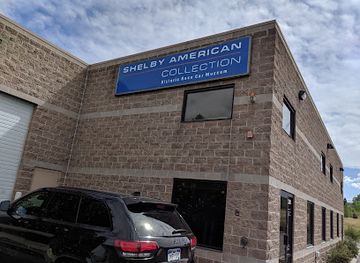
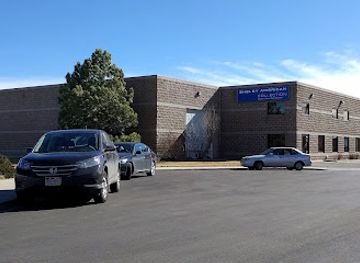
Shelby American Collection
Experience the legacy of Carroll Shelby and American auto racing at the Shelby American Collection in Boulder, Colorado.
25 min drive · 8.5 km from city centre
-
Winery
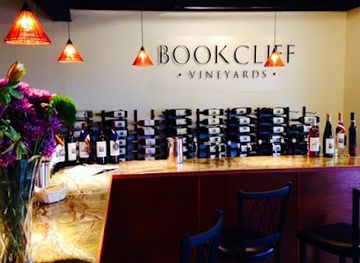
Bookcliff Vineyards - Boulder Winery and Tasting Room
Experience award-winning, 100% Colorado-grown wines at Bookcliff Vineyards' Boulder tasting room and winery. Open Thursday - Sunday!
27 min drive · 9.0 km from city centre
-
Tourist attraction
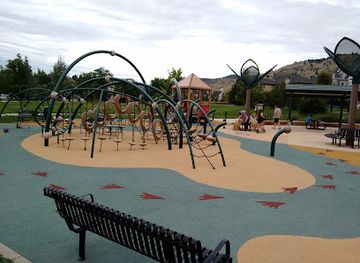
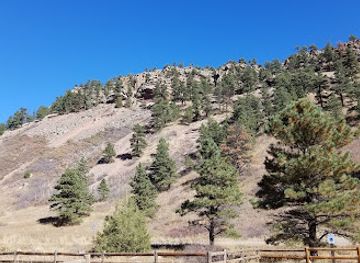
Dakota Ridge Park
Explore prehistoric fun and scenic beauty at Dakota Ridge Park, North Boulder's unique outdoor destination.
27 min drive · 9.0 km from city centre
-
Tourist attraction
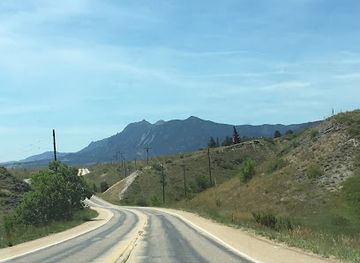
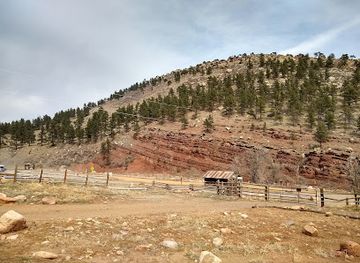
Six-Mile Fold Open Space
Hike through time at Six-Mile Fold Open Space, where dramatic geological formations meet stunning Colorado scenery. A haven for nature and history lovers.
16 min drive · 5.4 km from city centre
Best landmarks in Boulder
The Flatirons are Boulder’s defining natural landmarks, a serrated group of tilted sandstone formations that forms the backdrop to the city and carries deep symbolic importance in local identity. Below them, the Colorado Chautauqua’s auditorium, cottages and grounds represent the late nineteenth-century movement for public education and cultural recreation. In the centre, the Hotel Boulderado, opened in 1909, preserves the atmosphere of Boulder’s early commercial growth with its historic interior and prominent downtown presence. The University of Colorado’s Old Main, completed in 1876, is among the campus buildings that connect the city to the institution’s founding era. The Dushanbe Teahouse, presented to Boulder by its Tajik sister city, adds an intricate contemporary cultural landmark, with carved and painted decoration inspired by Tajik craft traditions. Together these places express Boulder’s relationship with landscape, education, civic history and international exchange.
-
Museum
Shelby American Collection
Explore the Shelby American Collection in Boulder, Colorado, a must-see destination for car enthusiasts showcasing iconic American muscle cars and automotive history.
25 min drive · 8.5 km from city centre
-
Hiking area
Corral Trailhead
Experience the breathtaking trails and stunning vistas at Corral Trailhead, the ultimate destination for hiking enthusiasts in Boulder, Colorado.
16 min drive · 5.2 km from city centre
-
Ravine
Left Hand Canyon
Immerse yourself in the tranquility of Left Hand Canyon, a breathtaking ravine in Colorado perfect for hiking, photography, and reconnecting with nature.
20 min drive · 6.6 km from city centre
-
Historical landmark
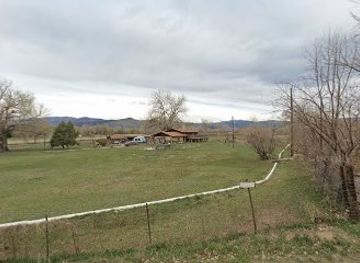
Lazy T Ranch
Explore Lazy T Ranch, a historical landmark in Longmont, Colorado, where the rich heritage of the American West comes alive amidst stunning natural beauty.
22 min drive · 7.4 km from city centre
Explore Boulder on the map
Plan your Boulder trip on one map. See where the top attractions, landmarks, restaurants, bars and hotels are, find what's near where you're staying, and book hotels and experiences in a few clicks.
Best hotels in Boulder
Get your free copy of our complete guide to Boulder, delivered straight to you.
Everything on this page, from attractions and restaurants to essentials and local phrases, in one PDF you can read offline, print or share.
Already have an account? Sign in
Your Boulder guide is ready.
We'll send it to · Not you? Sign out

Getting your guide ready…
We are putting together a fresh copy of the Boulder guide. This can take up to a minute.
This can take a few moments. If your browser asks, choose Allow so the download can start. You'll find the guide in your Downloads folder.
Nothing happened? Download it again
Sorry, the guide is taking longer than usual. Please try again in a minute, or get it by email instead.
Boulder essentials
Currency and Payment
Safety
Emergency Situations
Do's and Don'ts
Local Tips
From Eve
Local phrases worth knowing
You don't need to get them perfect. A few words go a long way, and locals appreciate the effort.
Basics
| English | Local | Say it |
|---|---|---|
| Hello | Howdy | [haw-dee] |
| Goodbye | Catch you later | [ketch yoo lay-ter] |
| Yes | Yep | [yep] |
| No | Nah | [na] |
| Please/You're welcome | Please/thank you | [pleez/thank yoo] |
| Thank you | Thanks a bunch | [thanks uh bunch] |
| Excuse me/Sorry | Pardon me | [par-dun me] |
| How are you? | How's it going? | [hows it go-in] |
| Fine. And you? | Doing well. You? | [doo-in well yoo] |
| Do you speak English? | You speak English? | [yoo speak ing-lish] |
| I don't understand | I'm lost | [ahm lost] |
Eating & Drinking
| English | Local | Say it |
|---|---|---|
| I'd like to see the menu, please | Can I check out the menu? | [kan eye chek out the men-yoo] |
| I don't eat meat | No meat for me | [no meet for mee] |
| Cheers! | Bottoms up! | [bottoms up] |
| I would like to pay, please | Check, please | [chek pleez] |
Emergencies
| English | Local | Say it |
|---|---|---|
| Help! | I need help! | [eye need help] |
| Go away! | Get lost! | [get lost] |
| Call the Police! | Call the cops! | [call the cops] |
| Call a doctor! | Get a doc! | [get a doc] |
| I'm lost | I'm turned around | [ahm turned a-round] |
| I'm ill | I'm under the weather | [ahm un-der the wed-der] |
Shopping
| English | Local | Say it |
|---|---|---|
| I'd like to buy... | I wanna get... | [eye wanna get] |
| I'm just looking | Just browsing | [just brow-zing] |
| How much is it? | What's the damage? | [whats the dam-ij] |
| That's too expensive | Pricey | [pry-see] |
| Can you lower the price? | Can you do better? | [kan yoo do bet-ter] |
Time & Numbers
| English | Local | Say it |
|---|---|---|
| What time is it? | What's the time? | [whats the time] |
| It's one o'clock | It's one | [its one] |
| Half past (10) | Ten thirty | [ten thur-tee] |
| Morning | AM | [ay-em] |
| Afternoon | PM | [pee-em] |
| Evening | Evening | [ee-ven-ing] |
| Yesterday | Yesterday | [yes-ter-day] |
| Today | Today | [to-day] |
| Tomorrow | Tomorrow | [to-mor-row] |
| 1 | One | [wun] |
| 2 | Two | [too] |
| 3 | Three | [three] |
| 4 | Four | [four] |
| 5 | Five | [five] |
| 6 | Six | [six] |
| 7 | Seven | [seven] |
| 8 | Eight | [ate] |
| 9 | Nine | [nine] |
| 10 | Ten | [ten] |
Transport & Directions
| English | Local | Say it |
|---|---|---|
| Where's a/the...? | Where's the...? | [wheres the] |
| What's the address? | What's the addy? | [whats the add-ee] |
| Can you show me (on the map)? | Can you point it out? | [kan yoo point it out] |
| When's the next (bus)? | When's the next one? | [whens the next one] |
| A ticket (to ....) | A ticket (to ....) | [a ticket to] |
History of Boulder
Indigenous Lands and Early Encounters
The Boulder Valley formed part of the traditional homelands and travel landscape of Indigenous peoples, including the Arapaho and Ute. The creek, grasslands and foothills supported seasonal movement and trade long before a permanent American settlement appeared. During the nineteenth century, increasing contact with traders, explorers and government expeditions altered these patterns, while disease, treaty-making and forced removal profoundly affected Indigenous communities across Colorado. Boulder’s later civic story therefore developed on land with a much older human history, although that history was often marginalised in early local accounts.
Gold Rush Settlement, 1858–1860
Boulder’s American settlement began during the Colorado Gold Rush, when prospectors and merchants moved into the region after gold discoveries along the South Platte and in the mountains west of the plains. The Boulder City Town Company was established in 1859, creating a commercial settlement near Boulder Creek that served miners travelling towards the mountains. Gold itself was not the only foundation of the town: shops, transport services and agricultural production helped sustain the growing population. The grid of the early settlement established the core from which the modern city expanded.
Incorporation and Civic Growth
Boulder was incorporated as a town in 1871 and became the seat of Boulder County, strengthening its role as a regional centre. Streets, commercial buildings, churches and civic institutions developed as the settlement moved beyond its mining-era origins. Rail connections in the late nineteenth century improved access to Denver and the mountain districts, encouraging trade and population growth. Surviving buildings in the downtown area, including the Hotel Boulderado from 1909, reflect the prosperity and civic confidence of this period, when Boulder was becoming both a commercial town and an educational centre.
The University Transforms Boulder
The University of Colorado opened in Boulder in 1877, one year after Colorado became a state. Its presence gradually gave the city a durable academic and cultural role, while the campus expanded with buildings that helped define local architectural character. The university attracted students, researchers and institutions, linking Boulder to broader developments in science, engineering and public life. Its growth also shaped neighbourhoods, businesses and the city’s youthful atmosphere. Today, the campus remains one of the most influential institutions in Boulder’s physical layout and cultural identity.
Chautauqua and Cultural Development
The Colorado Chautauqua was established in Boulder in 1898 as part of a national movement that combined education, public lectures, music and cultural entertainment. Its auditorium, cottages and grounds below the Flatirons became an important setting for intellectual and recreational life, as well as a destination for visitors. The Chautauqua tradition helped establish Boulder as a place where mountain scenery and organised cultural activity were closely connected. The historic buildings and continuing programme preserve a visible link with the reform-minded educational culture of the late nineteenth and early twentieth centuries.
Environmentalism and Modern Boulder
Boulder’s modern identity was strongly influenced by campaigns to protect the foothills and surrounding landscapes from unchecked development. The city began acquiring open space in the twentieth century, creating a system of preserved land that now surrounds much of the urban edge. Alongside this environmental outlook, the university, federal research laboratories and technology businesses helped build a knowledge-based economy. Boulder’s contemporary culture consequently combines outdoor recreation, scientific research, independent enterprise and concern for land conservation. The city visible today reflects both deliberate planning and the continuing influence of its mountain setting.
Boulder in Photos
Browse through our photo collection highlighting the charm and character of the destination.
Cities near Boulder
The closest cities to Boulder, if you have time for more than one stop.
-

-

-

-

-


Swipe for more cities
Explore more

Explore more of Colorado
Discover Colorado: A stunning blend of rugged mountains, vibrant cities, and rich history, offering endless adventures and unforgettable experiences.
Explore Colorado