

Free Slavonia Travel Guide & Mobile App
Explore Slavonia with free travel guides. Discover regional history, expert tips, proposed trips, and audio guides on web or mobile app.


Explore Slavonia in eastern Croatia for river towns, Roman heritage, vineyards, tambura music, hearty cuisine and Papuk's wooded landscapes.
Read more about Slavonia
When is the best time to visit Slavonia?
Best: June–August · 25–27°C| Month | High (°C) | Rainfall (mm) |
|---|---|---|
| January | 4 | 40 |
| February | 5 | 45 |
| March | 9 | 50 |
| April | 15 | 55 |
| May | 20 | 60 |
| June (best) | 25 | 65 |
| July (best) | 27 | 70 |
| August (best) | 26 | 65 |
| September | 21 | 60 |
| October | 15 | 55 |
| November | 9 | 50 |
| December | 5 | 45 |
Getting to and around Slavonia
How to get there
Transportation
Destinations in Slavonia
Resorts, valleys and scenic spots worth a trip of their own.

Swipe for more destinations
Best attractions in Slavonia
Slavonia's attractions range from archaeological museums and Roman remains to fortified towns, cathedrals, vineyards and protected woodland. Osijek's Tvrđa provides the region's most concentrated historic urban experience, with Baroque streets, museums and riverfront walks, while Vukovar combines the Vučedol archaeological site and museum with institutions devoted to the city's twentieth-century history. Đakovo is known for its cathedral and Lipizzaner breeding tradition, and Vinkovci presents the legacy of Roman Cibalae. In the west, Papuk Nature Park brings together forested hills, walking routes, geological features and cultural remains. The vineyards around Kutjevo and the Požega Valley offer tastings and rural landscapes, while cycling and birdwatching are well suited to the flatter river plain. Slavonia's appeal lies less in a single headline attraction than in the way archaeology, food production, living towns and open landscapes can be combined across a broad itinerary.
-
Memorial
Monument of Batina battle,("Julka")
Explore the Monument of Batina Battle: A historical memorial in Croatia honoring the valor of those who fought in World War II amidst serene landscapes.

Best landmarks in Slavonia
Osijek's Tvrđa is Slavonia's most recognisable historic ensemble: a planned Baroque fortress quarter whose streets, squares and military architecture reflect the Habsburg reconstruction of the city after Ottoman rule. In Đakovo, the Cathedral of St Peter dominates the skyline with its red-brick form and twin towers, expressing the long importance of the city's bishopric. Slavonski Brod Fortress, built on the Sava frontier, is a substantial star-shaped defensive complex and one of the clearest surviving monuments to the region's military past. Vukovar Water Tower has become a powerful symbol of the city's wartime destruction and survival, while the Vučedol archaeological site represents a much older Danube civilisation. In western Slavonia, Papuk's wooded ridges and geological formations provide a natural counterpoint to the region's built landmarks, showing how its identity extends from fortress towns and churches to the Pannonian landscape itself.
-
National park
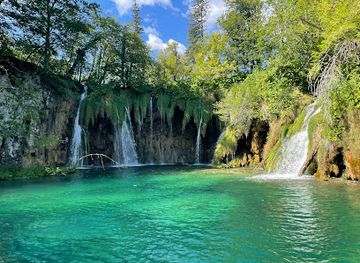
Plitvice Lakes National Park
Discover Croatia's natural masterpiece: sixteen stunning lakes, cascading waterfalls, and ancient forests in a UNESCO World Heritage site.
-
Historical landmark
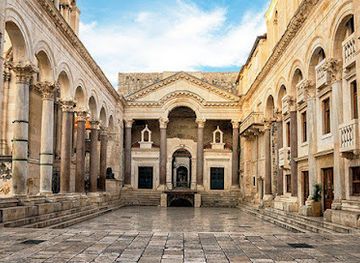
Diocletian's Palace
Explore the ancient Roman palace in Split, Croatia, where history comes alive amidst bustling streets, shops, and cultural landmarks.
-
Tourist attraction
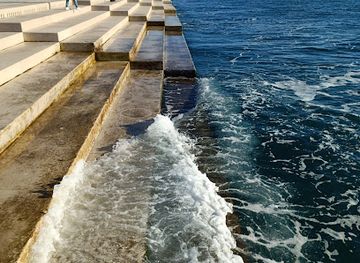
Sea Organ
Experience the enchanting melodies created by the sea at Zadar's unique Sea Organ, a blend of architecture, music, and nature.
-
National park
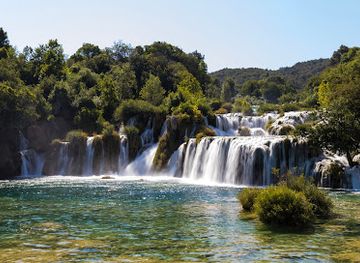
Krka National Park
Discover Croatia's natural beauty at Krka National Park, home to stunning waterfalls, historic sites, and diverse wildlife.
Explore Slavonia on the map
Plan your trip on one map. See where the top cities, national parks and sights are, and book hotels and experiences in a few clicks.
Best hotels in Slavonia
Best restaurants in Slavonia
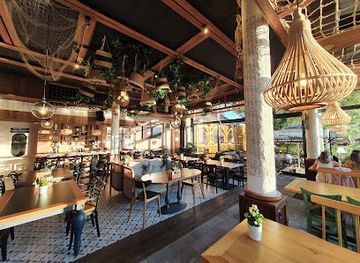
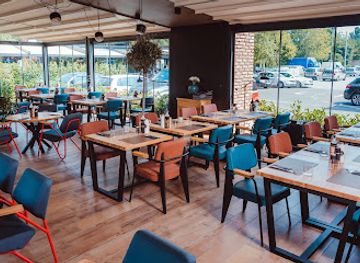
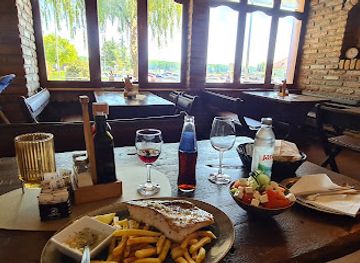
Slavonian cooking reflects fertile farmland, river fisheries and centuries of Central European and Balkan influence. Menus often include kulen, a paprika-seasoned cured sausage associated with eastern Croatia, other smoked meats, freshwater fish and fiš paprikaš, a richly seasoned fish stew whose preparation varies from one kitchen to another. Čobanac, a slow-cooked meat stew, is another familiar regional dish, while pastries, noodles and poppy-seed or walnut-based sweets reflect the wider Pannonian culinary tradition. Osijek, Slavonski Brod, Vukovar, Đakovo and Požega offer the broadest choice of restaurants, cafés and traditional eateries; village inns and family-run establishments provide a more rural setting. Wine from Kutjevo and the Požega Valley is central to the region's table, especially the white varieties associated with the area's continental vineyards. Farmers' markets are useful places to see seasonal produce, though availability changes throughout the year.
-
Restaurant
Čingi Lingi Čarda
Discover authentic Slavonian cuisine at Čingi Lingi Čarda – renowned for its exceptional fish dishes and warm hospitality.
-
Restaurant
Bistro&Pizzeria Public
Experience authentic Croatian flavors at Bistro&Pizzeria Public in Zagreb - where every dish tells a story.
-
Restaurant
Restoran Crna svinja
Savor authentic Slavonian cuisine at Restoran Crna svinja – where tradition meets flavor in every dish.
-
Restaurant
Restoran Stari toranj
Experience authentic Croatian cuisine at Restoran Stari Toranj in Vukovar – where tradition meets taste.

Best bars in Slavonia
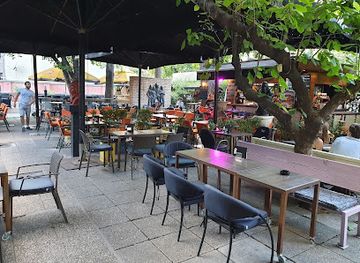
Evening life in Slavonia is centred on cafés, traditional pubs, wine bars, restaurants and live music rather than a large-scale club circuit. Osijek has the most varied nightlife, with riverside and central venues, student-oriented cafés, cultural programmes and occasional live performances, while Slavonski Brod, Vinkovci, Vukovar and Đakovo provide a smaller-town mix of cafés, bars and evening dining. Tambura music remains an important part of the regional sound, particularly during town festivals and community celebrations, although it is not the only contemporary musical style heard locally. Wine cellars and tasting rooms around the Požega Valley offer a quieter evening option, usually by prior arrangement. In rural areas, venues may be dispersed and late-night public transport limited, so visitors should plan their return journey rather than assuming an urban nightlife schedule.
-
Pub
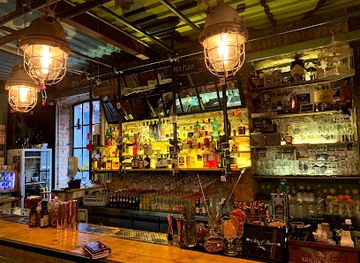
The Beertija
Immerse yourself in Zagreb's local culture at The Beertija, where great beer, delicious food, and a vibrant atmosphere await.
-
Bar
The Swanky Bar
Discover the vibrant ambiance and exquisite cocktails at The Swanky Bar, a premier nightlife destination in Zagreb, perfect for socializing and relaxation.
-
Grill
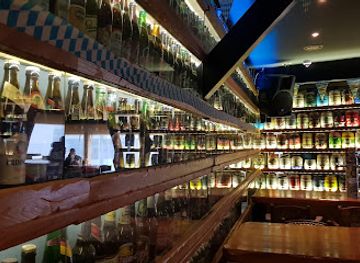
Beer House
Experience the vibrant culinary scene at Beer House in Slavonski Brod, where grilled delights meet exceptional local brews.
-
Family-friendly
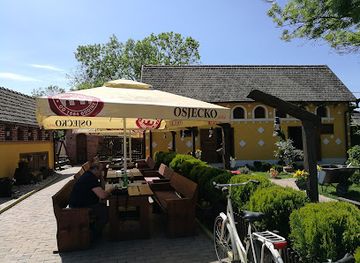
Kuća dida Tunje
Discover authentic Croatian flavors in a warm, family-friendly setting at Kuća dida Tunje in Oprisavci.
Best nightclubs in Slavonia
Evening life in Slavonia is centred on cafés, traditional pubs, wine bars, restaurants and live music rather than a large-scale club circuit. Osijek has the most varied nightlife, with riverside and central venues, student-oriented cafés, cultural programmes and occasional live performances, while Slavonski Brod, Vinkovci, Vukovar and Đakovo provide a smaller-town mix of cafés, bars and evening dining. Tambura music remains an important part of the regional sound, particularly during town festivals and community celebrations, although it is not the only contemporary musical style heard locally. Wine cellars and tasting rooms around the Požega Valley offer a quieter evening option, usually by prior arrangement. In rural areas, venues may be dispersed and late-night public transport limited, so visitors should plan their return journey rather than assuming an urban nightlife schedule.
-
Night club
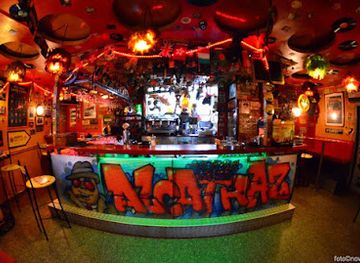
Night Club & Rock Bar Alcatraz
Discover the electrifying nightlife of Zagreb at Night Club & Rock Bar Alcatraz, where rock music and vibrant atmosphere collide.
-
Disco club
Culture Club Revelin
Discover the heartbeat of Dubrovnik's nightlife at Culture Club Revelin, where history meets high-energy dance in a stunning setting.
-
Disco club
Cocomo Club
Discover the energy of Cocomo Club in Novalja, where music meets celebration for an unforgettable nightlife experience.
-
Bar
Onyx Night Club
Discover the vibrant nightlife of Punat at Onyx Night Club, where great music and a lively atmosphere await you.


Best shops in Slavonia
Shopping in Slavonia is strongest in the larger towns, where everyday high streets, supermarkets, market halls and independent food shops serve local communities. Osijek offers the broadest urban choice, with the historic centre and Tvrđa providing cafés, small shops and cultural retail alongside practical shopping areas. Market stalls in Osijek, Vinkovci, Đakovo, Požega and Slavonski Brod are useful for seasonal fruit and vegetables, honey, preserves, sausages and other regional produce, although opening days and stall numbers vary. Wine from Kutjevo and the Požega Valley, Slavonian kulen, paprika products and honey make practical food gifts when purchased from reputable producers. Craft and souvenir options may include embroidered textiles, ceramics, woodwork and tambura-related items, while museum shops provide more considered historical and archaeological gifts. Rural wineries and farms are often better for regional products than general tourist shops, but visitors should check payment and collection arrangements before travelling.
-
Shopping mall
Mall of Split
Discover the vibrant shopping scene at Mall of Split, where local charm meets international brands in a stunning setting.
-
Shopping mall
Supernova Zadar
Discover the ultimate shopping experience at Supernova Zadar, where local charm meets international brands in a vibrant setting.
-
Shopping mall
City Center one Split
Experience shopping bliss at City Center One Split, where style meets excitement in Croatia's vibrant coastal city.
-
Shopping mall
Max City
Discover Max City, Pula's premier shopping mall offering an exceptional retail experience, diverse dining options, and vibrant local culture.


Get your free copy of our complete guide to Slavonia, delivered straight to you.
Everything on this page, from attractions and restaurants to essentials and local phrases, in one PDF you can read offline, print or share.
Already have an account? Sign in
Your Slavonia guide is ready.
We'll send it to · Not you? Sign out

Getting your guide ready…
We are putting together a fresh copy of the Slavonia guide. This can take up to a minute.
This can take a few moments. If your browser asks, choose Allow so the download can start. You'll find the guide in your Downloads folder.
Nothing happened? Download it again
Sorry, the guide is taking longer than usual. Please try again in a minute, or get it by email instead.
Slavonia essentials
Currency and Payment
Safety
Emergency Situations
Do's and Don'ts
Local Tips
From Eve
Local phrases worth knowing
You don't need to get them perfect. A few words go a long way, and locals appreciate the effort.
Basics
| English | Local | Say it |
|---|---|---|
| Hello | Bok | [Bok] |
| Goodbye | Doviđenja | [Doh-vee-jen-ya] |
| Yes | Da | [Dah] |
| No | Ne | [Neh] |
| Please/You're welcome | Molim | [Moh-leem] |
| Thank you | Hvala | [Hvah-lah] |
| Excuse me/Sorry | Oprostite | [Oh-pro-stee-teh] |
| How are you? | Kako si? | [Kah-koh see?] |
| Fine. And you? | Dobro. A ti? | [Doh-broh. Ah tee?] |
| Do you speak English? | Govoriš li engleski? | [Goh-vo-reesh lee en-gle-ski?] |
| I don't understand | Ne razumijem | [Neh rah-zoo-mee-em] |
Eating & Drinking
| English | Local | Say it |
|---|---|---|
| I'd like to see the menu, please | Mogu li vidjeti jelovnik, molim? | [Moh-goo lee veed-yeh-ti yeh-lo-vnik, moh-leem?] |
| I don't eat meat | Ne jedem meso | [Neh yeh-dem meh-so] |
| Cheers! | Živjeli! | [Zhee-vyeh-lee!] |
| I would like to pay, please | Želim platiti, molim | [Zhe-leem pla-ti-ti, moh-leem] |
Emergencies
| English | Local | Say it |
|---|---|---|
| Help! | Upomoć! | [Oo-poh-mohch!] |
| Go away! | Odlazi! | [Od-lah-zee!] |
| Call the Police! | Nazovite policiju! | [Nah-zoh-vee-teh poh-lee-tsi-yu!] |
| Call a doctor! | Nazovite doktora! | [Nah-zoh-vee-teh dok-to-ra!] |
| I'm lost | Izgubio sam se | [Eez-goo-bee-oh sahm seh] |
| I'm ill | Bolestan sam | [Boh-les-tan sahm] |
Shopping
| English | Local | Say it |
|---|---|---|
| I'd like to buy... | Želim kupiti... | [Zhe-leem koo-pee-ti...] |
| I'm just looking | Samo gledam | [Sah-mo gled-am] |
| How much is it? | Koliko košta? | [Koh-lee-koh koh-shta?] |
| That's too expensive | To je preskupo | [To yeh pre-skoo-poh] |
| Can you lower the price? | Možeš li spustiti cijenu? | [Moh-zhehsh lee spoos-tee-ti tsyeh-nu?] |
Time & Numbers
| English | Local | Say it |
|---|---|---|
| What time is it? | Koliko je sati? | [Koh-lee-koh yeh sah-tee?] |
| It's one o'clock | Jedan je sat | [Yeh-dahn yeh saht] |
| Half past (10) | Pola (10) | [Poh-lah (10)] |
| Morning | Jutro | [Yoo-troh] |
| Afternoon | Poslijepodne | [Poh-slee-yeh-poh-dneh] |
| Evening | Večer | [Veh-cher] |
| Yesterday | Jučer | [Yoo-cher] |
| Today | Danas | [Dah-nahs] |
| Tomorrow | Sutra | [Soo-trah] |
| 1 | Jedan | [Yeh-dahn] |
| 2 | Dva | [Dvah] |
| 3 | Tri | [Tree] |
| 4 | Četiri | [Cheh-tee-ree] |
| 5 | Pet | [Pet] |
| 6 | Šest | [Shest] |
| 7 | Sedam | [Seh-dahm] |
| 8 | Osam | [Oh-sahm] |
| 9 | Devet | [Deh-vet] |
| 10 | Deset | [Deh-set] |
Transport & Directions
| English | Local | Say it |
|---|---|---|
| Where's a/the...? | Gdje je...? | [Gdyeh yeh...?] |
| What's the address? | Koja je adresa? | [Koh-yah yeh ah-dre-sah?] |
| Can you show me (on the map)? | Možeš li mi pokazati (na karti)? | [Moh-zhehsh lee mee poh-kah-zah-ti (nah kar-ti)?] |
| When's the next (bus)? | Kada je sljedeći (autobus)? | [Kah-dah yeh sleh-deh-chee (ow-to-boos)?] |
| A ticket (to ....) | Jedna karta (za ...) | [Yed-na kar-ta (zah ...)] |
History of Slavonia
Prehistoric Vučedol and Pannonian Settlement
The Danube basin around Vukovar preserves evidence of sophisticated prehistoric communities, most famously associated with the Vučedol culture of the third millennium BC. Vučedol settlements are known for skilled pottery, metalworking, trade links and carefully organised domestic life. The archaeological site and museum south-east of Vukovar provide an important introduction to this legacy. Elsewhere in Slavonia, Neolithic and Bronze Age remains reflect the attractions of the fertile plain and its rivers, which supported farming, fishing and communication well before the emergence of Roman towns.
Roman Mursa and Cibalae
Roman rule integrated Slavonia into the imperial world through roads, military installations, towns and agricultural estates. Mursa, close to present-day Osijek, occupied a strategic position on the Drava, while Cibalae, beneath modern Vinkovci, became a prosperous settlement in the province of Pannonia. Important Roman emperors, including Valentinian I and Valens, were born at Cibalae in the fourth century. Archaeological finds, museum collections and the street plans of the modern towns continue to reveal the region's role in imperial administration and trade.
Medieval Counties, Churches and Estates
After the Roman period, Slavonia developed through medieval counties, royal settlements, noble estates and religious institutions. Fortified places and market centres emerged along the Sava, Drava and important inland routes, while churches and monasteries connected the region to the political and spiritual life of the medieval Croatian-Hungarian kingdom. The historic importance of Đakovo grew through its bishopric, whose long institutional presence later shaped the city's cathedral and cultural identity. Much of the medieval fabric was altered by later warfare, but town plans, ecclesiastical traditions and archaeological remains preserve the period's influence.
Ottoman Rule and the Habsburg Frontier
From the sixteenth century, Ottoman expansion transformed Slavonia into a contested borderland. Many settlements were damaged or depopulated, and the region's political geography changed for generations. Following the retreat of Ottoman power, the Habsburg Monarchy reorganised eastern Croatia through military, administrative and agrarian settlement. Fortresses, planned towns and frontier roads reflected the strategic importance of the Sava and Drava corridors. Slavonski Brod's fortress is among the clearest surviving reminders of this later military landscape, while the region's population and settlement patterns were reshaped by migration and imperial policy.
Agriculture, Trade and the Railway Age
During the eighteenth and nineteenth centuries, Slavonia became increasingly important as a grain-producing and livestock-raising region within the Habsburg lands. River transport, market towns and new roads connected farms with Osijek, Brod and other commercial centres. Railway construction in the nineteenth century accelerated the movement of agricultural goods and people, strengthening links with Zagreb, the Hungarian plain and the wider Danube basin. The growth of civic institutions, schools, printing and trade also left a visible architectural legacy in Osijek, Vinkovci, Slavonski Brod and other regional towns.
Twentieth-Century Change and the Croatian War of Independence
The twentieth century brought Yugoslav state formation, industrialisation, changing agricultural structures and major population movements. Slavonia remained one of Croatia's principal farming regions while towns expanded with manufacturing, administration and education. In 1991, the Croatian War of Independence caused extensive destruction and displacement, particularly in and around Vukovar, which endured a prolonged siege and suffered severe damage. Vukovar's memorial sites, restored buildings and museums document the human cost of the conflict. Reconstruction has continued alongside efforts to preserve memory and rebuild civic life.
Contemporary Slavonia and Regional Renewal
Since Croatia's independence and its integration into the European Union, Slavonia has faced the pressures of demographic change, rural depopulation and economic transition, while also developing new opportunities in food production, wine, heritage tourism and nature-based travel. Cultural institutions in Osijek, Vukovar, Đakovo and other towns support contemporary arts as well as regional traditions such as tambura music and folklore. Protected landscapes, archaeological interpretation and improved visitor infrastructure are helping present Slavonia not simply as an agricultural hinterland, but as a distinctive cultural and environmental region.
Slavonia in Photos
Browse through our photo collection highlighting the charm and character of the destination.
Neighbouring regions of Slavonia
The closest regions to Slavonia, if you have time for more than one.
-

-

-

-

-


Swipe for more regions
Explore more

Explore more of Croatia
Discover Croatia: A Mediterranean paradise with stunning coastlines, ancient cities, and rich cultural heritage. Perfect for beach lovers, history buffs, and nature enthusiasts.
Explore Croatia