

Erik's Tail Travel Guide
Free Guide: A narrow ribbon of sand lined with colourful huts, Erik's Tail puts you between two seas at once: sheltered lagoon on one side, open Baltic waves on the other.


A brief summary of Erik's Tail
A narrow ribbon of sand lined with colourful huts, Erik's Tail puts you between two seas at once: sheltered lagoon on one side, open Baltic waves on the other.
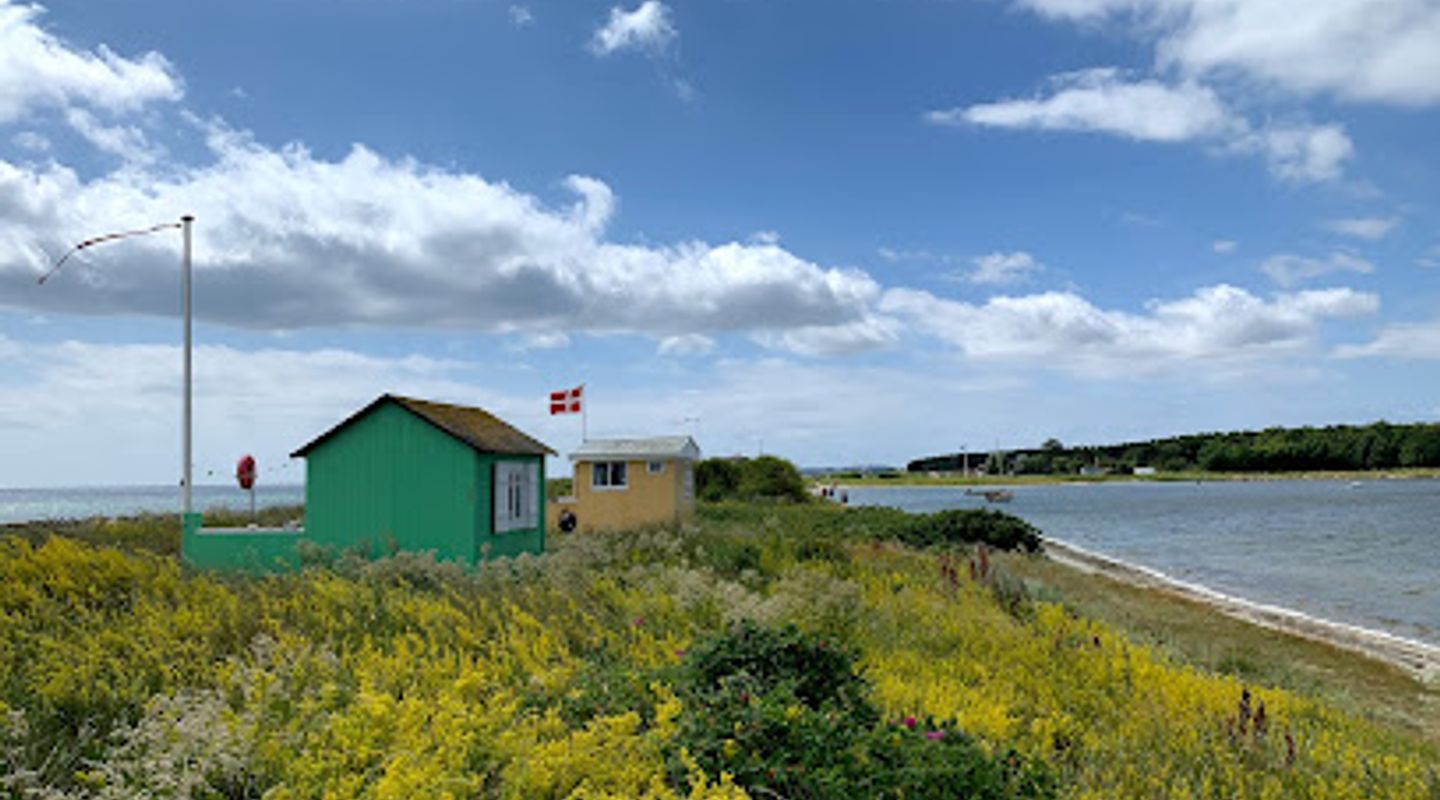
Erik's Tail, known locally as Eriks Hale, is a narrow sandy peninsula just outside Marstal on the Danish island of Ærø. Here a string of colourful wooden beach huts lines a tongue of sand between two very different seas: the sheltered, shallow “Little Sea” and the wilder Baltic “Big Sea”. It is a classic South Funen Archipelago scene, ideal for safe family swimming on one side, bracing dips and waves on the other, and slow coastal walks with big skies, sea breezes and wide horizons.
On-site amenities
 Restrooms
 Seating areas
 Trash bins
 Information boards
- Address
- Erik's Tail
Getting there
Local walk from central Marstal
Bicycle from Marstal and nearby parts of Ærø
Bus and short walk from other Ærø towns
Car access within Ærø
Discover more about Erik's Tail
A Narrow Tail Between Two Seas
Erik's Tail, or Eriks Hale, is a sandy spit that curves out from the harbour town of Marstal on Ærø, forming a delicate ribbon of land between two contrasting bodies of water. On one side lies the quiet “Little Sea”, a shallow, sheltered lagoon between the marina and the outer beach. On the other is the open Baltic, often called the “Big Sea” here, with fresher water, more movement and a feeling of real sea-going space.This unusual geography means you can stand on the narrowest part of the tail and feel flanked by water in two moods at once: calm and paddling‑friendly to one side, wave‑touched and brisk on the other. Low dunes and marram grass anchor the sand, while the long, low line of the peninsula draws your eye toward the horizon and the shipping lanes beyond.
Iconic Beach Huts and Coastal Character
Erik's Tail is instantly recognisable thanks to its row of small, colourful beach huts. Painted in blues, yellows, reds and greens, they sit just above the sand like a string of toy houses, echoing the maritime heritage of Marstal’s old wooden boats. Many are simple: a bench, hooks for towels, perhaps a kettle or a fishing rod. Together they create one of Ærø’s most photographed seaside scenes.The huts are part of a broader coastal culture built around bathing, boating and summer idling. Their doors open directly onto sand, so swimmers step from hut to shore in a few strides. As light changes through the day, the colours of the huts shift too, from soft pastels in the early morning to sharp, saturated tones under strong afternoon sun.
Swimming, Wading and Windy Walks
The Little Sea side of Erik's Tail is ideal for wading, playing and long, relaxed swims in warmer, shallow water. In summer the temperature can feel almost lagoon‑like, and the gentle slope makes it approachable for less confident swimmers and families with younger children. Further along, a jetty stretches over the water, perfect for jumping in or simply sitting with your feet dangling in the sea.On the Baltic side, the experience is more invigorating. Here the water quickly becomes deeper, the waves are livelier, and the breeze feels stronger and saltier. This is the side for longer, more energetic swims and for walkers who enjoy the sound of surf accompanying their stride. In breezy weather, the peninsula is a fine place to feel the elements without needing to venture far from town.
Light, Weather and the Ærø Horizon
Because Erik's Tail extends out into open water, it feels unusually exposed to light and weather. On clear days you can watch the sun track across a nearly unobstructed sky, with water reflecting the light on both sides. Mild, windless evenings often bring soft colours and long, horizontal bands of pink and gold over the archipelago.When clouds roll in, the colours of the huts and sea deepen, and the tail can feel dramatic and moody rather than purely idyllic. Even outside high summer, it is an atmospheric place for short, bracing walks, with seabirds circling and ferries or coastal traffic sliding along the distant horizon.
Simple Pleasures on the Edge of Marstal
Despite being only a short distance from Marstal’s streets and harbour, Erik's Tail feels like a small escape. There are no large structures, only sand, sea, the huts and occasional basic beach facilities. Many visitors bring simple picnics, a book or a camera, then let time stretch out between swims, shoreline strolls and quiet sitting.The scale is intimate, but the views are expansive. That contrast is part of the peninsula’s charm: a place where human touches remain small and colourful, yet the sea and sky dominate. Whether you come for a quick dip before breakfast, a long afternoon with the family or an off‑season walk in a strong breeze, Erik's Tail offers a concentrated taste of Ærø’s coastal life.
Evendo Review Centre
 Google
Guest reviews
Best time to go
Quietest: Jan, Feb & Mar · before 8am or from 11pm
Busy times are Evendo estimates for a typical year, to help you plan. Actual crowds vary with events, school holidays and the weather.
Explore Erik's Tail on the map
A handpicked selection of must-see spots near Erik's Tail, mapped for you.
Get your free copy of our complete guide to Erik's Tail, delivered straight to you.
Everything on this page, from opening hours and how to get there to Eve’s tips and the best time to go, in one PDF you can read offline, print or share.
Already have an account? Sign in
Your Erik's Tail guide is ready.
We'll send it to · Not you? Sign out

Getting your guide ready…
We are putting together a fresh copy of the Erik's Tail guide. This can take up to a minute.
This can take a few moments. If your browser asks, choose Allow so the download can start. You'll find the guide in your Downloads folder.
Nothing happened? Download it again
Sorry, the guide is taking longer than usual. Please try again in a minute, or get it by email instead.
Other nearby places you may find interesting
The closest places of the same kind, if this one is not quite what you had in mind.
-
Badehuse ved Vestre Strandvej A ribbon of tiny, colourful wooden bath huts on Ærøskøbing’s Vesterstrand, blending living island tradition with one of Ærø’s most scenic, swimmable beaches.
-
Ærø Museum Step into Ærø’s past inside a 1775 bailiff’s house, where island history, quirky traditions and a time‑capsule garden unfold in the heart of Ærøskøbing.
-
View Point A simple stop on Ærø’s coastal dike with sweeping views of sea, marsh and sky, perfect for a quiet pause, a photo, or a golden-hour moment between towns.
-
Voderup Klint Terraced coastal cliffs where Ice Age geology, open sea views and tranquil island farmland meet in one of Ærø’s most distinctive natural landscapes.
-
Hammerich House • Aero Museum A collector's cabinet of curiosities in a half-timbered cottage, brimming with antiques and artistic treasures.
Swipe for more places
More to explore near Erik's Tail

 Best experiences near Erik's Tail
 Best hotels near Erik's Tail
 Best landmarks near Erik's Tail
 Best attractions near Erik's Tail
 Best shops near Erik's Tail
 Best restaurants near Erik's Tail
 Best bars near Erik's Tail
Do you manage this location?
Take control to get all the benefits, like improved information, better appearance, and stronger visibility across AI-powered discovery.
Explore more

Explore more of Ærø
Discover the enchanting island of Ærø in Denmark, where fairy-tale towns, scenic landscapes, and rich maritime history await to captivate your senses.
Explore Ærø
Explore more of Denmark
Discover Denmark: A perfect blend of history, modern design, and the cozy concept of hygge. Explore vibrant cities, serene landscapes, and world-class cuisine.
Explore Denmark
