

Ristinge Klint Travel Guide
Free Guide: Dramatic ice‑age cliffs, sweeping Baltic views and simple coastal trails make Ristinge Klint a quietly spectacular corner of southern Langeland.


A brief summary of Ristinge Klint
Dramatic ice‑age cliffs, sweeping Baltic views and simple coastal trails make Ristinge Klint a quietly spectacular corner of southern Langeland.
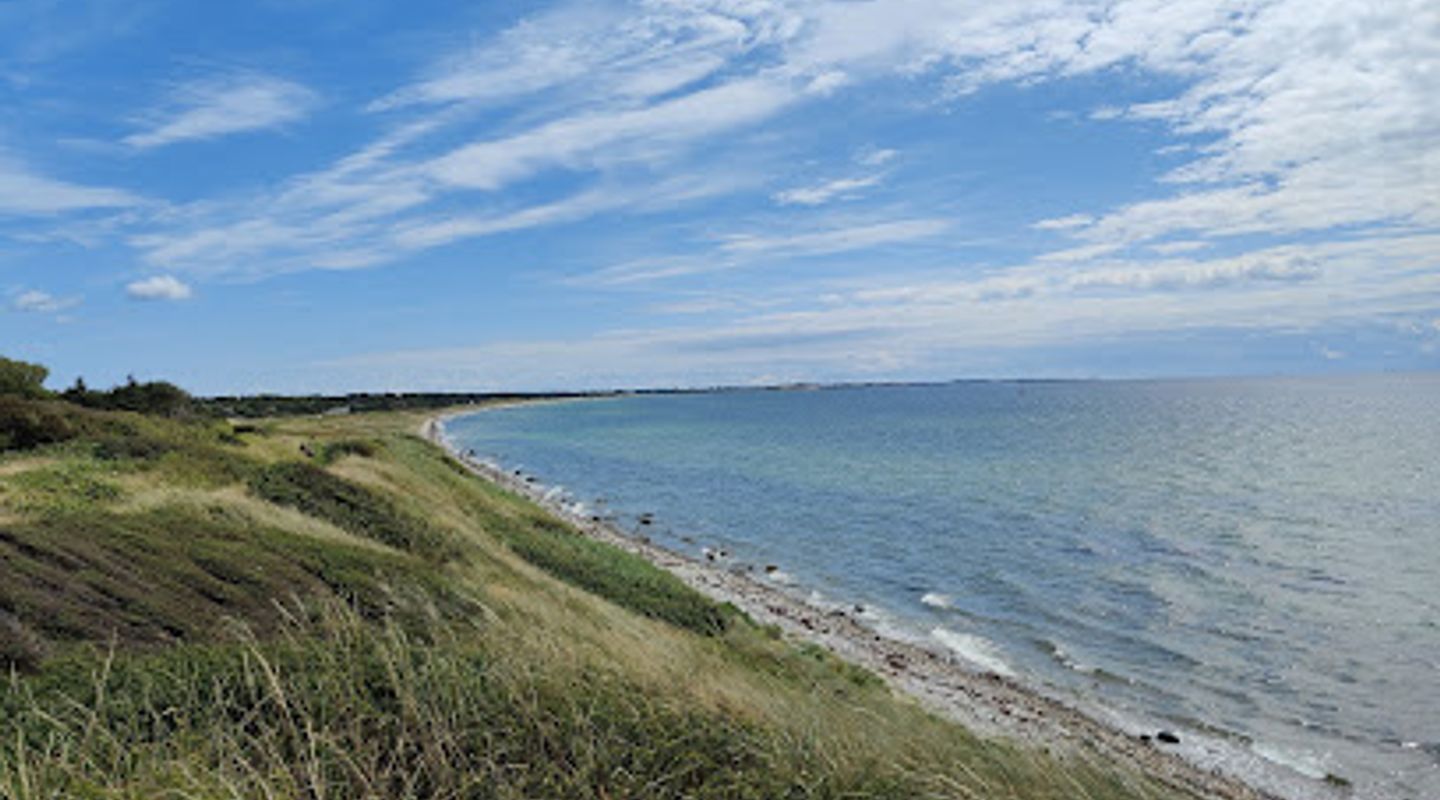
Ristinge Klint is a striking 2 km-long coastal cliff on the Ristinge Peninsula in southern Langeland, rising up to around 28 m above the Baltic Sea. Here, wind-scoured faces reveal layered sands and clays from the last ice age, while a narrow path along the top offers sweeping views across sea, dunes and the South Funen Archipelago. Below, a wild beach of pebbles and boulders invites slow walks, stone hunting and quiet moments listening to the surf on this geologically unique stretch of Danish coastline.
On-site amenities
 Restrooms
 Seating areas
 Trash bins
 Information boards
Opening hours
- Every dayOpen 24 hours
Opening hours as listed on the venue’s Google Business Profile. Hours can change for services and special events, so check with the venue before you go.
- Address
- 5932 Humble
- Phone
- Website
Getting there
Car from Rudkøbing (Langeland town)
Bus and short walk from Rudkøbing
Bicycle from Humble or surrounding villages
Discover more about Ristinge Klint
Clifftop Drama on the Edge of Langeland
Ristinge Klint forms the rugged western edge of the Ristinge Peninsula, a two‑kilometre ribbon of cliff overlooking the Baltic Sea. The face rises to about 28 metres, a sheer wall of sand, clay and gravel that drops down to a narrow strip of beach. From the top path you look out over the sea towards the South Funen islands, with fishing boats and ferries punctuating the horizon.Despite its modest height by world standards, the cliff feels surprisingly dramatic in the soft, rolling context of Danish island landscapes. The combination of steep drop, open sea and big skies creates a sense of exposure and scale that contrasts with the gentle farmland that leads you here. On bright days the water glows deep blue or green; in stormy weather the whole line of coast turns raw and elemental.
A Geological Story Written in Layers
What makes Ristinge Klint truly special is its textbook display of ice‑age geology. In the cliff face you can pick out distinct bands of coloured sands and clays, recording several different advances of glacial ice and warmer interglacial periods. Some layers date back to the last interglacial, when temperatures here were higher and sea levels several metres above today, while others were laid down under harsh, periglacial conditions with frozen ground and strong winds.Closer inspection reveals pale “white sand” deposited by meltwater and wind, reddish and grey tills left by separate ice advances, and compacted moraine forming rounded “noses” that jut from the cliff like frozen waves. Erosion constantly reshapes the profile, sending occasional small slides down to the beach and exposing fresh sections for geologists to study. It is one of the clearest places in Denmark to see how glaciers have pushed, stacked and folded older sediments into complex structures.
Walking the Edge and Roaming the Shore
A narrow trail runs along the upper edge of the cliff, threading between low scrub, open grass and cultivated fields. The walking is generally easy, but the ground can be sandy and uneven, and in places the path passes close to the drop, so a little care is needed. In return you are rewarded with far‑reaching views to Ærø and smaller skerries, shifting patterns of light on the water, and a constant play of wind in the grasses.Down on the beach the atmosphere is more intimate. Waves gnaw at the cliff base, leaving a mix of pebbles, flint, larger boulders and occasional driftwood. Many visitors wander slowly along the shore, looking for interesting stones shaped by transport from far‑off bedrock during the ice age. The sense of space is strong: long sightlines, low soundscapes broken mainly by surf and seabirds, and a horizon that feels close yet unreachable.
Dunes, Peninsula and Changing Coastline
Ristinge Klint is just one piece of a bigger coastal system. To the southeast, a broad belt of dunes and beach at Ristinge Strand forms one of the largest dune fields in the area, running for several kilometres parallel to the sea. To the north, the slim spit of Ristinge Hale stretches into the water with salt meadows, beach ridges and shallow lagoons that attract birds and frame wide views back towards the cliff.Over thousands of years, waves and currents have eaten into the cliff and carried its material along the coast, building up these sandy forelands. The peninsula itself was once separated from the rest of Langeland by a narrow sound that has gradually silted up and been reclaimed, turning sea into land. Walking here, you are literally crossing landscapes that did not exist a few human generations ago, shaped continually by wind, water and gravity.
Naturally Simple, Forever Exposed
Facilities at Ristinge Klint are deliberately minimal, preserving the feel of an unspoiled coastal landscape. Simple paths, a few information boards in the wider area and informal viewpoints are all that interrupt the meeting of farmland, cliff and sea. The experience is about being outdoors in changing weather, watching cloud shadows sweep the water or mist roll in from the horizon.In summer, long evenings lend themselves to unhurried strolls and quiet picnic stops on the grass above the drop. In cooler seasons, the same vantage points offer moody skies, rough seas and a powerful sense of exposure. Throughout the year, Ristinge Klint remains a place where geological history, coastal processes and the daily rhythms of wind and waves are all on open display.
Evendo Review Centre
 Google
Guest reviews
Best time to go
Quietest: Jan, Feb & Dec · before 8am or at 9pm
Busy times are Evendo estimates for a typical year, to help you plan. Actual crowds vary with events, school holidays and the weather.
Explore Ristinge Klint on the map
A handpicked selection of must-see spots near Ristinge Klint, mapped for you.
Get your free copy of our complete guide to Ristinge Klint, delivered straight to you.
Everything on this page, from opening hours and how to get there to Eve’s tips and the best time to go, in one PDF you can read offline, print or share.
Already have an account? Sign in
Your Ristinge Klint guide is ready.
We'll send it to · Not you? Sign out

Getting your guide ready…
We are putting together a fresh copy of the Ristinge Klint guide. This can take up to a minute.
This can take a few moments. If your browser asks, choose Allow so the download can start. You'll find the guide in your Downloads folder.
Nothing happened? Download it again
Sorry, the guide is taking longer than usual. Please try again in a minute, or get it by email instead.
Other nearby places you may find interesting
The closest places of the same kind, if this one is not quite what you had in mind.
-
-
-
-
-


Swipe for more places
More to explore near Ristinge Klint

 Best experiences near Ristinge Klint
 Best hotels near Ristinge Klint
 Best landmarks near Ristinge Klint
 Best attractions near Ristinge Klint
 Best shops near Ristinge Klint
 Best restaurants near Ristinge Klint
 Best bars near Ristinge Klint
Do you manage this location?
Take control to get all the benefits, like improved information, better appearance, and stronger visibility across AI-powered discovery.
Explore more

Explore more of Langeland
Discover Langeland: Denmark's idyllic island retreat with scenic landscapes, rich history, and vibrant culture. Perfect for nature lovers, history buffs, and festival goers.
Explore Langeland
Explore more of Denmark
Discover Denmark: A perfect blend of history, modern design, and the cozy concept of hygge. Explore vibrant cities, serene landscapes, and world-class cuisine.
Explore Denmark
