Sankt Alberts church Travel Guide
Free Guide: Grassy earthworks on a windswept headland mark where a Viking fort and medieval church once watched over Ærø’s coast, their story now held in turf and sea air.


A brief summary of Sankt Alberts church
Grassy earthworks on a windswept headland mark where a Viking fort and medieval church once watched over Ærø’s coast, their story now held in turf and sea air.
Set on the low headland of Vejsnæs Nakke near Ærøskøbing, the site of Sankt Albert's Church is a quiet, wind-brushed patch of earth where only grassy mounds and foundation traces hint at a thousand years of history. First raised around the year 1000 as a Viking-age fortification and later expanded into a modest medieval church, it was demolished after the Reformation in 1536. Today, low linear banks clearly outline the former walls, while archaeological finds of coins and graves reveal this was once a busy sacred place overlooking the South Funen Archipelago.
- Address
- 5970 Ærøskøbing
Getting there
Car from Ærøskøbing town
Bicycle from Ærøskøbing
Walking from a nearby country road
Discover more about Sankt Alberts church
From Viking Stronghold to Sacred Ground
On the exposed tip of Vejsnæs Nakke, just outside Ærøskøbing, the remains of Sankt Albert's Church trace a story that reaches back over a millennium. The first structure here rose around the year 1000 as a coastal fortification in the Viking Age, guarding the waters of the South Funen Archipelago. In the 13th–14th centuries the site changed character, when a small stone church dedicated to Saint Albert was added on top of the earlier defenses.Though the buildings have long since vanished, the location still feels like a frontier between land and sea. Standing here, it is easy to imagine small ships hugging the coastline below and island communities relying on this headland as both lookout and holy place.
Reading the Landscape: Earth Mounds and Foundations
Today, Sankt Albert's Church survives mainly as shapes in the ground. Low, linear earth mounds and banks clearly outline the former footprint of the nave and adjoining spaces. Archaeological work has confirmed that these raised lines are not natural formations but the foundations and surrounding ramparts of both the old fort and the later church.From above, the pattern forms a simple rectangular plan, modest in scale compared with grand town churches. Walking around the perimeter, you move from one side of the vanished walls to the other in just a few steps, which underscores how intimate and local this parish once was.
Archaeological Finds Beneath Your Feet
Beneath the turf, archaeologists have uncovered a surprising density of history. Around half a hundred graves have been identified near the church, many of them belonging to children. These burials speak of a small community bound closely to this place, returning generation after generation to the same consecrated ground.Excavations have also revealed a rich scatter of coins spanning from the mid-1300s up to the Reformation. The hoard shows that the church remained an active and frequented site through late medieval times, linked into the broader trading networks that threaded through the Baltic and North Sea.
The Reformation and a Vanishing Church
In 1536, Denmark’s Reformation reshaped religious life across the kingdom, and Sankt Albert's Church was among the many small rural churches that fell silent. Services ceased, the building was gradually dismantled, and its stone likely reused in nearby farms or other constructions on Ærø.The dismantling did not erase its memory, though. The sacred function shifted to other parish churches on the island, while the former churchyard remained a place of quiet significance, its story carried forward by oral tradition and, later, by antiquarian interest in Ærø’s layered past.
A Coastal Setting of Wind, Light, and Quiet
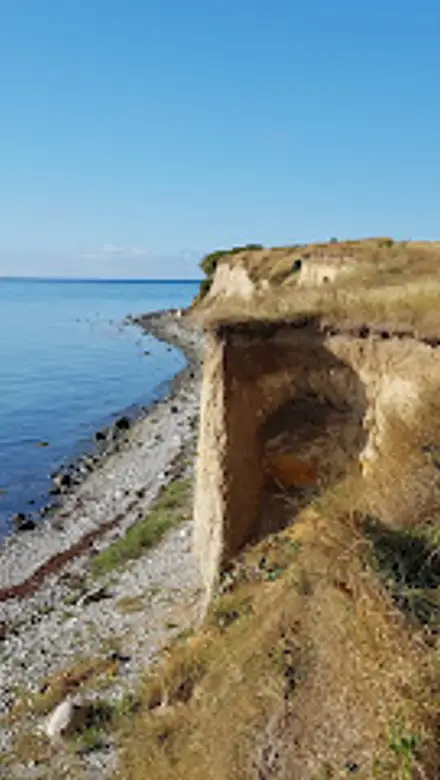
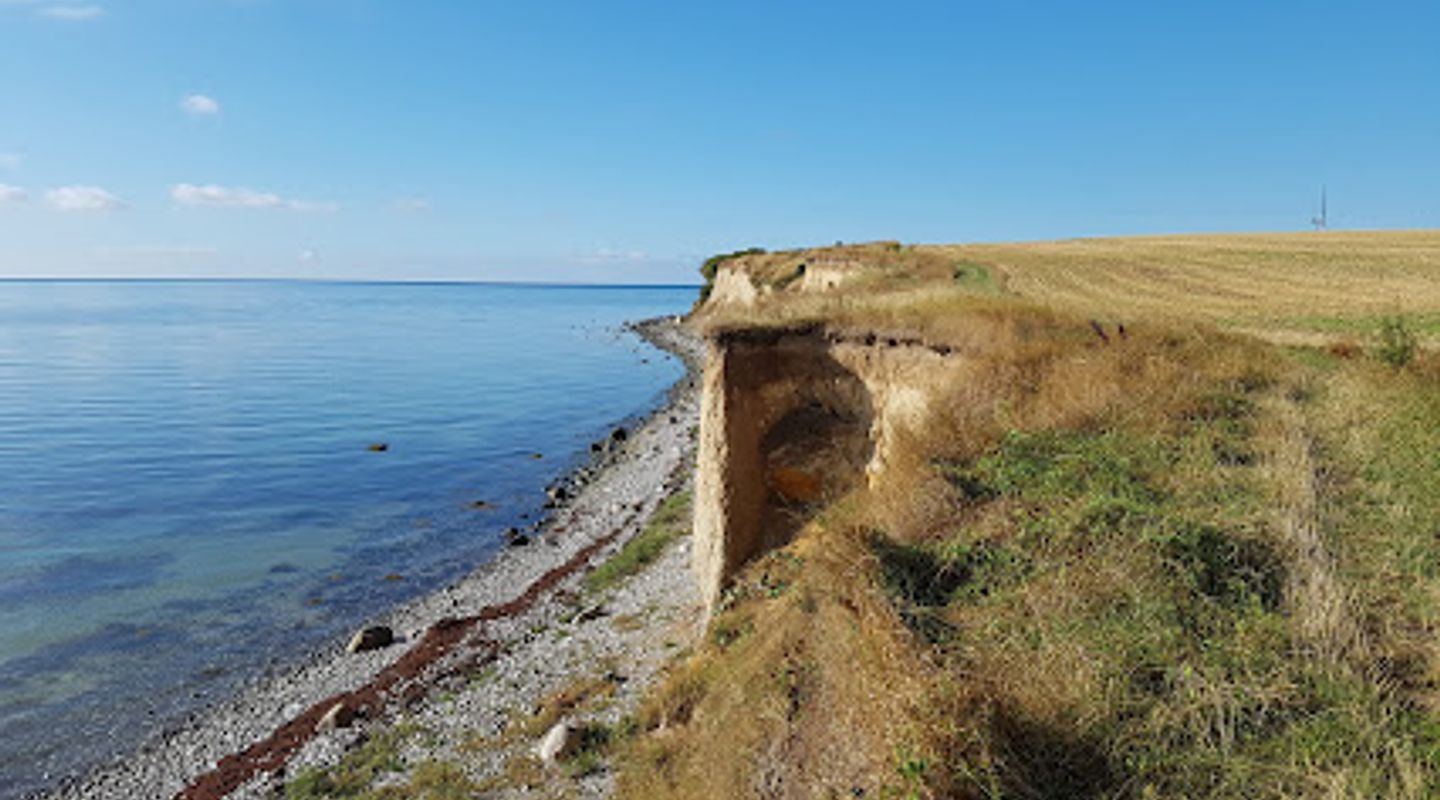
Part of the site’s appeal today lies in its setting. Vejsnæs Nakke is a low, windswept headland with open views across the island’s patchwork of fields and out to the island-speckled sea. On clear days, the horizon dissolves into a band of blue, broken by distant sails and the silhouettes of neighbouring shores.The atmosphere is understated rather than dramatic: grass underfoot, seabirds overhead, and the constant sound of wind. It is easy to pause here, sit on the gentle slopes, and let the shapes in the ground resolve into fort, church, graves and centuries of island life.
Visiting Today: A Subtle but Evocative Stop
There is no standing architecture to admire, no ornate interior or tower to climb. Instead, Sankt Albert's offers a quiet, contemplative stop for travellers interested in early Danish history, archaeology, and the way time softens human structures back into the landscape.Many visitors choose to combine a stop here with a wider exploration of Ærøskøbing’s cobbled streets and colourful houses, or with walks along the island’s coastal paths. The remains are easily appreciated in a short visit, yet the story they hint at reaches deep into the island’s Viking and medieval roots.
Evendo Review Centre
 Google
Guest reviews
Best time to go
Quietest: Jan, Feb & Mar · before 8am or at 7pm
Busy times are Evendo estimates for a typical year, to help you plan. Actual crowds vary with events, school holidays and the weather.
Explore Sankt Alberts church on the map
A handpicked selection of must-see spots near Sankt Alberts church, mapped for you.
Get your free copy of our complete guide to Sankt Alberts church, delivered straight to you.
Everything on this page, from opening hours and how to get there to Eve’s tips and the best time to go, in one PDF you can read offline, print or share.
Already have an account? Sign in
Your Sankt Alberts church guide is ready.
We'll send it to · Not you? Sign out

Getting your guide ready…
We are putting together a fresh copy of the Sankt Alberts church guide. This can take up to a minute.
This can take a few moments. If your browser asks, choose Allow so the download can start. You'll find the guide in your Downloads folder.
Nothing happened? Download it again
Sorry, the guide is taking longer than usual. Please try again in a minute, or get it by email instead.
Other nearby places you may find interesting
The closest places of the same kind, if this one is not quite what you had in mind.
-
-
-
-
-


Swipe for more places
More to explore near Sankt Alberts church

 Best experiences near Sankt Alberts church
 Best hotels near Sankt Alberts church
 Best landmarks near Sankt Alberts church
 Best attractions near Sankt Alberts church
 Best shops near Sankt Alberts church
 Best restaurants near Sankt Alberts church
 Best bars near Sankt Alberts church
Do you manage this location?
Take control to get all the benefits, like improved information, better appearance, and stronger visibility across AI-powered discovery.
Explore more

Explore more of Ærø
Discover the enchanting island of Ærø in Denmark, where fairy-tale towns, scenic landscapes, and rich maritime history await to captivate your senses.
Explore Ærø
Explore more of Denmark
Discover Denmark: A perfect blend of history, modern design, and the cozy concept of hygge. Explore vibrant cities, serene landscapes, and world-class cuisine.
Explore Denmark