Gammel Estrup Danmarks Herregårdsmuseum, Central Jutland Travel Guide
Step across the moat into a beautifully preserved Danish Renaissance manor where aristocrats, servants and gardens together tell the story of centuries of country life.
Gammel Estrup Danmarks Herregårdsmuseum is one of Denmark’s best-preserved Renaissance manor houses, set in the countryside near Auning on Djursland. Behind its red-brick moat-framed walls you step into richly furnished halls, salons and private chambers that trace aristocratic life from the 1600s onward, while exhibitions and recreated service quarters reveal the daily routines of butlers, maids and farm workers. Outside, formal baroque gardens, orchards, a kitchen garden and a large playground make this a full‑day, family-friendly escape into Danish heritage.
A brief summary to Gammel Estrup Danmarks Herregårdsmuseum
- Randersvej 2, Auning, 8963, DK
- Click to display
- Click to display
- Duration: 2 to 6 hours
- Mid ranged
-
 Mixed
Mixed
- Mobile reception: 4 out of 5
- Monday 10 am-5 pm
- Tuesday 10 am-5 pm
- Wednesday 10 am-5 pm
- Thursday 10 am-5 pm
- Friday 10 am-5 pm
- Saturday 10 am-5 pm
- Sunday 10 am-5 pm

Know before you go
Hi, I'm Eve. Here are a few practical things to know before exploring Gammel Estrup Danmarks Herregårdsmuseum.
- Allow at least half a day if you want to explore both Gammel Estrup and neighboring Det Grønne Museum on the joint ticket.
- Wear comfortable shoes: floors are uneven, staircases are narrow, and the gardens as well as playground invite extra walking.
- Check seasonal programs in advance; school holidays and the Christmas period often feature special activities in the manor kitchen and house.
- Parts of the historic building can be challenging for visitors with reduced mobility; plan extra time and use lifts and ramps where available.
- Combine the visit with a walk in the nearby forested areas to experience the wider estate landscape that supported the manor.
Do you manage this location?
Take control to get all the benefits, like improved information, better appearance, and stronger visibility across AI-powered discovery. Learn more about listing your business on Evendo
Activate your presenceOther nearby places you may find interesting
The closest places of the same kind, if this one is not quite what you had in mind.

Explore Gammel Estrup Danmarks Herregårdsmuseum on the Map
A handpicked selection of must-see spots near Gammel Estrup Danmarks Herregårdsmuseum, mapped for you.
Getting There
-
Car from Aarhus
Driving from central Aarhus to Gammel Estrup typically takes about 40–50 minutes, following main regional roads through Djursland. The route is straightforward and mostly on well-maintained two-lane roads. There is a large free car park in front of the ticket area, with spaces for over a thousand vehicles as well as some designated disabled parking and electric charging points. Fuel and roadside services are available along the way, and driving is practical year-round, though winter conditions can occasionally require extra caution.
-
Bus from Aarhus via Randers or Grenaa
You can reach Gammel Estrup by regional bus services that connect Aarhus with Randers and Djursland towns such as Auning. Typical travel time from Aarhus, including a change, is around 1.5–2 hours. A single adult ticket for this distance usually costs in the range of 60–110 DKK depending on time and ticket type. Buses run more frequently on weekdays than weekends, and services may be reduced on public holidays, so checking schedules in advance is important. The final stop is within walking distance of the manor along local roads.
-
Bicycle from Auning
From the town of Auning, keen cyclists can ride to Gammel Estrup in roughly 15–25 minutes, using local roads and cycle paths that pass through gently undulating countryside. The route is relatively easy but does involve sharing stretches of road with cars, so visibility gear and lights are recommended, especially outside summer. There is no specific fee for cycling or bike parking, but weather and wind can significantly affect comfort, particularly in the cooler months.
-
Taxi from Randers
If you arrive in Randers by train or bus, a taxi to Gammel Estrup is a convenient option, typically taking around 25–35 minutes depending on traffic. The distance means fares are relatively high; expect a one-way ride to cost in the region of 350–500 DKK, with supplements possible at night or on weekends. Taxis can be pre-booked or picked up at ranks in Randers, and this is often the most comfortable choice for small groups or those with limited mobility.
For the on-the-go comforts that matter to you
-
 Restrooms
-
 Drink Options
-
 Drinking Water
-
 Food Options
-
 Seating Areas
-
 Sheltered Areas
-
 Picnic Areas
-
 Trash Bins
-
 Information Boards
-
 Visitor Center
Discover more about Gammel Estrup Danmarks Herregårdsmuseum
Renaissance Red-Brick Manor in Rural Djursland
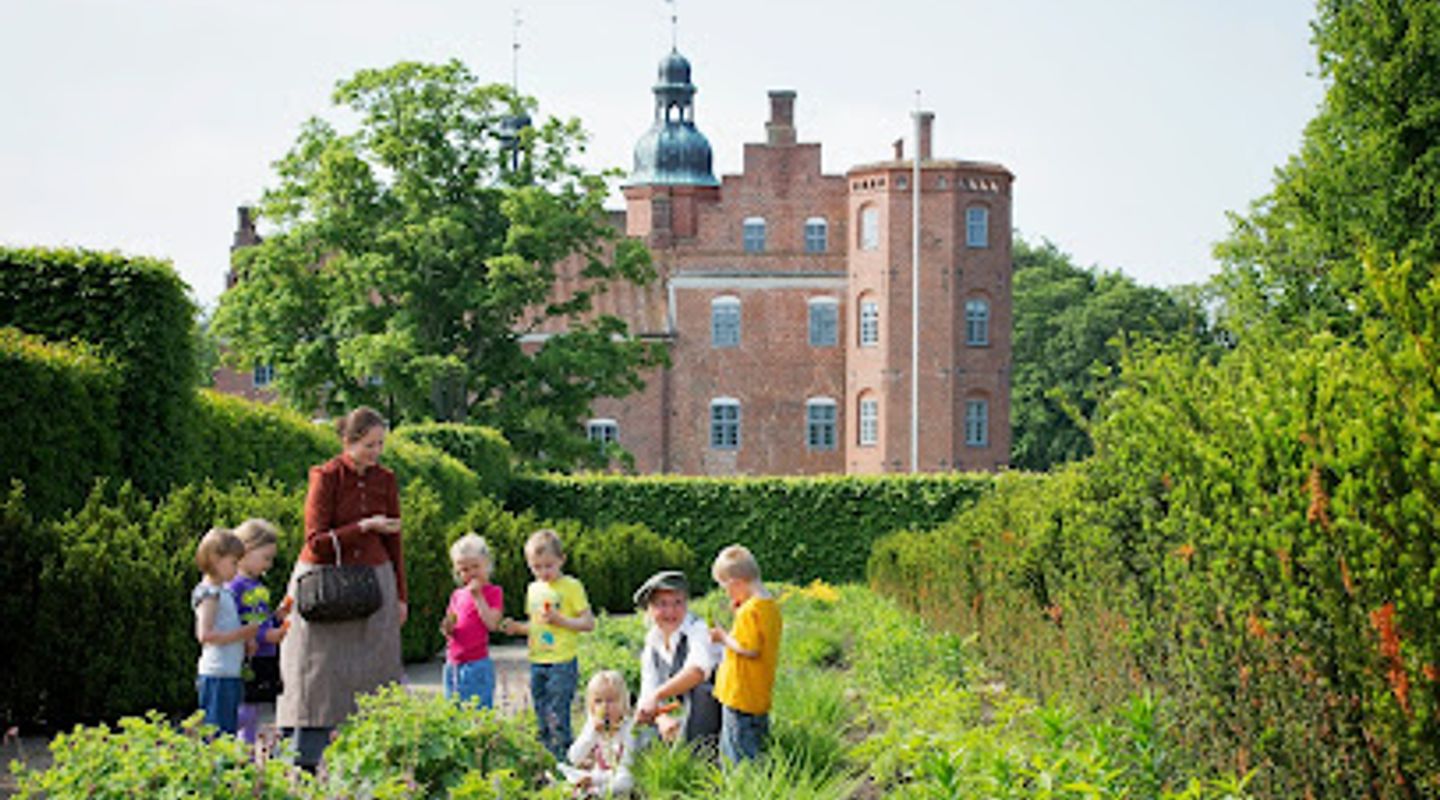
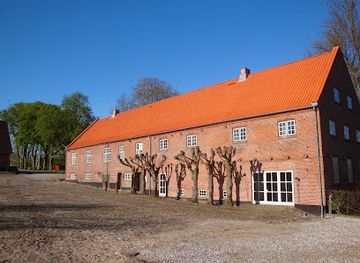
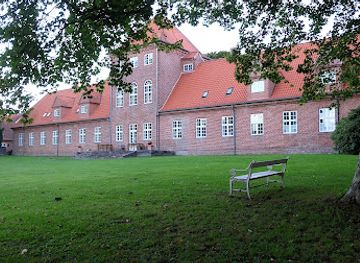
Gammel Estrup rises from its moat in deep red brick, a classic Danish Renaissance manor tucked into the rolling farmland of Djursland. Approaching the main building, you cross the water and enter a compact but stately complex of wings, towers and gables that has shaped the landscape here for centuries. The manor’s current appearance dates largely from the 17th century, when noble families transformed an older stronghold into an elegant country residence.Today the estate houses Denmark’s dedicated manor house museum, using the original rooms and architecture as its main exhibit. Instead of neutral gallery spaces, you wander through the very halls where counts and countesses staged their lives, surrounded by creaking floors, thick walls and narrow staircases that still feel unmistakably domestic.Aristocratic Everyday Life Behind Heavy Doors
Inside, a sequence of salons, dining rooms and private chambers reveals how the nobility lived, celebrated and displayed their wealth. High-ceilinged halls hang with portraits and hunting trophies, while smaller rooms are furnished with period furniture, carpets, porcelain and silver. Each floor tells a chapter in changing taste: heavy Renaissance pieces give way to lighter baroque and refined 19th‑century styles.Interpretive displays weave in stories of individual owners and families, tracing marriages, fortunes, estates and the political power that flowed through country houses like this. In the grand dining room you can almost imagine the clatter of cutlery and the murmur of diplomats, while in more intimate sitting rooms you see how aristocrats read, embroidered, played music and entertained close friends.Below Stairs: The World of Servants and Workers
A defining strength of Gammel Estrup is its focus on those who worked here. In the kitchens, corridors and service quarters, you are invited into a very different universe. Here the ceilings are lower, the light dimmer and the furniture more functional. Exhibitions explore hierarchies among servants, from housekeepers and coachmen to maids and kitchen staff, and explain how their long days were structured.Original or reconstructed workspaces show where food was prepared, fires stoked and laundry scrubbed. Tools, uniforms and household accounts help you grasp the sheer logistics required to run a manor: managing fields, forests and livestock, receiving guests and maintaining constant readiness for the owners’ needs. It is a rare chance to see both the glittering and the grinding sides of country‑house life within one estate.Historic Gardens, Orchards and Playful Corners
Stepping back outside, Gammel Estrup opens onto a carefully restored baroque garden that feels like an outdoor extension of the manor’s formality. Straight paths lead between clipped hedges and flowerbeds, structured around geometric lawns and sightlines to the main building. Orangeries recall the fashion for exotic plants and winter citrus, while an apple orchard and kitchen garden demonstrate how estates once supplied their own tables.The surrounding grounds blend heritage with recreation. You can stroll under old trees, watch seasonal changes in the beds or sit on benches with views to the moat and façades. A large manor‑themed playground introduces younger visitors to the setting through climbing structures and imaginative play, making the visit appealing for multigenerational groups.Living Heritage, Neighboring Museum and Seasonal Activities
Gammel Estrup operates as both museum and research center, documenting the broader culture of Danish manor houses: their architecture, agriculture, economics and role in society. Exhibitions often connect the estate’s story with developments across the country and abroad, from changing landownership to evolving ideas of status and leisure.Right next door lies Det Grønne Museum, dedicated to hunting, forestry, agriculture and food traditions, and a joint ticket allows you to explore both institutions in one visit. Throughout the year, Gammel Estrup hosts changing activities, from hands‑on programs in the manor kitchen during school holidays to atmospheric Christmas events focusing on festive customs for both gentry and staff. A day here becomes less a static museum stop and more an immersive encounter with Denmark’s rural past, set within one remarkably well‑preserved estate.More to explore near Gammel Estrup Danmarks Herregårdsmuseum
-

Best experiences near Gammel Estrup Danmarks Herregårdsmuseum
-

Best hotels near Gammel Estrup Danmarks Herregårdsmuseum
-

Best landmarks near Gammel Estrup Danmarks Herregårdsmuseum
-

Best shops near Gammel Estrup Danmarks Herregårdsmuseum
-

Best restaurants near Gammel Estrup Danmarks Herregårdsmuseum
-

Best bars near Gammel Estrup Danmarks Herregårdsmuseum







Your all‑in‑one travel companion app
Explore expert travel guides, compare and book tours, experiences, hotels, and more—all from the palm of your hand. Download now for seamless trip planning wherever your wanderlust takes you.


Explore More of Central Jutland
Looking beyond Gammel Estrup Danmarks Herregårdsmuseum? Discover Central Jutland for broader travel guides, local hot-spots, and regional highlights.
Explore Central Jutland