

Vennerslund Travel Guide
Free Guide: Historic Falster manor estate where centuries of Danish rural life, traditional architecture and gentle gardens meet the waterside landscape of Guldborgsund.


A brief summary of Vennerslund
Historic Falster manor estate where centuries of Danish rural life, traditional architecture and gentle gardens meet the waterside landscape of Guldborgsund.
Set on northern Falster near the waters of Guldborgsund, Vennerslund is an historic Danish manor estate with roots back to the 13th century. Centred on a classic whitewashed main house and working farmland, it is framed by avenues of old trees, formal lawns and gently landscaped gardens. Visitors come for the evocative manor ambience, glimpses of traditional estate life and peaceful rural scenery just outside the village of Nørre Alslev.
- Address
- Vennerslundsvej 9, 4840 Nørre Alslev
- Phone
- Website
Getting there
Regional train and taxi from Nykøbing Falster
Car from Nykøbing Falster and southern Falster
Cycling from Nørre Alslev
Discover more about Vennerslund
Centuries of Manor Life on Northern Falster
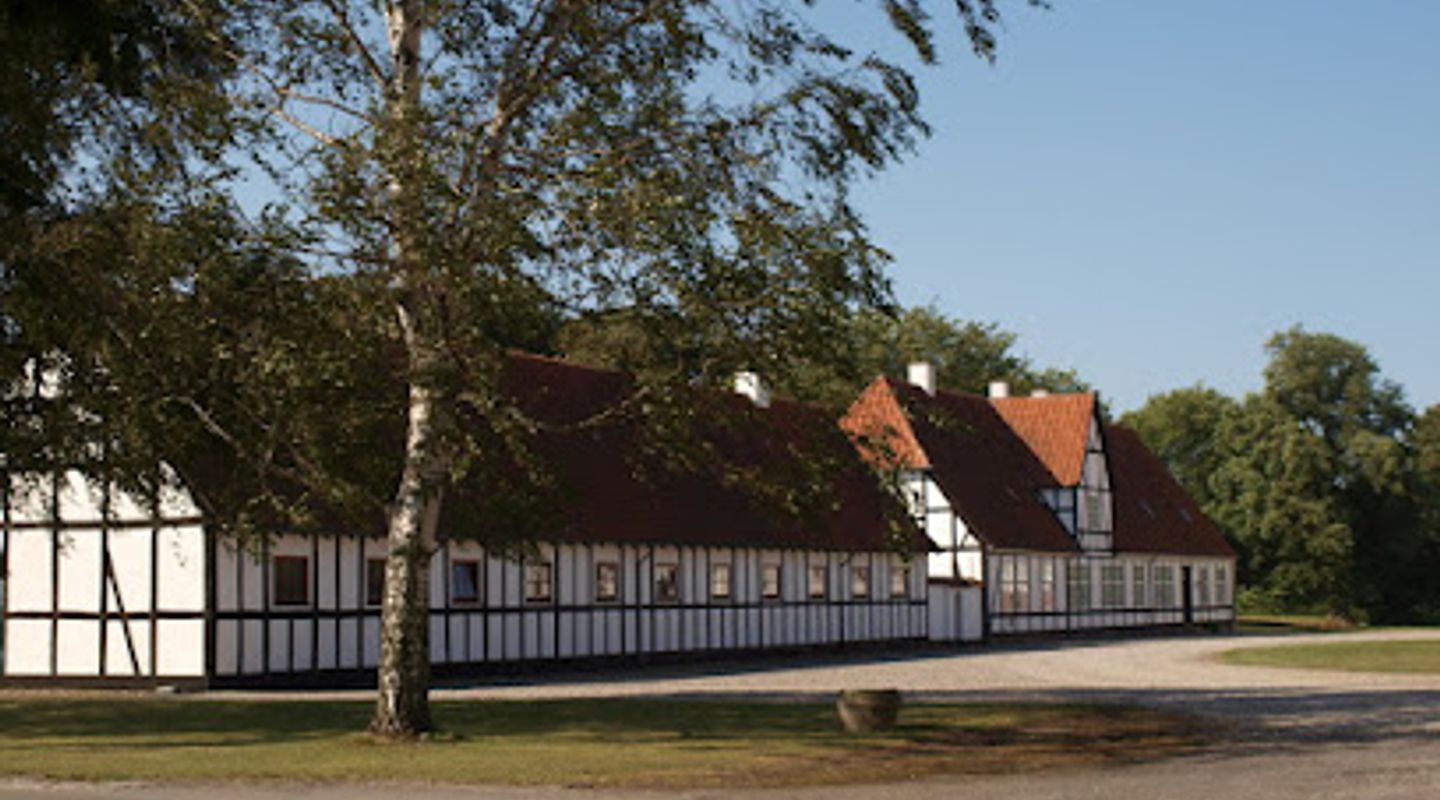
Vennerslund is one of Falster’s old manor estates, its history stretching back to around 1200 when the property first appears in written records under an earlier name. Over the centuries, the estate changed owners and titles, at one point known as Stadager and briefly Sophieholm, before taking the name Vennerslund. Since the early 1800s it has been in the hands of the same family, who have steered it through agricultural reforms, wars and changing economic fortunes while keeping the core of the estate intact.The main manor house, rebuilt and remodelled over time, presents the kind of restrained elegance typical of Danish country seats: clean lines, light façades and a balanced, almost modest expression. Around it stretch farm buildings, tenant houses and fields that tell a continuous story of rural production and stewardship.
Gardens, Avenues and the Landscape of Guldborgsund
Although Vennerslund is first and foremost a working estate, its grounds carry the quiet charm of a country garden. Stately trees line the approach, and shelterbelts frame views across fields and towards the waters of Guldborgsund. Depending on the season, you may see clipped lawns, blooming borders, or the subdued architecture of bare branches and winter light.The broader landscape is just as much part of the experience: flat, fertile farmland, hedgerows and windbreaks, and glimpses of the sund beyond. Birdsong, rustling leaves and distant farm machinery blend into a distinctly rural soundscape. It is a place where the transition from formal garden to productive land feels natural and seamless.
A Living Agricultural Estate
Vennerslund has long been an agricultural powerhouse on this part of Falster. Over the years, fields here have produced grain, fodder and other crops, and the estate has experimented with new methods as Danish farming modernised. Today, neat parcels of cultivated land, well-kept machinery and orderly barns reflect a professional, contemporary operation built on deep local knowledge.Visitors often sense this continuity: centuries-old structures stand beside modern facilities, and the rhythm of work on the land still shapes daily life. The estate’s scale means you can appreciate how manor, gardens and fields operate together as a single, coherent landscape.
Architecture, Details and First Impressions
Arriving at Vennerslund, the first impression is of symmetry and order. The main house anchors the ensemble of buildings, with wings and farm structures set around yards that have been adjusted but not erased by time. Plaster walls, slate or tile roofs and traditional window details anchor the estate firmly in Danish building traditions.Look for the smaller elements that give the place character: old trees leaning slightly over gravel, metalwork on gates, or traces of earlier rooflines in brickwork. These quiet details hint at how the buildings have been adapted generation after generation rather than rebuilt from scratch.
Visiting in Different Seasons
Vennerslund’s mood changes dramatically with the seasons. In spring, fresh leaves and the return of migrant birds transform the fields and avenues. Summer brings long, bright evenings, tall crops and busy farm activity. Autumn lays warm colours over trees and hedgerows, and low light emphasises the texture of brick, timber and soil. Winter can be spare and atmospheric, with frost on gravel and wide, pale skies over the fields.Whatever the time of year, this is not a manicured show garden but an authentic rural estate where history, agriculture and nature intersect in a quietly compelling way.
Evendo Review Centre
 Google
Guest reviews
Best time to go
Quietest: Jan, Feb & Mar · before 8am or at 7pm
Busy times are Evendo estimates for a typical year, to help you plan. Actual crowds vary with events, school holidays and the weather.
Explore Vennerslund on the map
A handpicked selection of must-see spots near Vennerslund, mapped for you.
Get your free copy of our complete guide to Vennerslund, delivered straight to you.
Everything on this page, from opening hours and how to get there to Eve’s tips and the best time to go, in one PDF you can read offline, print or share.
Already have an account? Sign in
Your Vennerslund guide is ready.
We'll send it to · Not you? Sign out

Getting your guide ready…
We are putting together a fresh copy of the Vennerslund guide. This can take up to a minute.
This can take a few moments. If your browser asks, choose Allow so the download can start. You'll find the guide in your Downloads folder.
Nothing happened? Download it again
Sorry, the guide is taking longer than usual. Please try again in a minute, or get it by email instead.
Other nearby places you may find interesting
The closest places of the same kind, if this one is not quite what you had in mind.
-
The Medieval Center Experience 15th-century Denmark through living history, trebuchets, tournaments, and authentic medieval crafts.
-
Guldborgsund Zoo & Botanisk Have Intimate town-edge zoo and botanical garden where animal encounters, leafy paths and playgrounds have long shaped family days out in Nykøbing Falster.
-
Horreby Lyng Falster’s only raised bog, where quiet boardwalks, restored peatland and traces of ancient life create a subtle, atmospheric escape into Danish nature.
-
Zipline Systofte Seasonal lakeside adventure park near Nykøbing Falster with a 400 m twin zipline, floating aquapark and high-jump airbag for families and thrill-seekers.
-
Crocodile Zoo, Falster Tropisk, fugtig varme, kæmpekrokodiller og bevaringsprojekter samles i et kompakt, intenst reptilunivers midt på Falster.
Swipe for more places
More to explore near Vennerslund

 Best experiences near Vennerslund
 Best hotels near Vennerslund
 Best landmarks near Vennerslund
 Best attractions near Vennerslund
 Best shops near Vennerslund
 Best restaurants near Vennerslund
 Best bars near Vennerslund
Do you manage this location?
Take control to get all the benefits, like improved information, better appearance, and stronger visibility across AI-powered discovery.
Explore more

Explore more of Falster
Discover Falster: A blend of serene beaches, rich history, and lush landscapes in Denmark's southern island treasure.
Explore Falster
Explore more of Denmark
Discover Denmark: A perfect blend of history, modern design, and the cozy concept of hygge. Explore vibrant cities, serene landscapes, and world-class cuisine.
Explore Denmark
