Ejegod Windmill, Nykøbing Falster
A beautifully preserved 1816 smock mill on a low hill in Nykøbing Falster, where sails, barn and miller’s house keep Denmark’s rural milling heritage alive.
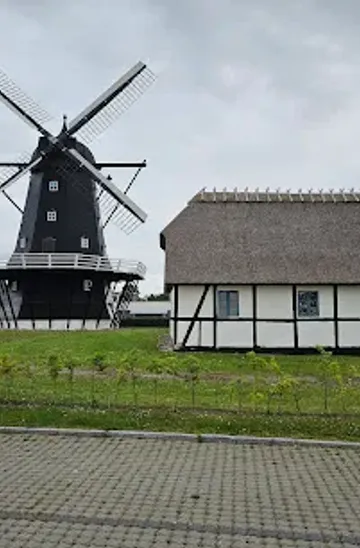
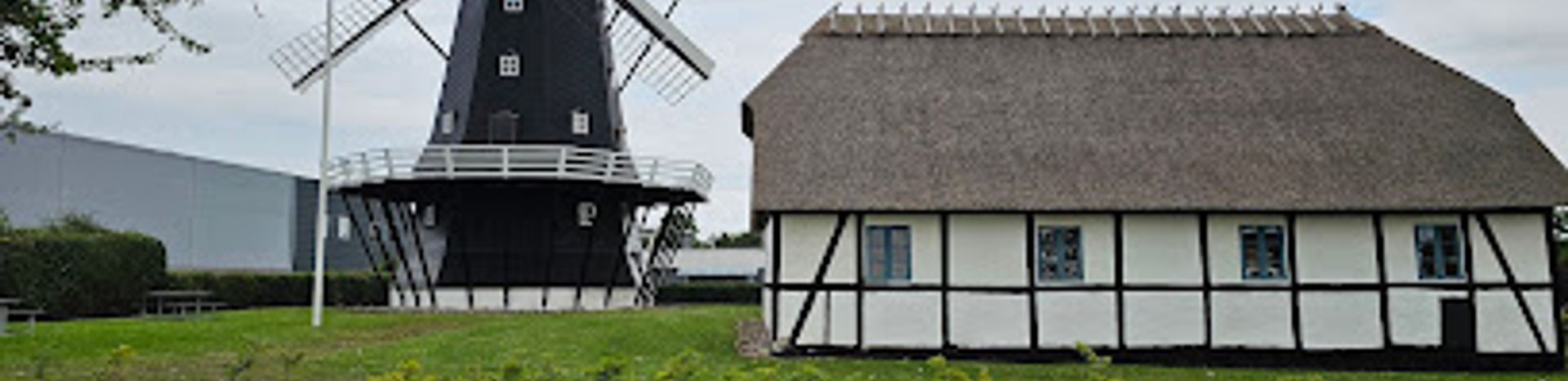
Rising above the northern part of Nykøbing Falster, Ejegod Windmill is a beautifully preserved 19th‑century smock mill and listed monument. Built in 1816, the octagonal mill, barn and former miller’s house form a rare intact ensemble that tells the story of Denmark’s milling heritage. Today it stands as an atmospheric cultural landmark, with its restored exterior, traditional timber details and sweeping views over the surrounding townscape.
A brief summary to Ejegod Windmill
- Ejegodvej 4, Nykøbing Falster, 4800, DK
- Click to display
- Click to display
- Duration: 0.5 to 1.5 hours
- Free
-
 Outdoor
- Mobile reception: 4 out of 5

Know before you go
Hi, I'm Eve. Here are a few practical things to know before exploring Ejegod Windmill.
- Plan around daylight and clear weather if possible; the mill’s white tower and dark sails are far more striking in good light and make for better photographs.
- Walk all the way around the mill to see how the sails and cap change character from different angles and to appreciate the relationship with the barn and miller’s house.
- Combine the stop with nearby cultural sights in Nykøbing Falster to turn the mill into part of a relaxed heritage‑themed half‑day itinerary.
Do you manage this location?
Take control to get all the benefits, like improved information, better appearance, and stronger visibility across AI-powered discovery. Learn more
Activate your presenceOther nearby places you may find interesting
Getting There
-
City bus from central Nykøbing Falster
From central Nykøbing Falster, local city buses running toward the northern residential districts typically reach the area around Ejegodvej in about 10–15 minutes, depending on traffic and intermediate stops. Services usually run at least every 30–60 minutes during the day. A single adult ticket within the town is commonly in the range of 20–30 DKK. Check the latest timetable and route number on local transport information boards before you travel.
-
Walking from Nykøbing Falster town centre
From the main shopping streets and central squares of Nykøbing Falster, walking to Ejegod Windmill takes roughly 20–30 minutes at a comfortable pace. The route is on paved urban streets with gentle inclines as you approach the small hill where the mill stands. The terrain is suitable for most visitors, though those with reduced mobility should allow extra time and may prefer public transport or a taxi.
-
Taxi from Nykøbing Falster train station
Taxis are readily available outside Nykøbing Falster station. The ride to the windmill in the northern part of town generally takes about 5–10 minutes, depending on traffic and the exact drop‑off point. For this short urban journey, expect a fare in the region of 70–130 DKK, covering both the starting fee and distance. Taxis provide the most convenient option for travelers with luggage or limited mobility.
For the on-the-go comforts that matter to you
-
 Seating Areas
-
 Information Boards
-
 Trash Bins
Discover more about Ejegod Windmill
A historic mill on the skyline of Falster
Ejegod Windmill crowns a low hill in the northern part of Nykøbing Falster, its white‑clad octagonal body and dark cap instantly recognizable against the Danish sky. Built in 1816 as a traditional smock mill, it once stood in open countryside, using the reliable winds over Falster to grind grain for the growing town and surrounding farms. Over two centuries later, the town has expanded around it, but the mill still reads clearly on the skyline as a symbol of local identity and rural roots.The mill is part of a wider ensemble that includes the barn and the former miller’s house. All three structures are officially protected, preserving not only a single building but a complete working environment from the age when wind power drove much of Denmark’s food production. Their survival offers a tangible link to the period when the island’s prosperity depended on agriculture and the careful management of wind and grain.Architecture, machinery and traditional craft
Ejegod is a classic Dutch‑style smock mill, with a tapered, eight‑sided tower standing on a masonry base. Horizontal weatherboarding wraps the upper structure, while the cap can turn to face the wind, carrying four impressive sails that once powered the millstones inside. The proportions are elegant rather than monumental, yet up close the timber framing and ironwork feel robust, built to withstand decades of harsh coastal weather.Inside, the mill is fitted with the typical arrangement of floors, hoists and gearing that once allowed a small team to bring in grain, raise it to the top, and grind it into flour. Even if interior access is only available on specific occasions, simply knowing that the original machinery survives enhances the experience of seeing the exterior. The restored cladding and cap, completed in the early 21st century, were carefully executed to match historic materials and detailing, ensuring the mill still reads as an authentic 19th‑century structure.A rare intact milling homestead
What sets Ejegod apart from many other Danish mills is the survival of its auxiliary buildings. The barn would have stored grain, flour and equipment, while the miller’s house provided on‑site accommodation, creating a self‑contained workplace that operated almost around the clock in harvest season. Together, the three buildings evoke a complete working homestead, bringing everyday rural life vividly into focus.This intact ensemble is unusual in Denmark, where many windmills lost their outbuildings as farming methods changed. Here, the relationship between house, barn and mill is still legible: you can trace the imagined route of a loaded wagon, picture the noise of grinding stones, and sense how central the miller was to the community’s food supply. The site illustrates not only technology, but also social history, family life and local economy.From working mill to protected landmark
Ejegod Windmill remained in operation until the mid‑20th century, long enough to see the transition from wind power to motorized milling. As its commercial role diminished, local authorities took over responsibility, recognizing its cultural importance and listing the entire complex as a monument. Periodic restorations have focused both on structural soundness and on visual authenticity, ensuring the mill does not become a mere shell but retains its character.Public ownership has allowed the site to be managed as a heritage attraction rather than as private property. Occasional events, open days or community activities may take place around the mill, reinforcing its role as a gathering point and educational resource. Even outside of such occasions, the building’s presence in a residential district offers a quiet reminder of how closely linked town and countryside once were.Experiencing the mill today
A visit to Ejegod Windmill is as much about atmosphere as it is about formal sightseeing. Approaching the hill, you notice how the sails line up with the surrounding rooftops and treetops, shifting subtly as you walk. The immediate area around the mill is compact and easy to explore on foot, allowing you to circle the tower, appreciate the varying angles, and study details such as shutters, latticework and the windshaft.Because the mill stands within the town rather than in isolated fields, it fits easily into a broader day in Nykøbing Falster. It pairs naturally with strolls through nearby streets, short walks to other cultural sites, or a relaxed break on a bench to enjoy the changing light on the sails. Photographers will find multiple vantage points, from close‑up architectural shots to wider compositions that place the mill in its urban landscape.A gentle stop for culture, calm and photography
Ejegod Windmill suits travelers who enjoy low‑key cultural stops, quiet exploration and a touch of nostalgia. There is no elaborate infrastructure to navigate; instead, the experience is about pausing, looking carefully and letting the building tell its own story. The modest scale and open surroundings make it approachable for families, solo travelers and couples alike.In different seasons, the mill offers subtly different moods: bright and crisp under clear spring skies, softened by summer greenery, or standing stark against autumn clouds. Each visit reveals new textures in the weathered timber and brickwork. Whether you spend a brief half‑hour or linger longer with a camera or sketchbook, Ejegod Windmill adds a distinctly Danish note to any exploration of Falster.Explore the best of what Ejegod Windmill has to offer













More about South Zealand
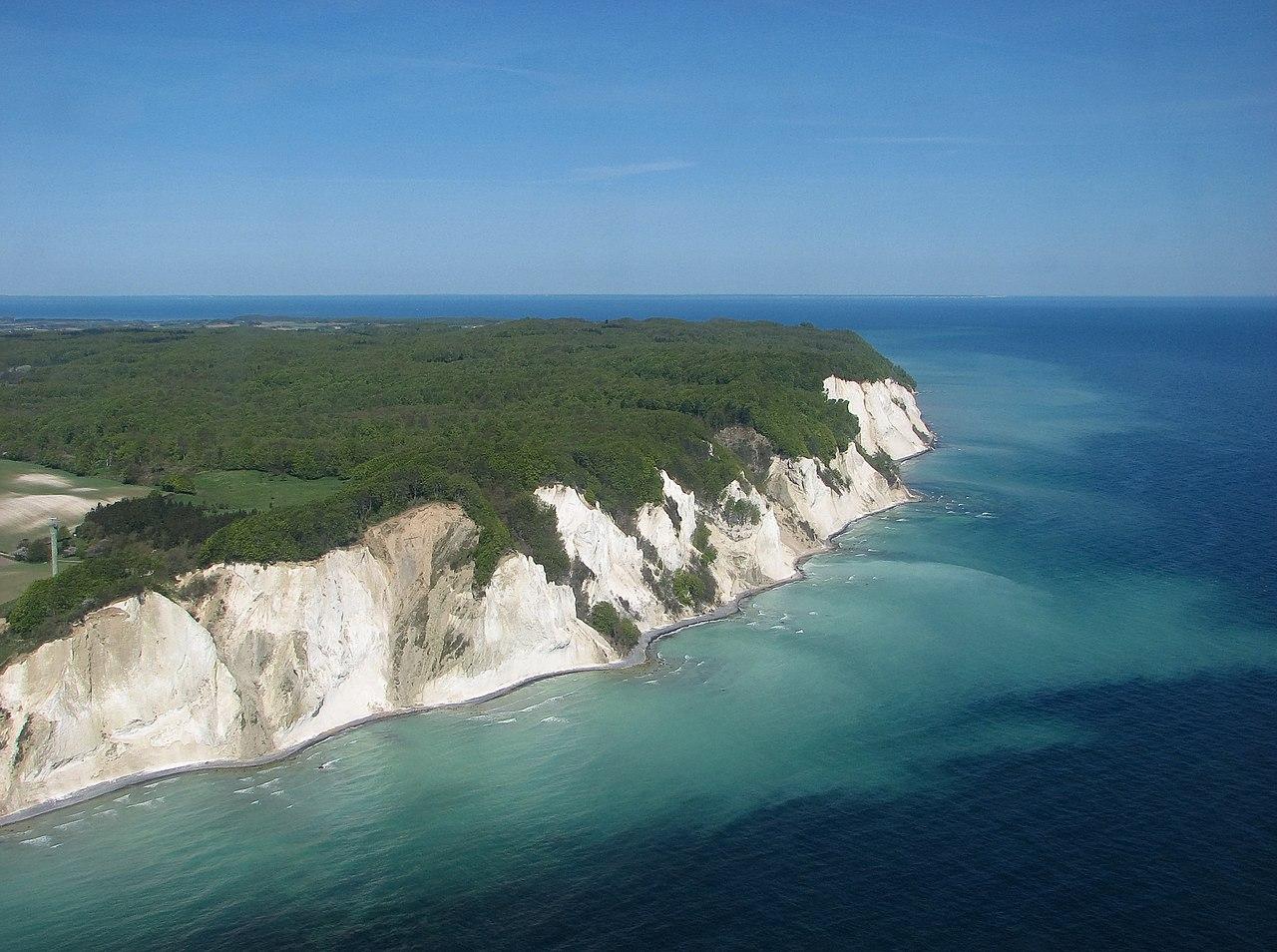
Discover South Zealand, where dramatic cliffs, historic castles, and charming coastal towns create the perfect Danish escape.
Tell me more about South Zealand
An intimate 17th‑century museum house in Nykøbing Falster, where island history, an old grocer’s shop and the eerie Museum Obscurum share the same creaking floors.

Intimate classical concerts in a modern hall beside historic Fuglsang Herregård, where carefully curated programs meet open landscapes on the Lolland–Falster coast.