Michael Wisniewski, Helsingor Travel Guide
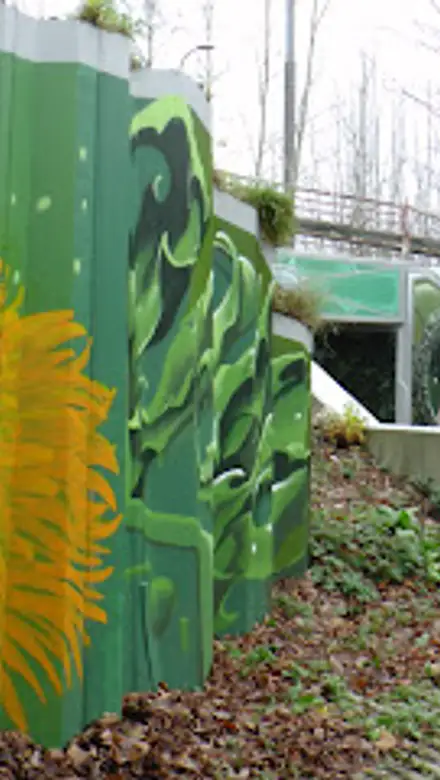
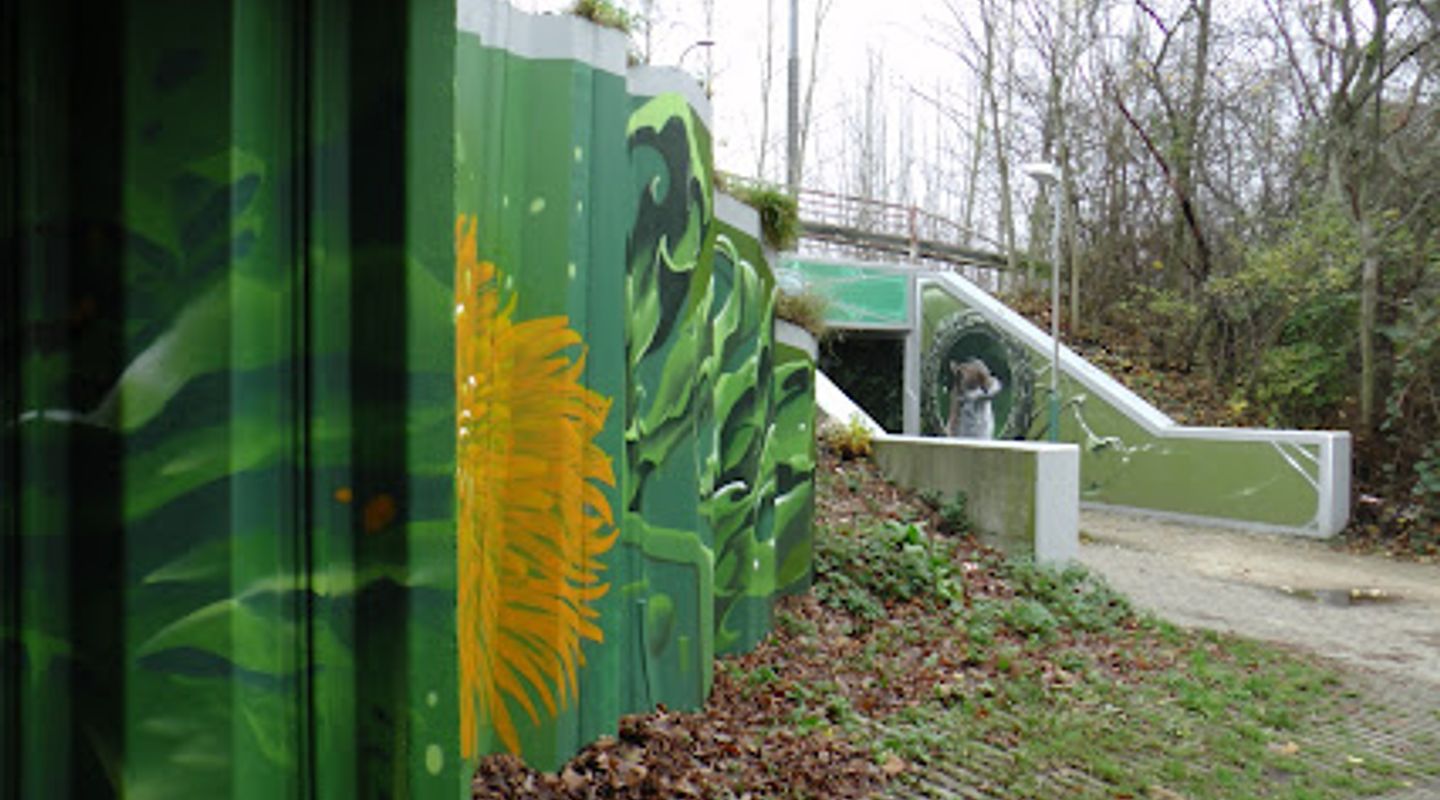
A pair of everyday tunnels in Helsingør’s Vapnagaard transformed into a flowing naturalistic mural, where dandelions and local nature turn concrete into a gentle urban sanctuary.
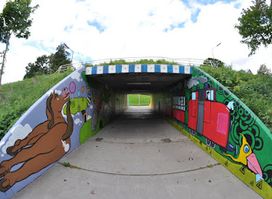
Hidden between Rytterbakken and the school by Rønnebær Allé in Helsingør’s Vapnagaard district, this immersive tunnel mural by Danish artist Michael Wisniewski transforms a pair of ordinary underpasses into a flowing world of naturalistic detail. Painted as one connected artwork for Vapnagaard’s 50th anniversary, the piece weaves plants, animals and dandelions into a vivid sanctuary, turning a daily walking route into a quiet encounter with color, symbolism and local identity.
A brief summary to Michael Wisniewski
- Rytterbakken, Helsingør, 3000, DK
- Click to display
- Duration: 0.5 to 1 hours
- Free
-
 Outdoor
- Mobile reception: 4 out of 5

Know before you go
Hi, I'm Eve. Here are a few practical things to know before exploring Michael Wisniewski.
- Walk both connected tunnels between Rytterbakken and the school by Rønnebær Allé; the mural is conceived as one continuous artwork and its symbolism is clearer when you see the full sequence.
- Visit during daylight hours for the best visibility of details and colours, as the tunnels rely partly on natural light at the entrances.
- Bring a camera or phone if you enjoy photographing street art; move slowly and look low along the walls where many of the smaller naturalistic motifs are painted.
Do you manage this location?
Take control to get all the benefits, like improved information, better appearance, and stronger visibility across AI-powered discovery. Learn more about listing your business on Evendo
Activate your presenceOther nearby places you may find interesting
The closest places of the same kind, if this one is not quite what you had in mind.
Explore Michael Wisniewski on the Map
A handpicked selection of must-see spots near Michael Wisniewski, mapped for you.
Getting There
-
Train and bus from central Copenhagen
From central Copenhagen, take a regional train toward Helsingør; the journey typically takes 45–50 minutes and runs several times per hour, with standard single tickets usually in the range of 80–110 DKK depending on discounts and time of purchase. From Helsingør Station, continue by local bus serving the Vapnagaard residential area, which generally adds around 10–15 minutes of travel time plus a short walk through the neighbourhood to reach the tunnels near Rytterbakken. Buses tend to run regularly during the day but less frequently in the evening, so check timetables in advance.
-
Local bus within Helsingør
If you are already in Helsingør town, use the local bus network to reach the Vapnagaard district; journeys from the centre commonly take 10–20 minutes depending on your starting point and route. A single-zone or short-distance ticket typically costs around 20–30 DKK when bought via ticket machines or mobile apps. From the nearest stop, expect a brief urban walk along pavements through housing blocks to the tunnels between Rytterbakken and the school by Rønnebær Allé. Bus services are generally reliable, but frequency can decrease on weekends and late evenings.
-
Bicycle from Helsingør centre
Cycling from central Helsingør to the Vapnagaard area is a practical option, with typical travel times of 10–20 minutes depending on your pace and starting point. The route follows ordinary city streets and designated cycle paths in sections, with mild gradients suitable for most riders. There is no extra cost if you use your own bicycle, while short-term bike rentals in Danish towns usually cost in the range of 100–200 DKK per day. Near Rytterbakken you can dismount and walk your bicycle through or alongside the tunnels to view the mural safely.
For the on-the-go comforts that matter to you
-
 Trash Bins
-
 Information Boards
-
 Seating Areas
Discover more about Michael Wisniewski
A quiet burst of colour beneath Rytterbakken
Tucked under a residential stretch of Helsingør, the tunnel between Rytterbakken and the school by Rønnebær Allé looks, at first glance, like any pedestrian underpass. Step inside, though, and the concrete shell gives way to a continuous mural by Danish artist Michael Wisniewski, part of the Vapnagaard tunnel art series. Here, what might have been a purely functional shortcut becomes a self-contained world of imagery that unfolds as you walk.The tunnels are low, elongated and slightly echoing, so the painted walls surround you at close range. Colours sit right at eye level, and every few steps reveal another cluster of leaves, seeds or animals. You are not just passing a mural on a distant façade; you are walking through it.Nature stories in a concrete passage
Wisniewski’s work in Vapnagaard is naturalistic and rich in small details from the surrounding environment. Birds, insects, plants and shifting skies appear in layered scenes that echo the greenery outside the tunnel entrances. The motifs reference the local landscape, but they also stretch further, suggesting connections to a wider, shared nature.Central to the mural is the dandelion, painted in different stages of its life cycle: bright yellow flowers, jagged leaves and globes of seeds caught in a breeze. As the images progress, those floating seeds thread the walls together, moving from one scene to the next, hinting at journeys, migration and quiet resilience.A dandelion as a symbol of connection
The choice of the dandelion is more than decorative. It is a plant that grows almost everywhere, on roadsides, in lawns and between paving stones, and is used here as a subtle symbol of people spread across the world yet linked by something familiar. Within the context of Vapnagaard’s diverse community, the image can be read as a gentle nod to many origins sharing the same ground.The mural was created in connection with the 50th anniversary of Vapnagaard, tying the artwork to a specific moment in the district’s story. The tunnels, often perceived as grey or utilitarian, are reimagined as places where everyday life and quiet symbolism meet, making the anniversary visible in daily routines.Walking through a painted sanctuary
As you follow the painting along the underpasses, the repetition of natural motifs creates a sense of calm. The traffic sounds above are muted; instead you notice brushstrokes, colour gradients and small, almost hidden creatures in the corners. Children on their way to school may spot new elements each day, while commuters can treat the walk as a brief visual pause.Light from each end of the tunnel marks the start and finish of the artwork, but the story is continuous, encouraging you to traverse both underpasses to understand the full piece. The walls invite close inspection, rewarding anyone who slows down long enough to trace how the dandelion seeds drift from one scene into the next.Street art woven into daily routes
This work is part of a broader programme that brings site-specific murals to Helsingør, especially around Vapnagaard’s tunnels. Rather than isolated attractions, these pieces are integrated into ordinary walking paths, used by residents, students and visitors moving between housing blocks, schools and green spaces.Here, the value lies in repetition. The mural is designed to be seen again and again, at different times of day and in shifting weather. On a bright afternoon the colours feel crisp; on a grey morning the tunnel’s interior glows more warmly than the sky outside. Over time, the artwork becomes a familiar presence, subtly shaping how the area is experienced and remembered.












Your all‑in‑one travel companion app
Explore expert travel guides, compare and book tours, experiences, hotels, and more—all from the palm of your hand. Download now for seamless trip planning wherever your wanderlust takes you.


Explore More of Helsingor
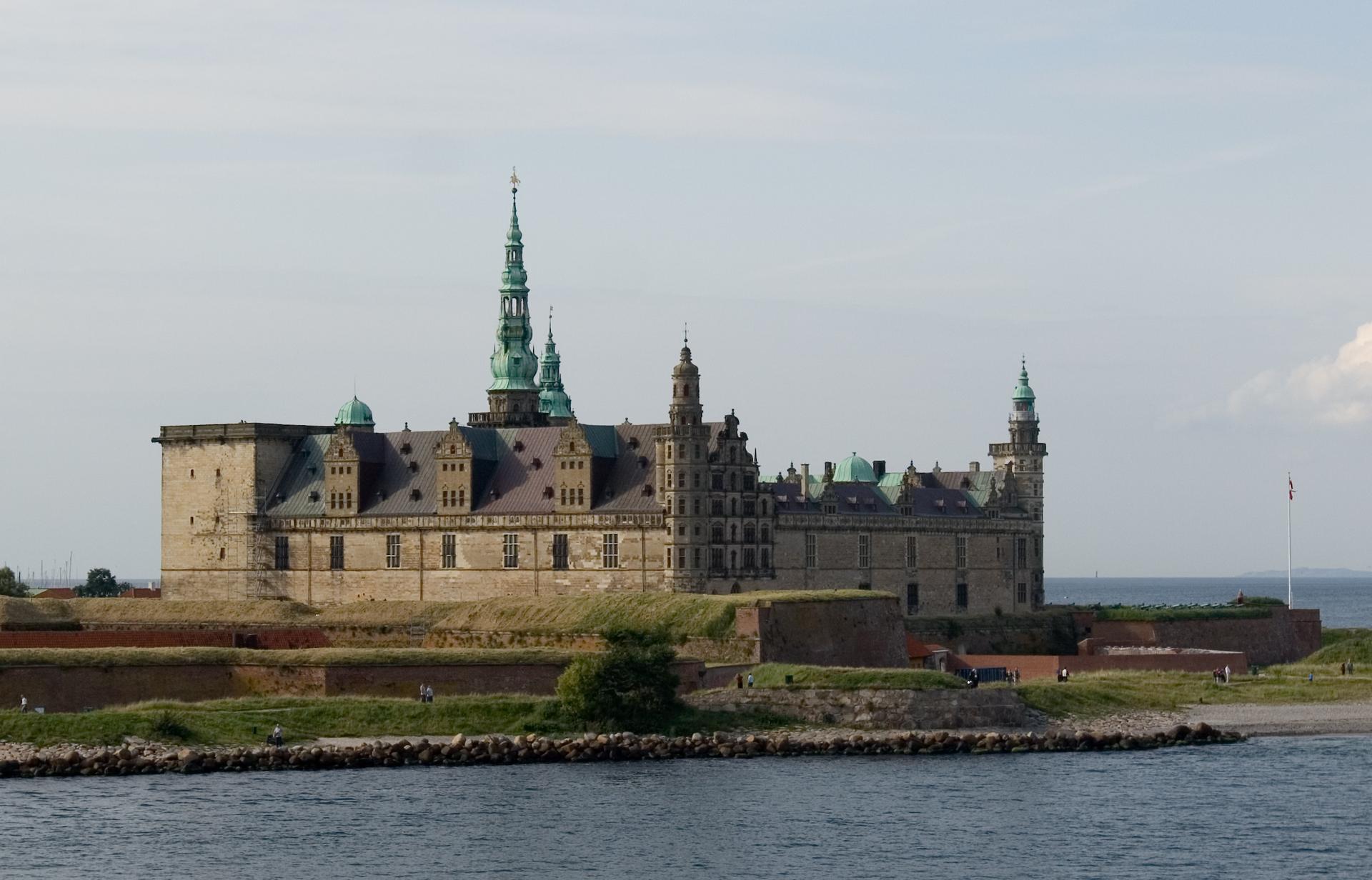
Looking beyond Michael Wisniewski? Discover Helsingor for broader travel guides, local hot-spots, and regional highlights.
Explore Helsingor
A calm everyday lake tucked inside Helsingør’s largest housing estate, where simple paths, water, and community life create an understated urban oasis.
A colourful urban underpass in Helsingør where curated street art transforms a simple tunnel into a living canvas of local stories and international styles.