Background

Kronborg Castle

Hamlet’s legendary Elsinore: a UNESCO‑listed Renaissance fortress where royal grandeur, sea power and Danish myth meet above the Øresund Strait.

4.6

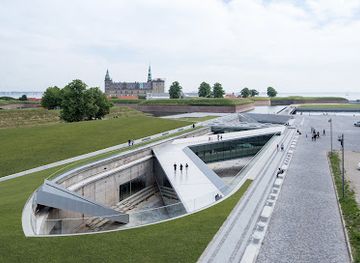
Commanding the narrow Øresund Strait from the tip of Helsingør, Kronborg Castle is a spectacular Renaissance fortress and UNESCO World Heritage Site. Once the royal stronghold that controlled tolls on all ships entering the Baltic, it later inspired Shakespeare’s Elsinore in Hamlet. Today its copper spires, vast ballroom, gloomy casemates, chapel and legends such as Holger Danske offer a rich blend of history, drama and sea views just across from Sweden.

A brief summary to Kronborg Castle

  • Kronborg, Helsingør, 3000, DK
  • +4549213078
  • Visit website
  • Duration: 2 to 4 hours
  • Mid ranged
  • Environment icon Mixed
  • Mobile reception: 4 out of 5
  • Tuesday 11 am-4 pm
  • Wednesday 11 am-4 pm
  • Thursday 11 am-4 pm
  • Friday 11 am-4 pm
  • Saturday 11 am-4 pm
  • Sunday 11 am-4 pm

Local tips

  • Allow at least 2–3 hours to explore the interiors, casemates and ramparts without feeling rushed, especially if you plan to join a guided introduction.
  • Bring an extra layer: the sea breeze on the ramparts and the cool, damp air in the casemates can feel chilly even on bright days.
  • Check the current schedule for Hamlet-themed performances or special events if you want to experience the castle as Shakespeare’s Elsinore.
  • Walk the outer fortifications for some of the best views across the Øresund to Sweden and to appreciate the scale of the defensive works.
  • Combine your visit with the nearby Maritime Museum of Denmark if you’re interested in the wider story of seafaring and Sound Dues.
widget icon

Getting There

  • Regional train from Copenhagen

    From Copenhagen’s central area, take a regional train toward Helsingør; services typically run several times an hour and the journey takes about 40–50 minutes. A standard adult single ticket generally costs around 80–90 DKK in total, and bicycles are allowed on many departures for an extra fee. From Helsingør station it is an easy, mostly level walk of around 15–20 minutes through the town and waterfront to the castle, suitable for most visitors with basic mobility.

  • Train within North Zealand

    If you are staying elsewhere in North Zealand, use the coastal railway line that connects towns such as Hellerup, Klampenborg and Humlebæk with Helsingør. Depending on your starting point, the ride usually takes 15–35 minutes, with similar ticket prices to regular Danish regional trains over the same distance. Trains typically run at least twice an hour during the day, but evening and weekend frequencies can be lower, so check the timetable in advance.

  • Car from greater Copenhagen area

    Driving from the Copenhagen region to Helsingør usually takes 40–60 minutes via the coastal route, depending on traffic. There are public parking areas around the harbour and near the castle grounds, often paid by the hour with prices that are broadly in line with Danish town centres. Spaces closest to the fortress can fill during summer weekends and school holidays, so arriving earlier in the day offers a better chance of finding convenient parking.

  • Ferry connection from Sweden

    Travellers coming from Helsingborg in Sweden can use the frequent car and passenger ferries that cross the Øresund to Helsingør in about 20 minutes of sailing time. A standard adult foot-passenger single ticket is usually in the range of 60–100 DKK equivalent, with separate fares for vehicles. The ferry terminal in Helsingør sits close to the old town and waterfront; from there it is a pleasant, mostly flat walk of roughly 15–20 minutes to the castle area.

Kronborg Castle location weather suitability

  • Weather icon Clear Skies
  • Weather icon Mild Temperatures
  • Weather icon Cold Weather
  • Weather icon Any Weather
  • Weather icon Windy Conditions

Unlock the Best of Kronborg Castle

Buy tickets

    No tickets available

Book tours with entry

    No tours available

Book tours without entry

    No tours available

Discover more about Kronborg Castle

Renaissance powerhouse above the Øresund

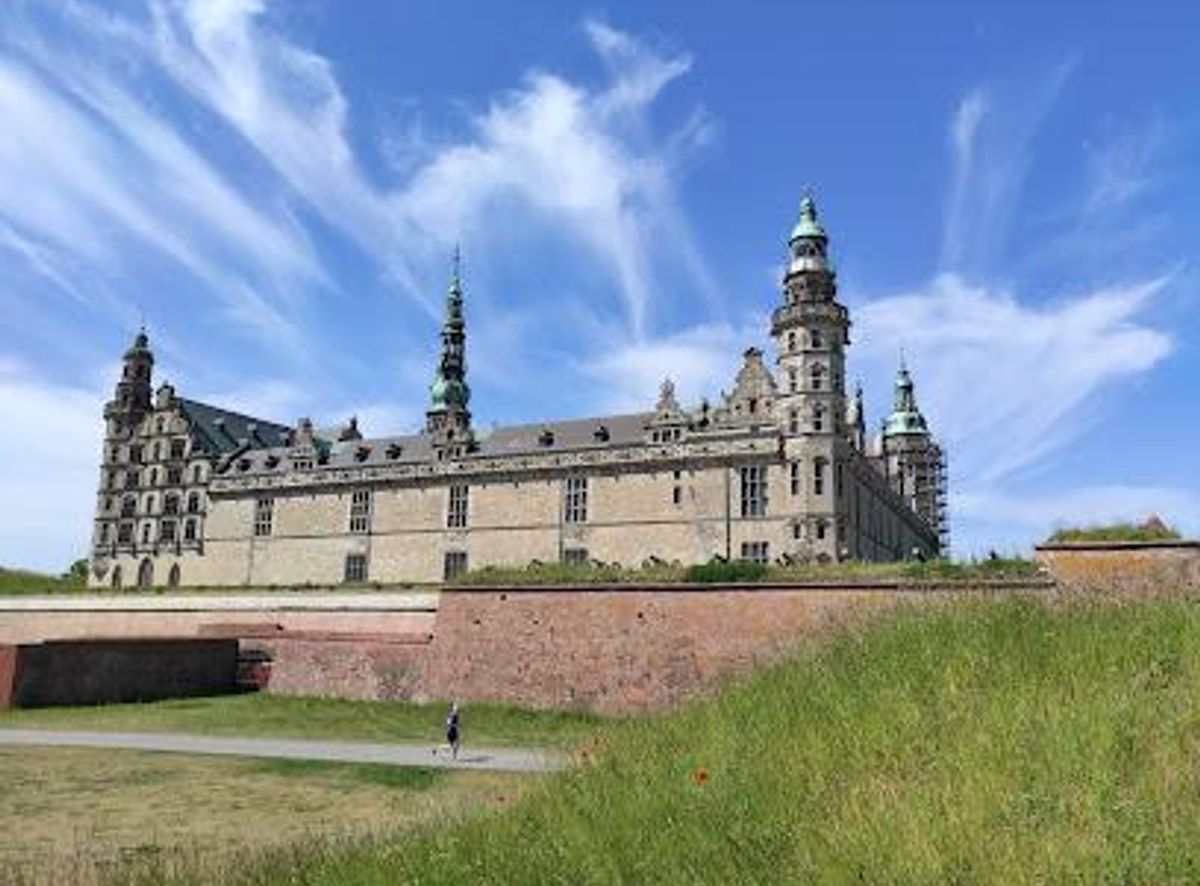
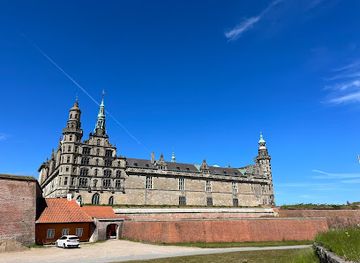
Kronborg Castle rises from a low peninsula at the narrowest point of the Øresund Strait, its green copper spires and pale sandstone walls visible for miles across the water. The site began as the fortress Krogen in the early 15th century, built by Eric of Pomerania to control traffic into the Baltic Sea. In the late 1500s, King Frederik II transformed this stronghold into an opulent Renaissance palace, clad in expensive Scanian sandstone and crowned with towers that announced royal power to every passing ship. The castle’s location was pure strategy. From here, Danish kings levied the lucrative Sound Dues on all vessels sailing to and from the Baltic for more than four centuries. Cannons along the bastions reminded captains to pay up, turning Kronborg into both a fearsome military outpost and a glittering symbol of wealth. Even today, the geometry of ramparts, moats and ravelins reads like a textbook of early modern fortification.

Fire, war and the age of soldiers

In 1629 a devastating fire gutted much of the castle, sparing only the chapel. Christian IV rebuilt the complex, adding Baroque details while preserving the Renaissance silhouette. A generation later, in 1658, Swedish forces besieged and captured Kronborg, stripping away many of its treasures as war booty. Despite this humiliation, subsequent monarchs heavily reinforced the outer works, surrounding the castle with new ramparts and the imposing Crownwork. By the late 18th century, Kronborg’s days as a royal residence were over. The complex became a garrison, its grand halls divided and adapted for army use. Soldiers drilled on the courtyards where ambassadors once arrived in gilded coaches, and the fortress identity overshadowed the palace. Only in the early 20th century did the military finally withdraw, allowing an extensive restoration that revealed Frederik II and Christian IV’s magnificent interiors beneath layers of utilitarian alterations.

Hamlet’s Elsinore and Danish legend

Kronborg is inseparable from literature and myth. William Shakespeare chose Elsinore as the setting for Hamlet, and over time audiences around the world have come to associate the brooding prince with this very castle. The combination of sea mists, cannon-lined walls and echoing corridors makes it easy to imagine intrigue unfolding in every shadowed corner. Seasonal performances often bring the tragedy back to its spiritual home, animating the courtyards and great halls. Deeper underground, another story takes hold. In the damp, vaulted casemates sits the massive figure of Holger Danske, the legendary hero said to sleep until Denmark faces mortal danger. The statue’s quiet presence, surrounded by low light and thick stone, lends the basement a timeless, slightly eerie atmosphere. Together, Hamlet and Holger make Kronborg not just a historic site but a touchstone of Danish cultural identity.

Grand interiors and everyday traces

Inside the four wings that frame the central courtyard, rooms shift from ceremonial to intimate. The vast banqueting hall is one of the largest in northern Europe, designed for feasts that impressed foreign envoys and domestic nobility alike. High ceilings, long vistas and rows of windows hint at evenings lit by hundreds of candles, accompanied by music and elaborate entertainments. Elsewhere, royal chambers and galleries reveal how kings and queens moved through their private and public worlds. Amid the grandeur, small human details abound: carved inscriptions on stone, worn thresholds and practical staircases threading between floors. The castle church, preserved from the pre‑fire period, offers woodwork and ornament that contrast with the military severity of the outer walls. Walking these spaces, it becomes clear that Kronborg is both showcase and workplace, where servants, soldiers and courtiers once navigated a strict hierarchy beneath ornate ceilings.

Sea winds, vistas and a living monument

Step outside again and the maritime setting takes over. From the bastions and outer walls, the Øresund shimmers, with Sweden clearly visible across the narrow channel. The constant breeze carries the sound of gulls and the scent of saltwater, underscoring how dependent the castle’s fortunes once were on the traffic below. On clear days, the view stitches together modern ferries, passing cargo ships and the outlines of two countries sharing a historic waterway. Since 2000 Kronborg has been recognized as a UNESCO World Heritage Site, celebrated for its role in the politics and economy of northern Europe and for its remarkably intact Renaissance military architecture. Today it forms part of Denmark’s national museum network, balancing conservation with exhibitions, performances and seasonal events. Whether approached as a literary landmark, a feat of engineering or a place to simply wander in the sea air, Kronborg remains one of Scandinavia’s most characterful castles.

Busiest months of the year

Busiest hours of the day

Popular Experiences near Kronborg Castle

Popular Hotels near Kronborg Castle

Select Currency