Saint Olaf's Church, Helsingor Travel Guide
Free Guide: Helsingør’s red-brick cathedral, where medieval trade, Nordic devotion and Renaissance art meet beneath soaring Gothic vaults and a copper-capped tower.


A brief summary of Saint Olaf's Church
Helsingør’s red-brick cathedral, where medieval trade, Nordic devotion and Renaissance art meet beneath soaring Gothic vaults and a copper-capped tower.
Saint Olaf’s Church, the red-brick cathedral of Helsingør, rises above the old town with a copper-clad tower and richly decorated Gothic-Renaissance interior. Dating back to around 1200 and completed in 1559, it reflects the city’s boom years from Øresund tolls and centuries of maritime trade. Step inside for soaring vaults, Renaissance altarpiece and pulpit, historic tombs, and a calm, contemplative atmosphere just a short stroll from Kronborg Castle.
On-site amenities
 Restrooms
 Seating areas
 Sheltered areas
 Trash bins
 Information boards
Opening hours
- MonClosed
- Tue10 am–2 pm
- Wed10 am–2 pm
- Thu10 am–2 pm
- Fri10 am–2 pm
- Sat10 am–2 pm
- Sun9:30 am–12 pm
Opening hours as listed on the venue’s Google Business Profile. Hours can change for services and special events, so check with the venue before you go.
- Address
- Sct Anna Gade 12, 3000 Helsingør
- Phone
- Website
Getting there
Train and walk from Copenhagen
Local bus within Helsingør
Car from the wider Zealand area
Ferry and foot from Helsingborg, Sweden
Discover more about Saint Olaf's Church
A medieval church shaped by a seafaring town
Saint Olaf’s Church, also known as Helsingør Cathedral, anchors the historic core of Helsingør with more than eight centuries of history behind its red-brick walls. First mentioned in 1295 and probably founded around 1200, the original church was a small Romanesque building serving a modest fishing settlement. As Helsingør flourished in the 15th and 16th centuries through tolls on ships sailing the Øresund, the church expanded in both scale and ambition, mirroring the town’s growing importance.Dedicated to Saint Olaf, the Norwegian king who died in 1030 and became a Nordic patron saint, the church long stood at the intersection of royal power, commerce, and faith. After the Reformation, it remained a focal point of religious life on the Sound, later becoming cathedral of the newly created Diocese of Helsingør in 1961. Each phase of the building’s growth tells a chapter of this story, from medieval extensions to modern restorations.
Red-brick basilica and striking tower
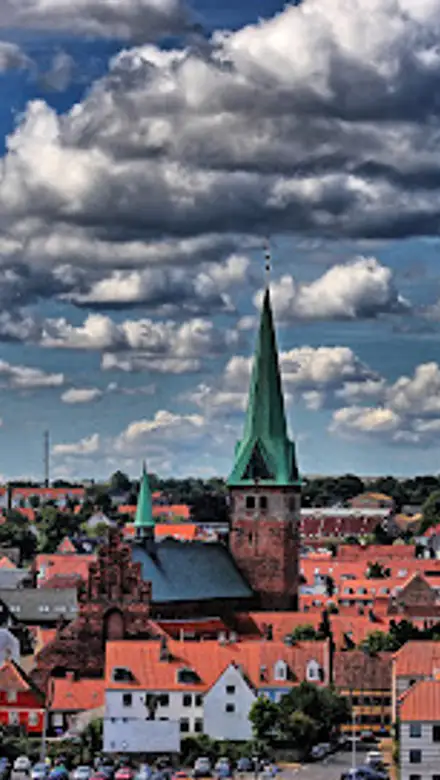
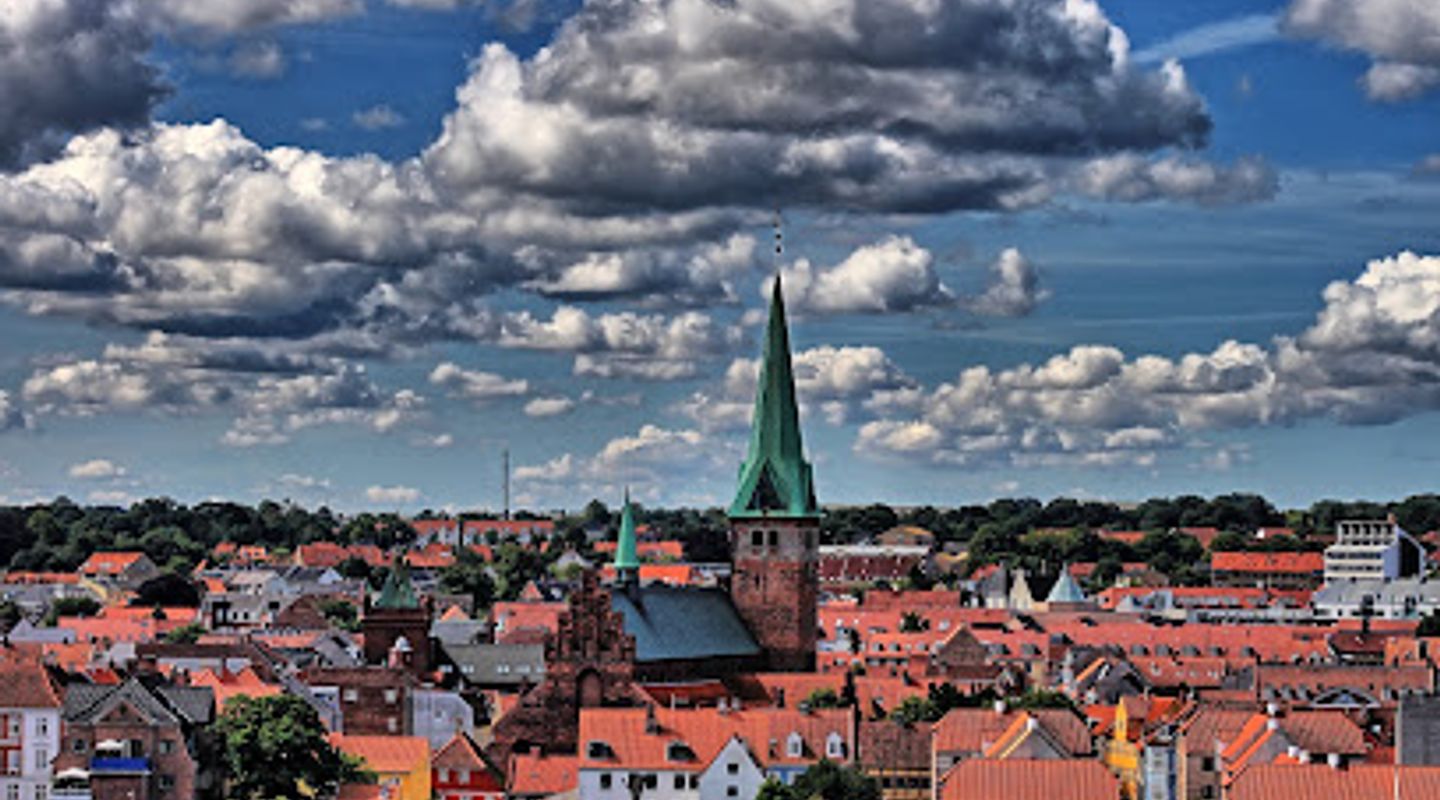
From the outside, Saint Olaf’s is a textbook example of Baltic brick Gothic blended with later Renaissance touches. The church is built as a three-aisled basilica in large red medieval bricks, with the central nave raised above narrower side aisles under separate roofs. Light spills into the interior through high clerestory windows, while the façades are punctuated by beautifully stepped gables that give the building a distinctive silhouette over the old town rooftops.At the western end, a massive tower dominates the skyline. Raised in the 1500s and later heightened, it was once crowned by a particularly slender spire romantically nicknamed the “Virgin of Helsingør.” Although that spire was lost to a storm in the 18th century, the present copper-clad spire, added in the late 19th century, restores the church’s elegant vertical emphasis. Details such as the copper roof, gutters and carefully articulated brickwork reward a slow circuit around the exterior.
Gothic vaults, Renaissance art and family chapels
Stepping inside, you are immediately enveloped by ribbed Gothic vaults and a cool, filtered light that softens the red brick and whitewashed surfaces. The basilica plan leads the eye down the central nave to a richly carved Renaissance altarpiece, originally gifted from a nearby monastery. Its painted panels and sculpted figures compress biblical narratives into a single ornate focal point, contrasting with the relative simplicity of the surrounding masonry.The pulpit, also from the Renaissance period, is another highlight, adorned with intricate woodcarving and symbolic figures that once served as visual sermons for seafaring congregations. Along the side aisles and in the Trinity Chapel, you will find elaborate epitaphs and tomb monuments to local dignitaries, merchants, and customs officials. These memorials, some from the late 1500s and early 1600s, read like a stone archive of Helsingør’s trading elite, connecting individual stories to the wider history of the Øresund.
Music, organ heritage and living worship
Saint Olaf’s is not only a historic monument but also a living church. Its acoustic qualities, shaped by high vaults and brick surfaces, make it a favored venue for choral and organ concerts. The church has deep roots in organ music; historic organists working here contributed to the flourishing North German and Danish organ tradition that later influenced composers across Europe. Today, organ recitals and seasonal performances continue that legacy, filling the nave with sound.Regular Lutheran services, baptisms, weddings, and special liturgical celebrations bring an everyday rhythm to the space. Visitors will often find quiet corners for reflection between events, with candles flickering beneath centuries-old arches. Information about upcoming concerts and services is usually posted near the entrance, making it easy for travelers to time a visit with a musical experience.
A quiet counterpoint to Kronborg and the harbor
Situated just a short walk from the bustling harbor and the famous castle associated with Hamlet, Saint Olaf’s offers a more contemplative counterpart to Helsingør’s grand showpieces. From the churchyard and nearby streets, views open toward traditional townhouses and, in places, down to the waterfront where ships still move through the same waters that once financed its expansion.The modest scale of the surrounding lanes enhances the sense of discovery as the tower suddenly appears above tiled roofs. Inside, the interplay of maritime history, religious art, and everyday parish life creates a layered experience: part architectural study, part historical lesson, part moment of calm. Whether you stop briefly to admire the interiors or linger to trace the details of memorials and chapels, Saint Olaf’s Church provides one of the most atmospheric windows into Helsingør’s long relationship with the sea.
Evendo Review Centre
 Google
Guest reviews
Best time to go
Quietest: Jan, Feb & Nov · before 8am or at 8pm
Busy times are Evendo estimates for a typical year, to help you plan. Actual crowds vary with events, school holidays and the weather.
Explore Saint Olaf's Church on the map
A handpicked selection of must-see spots near Saint Olaf's Church, mapped for you.
Get your free copy of our complete guide to Saint Olaf's Church, delivered straight to you.
Everything on this page, from opening hours and how to get there to Eve’s tips and the best time to go, in one PDF you can read offline, print or share.
Already have an account? Sign in
Your Saint Olaf's Church guide is ready.
We'll send it to · Not you? Sign out

Getting your guide ready…
We are putting together a fresh copy of the Saint Olaf's Church guide. This can take up to a minute.
This can take a few moments. If your browser asks, choose Allow so the download can start. You'll find the guide in your Downloads folder.
Nothing happened? Download it again
Sorry, the guide is taking longer than usual. Please try again in a minute, or get it by email instead.
Unlock the best of Saint Olaf's Church
Skip-the-line tickets, guided tours with entry, and walking tours of the area, booked in a few clicks.


Other nearby places you may find interesting
The closest places of the same kind, if this one is not quite what you had in mind.
-
-
-
-
-


Swipe for more places
More to explore near Saint Olaf's Church

 Best experiences near Saint Olaf's Church
 Best hotels near Saint Olaf's Church
 Best landmarks near Saint Olaf's Church
 Best attractions near Saint Olaf's Church
 Best shops near Saint Olaf's Church
 Best restaurants near Saint Olaf's Church
 Best bars near Saint Olaf's Church
Do you manage this location?
Take control to get all the benefits, like improved information, better appearance, and stronger visibility across AI-powered discovery.
Explore more

Explore more of Helsingor
Discover Helsingør, Denmark's historic coastal city, home to Kronborg Castle and a vibrant cultural scene, offering a blend of history, scenic beauty, and local charm.
Explore Helsingor
Explore more of Denmark
Discover Denmark: A perfect blend of history, modern design, and the cozy concept of hygge. Explore vibrant cities, serene landscapes, and world-class cuisine.
Explore Denmark