The Uncovered Bridge, Central Jutland Travel Guide
A hidden railway bridge buried for 85 years, spectacularly restored and now one of Denmark's most beloved landmarks.
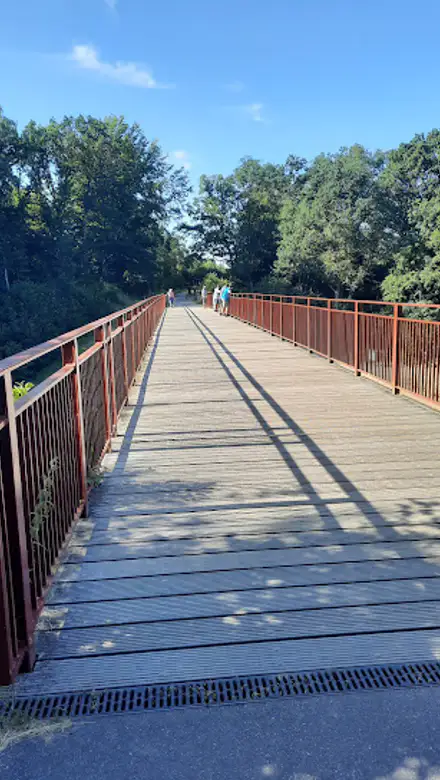
A striking red steel lattice bridge spanning the Gudenå River near Brædstrup, Den Genfundne Bro is a remarkable piece of Danish industrial heritage. Built in 1899 as part of a narrow-gauge railway, the 13.4-meter-high bridge was buried beneath a dam for 85 years before its dramatic excavation and restoration in 2014. Today, it stands as one of Denmark's most beloved excursion destinations, offering visitors a unique blend of history, engineering, and natural beauty in a picturesque riverside setting.
A brief summary to The Uncovered Bridge
- Vestbirkvej 2, Braedstrup, 8740, DK
- Duration: 1 to 3 hours
- Free
-
 Outdoor
- Mobile reception: 4 out of 5

Know before you go
Hi, I'm Eve. Here are a few practical things to know before exploring The Uncovered Bridge.
- Visit during clear, sunny weather to fully appreciate the bridge's striking red steel lattice structure and enjoy panoramic views over the Gudenå River and surrounding forest landscape.
- Arrive early on weekends and during peak summer months to secure parking, as the 85-space car park can fill quickly given the site's popularity as a regional attraction.
- Combine your bridge visit with a picnic using the on-site tables and benches, or extend your trip by walking the Horsens-Silkeborg Nature Trail to nearby Vestbirk Lakes or Brædstrup town.
- Bring a camera or smartphone—the bridge's distinctive architecture and riverside setting create excellent photography opportunities, particularly during golden hour or when framed against seasonal foliage.
- Read the on-site information boards to learn the full story of the bridge's construction in 1899, its 85-year burial, and its dramatic 2014 restoration—context that deepens appreciation of the site.
Do you manage this location?
Take control to get all the benefits, like improved information, better appearance, and stronger visibility across AI-powered discovery. Learn more about listing your business on Evendo
Activate your presenceOther nearby places you may find interesting
The closest places of the same kind, if this one is not quite what you had in mind.
Explore The Uncovered Bridge on the Map
A handpicked selection of must-see spots near The Uncovered Bridge, mapped for you.
Getting There
-
Car from Horsens
Drive north from Horsens city center on Route 16 toward Brædstrup, approximately 20 kilometers. Follow signs toward Vestbirk and Brædstrup. The parking area is located at Vestbirkvej 2A, Brædstrup. Journey time is approximately 25–30 minutes. Free parking is available with 85 spaces, including accessible parking. From the car park, follow the well-maintained asphalt path approximately 300 meters to reach the bridge.
-
Car from Brædstrup
From Brædstrup town center, drive south on local roads toward Vestbirk village. The parking area at Vestbirkvej 2A is clearly signposted. Journey time is approximately 10–15 minutes. Note: GPS users should enter 'Brædstrup' as the destination to avoid being directed to nearby Østbirk. Free parking with accessible spaces is available.
-
Cycling from Brædstrup
The bridge is accessible via the Horsens-Silkeborg Nature Trail, which passes through the area. From Brædstrup town center, follow cycling routes toward Vestbirk. The journey is approximately 7 kilometers and takes 25–35 minutes depending on terrain and fitness level. The route passes through forest and countryside with moderate difficulty. Bike parking facilities are available at the site.
-
Walking from Brædstrup
The bridge can be reached on foot via the Horsens-Silkeborg Nature Trail, approximately 7 kilometers from Brædstrup town center. Walking time is approximately 90–120 minutes depending on pace and terrain. The route follows forest paths and country roads with some elevation changes. This option is suitable for experienced walkers with good fitness levels.
For the on-the-go comforts that matter to you
-
 Restrooms
-
 Picnic Areas
-
 Seating Areas
-
 Trash Bins
-
 Information Boards
-
 Parking
Discover more about The Uncovered Bridge
A Bridge Rediscovered After Nearly a Century
Den Genfundne Bro carries one of Denmark's most compelling stories of industrial archaeology and restoration. Built in 1899 by the construction firm Hoffman, Hansen & Co., this elegant red steel lattice bridge was engineered to carry a narrow-gauge railway across the Gudenå River as part of the private railway connection between Horsens and Bryrup. At 13.4 meters high and 50 meters long, it was the tallest bridge of its kind in the entire Nordic region when completed. The inauguration on April 22, 1899, marked the beginning of what would become a celebrated transportation route, with passengers paying 1.65 Danish kroner for the journey.By 1929, however, the bridge's fate changed dramatically. The standard railway gauge had been widened across Denmark, rendering the narrow-gauge bridge obsolete and too expensive to modify. Rather than demolish it, engineers made an extraordinary decision: they buried the bridge entirely beneath a dam structure, covering it with sand and earth to create a foundation for the wider tracks above. For the next 85 years, the bridge lay hidden from view, its existence fading from public memory as nature and time obscured its presence.The Dramatic Excavation and Restoration
In 2014, the Municipality of Horsens initiated an ambitious restoration project that would transform Den Genfundne Bro from a forgotten relic into a celebrated landmark. The excavation began on April 7, 2014, and immediately captured public imagination—media coverage and television crews documented the process as the first steel grid saw daylight after nearly nine decades of concealment. The restoration team was astonished to discover the bridge in remarkably fine condition, a testament to the quality of its original construction and the protective environment created by the dam.The restoration process was meticulous and comprehensive. The horizontal upper structure was carefully uncovered, then sandblasted at 3000 bar pressure to remove accumulated deposits. During this delicate work, the entire bridge element was wrapped to prevent old lead-based paint from contaminating the creek below. The structure was then ground, primed, and repainted with careful attention to every detail. In mid-August 2014, the supporting bridge towers underwent the same treatment. Finally, robust Azobe wood planking was installed to create a safe pedestrian walkway, and modern safety railings were added. The creek itself was stabilized with large rocks and spawning sites for trout. The official inauguration on December 13, 2014, drew crowds once again, celebrating the bridge's return to public life.Engineering Marvel and Industrial Heritage
What makes Den Genfundne Bro extraordinary is not merely its age or its hidden history, but the engineering sophistication it represents. The bridge embodies late 19th-century industrial design at its finest—a delicate balance of structural integrity, aesthetic refinement, and functional purpose. Its red steel lattice construction was state-of-the-art for its time, and the restoration has preserved this character while making it safe and accessible for modern visitors. Standing on the bridge today, you can appreciate both the craftsmanship of 1899 and the dedication of the 2014 restoration team.The surrounding landscape tells an equally important story. The dam that buried the bridge was itself an engineering feat, constructed to harness the power of the Gudenå River. Water was diverted through two pipes to power two Francis turbines that drove the machinery of Bredvad Mill, demonstrating how the river's energy was central to the region's industrial economy. This layered history—railway, hydropower, agriculture—makes the site a window into Denmark's industrial past.A Perfect Excursion Destination
Today, Den Genfundne Bro serves as an ideal base for exploring the natural and cultural richness of the Bakkelandet area. The site features excellent facilities including a large car park with 85 spaces (including accessible parking), picnic tables, benches, and well-maintained paths. A smooth asphalt path from the parking area ensures wheelchair access to the bridge and surrounding grounds. The bridge itself, with its sturdy railings and wooden walkway, offers safe passage for visitors of all ages to experience the view over the Gudenå—Denmark's only river that flows naturally without human intervention.The location has become one of Denmark's most popular outdoor attractions, drawing visitors year-round. The surrounding forest and riverside setting provide a tranquil backdrop for contemplation and photography. On clear days, the red bridge against the green landscape creates a striking visual composition that has made it increasingly popular with photographers and social media enthusiasts.Gateway to Wider Exploration
While the bridge itself is the primary attraction, its location makes it an excellent starting point for longer explorations. The site forms part of the Horsens-Silkeborg Nature Trail, offering opportunities for extended hiking and cycling. Following the trail southeast for 1.3 kilometers through the forest leads to Vestbirk Lakes, where visitors can enjoy views of Naldal Lake and Vestbirk Lake. Continuing further reveals the newly established Natur Østbirk. Heading northwest instead, a 7-kilometer walk through varied terrain leads to the charming town of Brædstrup, where cafes and restaurants offer refreshment. For those seeking structured routes, two recorded hiking paths of 5 and 11 kilometers are available, complete with maps and descriptions of experiences along the way. Horseback riders can use a specially constructed ford to cross the river.












Your all‑in‑one travel companion app
Explore expert travel guides, compare and book tours, experiences, hotels, and more—all from the palm of your hand. Download now for seamless trip planning wherever your wanderlust takes you.


Explore More of Central Jutland
Looking beyond The Uncovered Bridge? Discover Central Jutland for broader travel guides, local hot-spots, and regional highlights.
Explore Central Jutland