

Old Cemetery, Kolding Travel Guide
Free Guide: Historic 1806 cemetery turned tranquil green refuge, where copper beeches, cast‑iron fences and war memorials quietly tell two centuries of Kolding’s story.


A brief summary of Old Cemetery
Historic 1806 cemetery turned tranquil green refuge, where copper beeches, cast‑iron fences and war memorials quietly tell two centuries of Kolding’s story.
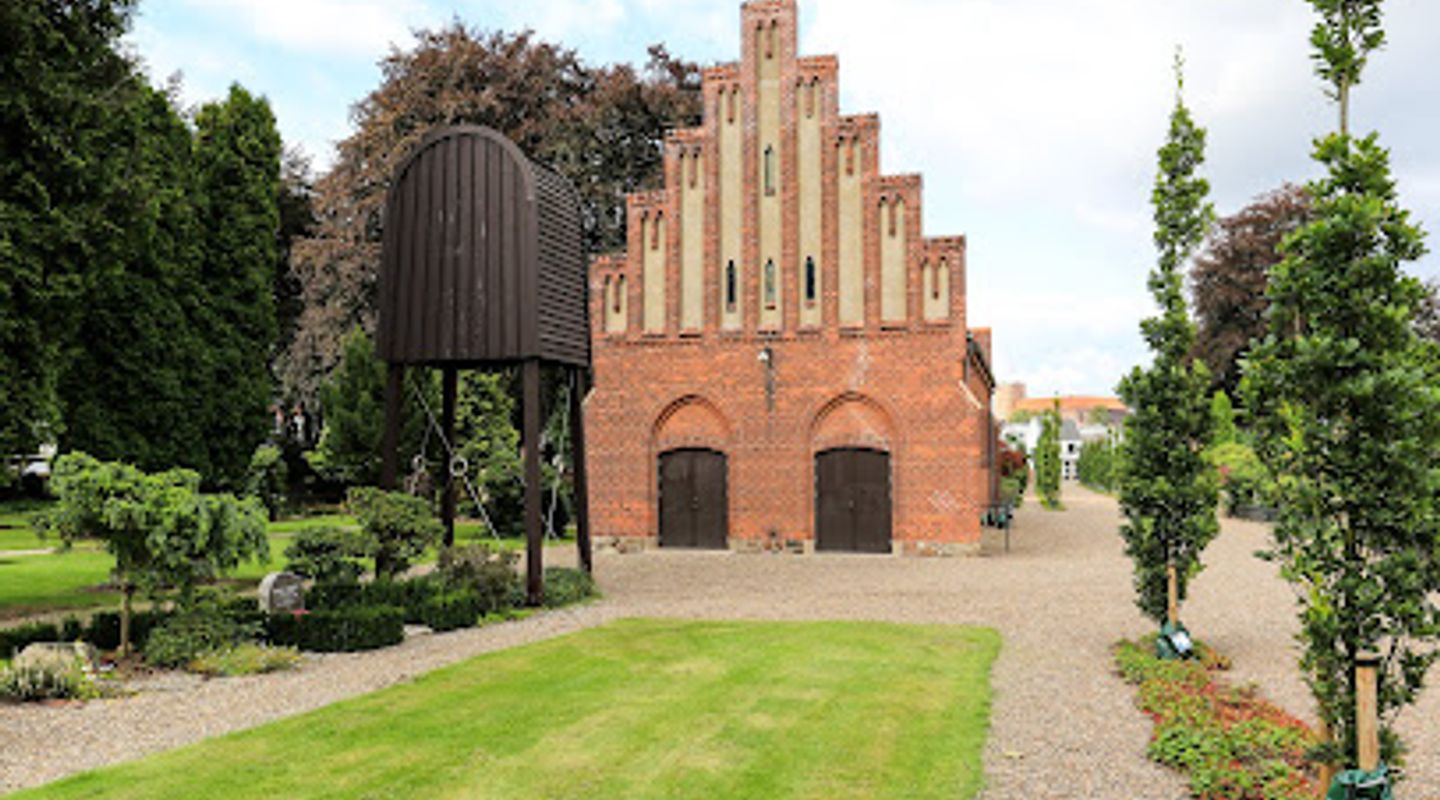
Tucked between residential streets close to Kolding’s center, the Old Cemetery is a tranquil green refuge and one of Denmark’s most evocative burial grounds. Laid out in 1806 as an extension to Sankt Nicolai Church, it blends avenues of ancient trees, distinctive cast-iron grave fences and war memorials to soldiers of several nations. Part peaceful park, part open-air history book, it offers quiet paths, layered stories and space for reflection away from the city’s bustle.
On-site amenities
 Restrooms
 Trash bins
 Information boards
 Seating areas
- Address
- Clemensgade 19B, 6000 Kolding
- Phone
- Website
Getting there
Local bus
Walking from Kolding center
Taxi within Kolding
Discover more about Old Cemetery
A quiet refuge in the heart of Kolding
The Old Cemetery in Kolding, known locally as Den Gamle Kirkegård, feels almost like a secret garden folded into the city grid. Enclosed by streets yet buffered by tall hedges and mature trees, it forms a green pocket where traffic noise drops to a murmur. Broad avenues intersect with narrow paths, inviting you to slow your pace, listen to birdsong and read the names and dates that have shaped more than two centuries of local history.Although it remains an active burial ground, the atmosphere is gentle rather than sombre. Moss-softened stones, flowering shrubs and carefully clipped lawns lend the place a park-like character. Benches tucked beneath spreading crowns of copper beeches turn the cemetery into a natural pause point for residents and visitors seeking shade, solitude or a contemplative stroll.
Two hundred years of Kolding stories in stone
Established in 1806 as an overflow cemetery for Sankt Nicolai Church, the Old Cemetery charts Kolding’s transformation from a small market town to a modern city. Many of the earliest graves are simple slabs, their lettering fading, but others are grand family plots marked by obelisks, columns and carved symbols of faith and remembrance. Here lie city officials and merchants, craftsmen and factory owners, clergymen and teachers, as well as local characters whose nicknames live on in stone.Among the most poignant markers is the grave of 17‑year‑old Barbara, the cemetery’s first burial, resting close to the priest who consecrated the ground. Nearby, information boards at selected graves open windows onto individual lives, connecting dates and titles to anecdotes about everyday work, social ambitions and personal tragedies. As you wander, you trace not just genealogies but the social fabric of Kolding over generations.
War memorials and international resting places
One of the cemetery’s most striking features is the war memorial mound, where history steps beyond the local. Here, Spanish, French, German and Danish soldiers are buried side by side, their graves recalling conflicts that once shook this borderland region. Neat rows of crosses and stones mark the resting places of those who never returned home, turning this quiet corner into a small, international field of memory.Flag days and commemorative ceremonies periodically animate this section, but even in silence the symbolism is powerful. It underlines Kolding’s role in the shifting story of the Danish–German frontier and the Slesvig wars, making the cemetery a compact lesson in European history as well as a place of mourning. The juxtaposition of military discipline and the softness of grass and trees adds to the emotional weight.
Cast‑iron craftsmanship and majestic trees
Den Gamle Kirkegård is celebrated for its remarkable collection of cast‑iron grave fences. These ornate railings, enclosing family plots, range from austere geometric designs to exuberant scrollwork and floral motifs. Over two hundred individual fences have been catalogued, representing dozens of patterns and revealing changing tastes and technologies across the nineteenth century. Rust, lichen and peeling paint lend them a textured patina that photographers and design enthusiasts will appreciate.Equally distinctive are the many copper beeches planted during the era of national revival in the nineteenth century. Their reddish foliage filters the light, casting a warm, almost theatrical glow over certain avenues in spring and summer. Close inspection reveals graft lines on the trunks, a tangible reminder of how demand for these fashionable trees outstripped natural supply and led to widespread grafting. In autumn, fallen leaves create rust-coloured carpets, transforming the cemetery’s mood once again.
A contemplative walk rather than a typical attraction
Visiting the Old Cemetery is less about ticking off sights and more about allowing yourself time to drift between past and present. Paths are generally level and easy to follow, though surfaces can be uneven, especially near the oldest plots. It is a place to walk slowly, read inscriptions, notice tiny details on ironwork and stone, and perhaps sit a while beneath the branches of a beech or lime tree.Because the cemetery still serves its original purpose, respect and discretion are essential. Voices carry, and ceremonies may be underway, so it is wise to keep a low profile near fresh graves. Photography is possible, especially of landscapes, trees and historic monuments, but sensitivity to mourners should guide your lens. Treated with care, Den Gamle Kirkegård rewards you with a layered, atmospheric glimpse into Kolding’s soul.
Evendo Review Centre
 Google
Guest reviews
Best time to go
Quietest: Jan, Feb & Mar · before 7am or from 9pm
Busy times are Evendo estimates for a typical year, to help you plan. Actual crowds vary with events, school holidays and the weather.
Explore Old Cemetery on the map
A handpicked selection of must-see spots near Old Cemetery, mapped for you.
Get your free copy of our complete guide to Old Cemetery, delivered straight to you.
Everything on this page, from opening hours and how to get there to Eve’s tips and the best time to go, in one PDF you can read offline, print or share.
Already have an account? Sign in
Your Old Cemetery guide is ready.
We'll send it to · Not you? Sign out

Getting your guide ready…
We are putting together a fresh copy of the Old Cemetery guide. This can take up to a minute.
This can take a few moments. If your browser asks, choose Allow so the download can start. You'll find the guide in your Downloads folder.
Nothing happened? Download it again
Sorry, the guide is taking longer than usual. Please try again in a minute, or get it by email instead.
Other nearby places you may find interesting
The closest places of the same kind, if this one is not quite what you had in mind.
-
Koldinghus A 750‑year‑old royal fortress reborn as an award‑winning museum, where raw brick ruins, modern timber and sweeping tower views tell the story of Denmark in one castle.
-
Geografisk Have Botanical world map, miniature historic Kolding and gentle animal encounters combine in this spacious garden-park, Kolding’s signature green escape for all ages.
-
Trapholt Museum for Modern Art and Design Architect‑designed hillside museum above Kolding Fjord, where modern art, experimental craft and iconic Danish design meet sculpture park strolls and a unique Arne Jacobsen house.
-
Fonden Harteværket A historic hydropower plant turned playful experience centre, where Kolding’s industrial past meets hands-on water experiments and tranquil river landscapes.
-
Stable Yard Historic whitewashed stables turned city museum, where royal horses, design heritage and Denmark’s only preserved Gestapo cell share one atmospheric courtyard.
Swipe for more places
More to explore near Old Cemetery

 Best experiences near Old Cemetery
 Best hotels near Old Cemetery
 Best landmarks near Old Cemetery
 Best attractions near Old Cemetery
 Best shops near Old Cemetery
 Best restaurants near Old Cemetery
 Best bars near Old Cemetery
Do you manage this location?
Take control to get all the benefits, like improved information, better appearance, and stronger visibility across AI-powered discovery.
Explore more

Explore more of Kolding
Discover Kolding, Denmark's blend of historical charm, natural beauty, and vibrant art scene, making it a must-visit destination for travelers seeking a unique experience.
Explore Kolding
Explore more of Denmark
Discover Denmark: A perfect blend of history, modern design, and the cozy concept of hygge. Explore vibrant cities, serene landscapes, and world-class cuisine.
Explore Denmark
