Hanklit 60 m høj Travel Guide
Free Guide: Walk at the foot of a 60‑metre moler cliff, trace 55 million years of volcanic ash and fossils, and gaze across the wide Limfjord from windswept Hanklit on Mors.


A brief summary of Hanklit 60 m høj
Walk at the foot of a 60‑metre moler cliff, trace 55 million years of volcanic ash and fossils, and gaze across the wide Limfjord from windswept Hanklit on Mors.
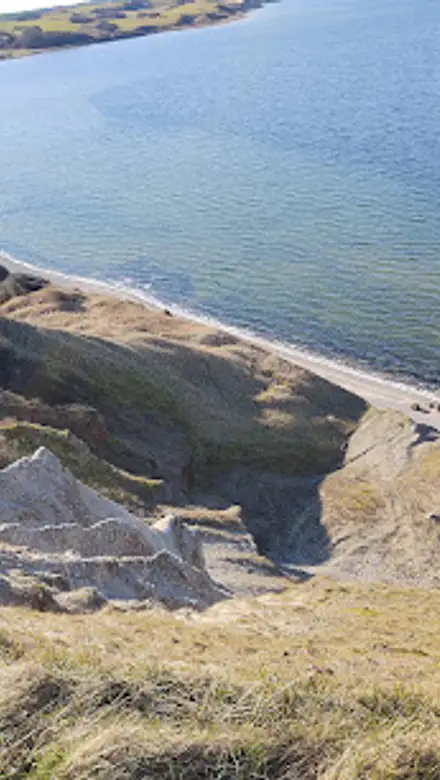
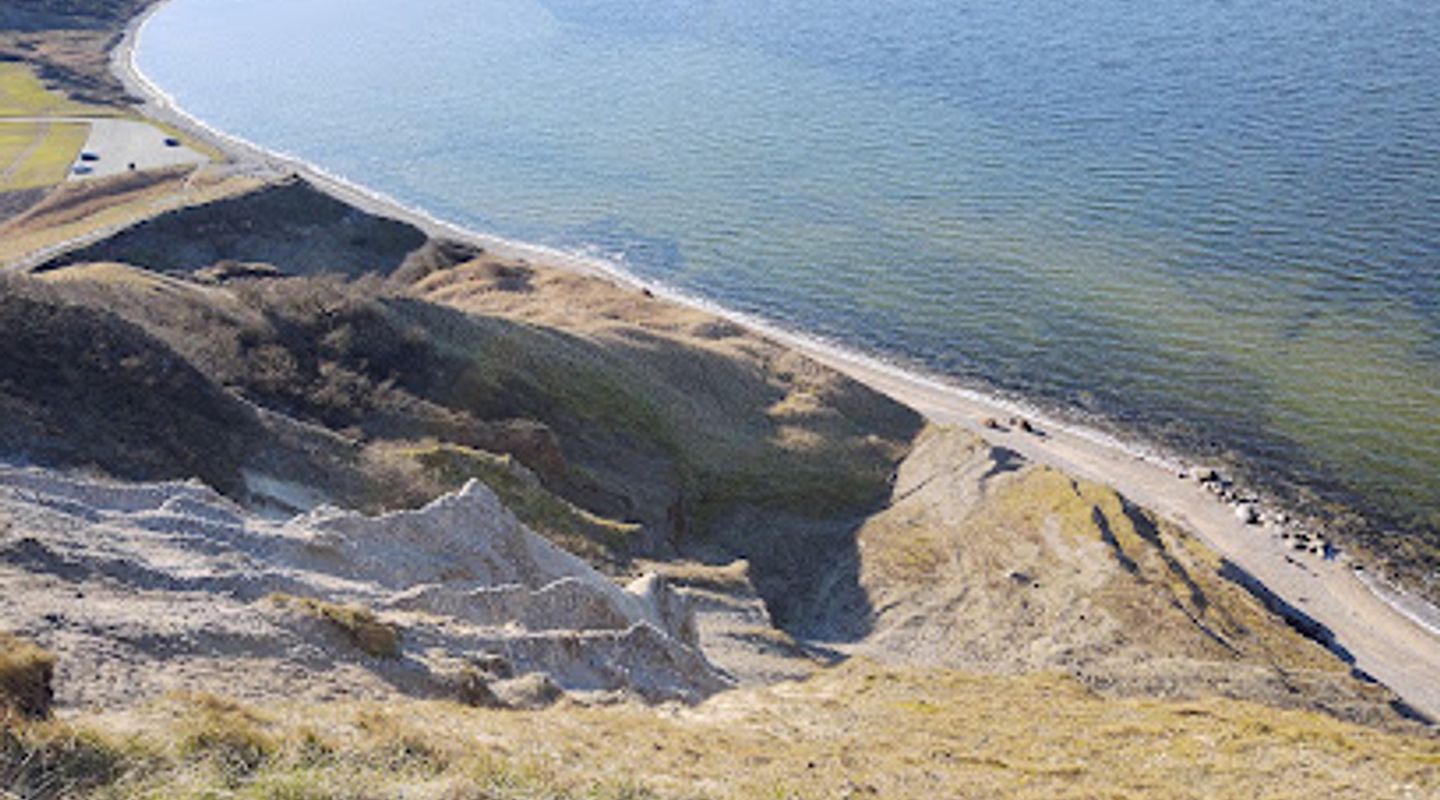
Hanklit is a dramatic 60–61 m high moler cliff on the north coast of Mors, rising steeply above Thisted Bredning in the Limfjord. Its pale, finely layered diatomite is sliced by dark bands of volcanic ash more than 55 million years old, making the cliff a textbook display of Earth’s deep past. Protected since the 1930s, Hanklit is part of a wider conservation area shared with Salgjerhøj and is a candidate for UNESCO World Heritage status. Visitors come for wide Limfjord views, fossil hunting along the beach, and rewarding coastal hikes in a landscape of big sky and quiet drama.
On-site amenities
 Restrooms
 Seating areas
 Trash bins
 Information boards
Opening hours
- Every dayOpen 24 hours
Opening hours as listed on the venue’s Google Business Profile. Hours can change for services and special events, so check with the venue before you go.
- Address
- Hanklitvej 23, 7900 Nykøbing Mors
- Website
Getting there
Car from Nykøbing Mors
Bicycle from Nykøbing Mors
Regional bus plus short walk
Discover more about Hanklit 60 m høj
A towering wall of time above the Limfjord
Hanklit rises like a pale stone curtain on the north side of Mors, a 60–61 m high cliff dropping almost sheer to the waters of Thisted Bredning. At its base, a narrow strand curves around the foot of the slope; above, the sky feels unexpectedly vast for such a small island. The cliff is the most famous of Mors’ moler formations, built from soft diatomite that has been tilted and eroded into a striking amphitheatre of light and shadow.What makes Hanklit so distinctive are the dark, almost ink-like bands that slice through the pale cliff face. These are layers of ancient volcanic ash, preserved as fine stripes that stand out clearly even from a distance. Together, the alternating bands of moler and ash read like an open book of geological history, each line recording an eruption or a quiet phase in the Eocene seas that once covered this part of Denmark.
Fossils and ash from a 55‑million‑year story
The moler that forms Hanklit began as countless microscopic shells from single‑celled algae, slowly settling on the seabed more than 55 million years ago. Over time, this siliceous mud was compacted into soft, easily carved rock. Between the algae-rich layers lie more than a hundred distinct ash horizons from distant volcanoes, a reminder that this apparently peaceful landscape was once shaped by violent forces far away.Along the beach below the cliff, small landslides and wave erosion continually expose fresh material. It is here, in loose stones and fallen blocks, that lucky searchers may find fossilised fish, insects, and plant remains, all sealed in fine detail by the moler. Collecting from the standing cliff is prohibited to protect the formation, but the shoreline offers plenty of opportunity for discovery. Many of the most remarkable finds from Hanklit are displayed at the nearby Moler Museum, where the delicate fossils place the cliff’s abstract layers into vivid life.
Protected landscapes and the path to World Heritage
Hanklit has been a cherished landmark for generations of islanders. In the 1930s, local initiatives raised funds to purchase the cliff and shield it from raw material extraction, turning it into one of Denmark’s early nature conservation successes. In 1937 the area was formally protected, and in the 1960s the protection zone was expanded to include the broader ridge connecting Hanklit with Salgjerhøj, the highest point on Mors.Today, Hanklit and its sister cliffs form part of a larger landscape of moler deposits around the Limfjord. Their exceptional scientific value has led to inclusion on Denmark’s tentative list for UNESCO World Heritage, recognising the cliffs as one of the world’s finest accessible records of early Cenozoic marine life and volcanism. Simple information boards on site explain the geology and conservation, helping visitors understand why this seemingly quiet stretch of coast matters far beyond the island.
Walking the ridge and shoreline
For visitors, Hanklit is as much about atmosphere as it is about science. Paths lead up over the back of the cliff to a broad ridge where the land rolls gently towards Salgjerhøj. From the top, the Limfjord opens in all directions: to the west over Thisted Bredning, to the east towards Livø Bredning, and inland across the varied farmland and church spires of Mors. On clear days the light over the water feels almost weightless, especially in the long evenings of summer.Down below, a shoreline path follows the foot of the cliff, sometimes on pebbly beach, sometimes on firmer sand. The towering wall of moler beside you and the rhythmic wash of the fjord create a sense of walking through a natural gallery. Bird calls echo off the slope, and in windy weather the cliff can shelter you from an easterly breeze, making the area attractive for coastal walking outside the warmest months.
A playground for quiet adventure
Although the setting is calm, Hanklit offers a gentle taste of adventure. The steep slopes and exposed top make it a favoured site for paragliders when conditions are right, bright canopies occasionally circling in front of the cliff face. Hikers can use Hanklit as a highlight on longer circuits around Nordmors, linking coastal stretches with inland viewpoints. The constantly changing light on the cliff makes it a rewarding place for photographers, whether you are drawn to tight studies of the ash bands or wide panoramas across the Limfjord.Despite its significance, the infrastructure remains low‑key. A small parking and access area, basic facilities and simple waymarked trails are designed to keep the focus on the landscape itself. This combination of scientific importance, big‑sky views and understated development is part of Hanklit’s appeal: a place where deep time, coastal weather and human-scale exploration all meet on one windswept headland.
Evendo Review Centre
 Google
Guest reviews
Best time to go
Quietest: Jan, Feb & Dec · before 8am or at 9pm
Busy times are Evendo estimates for a typical year, to help you plan. Actual crowds vary with events, school holidays and the weather.
Explore Hanklit 60 m høj on the map
A handpicked selection of must-see spots near Hanklit 60 m høj, mapped for you.
Get your free copy of our complete guide to Hanklit 60 m høj, delivered straight to you.
Everything on this page, from opening hours and how to get there to Eve’s tips and the best time to go, in one PDF you can read offline, print or share.
Already have an account? Sign in
Your Hanklit 60 m høj guide is ready.
We'll send it to · Not you? Sign out

Getting your guide ready…
We are putting together a fresh copy of the Hanklit 60 m høj guide. This can take up to a minute.
This can take a few moments. If your browser asks, choose Allow so the download can start. You'll find the guide in your Downloads folder.
Nothing happened? Download it again
Sorry, the guide is taking longer than usual. Please try again in a minute, or get it by email instead.
Other nearby places you may find interesting
The closest places of the same kind, if this one is not quite what you had in mind.
-
-
-
-
-


Swipe for more places
More to explore near Hanklit 60 m høj

 Best experiences near Hanklit 60 m høj
 Best hotels near Hanklit 60 m høj
 Best landmarks near Hanklit 60 m høj
 Best attractions near Hanklit 60 m høj
 Best shops near Hanklit 60 m høj
 Best restaurants near Hanklit 60 m høj
 Best bars near Hanklit 60 m høj
Do you manage this location?
Take control to get all the benefits, like improved information, better appearance, and stronger visibility across AI-powered discovery.
Explore more
Explore more of Limfjord
Discover Limfjord in Denmark: A serene waterway offering a blend of nature, culture, and history with charming villages, Viking sites, and vibrant arts scenes.
Explore Limfjord
Explore more of Denmark
Discover Denmark: A perfect blend of history, modern design, and the cozy concept of hygge. Explore vibrant cities, serene landscapes, and world-class cuisine.
Explore Denmark