

Ejegod Windmill Travel Guide
Free Guide: A beautifully restored 1816 smock mill on Falster, Ejegod Windmill pairs classic Danish milling heritage with a cosy toy-filled mill house in northern Nykøbing.


A brief summary of Ejegod Windmill
A beautifully restored 1816 smock mill on Falster, Ejegod Windmill pairs classic Danish milling heritage with a cosy toy-filled mill house in northern Nykøbing.
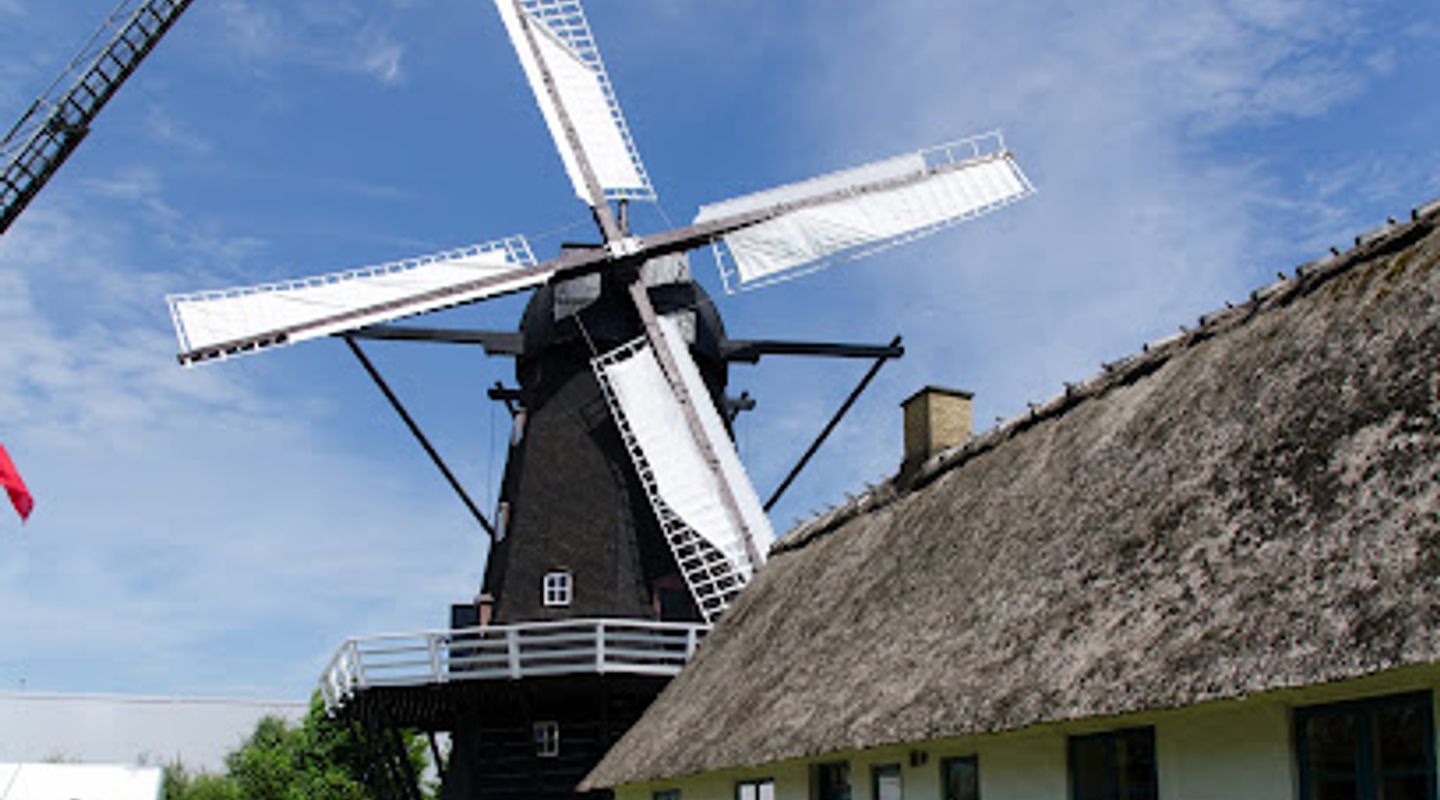
Rising above the northern edge of Nykøbing Falster, Ejegod Windmill is a beautifully restored early-19th-century smock mill that anchors a charming historic ensemble of mill, barn and miller’s house. Built in 1816 for the old Ejegod farm, this protected landmark now sits within town, its white sails, shingled cap and octagonal body telling the story of Falster’s agrarian past. A small toy museum in the former mill house adds a playful, family-friendly angle to this slice of Danish heritage.
On-site amenities
 Trash bins
 Information boards
 Seating areas
- Address
- Ejegodvej 4, 4800 Nykøbing Falster
- Phone
- Website
Getting there
Local bus from Nykøbing Falster station
Taxi within Nykøbing Falster
Cycle from central Nykøbing Falster
On foot from northern Nykøbing Falster
Discover more about Ejegod Windmill
A historic mill on Falster’s northern rise
Ejegod Windmill crowns a gentle hill in the northern part of Nykøbing Falster, where its tall white body and long sails have watched over the landscape since 1816. Originally built for the now-vanished Ejegod farm, the mill once stood in open countryside, grinding grain for the surrounding fields and farms on the island of Falster. As Nykøbing expanded northward, houses and streets gradually approached, until the mill became a landmark woven into the fabric of town life rather than a solitary structure in rural fields.Today the mill is recognised as a smock mill, with an octagonal wooden tower standing on a solid base and a rotating cap that could be turned into the wind. The form is both functional and graceful, giving Ejegod Windmill its distinctive silhouette when seen from nearby streets or from the surrounding neighbourhoods.
Architecture, restoration and protection
The mill, its adjoining barn and the former miller’s house form a rare intact ensemble, all officially protected as historic buildings. Their preservation means you can still read the entire story of a working mill site in the layout of the yard: the main tower for grinding, the barn for storage and work, and the dwelling where the miller and family lived and kept an eye on the skies for shifts in the wind.After decades of wear and changing fortunes, the complex benefited from determined local efforts to save it. Major exterior restoration in the early 2000s renewed the cladding, improved the gallery encircling the tower and refitted the shingled cap, returning the mill to something close to its 19th-century appearance. The sails once again define the skyline here, even when they stand still, more symbol than machinery.
From working industry to cultural landmark
For much of the 19th and early 20th centuries the mill was part of the economic engine of Falster, turning grain into flour with wind power alone. Shifts in technology and competition from more efficient mills gradually undercut its role, and traditional wind-powered milling ceased in the mid-20th century. Public ownership, secured in the 20th century, ensured that the mill would not be demolished when its industrial use ended.Today, Ejegod Windmill functions first and foremost as a cultural symbol. It speaks of Denmark’s long relationship with wind as a source of power, and of the craftsmanship involved in building and maintaining such a structure before modern machinery. Even when interior access is limited or seasonal, strolling around the outside gives a strong sense of how central such a site once was to daily survival.
Toys, stories and family-friendly charm
Adding a lighter note to the setting, the former miller’s house now hosts a small toy-focused collection. Inside, rooms that once formed part of a working household have been adapted to showcase playthings from different eras. The juxtaposition of robust agricultural architecture with delicate dolls, games and model vehicles creates a charming contrast, underscoring how communities repurpose old buildings to fit new needs.Outdoors, the enclosed feel of the courtyard and the slope of the surrounding grounds invite gentle exploration. Children can run off some energy while adults take in the angles of timber, brick and shingle, and photograph the tower from various vantage points. The atmosphere is relaxed and local rather than grand, with the mill feeling like a neighbourhood guardian.
Atmosphere and nearby heritage
The ambience around Ejegod Windmill is quietly scenic: you hear the murmur of town life, occasional birdsong and the breeze that once turned the sails. On clear days the white body of the mill stands out crisply against the sky, while softer light emphasises the ageing textures of wood and masonry. It is easy to imagine carts and horses arriving with grain, or the miller adjusting the sails before a coming storm.The area around the mill is rich in heritage, with a church, a historic cemetery and an experimental medieval centre all within a short radius. As a result, Ejegod Windmill works well as a cultural stop on a wider day of exploration, especially for those interested in how everyday work, belief and community life have changed over the centuries on this southern Danish island.
Planning your visit
Ejegod Windmill is free to admire from the outside, and access to interiors or the toy exhibition typically follows local, often seasonal, opening arrangements. There are paths and open areas around the site, making it straightforward to wander, pause for photographs or simply find a bench to sit and view the sails. Even a brief stop of half an hour provides a satisfying sense of place, while a longer visit allows time to study the details of joinery, the form of the cap and the relationship between the mill and its auxiliary buildings.Whether you are tracing Danish industrial heritage, introducing children to the workings of traditional technology, or simply seeking a quiet corner of Nykøbing with character, Ejegod Windmill offers an evocative and compact glimpse of Falster’s past.
Evendo Review Centre
 Google
Guest reviews
Best time to go
Quietest: Jan, Feb & Mar · before 8am or at 8pm
Busy times are Evendo estimates for a typical year, to help you plan. Actual crowds vary with events, school holidays and the weather.
Explore Ejegod Windmill on the map
A handpicked selection of must-see spots near Ejegod Windmill, mapped for you.
Get your free copy of our complete guide to Ejegod Windmill, delivered straight to you.
Everything on this page, from opening hours and how to get there to Eve’s tips and the best time to go, in one PDF you can read offline, print or share.
Already have an account? Sign in
Your Ejegod Windmill guide is ready.
We'll send it to · Not you? Sign out

Getting your guide ready…
We are putting together a fresh copy of the Ejegod Windmill guide. This can take up to a minute.
This can take a few moments. If your browser asks, choose Allow so the download can start. You'll find the guide in your Downloads folder.
Nothing happened? Download it again
Sorry, the guide is taking longer than usual. Please try again in a minute, or get it by email instead.
Other nearby places you may find interesting
The closest places of the same kind, if this one is not quite what you had in mind.
-
-
-
-
-


Swipe for more places
More to explore near Ejegod Windmill

 Best experiences near Ejegod Windmill
 Best hotels near Ejegod Windmill
 Best landmarks near Ejegod Windmill
 Best attractions near Ejegod Windmill
 Best shops near Ejegod Windmill
 Best restaurants near Ejegod Windmill
 Best bars near Ejegod Windmill
Do you manage this location?
Take control to get all the benefits, like improved information, better appearance, and stronger visibility across AI-powered discovery.
Explore more

Explore more of Lolland-Falster
Discover Lolland-Falster: Denmark's serene southern islands with stunning beaches, historic castles, and charming coastal towns offering a perfect blend of nature and culture.
Explore Lolland-Falster
Explore more of Denmark
Discover Denmark: A perfect blend of history, modern design, and the cozy concept of hygge. Explore vibrant cities, serene landscapes, and world-class cuisine.
Explore Denmark
