Horreby Lyng Travel Guide
Free Guide: Falster’s last raised bog: a quiet mosaic of peat, heather and history, where boardwalks, rare habitats and ancient finds meet under wide Danish skies.


A brief summary of Horreby Lyng
Falster’s last raised bog: a quiet mosaic of peat, heather and history, where boardwalks, rare habitats and ancient finds meet under wide Danish skies.
Horreby Lyng is Falster’s only raised bog, a rare landscape of sphagnum, heather and open water just east of Nykøbing Falster. Wooden boardwalks and waymarked trails lead you across peat cuttings, wet hollows and regenerating woodland, revealing a tapestry of special plants, insects and birdlife. With its Neolithic remains, stories of peat cutting and serene, open horizons, this compact reserve offers an atmospheric nature walk that feels far wilder than its modest size suggests.
On-site amenities
 Information boards
 Trash bins
 Seating areas
Opening hours
- Every dayOpen 24 hours
Opening hours as listed on the venue’s Google Business Profile. Hours can change for services and special events, so check with the venue before you go.
- Address
- Spangvej, 4800 Nykøbing Falster
- Phone
- Website
Getting there
Car from Nykøbing Falster town centre
Bicycle from Nykøbing Falster
Taxi or booked ride from Nykøbing Falster
Discover more about Horreby Lyng
A rare high bog on a small Danish island
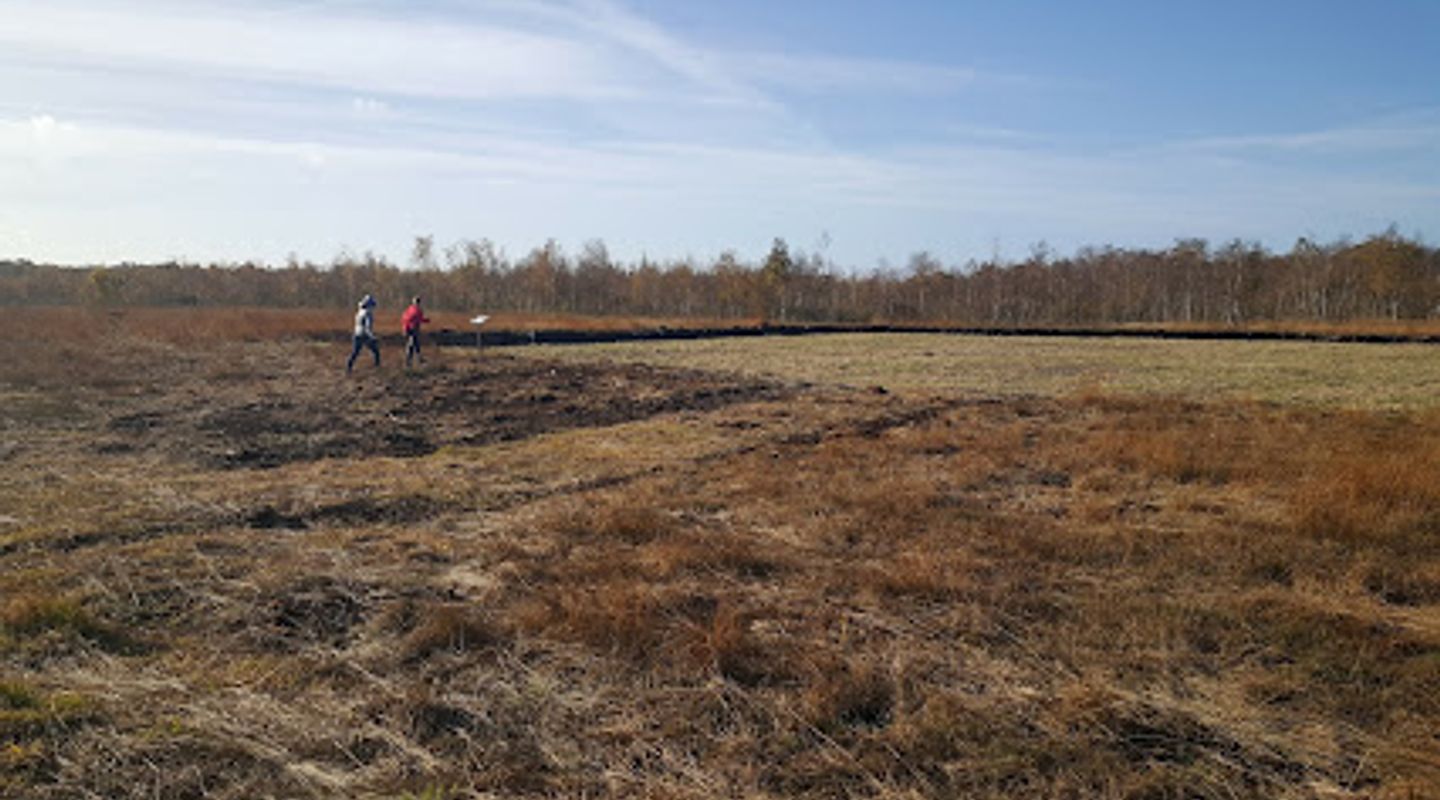
Horreby Lyng is a compact but remarkable raised bog on the island of Falster, formed over thousands of years from a post‑glacial meltwater lake that slowly infilled with plant material. As layer upon layer of sphagnum moss accumulated, the surface rose above the surrounding land, creating the dome‑shaped high bog that survives here today. In a region better known for fields, villages and beaches, this surviving patch of peatland feels surprisingly remote and otherworldly.Despite its modest scale, the bog preserves a characteristic mosaic of open, wet surfaces, hummocks of moss and drier fringes where birch and pine take hold. The ground is often saturated, the vegetation springy underfoot and the colours constantly shifting with the light, from rusty browns and deep greens to pale pinks and golds in late summer and autumn.
Traces of ancient people in a waterlogged archive
Beneath the bog’s surface lies a natural archive of human presence stretching back to the Neolithic period. The oxygen‑poor, acidic conditions of peat slow decay, preserving organic materials that would normally vanish. Over time, archaeologists have uncovered flint tools, fragments of clothing such as goatskin capes and even skeletal remains, hinting at rituals, journeys or accidents lost to history.These finds tie Horreby Lyng into a wider story of Denmark’s bog bodies and wetland offerings, where waterlogged places often held both practical and spiritual importance. As you walk, it takes little imagination to picture early communities navigating the soft ground, cutting turf, hunting or using the bog as a boundary and a resource.
From peat cutting to careful restoration
For generations, Horreby Lyng was worked as a peat resource, providing fuel for heating and cooking, particularly during the shortages of the Second World War. In the eastern parts of the area you can still see the legacy of this extraction: drier ground, stands of shrubs and deciduous trees, and cut faces where the bog was drained and stripped.More recently, restoration efforts have focused on re‑wetting sections of the bog and managing vegetation so that typical high‑moor habitats can recover. Simple interventions, such as blocking old drains, allow water levels to rise again. The result is a landscape where extraction scars, regenerating woodland and intact peatland lie side by side, illustrating the tension between use and conservation.
Boardwalks, waymarked loops and close‑up nature
Visitors experience Horreby Lyng via a network of marked trails, typically between three and five kilometres, that loop through different parts of the bog and its fringes. A highlight is the roughly 300‑metre wooden boardwalk on the western side, carrying you directly over wet sections where the peat is soft and the water lies close to the surface. Here, you can pause to study the dense carpets of sphagnum, insect‑eating sundews and other moisture‑loving plants.Simple information signs along the routes explain the bog’s formation, the story of peat cutting and some of the more unusual species that live here. Birdsong, insect buzz and the occasional rustle in the undergrowth replace traffic noise, and in warm weather you may notice adders basking near sunny edges, so a watchful step is wise.
Atmosphere, seasons and practical rhythm
The mood of Horreby Lyng changes markedly with the season and time of day. Early mornings with light mist hanging over the sphagnum pools feel almost ethereal, while clear afternoons reveal open skies and long vistas towards the surrounding farmland. In autumn, the bog glows with bronze and purple tones, and in winter it can feel stark and quiet, with frost sparkling on the moss.The area lies on private land but is generally accessible from early morning until sunset, with use restricted to established paths and roads. This balance allows nature to thrive while still welcoming walkers, birdwatchers and those simply seeking an hour or two of calm in a subtly dramatic landscape.
Who will appreciate Horreby Lyng
Horreby Lyng is best suited to travellers who enjoy gentle walking, quiet observation and an interest in natural or cultural history. The trails are mostly easy and low in elevation, though sections can be wet or uneven, so sturdy footwear is important. Families with nature‑curious children, photographers looking for textures and colours, and anyone keen to see one of Denmark’s few remaining raised bogs will find plenty to reward a slow visit.Rather than grand views or built attractions, the appeal lies in details: the structure of a moss cushion, the pattern of old peat cuttings, the contrast between dry and saturated ground. It is a place that invites you to slow down, listen closely and imagine the long timeline written into its peat.
Evendo Review Centre
 Google
Guest reviews
Best time to go
Quietest: Jan, Feb & Dec · before 7am or from 8pm
Busy times are Evendo estimates for a typical year, to help you plan. Actual crowds vary with events, school holidays and the weather.
Explore Horreby Lyng on the map
A handpicked selection of must-see spots near Horreby Lyng, mapped for you.
Get your free copy of our complete guide to Horreby Lyng, delivered straight to you.
Everything on this page, from opening hours and how to get there to Eve’s tips and the best time to go, in one PDF you can read offline, print or share.
Already have an account? Sign in
Your Horreby Lyng guide is ready.
We'll send it to · Not you? Sign out

Getting your guide ready…
We are putting together a fresh copy of the Horreby Lyng guide. This can take up to a minute.
This can take a few moments. If your browser asks, choose Allow so the download can start. You'll find the guide in your Downloads folder.
Nothing happened? Download it again
Sorry, the guide is taking longer than usual. Please try again in a minute, or get it by email instead.
Other nearby places you may find interesting
The closest places of the same kind, if this one is not quite what you had in mind.
-
Labyrint Lolland-Falster Navigate winding paths through Denmark's enchanting countryside maze—a family adventure combining nature, challenge, and outdoor exploration.
-
Guldborgsund Zoo & Botanisk Have A compact blend of zoo and botanical garden that long served Nykøbing Falster as a green, family-friendly escape of animals, flowers and playgrounds close to town.
-
Ejegod Windmill A beautifully restored 1816 smock mill on Falster, Ejegod Windmill pairs classic Danish milling heritage with a cosy toy-filled mill house in northern Nykøbing.
-
Gedser Lighthouse Historic brick lighthouse at Denmark’s southern tip, where raw Baltic coastline, seabird migration and two centuries of maritime history meet in wide-open skies.
-
Museum Obscurum A dimly lit cabinet of curiosities in Nykøbing Falster, where Cornelius Rödder’s eerie collection blurs the line between folklore, fake news and unsettling reality.
Swipe for more places
More to explore near Horreby Lyng

 Best experiences near Horreby Lyng
 Best hotels near Horreby Lyng
 Best landmarks near Horreby Lyng
 Best attractions near Horreby Lyng
 Best shops near Horreby Lyng
 Best restaurants near Horreby Lyng
 Best bars near Horreby Lyng
Do you manage this location?
Take control to get all the benefits, like improved information, better appearance, and stronger visibility across AI-powered discovery.
Explore more

Explore more of Lolland-Falster
Discover Lolland-Falster: Denmark's serene southern islands with stunning beaches, historic castles, and charming coastal towns offering a perfect blend of nature and culture.
Explore Lolland-Falster
Explore more of Denmark
Discover Denmark: A perfect blend of history, modern design, and the cozy concept of hygge. Explore vibrant cities, serene landscapes, and world-class cuisine.
Explore Denmark