Kvalitetssti Mols Bjerge, Bjergetapen Travel Guide
Free Guide: Denmark’s “mountain stage”: a demanding, day-long loop through the heather-clad hills, ravines and far-reaching views of Mols Bjerge near Ebeltoft.


A brief summary of Kvalitetssti Mols Bjerge, Bjergetapen
Denmark’s “mountain stage”: a demanding, day-long loop through the heather-clad hills, ravines and far-reaching views of Mols Bjerge near Ebeltoft.
Kvalitetssti Mols Bjerge, Bjergetapen is the demanding “mountain stage” of the 80 km Mols Bjerge Trail near Ebeltoft, threading through the heart of Denmark’s most dramatic Ice Age landscape. This roughly 19–20 km certified loop leads you over steep ridges, into deep meltwater ravines and past kettle holes, heather slopes and gnarled oak scrub, with expansive views across Djursland and Ebeltoft Vig. Expect a full-day, moderately challenging hike with varied terrain, few buildings in sight and a strong feeling of being far from the everyday world.
On-site amenities
 Restrooms
 Seating areas
 Trash bins
 Information boards
- Address
- 8400 Ebeltoft
- Website
Getting there
Car
Bus
Bike
Discover more about Kvalitetssti Mols Bjerge, Bjergetapen
An Ice Age Landscape in the Heart of Djursland
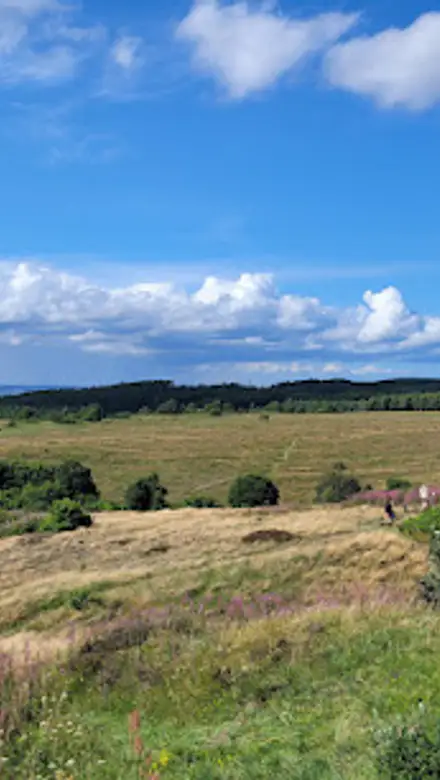
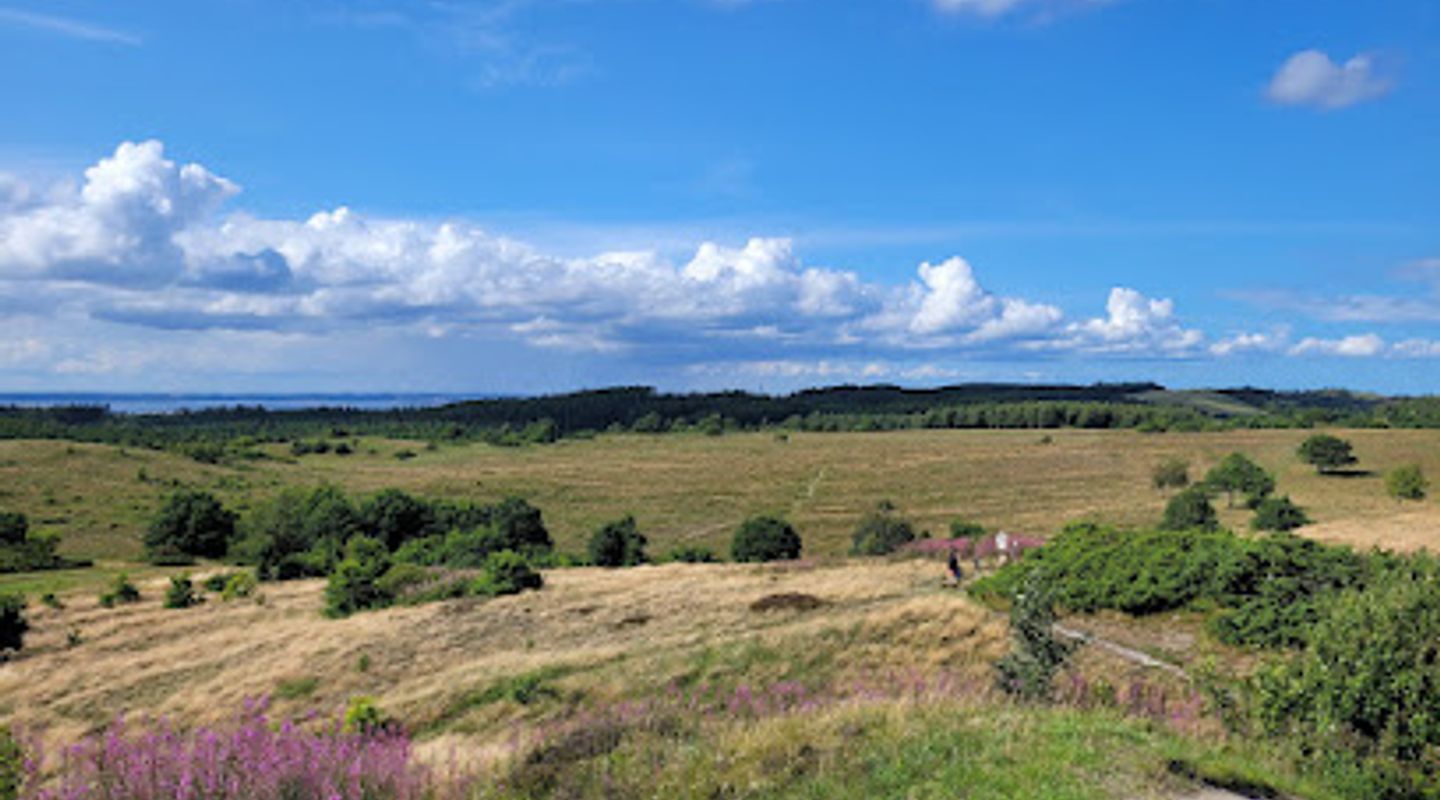
The Bjergetapen, or mountain stage, of the Mols Bjerge Trail plunges you into one of Denmark’s most striking Ice Age landscapes. Here in the hills above Ebeltoft, glaciers once ground their way across Djursland, leaving behind sharp ridges, deep hollows and a tangle of dry valleys. Today those ancient forms shape every step of the route. The loop begins and ends near Femmøller, but once you leave the trailhead the modern world quickly drops away and the view opens onto a sea of rolling, grass-covered hills.The terrain is unusually dramatic for Denmark: rounded summits rise and fall in quick succession, slopes tilt steeply to hidden basins, and the light shifts constantly across the undulating ground. Scattered farmsteads and distant church spires remind you that this is still a lived-in landscape, yet buildings are rare along the stage, reinforcing the sense of remoteness that many hikers do not expect to find so close to Ebeltoft.
Hills, Ravines and Heather-Covered Slopes
As you follow the certified quality trail, the path threads through narrow ravines lined with gnarled trees, then climbs to open viewpoints where wind strokes the heather and sheep graze on old grasslands. The kettle holes and steep-sided depressions you pass are direct signatures of melting ice blocks left behind at the end of the last glaciation. In some hollows, scrub and scattered birch create sheltered pockets, while others remain open, inviting long pauses to take in the contours of the hills.The route’s reputation as the most demanding stage of the Mols Bjerge Trail stems less from any technical difficulty and more from the constant ascents and descents. Paths can be narrow, rooty and uneven, especially where they wind through beech and oak woodland, and sections may be muddy after rain. Good footwear and a steady pace make the day entirely manageable for reasonably fit walkers, and the reward is a chain of ever-changing views over Mols Bjerge and the wider national park.
Wildlife, Grazing and Subtle Seasonal Changes
Bjergetapen is also an excellent stage for quietly observing nature. Open grasslands and heath support butterflies and grasshoppers in summer, while skylarks and other songbirds provide a constant soundtrack above the hills. In the more wooded ravines you may glimpse roe deer slipping between the trunks or hear woodpeckers at work on older trees. Grazing projects using cattle, sheep and sometimes horses help keep the hills open, maintaining the mosaic of habitats that make this area so distinctive.Seasonality plays a big role in the experience. Spring brings fresh greens and clear views, with cool air ideal for longer days on the trail. In late summer the heath can blush purple, while autumn paints the scattered woodlands in warm tones and often delivers long, low light across the hills. Even on calm winter days the bare shapes of the terrain stand out sharply, making the glacial story easier to read in the contours themselves.
A Full-Day Circuit for Dedicated Walkers
This circular stage is typically described as around 19–20 km, taking most hikers about six to seven hours including breaks. It is waymarked and part of the internationally certified Mols Bjerge Trail, which runs a total of 80 km between Rønde and Ebeltoft. Bjergetapen stands out among the four stages as the most strenuous and, for many walkers, the most immersive in terms of pure landscape.There are no major facilities once you are out on the trail, so you need to carry water, snacks and appropriate clothing for rapidly changing coastal weather. The route is well suited to day packs rather than heavy multi-day loads, and trekking poles can ease the repeated short climbs and descents. Families with hiking experience and older children often enjoy the challenge, but this is not a casual stroll: it is a full-day outing in hilly country.
Link in a Larger Network of Trails
Although Bjergetapen forms a distinct loop, it also acts as a hinge within the wider Mols Bjerge Trail network. Nearby stages lead towards Kalø and Ebeltoft, opening possibilities for multi-day hikes that combine demanding hill sections with gentler coastal and forest stretches. Trail information, maps and route suggestions are available through the national park and local tourist offices, making it easy to integrate this stage into a broader exploration of Djursland.For many trekkers, walking Bjergetapen is less about ticking off a distance and more about spending unhurried time in a rare Danish landscape where Ice Age forms remain so clearly legible. The combination of rolling panoramas, quiet ravines and almost continuous views makes this stage a highlight for anyone who appreciates geography under their boots as much as scenery before their eyes.
Evendo Review Centre
 Google
Guest reviews
Best time to go
Quietest: Jan, Feb & Dec · before 7am or from 8pm
Busy times are Evendo estimates for a typical year, to help you plan. Actual crowds vary with events, school holidays and the weather.
Explore Kvalitetssti Mols Bjerge, Bjergetapen on the map
A handpicked selection of must-see spots near Kvalitetssti Mols Bjerge, Bjergetapen, mapped for you.
Get your free copy of our complete guide to Kvalitetssti Mols Bjerge, Bjergetapen, delivered straight to you.
Everything on this page, from opening hours and how to get there to Eve’s tips and the best time to go, in one PDF you can read offline, print or share.
Already have an account? Sign in
Your Kvalitetssti Mols Bjerge, Bjergetapen guide is ready.
We'll send it to · Not you? Sign out

Getting your guide ready…
We are putting together a fresh copy of the Kvalitetssti Mols Bjerge, Bjergetapen guide. This can take up to a minute.
This can take a few moments. If your browser asks, choose Allow so the download can start. You'll find the guide in your Downloads folder.
Nothing happened? Download it again
Sorry, the guide is taking longer than usual. Please try again in a minute, or get it by email instead.
Other nearby places you may find interesting
The closest places of the same kind, if this one is not quite what you had in mind.
-
-
-
-
-


Swipe for more places
More to explore near Kvalitetssti Mols Bjerge, Bjergetapen
-
 Best experiences near Kvalitetssti Mols Bjerge, Bjergetapen
-
 Best hotels near Kvalitetssti Mols Bjerge, Bjergetapen
-
 Best landmarks near Kvalitetssti Mols Bjerge, Bjergetapen
-
 Best attractions near Kvalitetssti Mols Bjerge, Bjergetapen
-
 Best shops near Kvalitetssti Mols Bjerge, Bjergetapen
-
 Best restaurants near Kvalitetssti Mols Bjerge, Bjergetapen
-
 Best bars near Kvalitetssti Mols Bjerge, Bjergetapen


Do you manage this location?
Take control to get all the benefits, like improved information, better appearance, and stronger visibility across AI-powered discovery.
Explore more

Explore more of Mols Bjerge
Discover the natural beauty and historical charm of Mols Bjerge, Denmark's captivating national park in the heart of Djursland, perfect for nature lovers and adventurers.
Explore Mols Bjerge
Explore more of Denmark
Discover Denmark: A perfect blend of history, modern design, and the cozy concept of hygge. Explore vibrant cities, serene landscapes, and world-class cuisine.
Explore Denmark