

Mols Bjerge stien Travel Guide
Free Guide: An Ice Age–sculpted long-distance trail of low Danish “mountains”, wide views, rare nature and historic sites winding through Nationalpark Mols Bjerge.


A brief summary of Mols Bjerge stien
An Ice Age–sculpted long-distance trail of low Danish “mountains”, wide views, rare nature and historic sites winding through Nationalpark Mols Bjerge.
Mols Bjerge-stien is a certified long-distance hiking trail winding 60–80 km through Nationalpark Mols Bjerge near Ebeltoft. Crossing Denmark’s most striking Ice Age landscape, it links coastal meadows, heather-clad hills, dead-ice hollows and historic farm country. Divided into four day-stages of around 20 km, the route offers big sky views, rare flora and fauna, ancient burial mounds and castle ruins, plus tranquil corners for picnics and birdwatching.
On-site amenities
 Restrooms
 Seating areas
 Picnic areas
 Trash bins
 Information boards
 Visitor centre
 Drinking water
- Address
- 8400 Ebeltoft
Getting there
Car from Aarhus
Bus from Aarhus to Rønde and Kalø area
Bus from Ebeltoft town
Cycling to trail access points
Discover more about Mols Bjerge stien
Ice Age Hills Above the Bay
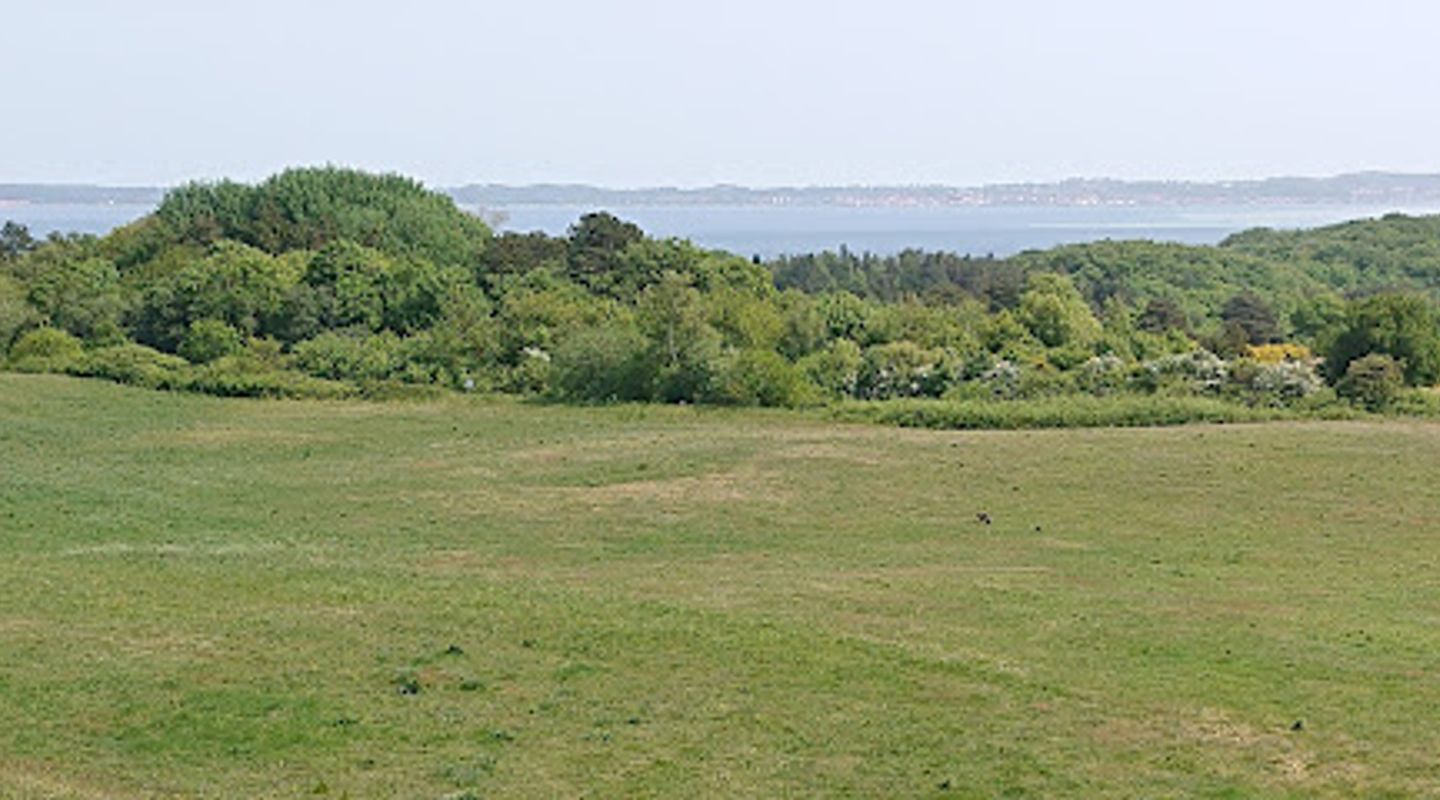
Mols Bjerge-stien threads through one of Denmark’s most dramatic post-Ice Age landscapes, a hilly mosaic carved by retreating glaciers. Here, between Ebeltoft and Kalø Vig, low “mountains” rise to around 137 metres, enough to give wide-open views over bays, inlets and patchwork fields. The terrain undulates constantly, with steep ridges, kettle holes and narrow valleys showing how the ice once flowed and fractured.Despite the modest altitude, the sense of height is real. From vantage points such as Agri Bavnehøj and the burial mounds at Trehøje, you look across a rolling sea of heath, woodland and farmland with the coastline glittering beyond. On clear days the horizon stretches as far as Aarhus, while at your feet juniper, heather and wind-twisted hawthorns cling to the thin, stony soils.
A Quality Long-Distance Route
The trail runs for roughly 60–80 km, depending on variant, and is officially recognised as a “Leading Quality Trail – Best of Europe”, placing it among the continent’s standout hiking routes. It is typically divided into four day stages of around 20 km, each focusing on a different facet of the national park. Waymarking is clear, with arrows and posts guiding you along field edges, forest tracks, sandy paths and old lanes.Stages vary from medium to moderately demanding, mainly because of the constant ups and downs rather than any technical difficulty. Much of the route feels surprisingly remote by Danish standards; buildings are scattered and long stretches lead through open country where you share the path only with grazing horses, cattle and sheep. Benches, picnic tables and occasional shelters break up the distance and offer weatherproof rest points.
Landscape Stories and Cultural Traces
Mols Bjerge-stien is as much about culture as nature. Along the Kalø section, the ruins of Kalø Castle loom above the bay, a reminder of medieval power and coastal control. Elsewhere the trail passes manorial landscapes with old beech woods, winding stone walls and traditional farmsteads. In places you follow a disused railway line, now reclaimed by grasses and wildflowers, that once linked rural communities.Prehistory is written into the hills. Round dolmens such as Poskær Stenhus and ancient burial mounds crown ridges, giving both sweeping views and a tangible sense of age. The route skirts small villages, mills and wayside churches, tying together thousands of years of human activity in a relatively compact area.
Wildlife, Rare Species and Protected Nature
Nationalpark Mols Bjerge is one of Denmark’s richest areas for rare and threatened species, and long sections of the trail cross sensitive habitats. Dry grasslands support orchids, butterflies and sun-basking reptiles, while damp hollows and so‑called dead‑ice depressions harbour lush vegetation, amphibians and invertebrates. Seasonal grazing helps keep the hillsides open and preserves the characteristic mosaic of scrub and grassland.Birdlife is a constant companion. Around lakes such as Stubbe Sø and along coastal stretches near Ebeltoft, patient walkers may spot warblers, larks and swallows, alongside waterfowl and birds of prey gliding over the slopes. In summer, the low buzz of insects and the scent of warm pine and heather add to the sensory palette.
From Hill Crests to Seaside Towns
Each stage of Mols Bjerge-stien has its own personality. The mountain section is the most undulating, with a succession of viewpoints and ravines lined by gnarled trees. The Ebeltoft stretch gradually swaps hills for a forested valley, quiet lakeshore paths and finally cobbled streets and half-timbered houses in the old town. Another stage follows the shoreline past beach meadows, bird protection zones and sandy spits, where wind and waves reshape the coast.Facilities are thoughtfully spaced rather than continuous. Shelters at Tremosegård, packed-lunch houses and small visitor centres provide places to pause and learn more about the national park’s geology and ecology. Many hikers tackle the trail in sections, returning to favourite viewpoints or quiet corners to rediscover the area in different seasons, from frost-sparkling winter ridges to late-summer heather in bloom.
Evendo Review Centre
 Google
Guest reviews
Best time to go
Quietest: Jan, Feb & Dec · before 6am or from 9pm
Busy times are Evendo estimates for a typical year, to help you plan. Actual crowds vary with events, school holidays and the weather.
Explore Mols Bjerge stien on the map
A handpicked selection of must-see spots near Mols Bjerge stien, mapped for you.
Get your free copy of our complete guide to Mols Bjerge stien, delivered straight to you.
Everything on this page, from opening hours and how to get there to Eve’s tips and the best time to go, in one PDF you can read offline, print or share.
Already have an account? Sign in
Your Mols Bjerge stien guide is ready.
We'll send it to · Not you? Sign out

Getting your guide ready…
We are putting together a fresh copy of the Mols Bjerge stien guide. This can take up to a minute.
This can take a few moments. If your browser asks, choose Allow so the download can start. You'll find the guide in your Downloads folder.
Nothing happened? Download it again
Sorry, the guide is taking longer than usual. Please try again in a minute, or get it by email instead.
Other nearby places you may find interesting
The closest places of the same kind, if this one is not quite what you had in mind.
-
-
-
-
-


Swipe for more places
More to explore near Mols Bjerge stien

 Best experiences near Mols Bjerge stien
 Best hotels near Mols Bjerge stien
 Best landmarks near Mols Bjerge stien
 Best attractions near Mols Bjerge stien
 Best shops near Mols Bjerge stien
 Best restaurants near Mols Bjerge stien
 Best bars near Mols Bjerge stien
Do you manage this location?
Take control to get all the benefits, like improved information, better appearance, and stronger visibility across AI-powered discovery.
Explore more

Explore more of Mols Bjerge
Discover the natural beauty and historical charm of Mols Bjerge, Denmark's captivating national park in the heart of Djursland, perfect for nature lovers and adventurers.
Explore Mols Bjerge
Explore more of Denmark
Discover Denmark: A perfect blend of history, modern design, and the cozy concept of hygge. Explore vibrant cities, serene landscapes, and world-class cuisine.
Explore Denmark
