Møns Klint Travel Guide
Free Guide: Towering white chalk cliffs, ancient beech forest and star‑filled skies meet at Denmark’s most dramatic Baltic coastline on the wild eastern edge of Møn.


A brief summary of Møns Klint
Towering white chalk cliffs, ancient beech forest and star‑filled skies meet at Denmark’s most dramatic Baltic coastline on the wild eastern edge of Møn.
Møns Klint is Denmark’s most dramatic coastline: a sweeping line of 70‑million‑year‑old white chalk cliffs plunging up to 128 m into the Baltic Sea on the eastern shore of Møn. Framed by dense beech forest and a clear, milky‑turquoise sea, this protected landscape combines striking geology, rich birdlife and Dark Sky–quality night skies. Well‑marked trails, long staircases to the pebble beach and the family‑focused GeoCenter at the clifftop make it both a wild nature escape and an accessible day trip from Copenhagen.
On-site amenities
 Restrooms
 Drink options
 Drinking water
 Food options
 Seating areas
 Sheltered areas
 Picnic areas
 Trash bins
 Information boards
 Visitor centre
Opening hours
- Every dayOpen 24 hours
Opening hours as listed on the venue’s Google Business Profile. Hours can change for services and special events, so check with the venue before you go.
- Address
- 4791 Borre
- Phone
- Website
Getting there
Car from Copenhagen or Zealand
Public transport via Vordingborg and Stege
Cycling on Møn
Discover more about Møns Klint
Ancient chalk walls above the Baltic
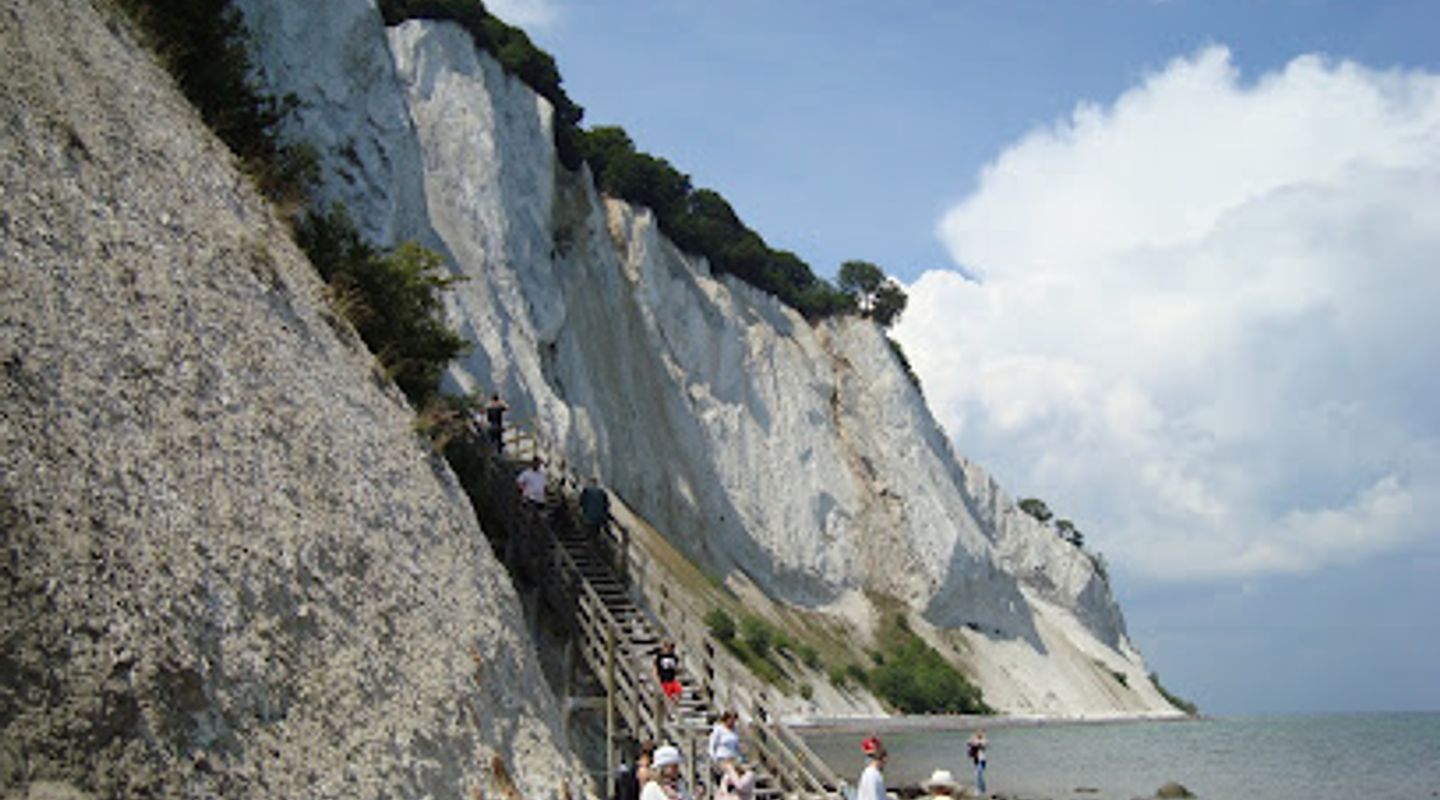
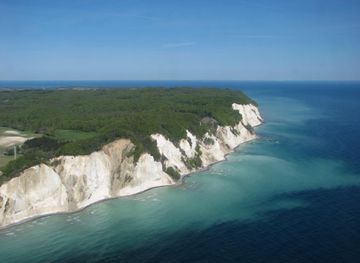
Møns Klint is one of northern Europe’s most distinctive coastlines, a 6 km sweep of white chalk cliffs rising sheer from the Baltic Sea on the island of Møn. Formed from the compressed remains of microscopic sea creatures some 70 million years ago, the cliffs stand up to around 120–130 m high, their bright faces constantly reshaped by erosion and occasional landslides. From the top, the views stretch along a serrated line of headlands and coves, with the sea below taking on a luminous turquoise tint where chalk particles cloud the shallows.Walking along the cliff edge path, you are never far from reminders that this is a living, changing landscape. Sections of the trail weave through slumping slopes and hollows left by previous collapses, while fenced viewpoints bring you just close enough to admire the vertical drop without compromising safety. Interpretive signs near the GeoCenter explain how the layers of chalk, flint and clay record ancient climate shifts and how the sea is still nibbling away a little of Denmark each year.
Beech forests, dark skies and wildlife encounters
Set immediately behind the cliff edge is a band of old beech woodland, cool and cathedral‑like in summer and blazing with colour in autumn. The network of trails here ranges from gentle, almost level loops to more undulating routes that repeatedly dip towards the brink, offering glimpses of the sea through the trees. In spring, the forest floor can be carpeted with anemones, while in winter the bare trunks reveal more of the coastline’s contours.Møns Klint is also famed for its birds and night skies. Peregrine falcons and ravens patrol the cliff faces, and in migration seasons you may spot flocks passing along the Baltic flyway. After dark, the area forms the core of Scandinavia’s first certified Dark Sky Park, with minimal artificial light and on clear nights an extraordinary canopy of stars. On calm evenings the combination of starlight, the pale cliffs and the hush of the sea creates a surprisingly remote, almost otherworldly mood within easy reach of urban Denmark.
Down the stairways to the stony shore
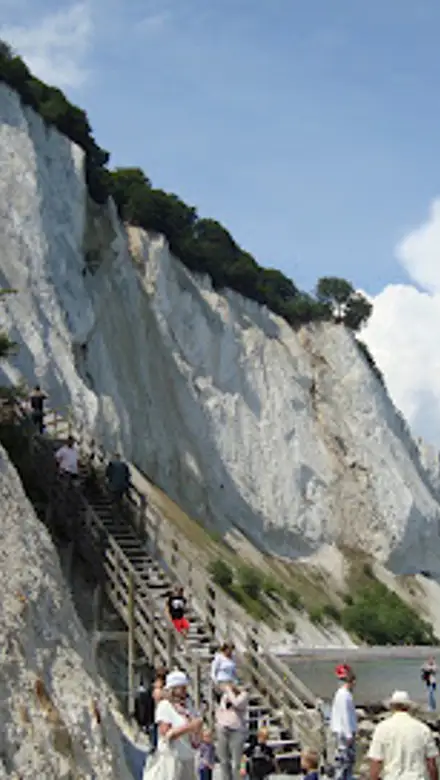
One of the classic experiences at Møns Klint is descending from the plateau to the beach. Several staircases connect clifftop and shoreline; the most famous, near the GeoCenter, has roughly 500 steps and is a serious workout on the way back up. The descent spirals you through layers of chalk to a narrow pebble beach where the cliffs tower overhead and their scale is most impressive.Down on the shore, you can walk sections of the coastline at low water, picking your way over flint pebbles and driftwood. Fossil hunting is popular, and with patience you may find sea urchins, belemnites or shell imprints in loose chunks of chalk. The sea is generally cool, but on calm summer days some visitors paddle or take a quick dip, always keeping an eye on conditions and respecting the risk of small rockfalls from the cliffs above.
GeoCenter Møns Klint and active adventures
Perched by the main parking area, GeoCenter Møns Klint serves as both visitor hub and hands‑on museum of Danish geology. Its exhibitions use films, interactive displays and real fossils to tell the story of how the cliffs formed, how ice ages sculpted Møn, and how life evolved in the prehistoric seas that once covered northern Europe. Families are well catered for, with touch‑and‑feel exhibits, a 3D cinema and seasonal guided fossil hunts or nature walks.Around the center, various outdoor activities bring the landscape to life. In season, there may be tree‑top courses, guided mountain‑bike routes through the forest and snorkelling or boat trips offered from nearby harbours to view the cliffs from the water. A clifftop café provides hot drinks, simple meals and that classic Danish combination of coffee and cake, best enjoyed on the terrace with the horizon stretching across the Baltic.
Planning your visit along the cliff edge
Møns Klint can reward anything from a brief viewpoint stop to a full‑day hike. Waymarked trails link the main GeoCenter area with quieter viewpoints and forest sections, allowing you to tailor your walk to fitness and time. The staircases and some paths are steep and involve many steps, so anyone with limited mobility may prefer to stay on the upper routes and lookouts, which still offer superb panoramas.Facilities are concentrated around the GeoCenter, including toilets, information boards and paid parking, while the cliffs and beach themselves remain freely accessible at all hours. Weather changes quickly along the coast, so layers and waterproofs are advisable even in summer, and good footwear makes the chalky, sometimes slippery paths and countless steps more comfortable. Whether you come for photography, a strenuous coastal hike, a family fossil hunt or simply to stand and stare, Møns Klint delivers a memorable encounter with Denmark’s wildest edge.
Evendo Review Centre
 Google
Guest reviews
Best time to go
Quietest: Jan, Feb & Dec · before 8am or from 10pm
Busy times are Evendo estimates for a typical year, to help you plan. Actual crowds vary with events, school holidays and the weather.
Explore Møns Klint on the map
A handpicked selection of must-see spots near Møns Klint, mapped for you.
Get your free copy of our complete guide to Møns Klint, delivered straight to you.
Everything on this page, from opening hours and how to get there to Eve’s tips and the best time to go, in one PDF you can read offline, print or share.
Already have an account? Sign in
Your Møns Klint guide is ready.
We'll send it to · Not you? Sign out

Getting your guide ready…
We are putting together a fresh copy of the Møns Klint guide. This can take up to a minute.
This can take a few moments. If your browser asks, choose Allow so the download can start. You'll find the guide in your Downloads folder.
Nothing happened? Download it again
Sorry, the guide is taking longer than usual. Please try again in a minute, or get it by email instead.
Other nearby places you may find interesting
The closest places of the same kind, if this one is not quite what you had in mind.
-
GeoCenter Møns Klint Immersive cliff-top museum and nature hub revealing 70 million years of geology beside Denmark’s highest white chalk cliffs at Møns Klint.
-
Moen lighthouse A quiet 19th‑century beacon perched above Denmark’s most dramatic chalk cliffs, where sea, sky and starlight meet on the far edge of the island of Møn.
-
Trappe Møns Klint A steep wooden stairway plunging from beech forest to turquoise Baltic shore, Trappe Møns Klint is the most direct way into Denmark’s iconic white chalk cliffs.
-
Stranden Møns Klint A raw shingle shore pressed between turquoise Baltic waves and 100‑metre chalk cliffs, Stranden Møns Klint is Denmark’s most dramatic meeting of land and sea.
-
Thorsvang, Danmarks Samlermuseum Et stemningsfuldt samlermuseum på Møn, indrettet som en hel lille by fra de gode gamle dage – fyldt med butikker, værksteder, kolonihaver og hverdagsminder.
Swipe for more places
More to explore near Møns Klint

 Best experiences near Møns Klint
 Best hotels near Møns Klint
 Best landmarks near Møns Klint
 Best attractions near Møns Klint
 Best shops near Møns Klint
 Best restaurants near Møns Klint
 Best bars near Møns Klint
Do you manage this location?
Take control to get all the benefits, like improved information, better appearance, and stronger visibility across AI-powered discovery.
Explore more
Explore more of Møn
Discover the breathtaking cliffs, rich history, and serene beauty of Møn, Denmark's hidden gem in the Baltic Sea, perfect for nature lovers and history enthusiasts alike.
Explore Møn
Explore more of Denmark
Discover Denmark: A perfect blend of history, modern design, and the cozy concept of hygge. Explore vibrant cities, serene landscapes, and world-class cuisine.
Explore Denmark