Helene Grave, North Zealand Travel Guide
A quiet stone enclosure in the dunes of Tisvildeleje where legend, healing folklore and North Zealand’s coastal light meet at the symbolic tomb of Saint Helene.
Tucked among summer houses just behind the dunes at Tisvildeleje, Helene Grave is a low stone enclosure with two leaning boulders that mark the legendary resting place of Saint Helene. This simple coastal cenotaph has been a local pilgrimage site for centuries, closely tied to nearby Helene Spring and stories of miraculous healing on midsummer night. Today it offers a quiet, slightly mysterious clearing where folklore, landscape and Danish coastal light blend into a gently atmospheric stop on a walk through North Zealand.
A brief summary to Helene Grave
- Sankt Helene Vej 49, Tisvilde, 3220, DK
- Click to display
- Duration: 0.5 to 1.5 hours
- Free
-
 Outdoor
- Mobile reception: 4 out of 5

Know before you go
Hi, I'm Eve. Here are a few practical things to know before exploring Helene Grave.
- Combine a stop at Helene Grave with a walk to Helene Spring and Troldeskoven to experience the full blend of legend, forest and coastline in one loop.
- Visit in the early morning or late evening for softer light, fewer people and a more atmospheric sense of the site’s folklore.
- Wear comfortable shoes; paths may be sandy or uneven, and you will likely want to continue walking into the nearby forest and dune areas.
Do you manage this location?
Take control to get all the benefits, like improved information, better appearance, and stronger visibility across AI-powered discovery. Learn more about listing your business on Evendo
Activate your presenceOther nearby places you may find interesting
The closest places of the same kind, if this one is not quite what you had in mind.
Explore Helene Grave on the Map
A handpicked selection of must-see spots near Helene Grave, mapped for you.
Getting There
-
Train and walk from Copenhagen region
From central Copenhagen or Hillerød, take a regional train to Tisvildeleje Station; the journey typically takes 1–1.5 hours depending on connections. Standard adult single tickets from Copenhagen cost in the range of 80–120 DKK. Trains run regularly during the day, with slightly reduced frequency in the late evening. From Tisvildeleje Station it is roughly a 15–25 minute walk on generally flat, paved and then residential roads to reach the area around Sankt Helene Vej and the grave, suitable for most visitors who are comfortable walking that distance.
-
Car from North Zealand towns
Driving from nearby North Zealand centers such as Hillerød or Helsingør to Tisvildeleje usually takes 30–45 minutes, depending on traffic and season. There is no dedicated car park directly at the grave, so drivers generally use public parking areas in Tisvildeleje or near the beach and then walk 10–20 minutes through the residential area. Parking is a mix of free and time-limited zones; in peak summer some lots may charge modest fees, typically around 10–20 DKK per hour, and spaces can fill quickly on hot beach days.
-
Bicycle access from local area
Tisvildeleje and the surrounding coast are popular for cycling, and Helene Grave can be reached via local roads and cycle-friendly routes from neighboring villages such as Vejby or Liseleje in about 20–40 minutes. Terrain is mostly gentle, with a few small inclines and some sandy patches near the dunes. Bicycles can be locked near residential streets close to Sankt Helene Vej; there are no formal bike stands at the grave itself, so bring a secure lock and avoid leaving valuables unattended.
For the on-the-go comforts that matter to you
-
 Information Boards
-
 Trash Bins
-
 Seating Areas
Discover more about Helene Grave
Legend of Saint Helene on the North Zealand Coast
Helene Grave, also known as Helene’s Tomb, is a modest but evocative stone enclosure on the sandy fringe of Tisvildeleje, a short way from the Kattegat shore. The site is dedicated to the legendary Saint Helene, whose story has been woven into local tradition for centuries. Two large boulders leaning against each other within a rectangular, grazed area mark the symbolic resting place of the saint.According to legend, Helene was a pious woman whose body was miraculously carried by the sea to this part of the coast. Her grave and a nearby holy spring became places where pilgrims sought help for ailments that no other remedies could cure. Even though historians consider the tomb a cenotaph rather than an actual burial place, the story continues to give this quiet corner of the landscape a distinct sense of meaning.Folklore, Healing Waters and Midsummer Rituals
Helene Grave is closely linked to Helene Spring, one of Denmark’s most famous holy wells, set a short walk away in the dunes and forest. Traditions describe how the sick should collect water from the spring on the evening of 23 June, the night of Sankt Hans, and spend the night by Helene’s grave. Stretched out on the ground, they would drink the water and await the first light of morning, when healing was said to arrive with the dawn.These midsummer rituals blend Christian saintly devotion with much older ideas about sacred springs and powerful landscape spots. The combination of the grave, the spring and the coastal setting has long made Tisvildeleje a place where nature and belief overlap. Even if visitors today come simply out of curiosity, the stories are easy to imagine when standing among the stones in the soft summer twilight.A Simple Stone Monument in a Shifting Landscape
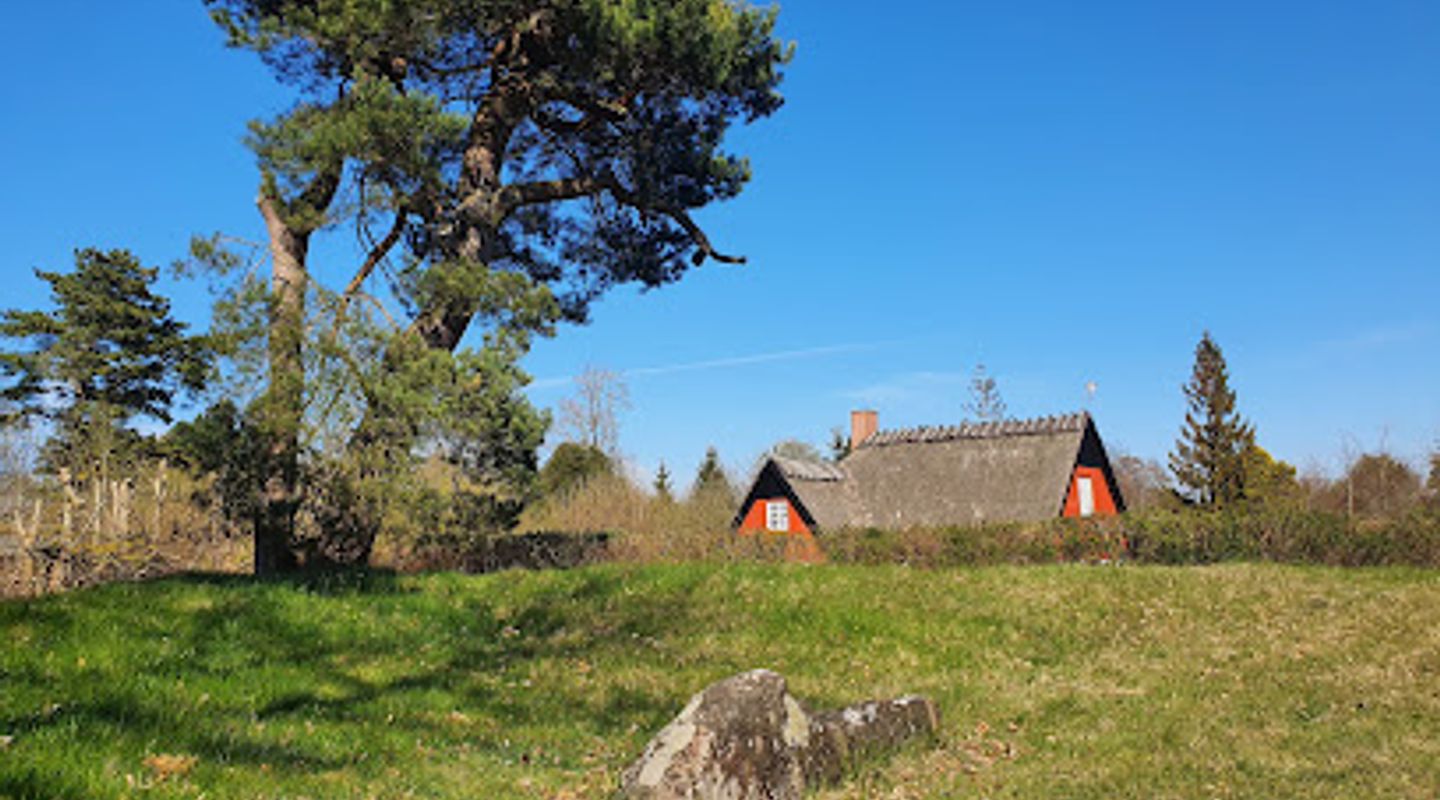
Physically, Helene Grave is understated: a low stone fence forming a rectangle in the grass, with the pair of leaning boulders at its heart. There are no grand sculptures or ornate carvings here, only the texture of weathered stone and the sound of wind traveling in from the sea. This simplicity is part of its appeal; the monument feels more like a fragment of the landscape than a constructed site.The wider area around Tisvildeleje was once threatened by drifting sands that buried farms, roads and even parts of nearby Tibirke Church. Over the 19th century, the planting of the Tisvilde Hegn forest stabilized the dunes and reshaped the coastline’s character. Helene’s tomb survived this transformation and today sits in a patchwork of forest, heath and summer houses, a reminder that the coast has always been both fragile and resilient.Atmosphere Between Sea, Forest and Summer Houses
Walking to Helene Grave, you pass through a quiet residential zone of classic North Zealand summer houses before the landscape opens into low scrub and sandy soil. The grave itself is a small clearing, often filled with the calls of birds, distant surf and the rustle of grasses. On clear days the light can be exceptionally bright, with the white of the stones contrasting against green grass and blue sky.Despite being close to a popular beach destination, the grave usually feels secluded. It is a natural pause point on a stroll between Tisvildeleje town, the beach and the forest paths of Tisvilde Hegn. Some visitors sit on the edge of the stone enclosure to read or reflect, while others simply pass through, tracing a circle around the tomb before heading back towards the dunes.Visiting Respectfully and Making the Most of the Area
There is no formal visitor center at Helene Grave, and the site is open at all hours, so you can experience its atmosphere at sunrise, in bright midday light or during the long Nordic summer evenings. A simple information board may provide basic background, but most of the experience comes from combining what you see with the local legends you bring in your mind.The location is ideal to pair with a walk to Helene Spring, the nearby Troldeskoven “Troll Forest” with its wind-twisted pines, or the wide sands of Tisvildeleje Beach. Taken together, these places form a small circuit of nature, history and myth that gives a deeper understanding of why this corner of North Zealand has been considered special for so long.












Your all‑in‑one travel companion app
Explore expert travel guides, compare and book tours, experiences, hotels, and more—all from the palm of your hand. Download now for seamless trip planning wherever your wanderlust takes you.


Explore More of North Zealand
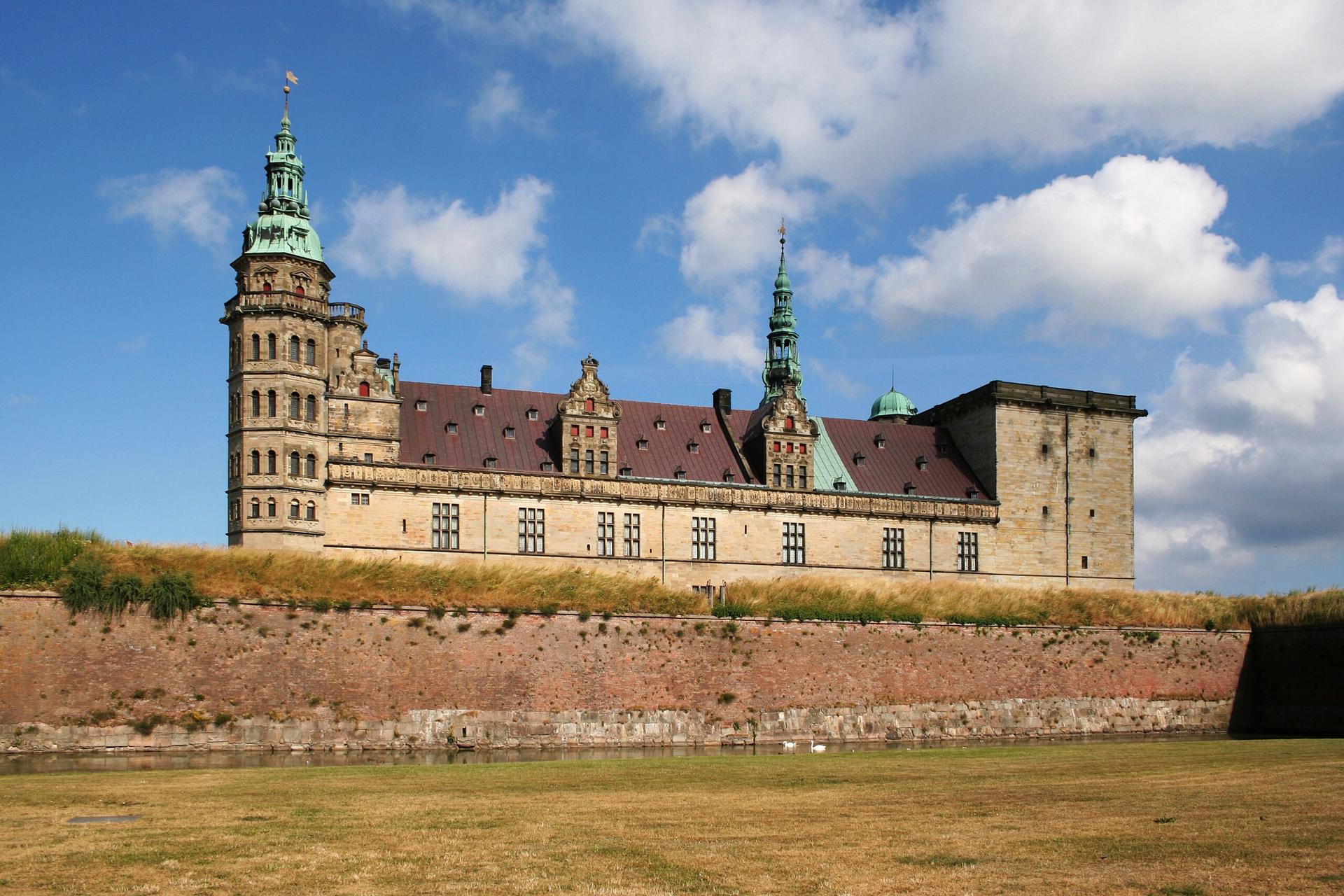
Looking beyond Helene Grave? Discover North Zealand for broader travel guides, local hot-spots, and regional highlights.
Explore North Zealand