

Galgebakken, Ribe Travel Guide
Free Guide: Denmark's haunting reminder of the witch hunts that claimed eleven lives in Ribe between 1572 and 1652.


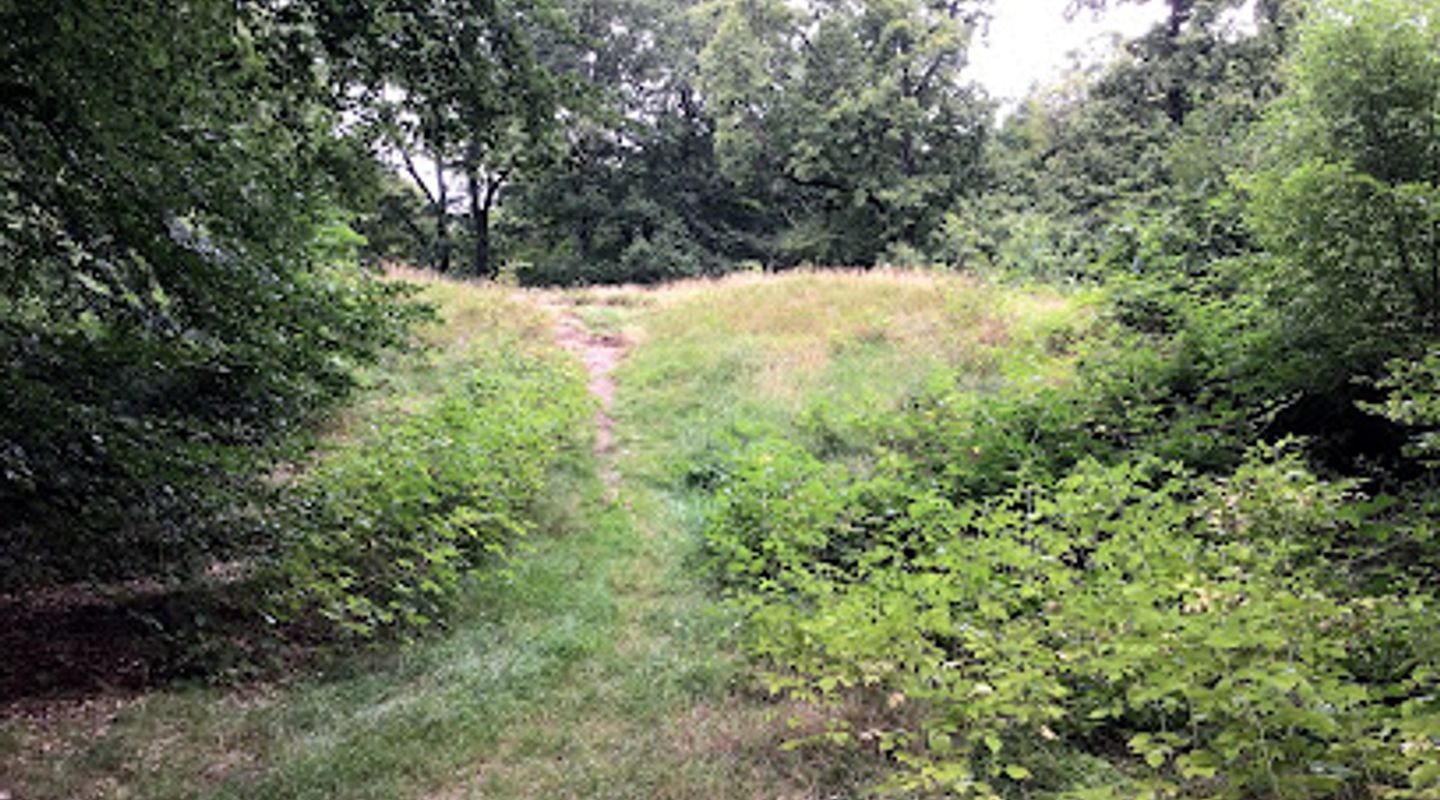
A brief summary of Galgebakken
Denmark's haunting reminder of the witch hunts that claimed eleven lives in Ribe between 1572 and 1652.
Galgebakken (Gallows Hill) is a historically significant open-air site on the outskirts of Ribe, Denmark's oldest town. This somber landmark commemorates the execution of Maren Spliid, Denmark's most famous witch trial victim, who was burned at the stake here in 1641. The site stands as a powerful reminder of the witch hunts that swept through Ribe between 1572 and 1652, during which eleven people were executed. Today, Galgebakken offers visitors a contemplative space to reflect on this dark chapter of Danish history.
On-site amenities
 Information boards
- Address
- Jernkærvej 1, 6760 Ribe
Getting there
Car from Ribe town center
Walking from Ribe old town
Guided walking tour
Bicycle from Ribe town center
Discover more about Galgebakken
A Dark Chapter in Danish History
Galgebakken, or Gallows Hill, sits on the outskirts of Ribe as a stark memorial to one of Denmark's most troubling historical episodes. Between 1572 and 1652, the town of Ribe witnessed 22 witch trials, resulting in eleven executions—a concentration of witch hunts that earned Ribe the grim distinction of being Denmark's answer to Salem. The site itself became the stage for these tragic events, where accused witches were brought to face their final moments.The most infamous execution at Galgebakken occurred on November 9, 1641, when Maren Spliid, a wealthy tailor's wife, was burned at the stake. Her case exemplifies the hysteria and injustice of the era. Spliid was initially accused by a nobleman named Didrik, who claimed she and two other witches had visited him in the night and blown into his mouth, causing him to vomit an object he believed to be of supernatural origin. Though initially acquitted by local courts and supported by her husband, the case was reopened by King Christian IV himself. Under torture in the Blue Tower of Copenhagen Castle, Spliid eventually confessed and named six other women as part of her supposed coven. She was then transported back to Ribe for public execution.
The Witch Hunt Era and Royal Involvement
The witch trials in Ribe occurred almost entirely during the reign of King Christian IV, who passed a law making witchcraft a criminal offense. The king's personal involvement in cases like Spliid's—even presiding over her trial at the highest court—demonstrates how deeply the witch hunt hysteria penetrated Danish society, reaching even the monarchy. The first execution in Ribe, Johanne Christensdatter Rygge, took place in 1572, while the last, Anna Bruds, occurred in 1652. With Christian IV's death, the fervor surrounding witchcraft accusations gradually subsided, though executions continued elsewhere in Denmark until 1693.The trials were marked by procedures that violated even Denmark's own laws. Torture, officially prohibited by a Danish statute from 1547, was routinely employed to extract confessions. The accused faced impossible odds: Spliid was required to find fifteen character witnesses to swear her innocence—a task she could not accomplish in a climate of fear and suspicion.
Public Spectacle and Community Impact
Executions at Galgebakken were public events that drew enormous crowds. Contemporary accounts suggest that so many people gathered to witness Maren Spliid's execution that the priest could barely move through the throng. Before her execution, Spliid was given half a pitcher of mead to calm her nerves—a grim courtesy before she was tied to a ladder and thrown into the flames. These public executions served as warnings to the community and reinforced the fear that sustained the witch hunt hysteria.The impact on Ribe's social fabric was profound. The trials touched families across the town, creating an atmosphere of suspicion and dread. The memorial tablet now set into the wall of the house where Maren Spliid lived with her tailor husband serves as a quiet acknowledgment of this tragedy, reminding visitors of the human cost of mass hysteria.
Remembrance and Historical Significance
Today, Galgebakken stands as a place of reflection and remembrance. The site has no elaborate monuments or visitor infrastructure—its power lies in its simplicity and the weight of history it carries. For those interested in understanding the darker aspects of European history, Galgebakken offers a tangible connection to the witch hunt era. The location is particularly meaningful for those studying the intersection of politics, religion, and justice in early modern Europe, as the Danish trials demonstrate how royal authority and legal systems could be weaponized against the vulnerable.Ribe itself has embraced its complex history, with museums and walking tours dedicated to exploring the witch trials and their victims. The HEX Museum of Witch Hunt, located in the town, provides deeper context and documentation of these events. Visiting Galgebakken as part of a broader exploration of Ribe allows visitors to understand how a prosperous medieval trading town became the site of one of Northern Europe's most significant witch hunts.
Evendo Review Centre
 Google
Guest reviews
Best time to go
Quietest: Jan, Feb & Dec · before 6am or at 9pm
Busy times are Evendo estimates for a typical year, to help you plan. Actual crowds vary with events, school holidays and the weather.
Explore Galgebakken on the map
A handpicked selection of must-see spots near Galgebakken, mapped for you.
Get your free copy of our complete guide to Galgebakken, delivered straight to you.
Everything on this page, from opening hours and how to get there to Eve’s tips and the best time to go, in one PDF you can read offline, print or share.
Already have an account? Sign in
Your Galgebakken guide is ready.
We'll send it to · Not you? Sign out

Getting your guide ready…
We are putting together a fresh copy of the Galgebakken guide. This can take up to a minute.
This can take a few moments. If your browser asks, choose Allow so the download can start. You'll find the guide in your Downloads folder.
Nothing happened? Download it again
Sorry, the guide is taking longer than usual. Please try again in a minute, or get it by email instead.
Other nearby places you may find interesting
The closest places of the same kind, if this one is not quite what you had in mind.
-
-
-
-
-


Swipe for more places
More to explore near Galgebakken

 Best experiences near Galgebakken
 Best hotels near Galgebakken
 Best landmarks near Galgebakken
 Best attractions near Galgebakken
 Best shops near Galgebakken
 Best restaurants near Galgebakken
 Best bars near Galgebakken
Do you manage this location?
Take control to get all the benefits, like improved information, better appearance, and stronger visibility across AI-powered discovery.
Explore more
Explore more of Ribe
Discover Ribe, Denmark's oldest town, where medieval charm meets modern allure. Experience Viking history, stunning architecture, and breathtaking natural wonders.
Explore Ribe
Explore more of Denmark
Discover Denmark: A perfect blend of history, modern design, and the cozy concept of hygge. Explore vibrant cities, serene landscapes, and world-class cuisine.
Explore Denmark
