Wooden Bridges of Ribe
Simple timber footbridges over Ribe’s quiet river, offering gentle views, soft light and a tranquil pause just beyond the medieval streets.
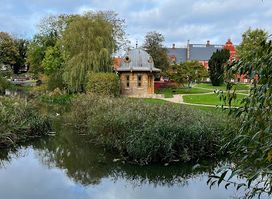
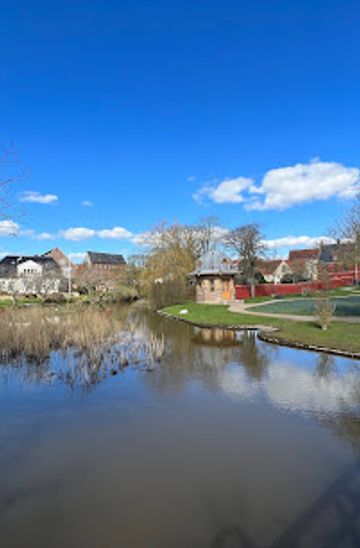
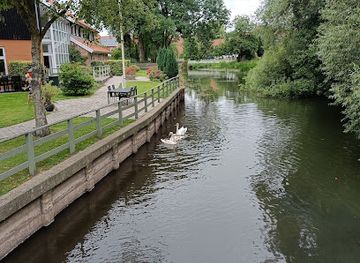
Tucked just off Ribe’s historic center, the Wooden Bridges span the calm River Ribe in a trio of simple footbridges linking small tree‑topped islets. This quiet corner feels worlds away from the town’s cobbled streets and cathedral towers, offering close-up views of half-timbered houses, slow-moving water and waterfowl. It is an easy, free stop where you can pause, watch reflections ripple under the planks and sense the rhythm of Denmark’s oldest town at a softer pace.
A brief summary to Wooden bridges
- Buste af Jacob A. Riis, Sct Catharinæ Pl., Ribe, 6760, DK
- Duration: 0.5 to 1.5 hours
- Free
-
 Outdoor
- Mobile reception: 4 out of 5

Know before you go
Hi, I'm Eve. Here are a few practical things to know before exploring Wooden bridges.
- Aim to visit around sunrise or late afternoon when the light is low and warm; reflections in the river and views of Ribe’s rooftops are at their most atmospheric.
- Bring a light jacket: the riverside can feel cooler and breezier than the narrow streets, especially outside high summer.
- Allow a little extra time to combine the bridges with nearby sights such as the Jacob A. Riis bust, St. Catherine’s Priory and Ribe Kunstmuseum.
Do you manage this location?
Take control to get all the benefits, like improved information, better appearance, and stronger visibility across AI-powered discovery. Learn more
Activate your presenceOther nearby places you may find interesting
Getting There
-
Train and short walk from Esbjerg
From Esbjerg, take a regional train to Ribe Station; trains typically run at least once an hour during the day and the journey takes about 30–35 minutes. A one-way adult ticket usually costs around 60–80 DKK in standard class. From Ribe Station, allow 10–15 minutes on foot along level, paved streets to reach the Wooden Bridges near Sct Catharinæ Plads; the route is step-free and suitable for wheeled luggage and strollers.
-
Car from Esbjerg or the wider Wadden Sea area
Driving from Esbjerg to Ribe takes roughly 30–40 minutes, depending on traffic. There is public parking available within a 5–10 minute walk of the Wooden Bridges, but spaces can be limited at busy times and some areas are time-restricted or pay-and-display, typically costing in the range of 10–20 DKK per hour where fees apply. Surfaces are mostly cobbled or paved, and from central parking areas the approach to the river is flat and straightforward.
-
Regional bus within South Jutland
Regional buses connect Ribe with nearby towns such as Esbjerg and Skærbæk, with typical journey times of 35–60 minutes depending on the route and intermediate stops. Single tickets usually fall between 40–70 DKK, and services are less frequent in the evenings and on weekends, so checking timetables in advance is important. Most buses stop near Ribe’s historic center, from where you should allow about 10–15 minutes of level walking on mixed cobblestone and pavement to reach the river and Wooden Bridges area.
For the on-the-go comforts that matter to you
-
 Seating Areas
-
 Trash Bins
-
 Information Boards
-
 Restrooms
-
 Drink Options
-
 Food Options
Discover more about Wooden bridges
Ribe’s River Crossing Retreat
The Wooden Bridges in Ribe form a small cluster of timber footbridges that cross the River Ribe just beyond the dense web of medieval streets. Here, three modest structures link grassy islets and riverbanks, creating an intimate patchwork of paths over the water. Their scale is human and unpretentious, but the setting makes them memorable: low railings frame views of gabled houses, church spires and leafy gardens while the river slides quietly beneath your feet.The bridges sit beside a bust of Jacob A. Riis on Sct Catharinæ Plads, a reminder that this tranquil spot is still very much part of Ribe’s story. From the planks you can look back to the town’s skyline or turn toward the greener edges of the river, using the bridges as a gentle transition between built history and softer landscape.Water, Light and Shifting Reflections
What lingers most here is the play of light on water. On clear days, the river mirrors the red roofs and timbered façades; a breeze breaks the reflection into patterns that shift with every step you take across the boards. Ducks and swans often patrol the channels, sliding through patches of reeds that fringe the banks and tiny island. The bridges’ simple wooden construction makes them feel close to the elements: you hear footsteps on the planks, notice the faint creak of joints and sense the current flowing just below.Even in overcast weather, the scene has a muted charm. Mist can hang low over the water in cooler months, softening the outlines of nearby buildings and turning the bridges into spectral shapes emerging from the haze. After rain, the timber darkens and glistens, and puddles along the paths reflect shards of cathedral stone and tiled roofs overhead.A Quiet Counterpoint to the Old Town
Although they lie only a short stroll from Ribe’s main streets, the Wooden Bridges feel unexpectedly calm. They provide a breathing space between visits to museums, churches and old guild houses, somewhere to sit on a bench, lean on a railing and simply listen. You might catch the distant peel of bells from Ribe Cathedral, the murmur of conversation from nearby cafés or the rustle of wind through trees on the little island where the bridges meet.Because the area is open and ungated, it functions as an informal riverside park as much as a crossing point. Locals cut across on bicycles, children stop to watch fish and visiting photographers wait for clouds to shift. It is an easy place to return to at different times of day to see how the river and town change with the light.Layers of History Along the Banks
Ribe has grown up with this river for more than a millennium, and the Wooden Bridges sit within that long relationship between water and town. Nearby stand the remains and echoes of monastic life at St. Catherine’s Priory, reminders of noble merchant houses and the legacy of Jacob A. Riis, whose work far across the Atlantic began in these quiet streets. From the bridges, you are within sight or short walking distance of many of Ribe’s historic landmarks, yet you remain close to reeds, birds and the everyday flow of water.This juxtaposition is part of the appeal: a place where trade, faith and urban life once clustered tightly around the river now opens to gentler uses. The bridges themselves are modern in spirit but feel timeless, echoing centuries of simpler crossings that would have connected craftsmen, traders and townsfolk to fields and marshland beyond.Slow Moments and Simple Pleasures
Visiting the Wooden Bridges is less about a checklist of sights and more about claiming a slow moment in Denmark’s oldest town. You might stand on the central span at sunset as the sky reddens behind the cathedral tower, or pause in the early morning when only birds and the faint hum of delivery vans disturb the stillness. The spot lends itself to sketching, quiet conversation, thoughtful photography or just watching ripples fan out from a passing duck.There is no formal route or required way to explore this corner: you can cross each bridge in turn, circle the small island, or linger in one place and observe how life glides past. In a town rich with formal monuments and structured stories, the Wooden Bridges offer a softer kind of experience—an unhurried encounter with Ribe’s river, air and light that stays with you long after you have stepped back onto cobblestones.Explore the best of what Wooden bridges has to offer













More about The North Sea Islands
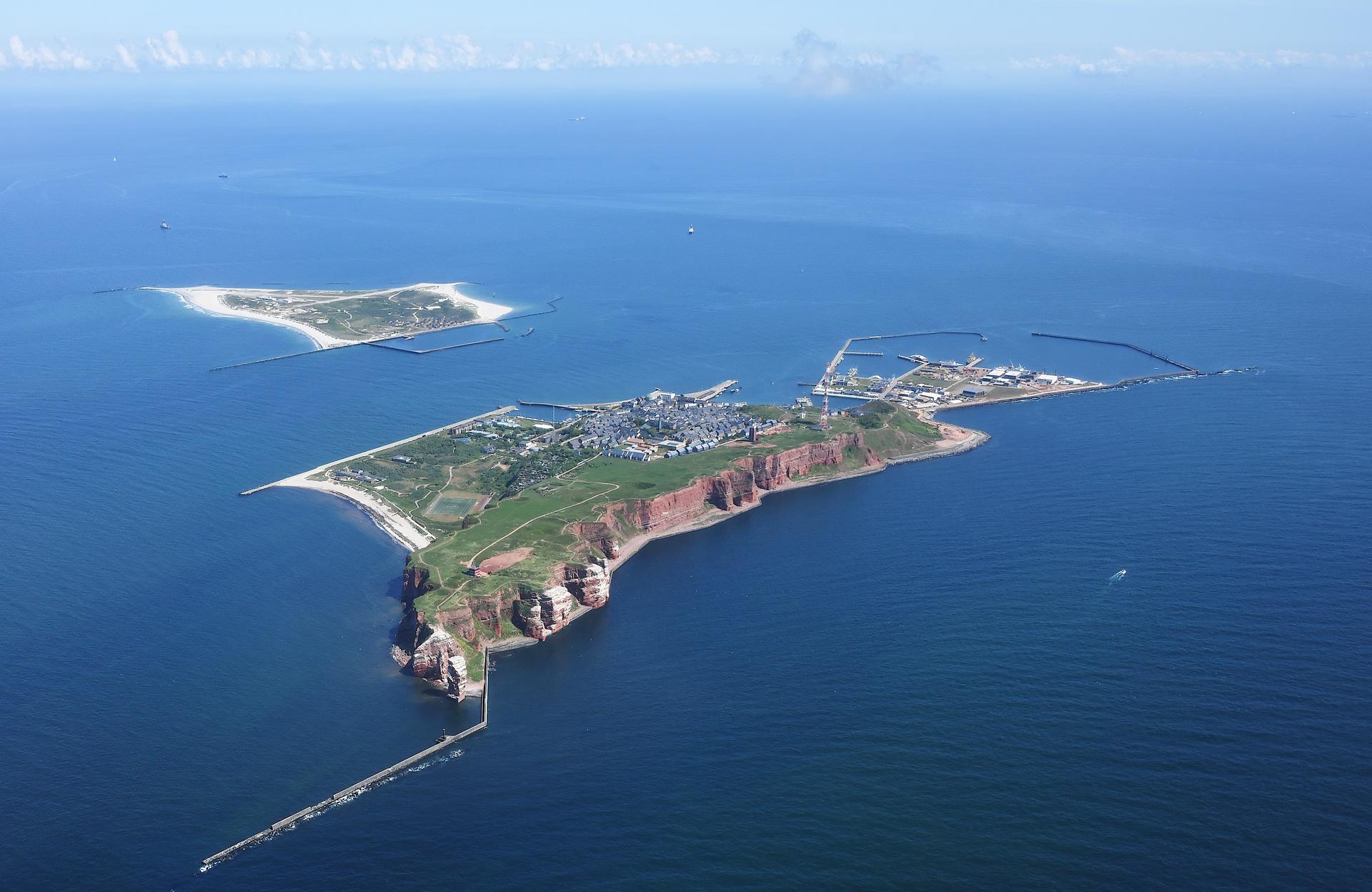
Discover the North Sea Islands of Denmark: idyllic sandy beaches, vibrant local culture, and unique natural landscapes await you on Fanø, Rømø, and Mandø.
Tell me more about The North Sea Islands