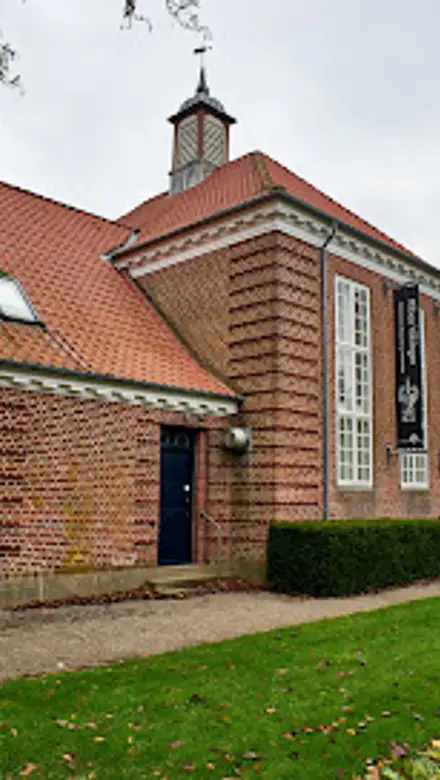
Museum For Vikingtid Og Middelalder, Ribe Travel Guide
Free Guide: Step into a thousand years of Ribe’s past, from bustling Viking marketplace to medieval trading town, in an engaging riverside museum of artefacts and stories.


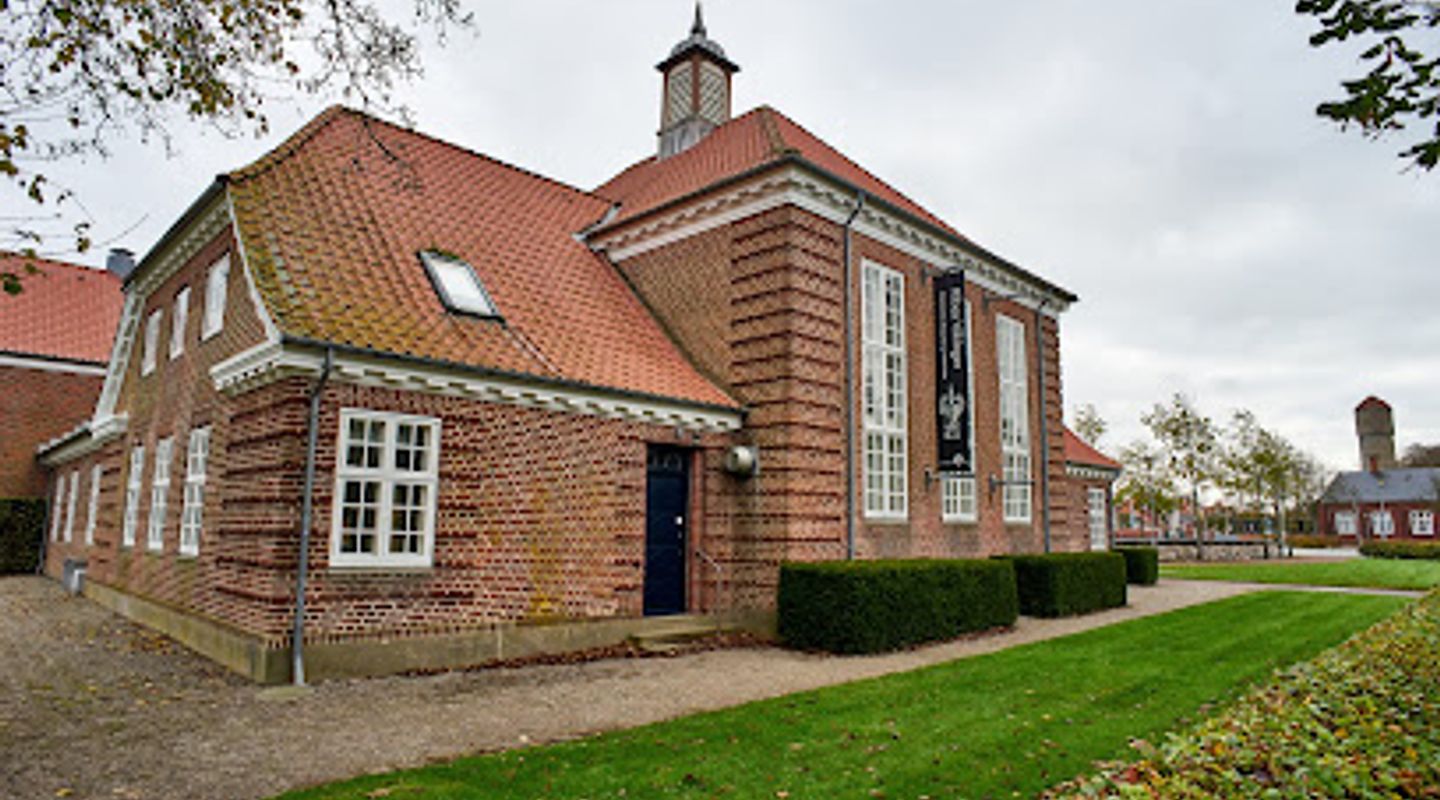
A brief summary of Museum For Vikingtid Og Middelalder
Step into a thousand years of Ribe’s past, from bustling Viking marketplace to medieval trading town, in an engaging riverside museum of artefacts and stories.
At Museet Ribes Vikinger in Ribe, Denmark’s oldest town, you step into a thousand years of history, from the first Viking marketplace around year 700 to the bustling Renaissance port city. Atmospheric galleries overlooking the Ribe Å river are filled with archaeological treasures: jewellery, tools, runic stones and ship fittings that trace Ribe’s rise as Scandinavia’s key trading hub. Immersive installations, detailed models and hands‑on activity areas bring daily life, belief and craftsmanship in Viking and medieval Ribe vividly to life for all ages.
On-site amenities
 Restrooms
 Seating areas
 Trash bins
 Information boards
 Visitor centre
Opening hours
- Every day10 am–4 pm
Opening hours as listed on the venue’s Google Business Profile. Hours can change for services and special events, so check with the venue before you go.
- Address
- Dagmarsgade 14B, 6760 Ribe
Getting there
Regional train to central Ribe and short walk
Bus connection within South Jutland
Car from Esbjerg and wider region
Discover more about Museum For Vikingtid Og Middelalder
Ribe’s story from river market to medieval powerhouse
Museet Ribes Vikinger stands close to the spot where a simple marketplace by the Ribe Å river grew into what is often considered the first real town in the Nordic region around year 700. Inside, the permanent exhibitions follow Ribe’s development chronologically, so you can trace how a seasonal trading camp of craftsmen and merchants slowly transformed into a dense town of streets, churches and guilds.Display cases and atmospheric reconstructions introduce you to Viking Ribe between about 700 and 850, when the town flourished as Scandinavia’s largest trading centre. You see the goods that drew people here from across Europe: glass beads, metalwork, combs, coins and imported luxury items that speak of long-distance routes reaching the Frankish kingdoms, the British Isles and beyond.
Meeting the Vikings through objects and craftsmanship
One of the museum’s strengths is how it uses concrete objects to open a window on everyday life. Tools from bead makers, bronze casters and comb makers show how specialised crafts were organised in the early town. Weights, scales and hacked-up silver tell of barter and payment, while weapon fragments hint at the need to protect wealth in such a busy port.The Viking section also delves into beliefs and rituals. Grave finds, amulets and fragments of altars illustrate the mix of Norse gods, magic and early Christianity that characterised Ribe during this transition period. Texts and models help you imagine the original market stalls and simple wooden houses that stood where modern Ribe spreads today.
Life and faith in medieval and Renaissance Ribe
Beyond the Viking Age, the museum follows Ribe through the Middle Ages and Renaissance up to around 1700. Here the focus shifts from open market to a structured town dominated by the cathedral, religious houses and prosperous merchants’ homes. Exhibits explore birth and childhood, work, play, health, sickness and death in a world shaped by Catholic rituals and later by the Reformation.You encounter stories of monasteries and churches, colourful processions, and the rhythms of the liturgical year. Trade never disappears from the narrative: coins, imported ceramics and everyday objects reveal how Ribe stayed plugged into European networks, even as political power moved elsewhere in Denmark.
Hands-on history for curious families
Museet Ribes Vikinger is designed to be approachable even if you are not a history specialist. Many texts are offered in several languages, and key scenes are supported by models, films and soundscapes, so children and adults can follow along together. A dedicated activity area themed around figures such as Dagmar and Valdemar encourages younger visitors to open drawers, handle replicas and role‑play scenes from town life.Costumes, shields and simple props invite imaginative play, while tactile elements let children feel the weight of a sword hilt or the texture of carved bone. Throughout the building, staff can often explain objects in more depth, and the museum shop continues the historical theme with books, replicas and decorative pieces inspired by the finds on display.
Atmosphere by the river and planning your visit
The museum building sits in central Ribe with views over the calm ribbon of the Ribe Å, so between galleries you can pause by the windows and imagine long‑gone ships tied up along the banks. Indoors, the lighting is generally soft and controlled to protect fragile artefacts, creating a quietly dramatic mood that suits rainy or windy days just as well as bright summer afternoons.Most exhibition spaces are on a few levels connected by lifts and ramps, and the overall circuit can comfortably be explored in one to two hours, with extra time if you like to read every panel or linger in the children’s area. Basic amenities such as restrooms, seating and information boards are available, and combined with Ribe’s compact historic centre, the museum fits naturally into a wider day of exploring cobbled streets, the cathedral and the surrounding Wadden Sea region.
Evendo Review Centre
 Google
Guest reviews
Best time to go
Quietest: Jan, Feb & Mar · before 8am or at 6pm
Busy times are Evendo estimates for a typical year, to help you plan. Actual crowds vary with events, school holidays and the weather.
Explore Museum For Vikingtid Og Middelalder on the map
A handpicked selection of must-see spots near Museum For Vikingtid Og Middelalder, mapped for you.
Get your free copy of our complete guide to Museum For Vikingtid Og Middelalder, delivered straight to you.
Everything on this page, from opening hours and how to get there to Eve’s tips and the best time to go, in one PDF you can read offline, print or share.
Already have an account? Sign in
Your Museum For Vikingtid Og Middelalder guide is ready.
We'll send it to · Not you? Sign out

Getting your guide ready…
We are putting together a fresh copy of the Museum For Vikingtid Og Middelalder guide. This can take up to a minute.
This can take a few moments. If your browser asks, choose Allow so the download can start. You'll find the guide in your Downloads folder.
Nothing happened? Download it again
Sorry, the guide is taking longer than usual. Please try again in a minute, or get it by email instead.
Other nearby places you may find interesting
The closest places of the same kind, if this one is not quite what you had in mind.
-
Museet Ribes Vikinger Dive into 1,000 years of Ribe’s past, from bustling Viking marketplace to medieval port city, in an intimate museum packed with original finds and stories.
-
Riberhus Slotsbanke Grassy castle ramparts, a serene Queen Dagmar statue and wide Ribe panoramas reveal the quiet remains of Denmark’s former royal stronghold by the Wadden Sea.
-
Ribe VikingeCenter Immerse yourself in a full-scale reconstructed Viking town near Ribe, where costumed craftspeople, warriors and farmers bring 1300 years of Danish history vividly to life.
-
Jacob A. Riis Museum The childhood home of a Danish-American reformer who documented poverty and changed a nation.
-
Ribe Cathedral Explore Denmark's rich glass and ceramic heritage at Holmegaard Værk, featuring live demonstrations and interactive workshops.
Swipe for more places
More to explore near Museum For Vikingtid Og Middelalder
-
 Best experiences near Museum For Vikingtid Og Middelalder
-
 Best hotels near Museum For Vikingtid Og Middelalder
-
 Best landmarks near Museum For Vikingtid Og Middelalder
-
 Best attractions near Museum For Vikingtid Og Middelalder
-
 Best shops near Museum For Vikingtid Og Middelalder
-
 Best restaurants near Museum For Vikingtid Og Middelalder
-
 Best bars near Museum For Vikingtid Og Middelalder







Do you manage this location?
Take control to get all the benefits, like improved information, better appearance, and stronger visibility across AI-powered discovery.
Explore more
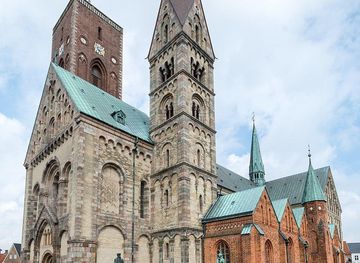
Explore more of Ribe
Discover Ribe, Denmark's oldest town, where medieval charm meets modern allure. Experience Viking history, stunning architecture, and breathtaking natural wonders.
Explore Ribe
Explore more of Denmark
Discover Denmark: A perfect blend of history, modern design, and the cozy concept of hygge. Explore vibrant cities, serene landscapes, and world-class cuisine.
Explore Denmark