Sct Hans Kilde, Roskilde Travel Guide
Free Guide: A tiny historic spring tucked behind Roskilde’s houses, Sct. Hans Kilde offers a brief, tranquil glimpse into the town’s medieval, church-linked water heritage.


A brief summary of Sct Hans Kilde
A tiny historic spring tucked behind Roskilde’s houses, Sct. Hans Kilde offers a brief, tranquil glimpse into the town’s medieval, church-linked water heritage.
Tucked behind houses on Skolegade in central Roskilde, Sct. Hans Kilde is a small historic spring site that quietly recalls the town’s medieval past. Once linked to the nearby Sankt Hans churchyard and local traditions, this modest green corner combines a simple water source, stonework and a few trees into a surprisingly atmospheric pause from busy streets. It is not a major sight, but for those who enjoy small historical traces woven into the everyday cityscape, it offers a gentle, contemplative stop.
On-site amenities
 Restrooms
 Drink options
 Drinking water
 Food options
 Seating areas
 Trash bins
 Information boards
Opening hours
- Every dayOpen 24 hours
Opening hours as listed on the venue’s Google Business Profile. Hours can change for services and special events, so check with the venue before you go.
- Address
- Skolegade 17A, 4000 Roskilde
- Website
Getting there
Train and walking from Copenhagen
Local bus within Roskilde
Car or taxi from Greater Copenhagen
Discover more about Sct Hans Kilde
A modest spring with deep historical roots
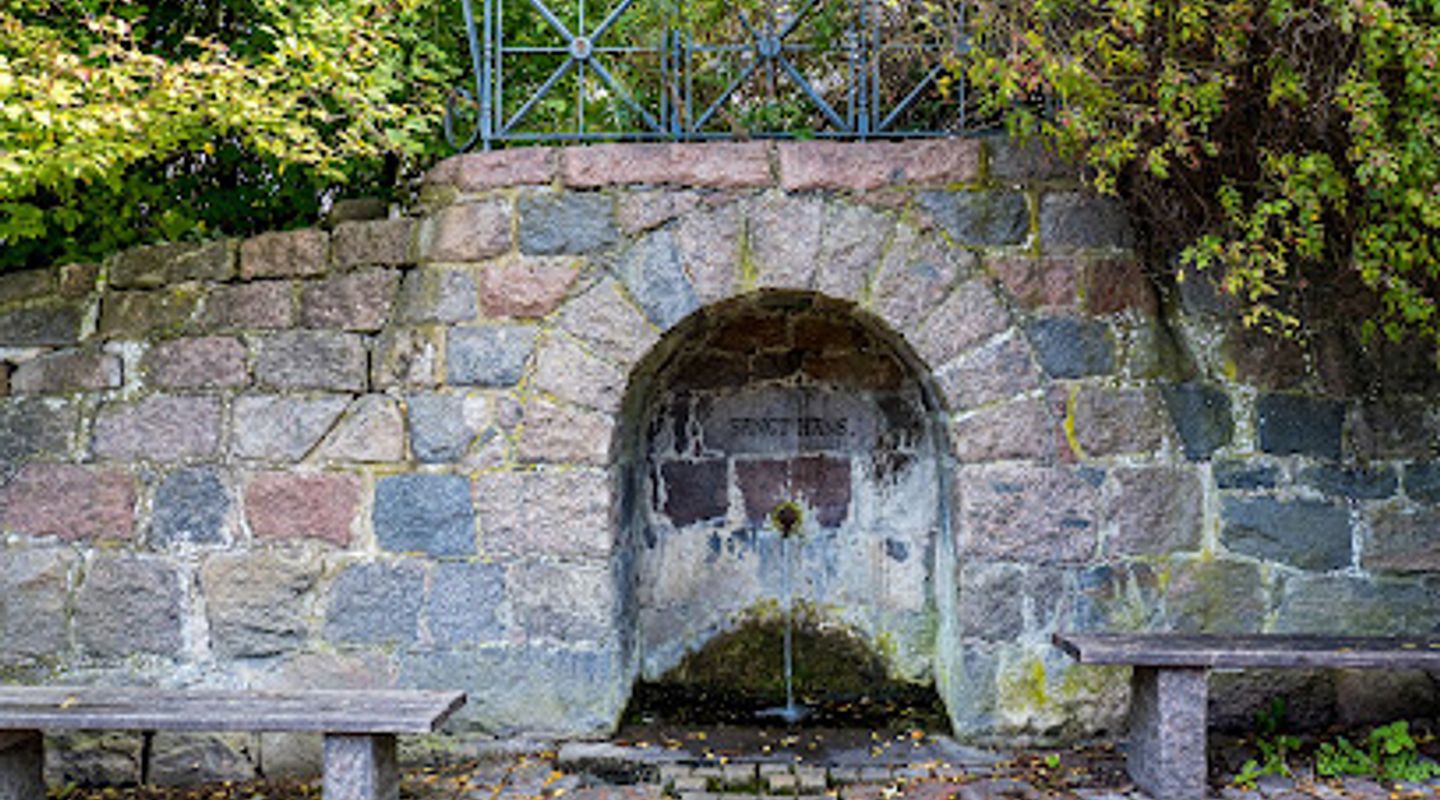
Sct. Hans Kilde is one of those understated places where Roskilde’s long history surfaces in a very small compass. Hidden off Skolegade among private homes and gardens, the site marks a historic spring traditionally associated with Saint John and the former church and cemetery that once occupied this part of town. The scale today is intimate, but the sense of continuity is strong: people have come to this spot for centuries to draw water, meet neighbours or quietly reflect.The spring itself is framed by simple stonework and low greenery, more a suggestion of an old holy well than a grand monument. Its charm lies in how it sits within the everyday fabric of Roskilde – a reminder that the city’s medieval and religious heritage is not only in its cathedral towers, but also in small places where water once shaped daily life.
A quiet green corner in the middle of town
Arriving at Sct. Hans Kilde, you step into a tiny enclave of calm between houses and backyards. A few trees, patches of lawn and modest plantings give the spot a pocket-park feel, while views are largely enclosed by fencing and façades. The atmosphere is sheltered and slightly secluded, making it an appealing detour if you are already exploring the historic centre on foot.This is not a destination park with elaborate landscaping; instead, it feels like a neighbourhood sanctuary, used more for a brief pause than for long stays. The close presence of surrounding homes adds a lived-in quality, as if you are glimpsing a fragment of local history that residents have quietly kept in the urban landscape.
Traces of faith, folklore and local memory
Like many springs connected to saints in Northern Europe, Sct. Hans Kilde occupies a space where faith and folklore once overlapped. Over the centuries, such springs were often thought to have beneficial or even healing properties, and gatherings were linked with church festivals around Midsummer and Saint John’s Day. While those traditions are not actively re-enacted here today, the association lingers in the name and the continued care for the site.The nearby former Sankt Hans churchyard and the broader ecclesiastical history of Roskilde give the spring added resonance. Standing by the water, it is easy to imagine how this small source would have been woven into processions, rituals and everyday routines when the church was still central to the quarter’s identity.
A short but meaningful stop for urban explorers
For visitors, Sct. Hans Kilde works best as a brief, contemplative stop on a wider walk through Roskilde’s old streets. There are no formal exhibits, but the place invites you to slow down, listen to distant city sounds softened by trees and let the mind wander through earlier centuries. A few minutes are enough to see the physical features, yet the contrast with the surrounding city makes the moment linger.Because it is small and residential in character, it is also a good spot to introduce children to the idea that history can hide in very ordinary surroundings. A visit can easily be combined with the cathedral, nearby squares and the museum quarter, creating a richer picture of how water, worship and settlement once interacted here.
Practical considerations and respectful visiting
Sct. Hans Kilde is freely accessible at all hours, and there is no entrance fee or infrastructure beyond simple paths and occasional seating nearby. Surfaces are generally level, though compact, and the short approach through town streets is manageable for most visitors. Mobile reception is reliable, allowing you to read up on the site’s background as you stand here.Because the spring sits so close to residential properties, a quiet, respectful attitude makes a big difference. Staying on paths, supervising children and keeping visits relatively short helps preserve the tranquil character that makes this little historic corner worth seeking out in the first place.
Evendo Review Centre
 Google
Guest reviews
Best time to go
Quietest: Jan, Feb & Nov · before 8am or at 8pm
Busy times are Evendo estimates for a typical year, to help you plan. Actual crowds vary with events, school holidays and the weather.
Explore Sct Hans Kilde on the map
A handpicked selection of must-see spots near Sct Hans Kilde, mapped for you.
Get your free copy of our complete guide to Sct Hans Kilde, delivered straight to you.
Everything on this page, from opening hours and how to get there to Eve’s tips and the best time to go, in one PDF you can read offline, print or share.
Already have an account? Sign in
Your Sct Hans Kilde guide is ready.
We'll send it to · Not you? Sign out

Getting your guide ready…
We are putting together a fresh copy of the Sct Hans Kilde guide. This can take up to a minute.
This can take a few moments. If your browser asks, choose Allow so the download can start. You'll find the guide in your Downloads folder.
Nothing happened? Download it again
Sorry, the guide is taking longer than usual. Please try again in a minute, or get it by email instead.
Other nearby places you may find interesting
The closest places of the same kind, if this one is not quite what you had in mind.
-
-
-

-
-


Swipe for more places
More to explore near Sct Hans Kilde

 Best experiences near Sct Hans Kilde
 Best hotels near Sct Hans Kilde
 Best landmarks near Sct Hans Kilde
 Best attractions near Sct Hans Kilde
 Best shops near Sct Hans Kilde
 Best restaurants near Sct Hans Kilde
 Best bars near Sct Hans Kilde
Do you manage this location?
Take control to get all the benefits, like improved information, better appearance, and stronger visibility across AI-powered discovery.
Explore more

Explore more of Roskilde
Discover Roskilde: A blend of rich history, Viking heritage, and vibrant music culture in the heart of Denmark, just a short journey from Copenhagen.
Explore Roskilde
Explore more of Denmark
Discover Denmark: A perfect blend of history, modern design, and the cozy concept of hygge. Explore vibrant cities, serene landscapes, and world-class cuisine.
Explore Denmark