Skt. Laurentius, Roskilde Travel Guide
Free Guide: Step beneath Roskilde’s central square and up its historic tower for a compact journey through 900 years of church ruins, civic life and city views in one spot.


A brief summary of Skt. Laurentius
Step beneath Roskilde’s central square and up its historic tower for a compact journey through 900 years of church ruins, civic life and city views in one spot.
Hidden beneath Roskilde’s central square Stændertorvet, Sankt Laurentius Kirkeruin reveals the remains of a 12th‑century church, while the preserved brick tower above has served as bell tower, fire watch and town hall tower over the centuries. Today, this compact museum experience combines underground ruins, a remarkably early brick floor, and a climb up the historic tower for some of the best views across Roskilde’s old town and cathedral skyline.
On-site amenities
 Restrooms
 Seating areas
 Trash bins
 Information boards
- Address
- Stændertorvet, 4000 Roskilde
- Phone
- Website
Getting there
Train from Copenhagen and short walk
Local bus within Roskilde
Car or taxi from the surrounding region
Discover more about Skt. Laurentius
Layers of Roskilde’s Past Beneath the Square
Beneath the cobbles of Stændertorvet, Sankt Laurentius gathers almost a millennium of Roskilde history in a surprisingly small footprint. Here, the outline of a once-grand medieval church lies preserved just below the busy market square, quietly telling stories of faith, power and everyday life in one of Denmark’s earliest royal cities. The modest entrance at street level barely hints at what waits below: an atmospheric underground ruin and the base of a tower that has watched Roskilde change around it.Only part of the original ground plan is exposed, but it is enough to sense the scale of the stone church that rose here in the 12th century. Interpretive displays help you picture the full structure that once dominated the square and linked closely to Roskilde’s role as a religious and political centre.
From Wooden Chapel to Stone Church
Long before the stone walls appeared, a wooden church stood on this site in the 11th century, serving an early Christian community at a time when Denmark was still being consolidated as a Christian kingdom. Archaeologists have found burials from this period, hinting at a simple timber structure now lost to time.Around 1125, builders replaced wood with travertine limestone, a local material quarried near Roskilde. Later rebuilds introduced red brick, marking an early phase of brick construction in Scandinavia. Over the centuries the nave was extended westwards and architectural details refined, reflecting growing prosperity and changing tastes. Walking among the foundations today, you are effectively tracing the footprint of several building phases layered one over another.
A Rare Medieval Brick Floor Under Your Feet
One of the site’s most striking features is the preserved brick floor, laid in a mosaic of red and dark-fired tiles. It is considered one of the earliest brick pavements in the region, and it instantly catches the eye when you step into the ruin. The subtle colour shifts in the fired clay, the worn edges and slight unevenness speak of countless footsteps: clergy moving between altar and choir, townsfolk gathering for worship, and processions on major feast days.Discreet lighting and clear explanations make it easy to appreciate the craftsmanship. Rather than presenting the church as a distant curiosity, the exhibition focuses on the tangible details of medieval construction—how walls were bonded, how floors were laid, and how excavations in the late 20th century brought these details back into the light.
The Tower That Became the Town’s Watch
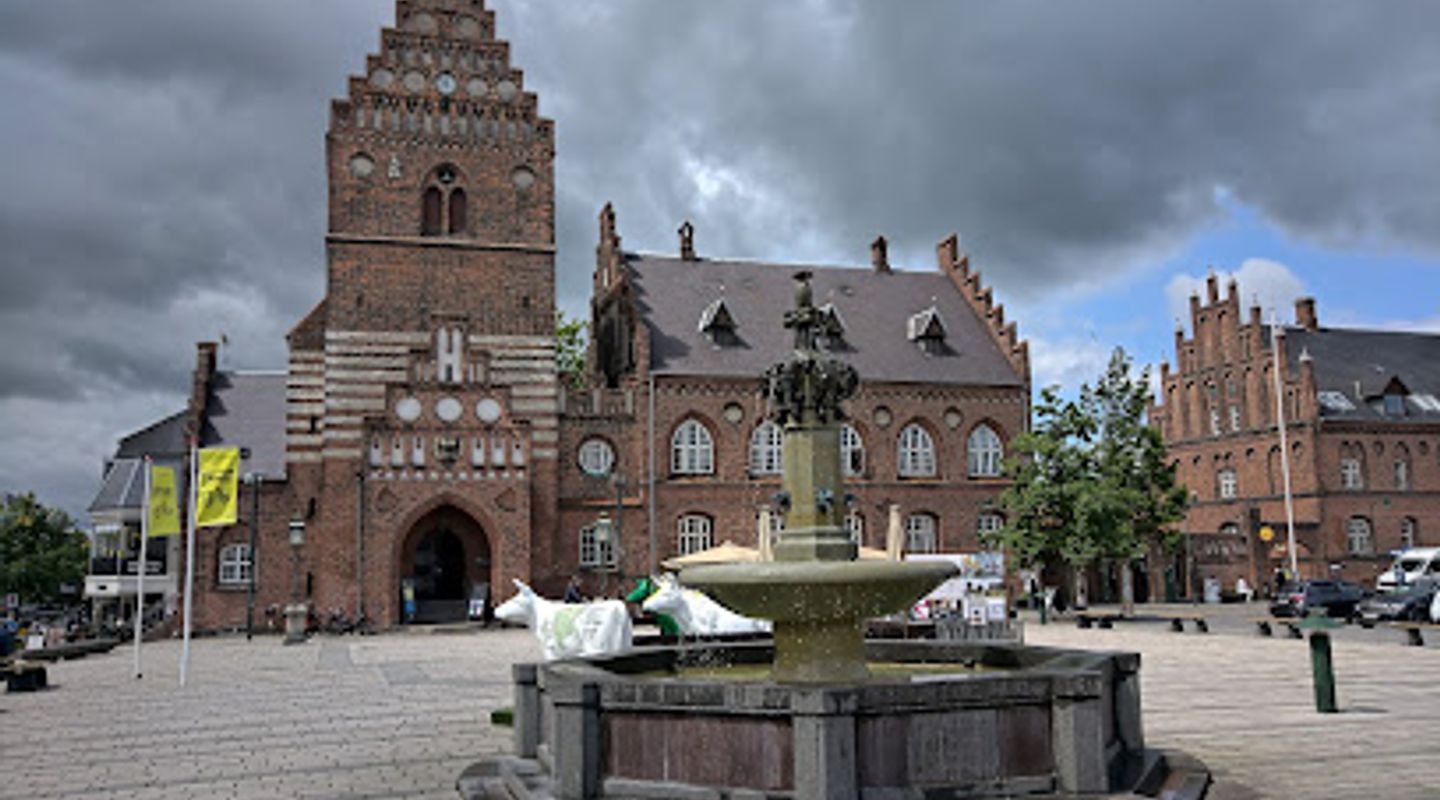
Above ground, the still-standing tower dates from around 1500 and once formed the western end of the church. When the Reformation led to the demolition of the nave in the 16th century, the tower escaped destruction and took on new, more practical roles. It became the city’s bell tower, calling citizens to attention rather than worship, and a lookout post where watchmen scanned the rooftops for signs of fire.In the 18th century the tower gained yet another identity when a new town hall was built against it, transforming it into a town hall tower and anchoring it firmly in the civic life of Roskilde. Today, climbing the narrow staircases reveals traces of these changing functions, from prison cells and guard rooms to the belfry, before you finally step out to views over tiled roofs, church spires and the nearby cathedral.
An Intimate Museum Experience in the City Centre
Despite its deep history, Sankt Laurentius is a compact, easily digestible visit. Exhibits outline key finds from the excavations, including burial evidence from the wooden church phase and artefacts that illuminate everyday life around the square. Paving stones on Stændertorvet mark the original footprint above ground, so you can connect what you see below with the modern urban layout.Because of its central location, the site fits neatly into a wider exploration of Roskilde’s old town. It offers a quieter, more archaeological counterpoint to the grandeur of the cathedral just steps away, ideal for travellers who enjoy getting close to original materials and structural remains rather than only looking at restored interiors.
Stories of Saint Lawrence and the City
The church was dedicated to Saint Lawrence, a deacon of the early Roman church who, according to legend, was martyred on a gridiron. His image appears as a relief high on the tower, a subtle reminder of the saint’s enduring presence in the city’s story. Inside, brief introductions and displays place the dedication in a European context, linking Roskilde to a wider medieval network of churches sharing the same patron.Taken together—the underground ruin, the brick floor, the versatile tower and the quiet stories of a patron saint—Sankt Laurentius offers a concentrated glimpse of how religion, civic authority and everyday life intertwined here. It is less about grand spectacle and more about standing in the very spaces where Roskilde’s history unfolded, layer by carefully excavated layer.
Evendo Review Centre
 Google
Guest reviews
Best time to go
Quietest: Jan, Feb & Nov · before 7am or from 8pm
Busy times are Evendo estimates for a typical year, to help you plan. Actual crowds vary with events, school holidays and the weather.
Explore Skt. Laurentius on the map
A handpicked selection of must-see spots near Skt. Laurentius, mapped for you.
Get your free copy of our complete guide to Skt. Laurentius, delivered straight to you.
Everything on this page, from opening hours and how to get there to Eve’s tips and the best time to go, in one PDF you can read offline, print or share.
Already have an account? Sign in
Your Skt. Laurentius guide is ready.
We'll send it to · Not you? Sign out

Getting your guide ready…
We are putting together a fresh copy of the Skt. Laurentius guide. This can take up to a minute.
This can take a few moments. If your browser asks, choose Allow so the download can start. You'll find the guide in your Downloads folder.
Nothing happened? Download it again
Sorry, the guide is taking longer than usual. Please try again in a minute, or get it by email instead.
Unlock the best of Skt. Laurentius
Skip-the-line tickets, guided tours with entry, and walking tours of the area, booked in a few clicks.

Other nearby places you may find interesting
The closest places of the same kind, if this one is not quite what you had in mind.
-
-
-

-
-


Swipe for more places
More to explore near Skt. Laurentius

 Best experiences near Skt. Laurentius
 Best hotels near Skt. Laurentius
 Best landmarks near Skt. Laurentius
 Best attractions near Skt. Laurentius
 Best shops near Skt. Laurentius
 Best restaurants near Skt. Laurentius
 Best bars near Skt. Laurentius
Do you manage this location?
Take control to get all the benefits, like improved information, better appearance, and stronger visibility across AI-powered discovery.
Explore more

Explore more of Roskilde
Discover Roskilde: A blend of rich history, Viking heritage, and vibrant music culture in the heart of Denmark, just a short journey from Copenhagen.
Explore Roskilde
Explore more of Denmark
Discover Denmark: A perfect blend of history, modern design, and the cozy concept of hygge. Explore vibrant cities, serene landscapes, and world-class cuisine.
Explore Denmark