

Håndværksmuseet, Roskilde Travel Guide
Free Guide: An intimate upstairs museum in historic Roskilde, where traditional woodcraft tools and workshops trace the journey from forest timber to finely made everyday objects.


A brief summary of Håndværksmuseet
An intimate upstairs museum in historic Roskilde, where traditional woodcraft tools and workshops trace the journey from forest timber to finely made everyday objects.
Tucked above Lützhøfts historic grocer’s yard in central Roskilde, Håndværksmuseet is a compact but remarkably rich museum devoted to traditional woodcrafts. On the first floor of the old grain warehouse you follow the story of wood from forest to finished object through beautifully arranged workshops and an exceptional collection of tools from around 1800–1950. From wheelwright and cooper to woodcarver and clog maker, each corner reveals another specialist trade, preserving the skills that once powered everyday life in Danish towns.
On-site amenities
 Restrooms
 Drink options
 Drinking water
 Food options
 Seating areas
 Trash bins
 Information boards
 Visitor centre
Opening hours
- MonClosed
- Tue12 pm–4 pm
- Wed12 pm–4 pm
- Thu12 pm–4 pm
- Fri12 pm–4 pm
- Sat10 am–2 pm
- SunClosed
Opening hours as listed on the venue’s Google Business Profile. Hours can change for services and special events, so check with the venue before you go.
- Address
- Ringstedgade 6C, 4000 Roskilde
- Phone
- Website
Getting there
Train and walking from Roskilde Station
Local bus within Roskilde
Car or taxi within Roskilde
Discover more about Håndværksmuseet
Woodcraft Treasures Above the Old Grocer’s Yard
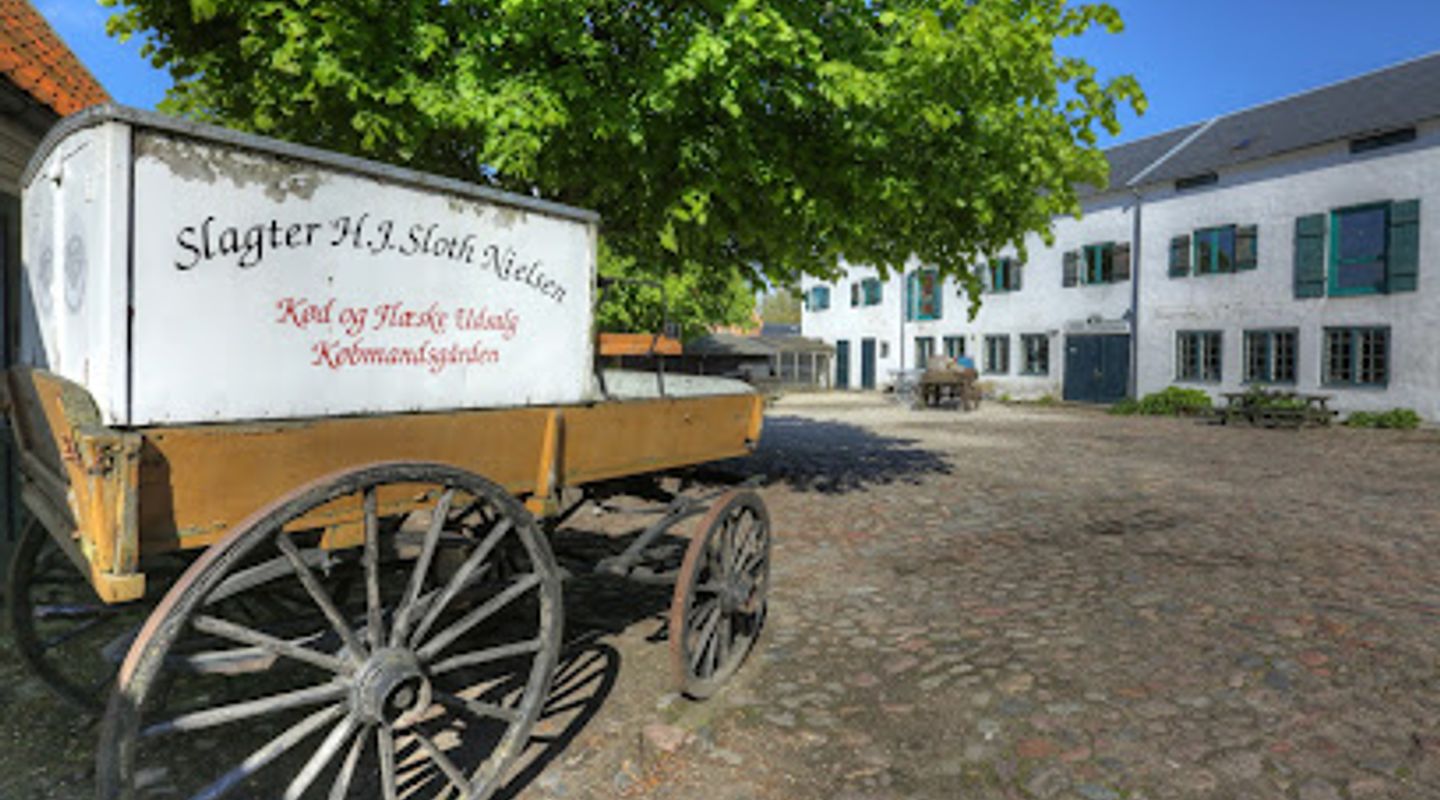
Håndværksmuseet occupies the first floor of Lützhøfts Købmandsgård’s former grain warehouse, hidden just behind the cobbled courtyard in Ringstedgade. Climb the stairs and you step into a quiet world of benches, planes, chisels and shavings, a deliberate contrast to the bustle of Roskilde’s shopping streets below. The building’s timber beams and worn floorboards set the scene for a museum that is itself a piece of local trade history.The setting links directly to Roskilde’s role as a market town. Where goods once moved in and out of the warehouse, the focus is now on the hands and tools that transformed raw wood into wagons, barrels, furniture and everyday objects. The atmosphere is intimate, almost like entering a preserved workshop rather than a formal gallery space.
The Journey of Wood from Forest to Finished Craft
The collection is arranged to follow wood on its journey from the forest to the finished product. You begin among saws, axes and equipment for felling and cutting timber, a reminder of the hard physical work that underpinned every craft on display. From there, the route threads past benches and tool racks belonging to different specialists.Each trade has its own enclave: the wheelwright shaping spokes and rims, the carpenter and joiner surrounded by planes and moulding tools, the cooper fitting curved staves into watertight barrels. Labels and layouts highlight the particular skills and sequences of tools each craft demanded, inviting you to imagine the rhythm of work rather than just admire the objects.
Workshops Frozen in Time
Many displays are set up as complete workstations, with tools laid out as if the craftsperson had just stepped away. The clog maker’s low shaving horse, the turner’s substantial lathe and the woodcarver’s fine chisels all sit ready for use. Light from the small windows falls across steel and wood, picking out the patina of years of handling.These reconstructed corners give a sense of how noisy, dusty and lively such workshops once were. You can trace how a simple block of wood becomes a curved wheel or a carved ornament, reading the story directly from the sequence of tools on the bench. The focus stays on process and technique, revealing how different trades achieved precision with hand-powered equipment alone.
The Craftspeople Behind the Tools
Beyond the tools themselves, Håndværksmuseet hints at the people who used them. Many pieces in the collection come from local workshops, representing generations of Roskilde artisans whose livelihoods depended on the durability of both their tools and their reputations. Initials burned into handles or homemade repairs on worn tools suggest personal attachment as well as practicality.Panels and object groupings quietly evoke the apprenticeship system, long working days and close-knit craft communities that shaped the town’s economy. By bringing together so many trades under one roof, the museum makes clear how interdependent they were, each specialist contributing a piece to the larger picture of everyday life.
A Compact Stop in a Wider Historic Quarter
Although the museum itself is small, a visit easily fits into a broader exploration of Roskilde’s historic heart. Downstairs, the old grocer’s shop re-creates a 1920s store, while the courtyard’s carts, sheds and cobblestones extend the impression of stepping back a century. Together, they form a cluster of sites that illuminate the links between production, trade and domestic life.Access to Håndværksmuseet is typically straightforward and visits are unhurried, making it an appealing stop for anyone with an interest in craft, design or local history. Free admission encourages spontaneous visits, whether you stay briefly to browse a few favourite trades or linger longer, absorbing the quiet details of tools that once shaped a wooden world.
Evendo Review Centre
 Google
Guest reviews
Best time to go
Quietest: Jan, Feb & Nov · before 9am or from 6pm
Busy times are Evendo estimates for a typical year, to help you plan. Actual crowds vary with events, school holidays and the weather.
Explore Håndværksmuseet on the map
A handpicked selection of must-see spots near Håndværksmuseet, mapped for you.
Get your free copy of our complete guide to Håndværksmuseet, delivered straight to you.
Everything on this page, from opening hours and how to get there to Eve’s tips and the best time to go, in one PDF you can read offline, print or share.
Already have an account? Sign in
Your Håndværksmuseet guide is ready.
We'll send it to · Not you? Sign out

Getting your guide ready…
We are putting together a fresh copy of the Håndværksmuseet guide. This can take up to a minute.
This can take a few moments. If your browser asks, choose Allow so the download can start. You'll find the guide in your Downloads folder.
Nothing happened? Download it again
Sorry, the guide is taking longer than usual. Please try again in a minute, or get it by email instead.
Other nearby places you may find interesting
The closest places of the same kind, if this one is not quite what you had in mind.
-
-
-

-
-


Swipe for more places
More to explore near Håndværksmuseet

 Best experiences near Håndværksmuseet
 Best hotels near Håndværksmuseet
 Best landmarks near Håndværksmuseet
 Best attractions near Håndværksmuseet
 Best shops near Håndværksmuseet
 Best restaurants near Håndværksmuseet
 Best bars near Håndværksmuseet
Do you manage this location?
Take control to get all the benefits, like improved information, better appearance, and stronger visibility across AI-powered discovery.
Explore more

Explore more of Roskilde
Discover Roskilde: A blend of rich history, Viking heritage, and vibrant music culture in the heart of Denmark, just a short journey from Copenhagen.
Explore Roskilde
Explore more of Denmark
Discover Denmark: A perfect blend of history, modern design, and the cozy concept of hygge. Explore vibrant cities, serene landscapes, and world-class cuisine.
Explore Denmark
