Domkirkemuseet, Roskilde Travel Guide
Free Guide: Intimate museum spaces inside Roskilde’s UNESCO-listed cathedral, revealing the hidden stories behind royal tombs, brick Gothic architecture and a millennium of Danish faith.


A brief summary of Domkirkemuseet
Intimate museum spaces inside Roskilde’s UNESCO-listed cathedral, revealing the hidden stories behind royal tombs, brick Gothic architecture and a millennium of Danish faith.
Housed within Roskilde Cathedral’s historic complex on Domkirkepladsen, Domkirkemuseet adds depth to a visit to Denmark’s royal burial church and UNESCO World Heritage site. Here you step behind the scenes of one of Northern Europe’s earliest brick Gothic cathedrals, exploring its art, liturgical treasures and the evolving story of Danish monarchs laid to rest next door. Expect vaulted spaces, artefacts and quiet corners that reveal a thousand years of power, faith and craftsmanship.
On-site amenities
 Restrooms
 Drink options
 Drinking water
 Food options
 Seating areas
 Sheltered areas
 Trash bins
 Information boards
 Visitor centre
Opening hours
- Mon–Sat10 am–4 pm
- Sun1 pm–4 pm
Opening hours as listed on the venue’s Google Business Profile. Hours can change for services and special events, so check with the venue before you go.
- Address
- Domkirkepladsen 3, 4000 Roskilde
- Phone
- Website
Getting there
Train from Copenhagen
Car from Copenhagen or Zealand
Local bus within Roskilde
Cycling in from nearby areas
Discover more about Domkirkemuseet
A museum inside a royal burial church
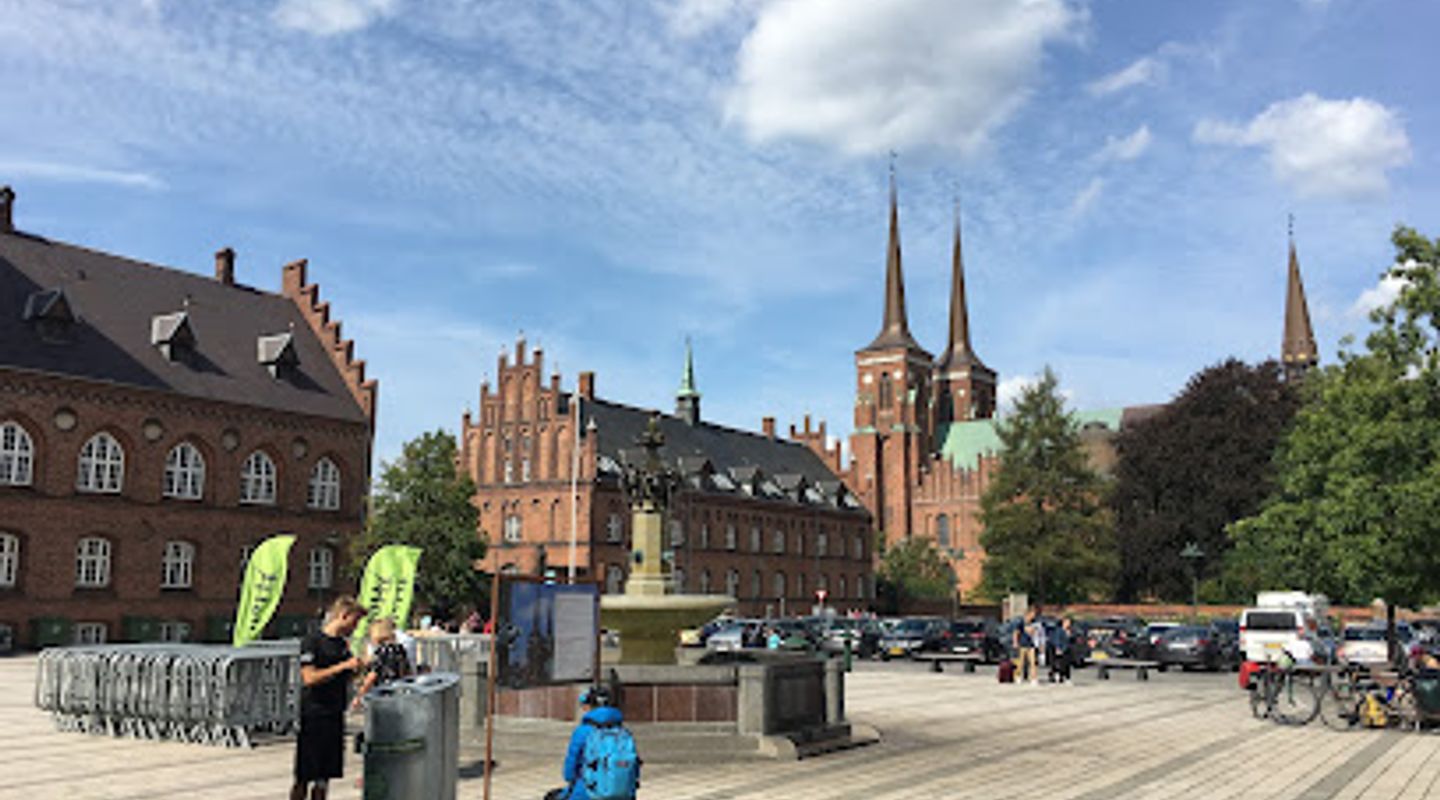
Domkirkemuseet is woven into the fabric of Roskilde Cathedral, Denmark’s royal burial church and one of the country’s most important religious buildings. The cathedral’s red-brick silhouette has dominated Roskilde since the 12th and 13th centuries, and the museum adds an interpretive layer to what you see in the nave and chapels. Rather than standing apart, the exhibition rooms feel like an extension of the church itself, with thick walls, timber details and glimpses of the surrounding cloisters and gardens.Inside, displays illuminate how this once-Catholic cathedral gradually became the Lutheran Church of Denmark’s showcase, while still guarding the tombs of around 40 kings and queens. Timelines, portraits and architectural drawings give context to what otherwise might feel like an overwhelming array of chapels, sarcophagi and side altars.
Stone, brick and changing styles
One of the museum’s strengths is how clearly it unpacks the cathedral’s architecture. Roskilde was among the first major brick Gothic churches in Northern Europe, and the museum exhibits fragments of earlier stonework, carved capitals and decorative details that reveal its Romanesque beginnings. Models and cross-sections show how the high choir, chapels and towers were added across the centuries.Panels and artefacts walk you through successive stylistic waves: from the austere medieval core to Renaissance and Baroque royal chapels, Neoclassical additions and even 20th-century interventions. Standing in the museum, you can trace how each monarch left a mark on the building, commissioning a new chapel or tomb that reflected tastes of their age.
Kings, queens and the story of power
Because the cathedral is the burial place of Danish monarchs from the Middle Ages to the present, the museum naturally focuses on royal history. Expect detailed background on figures such as Queen Margrete I, who united Denmark, Sweden and Norway, and Christian IV, the energetic builder king whose projects reshaped Copenhagen. There is material on earlier Viking rulers associated with the site, and on how Roskilde’s status as royal necropolis shaped the town’s fortunes.Rather than simply listing dynasties, the museum delves into ceremony and symbolism: how tombs were arranged to project power, why certain chapels were chosen, and how changing religious ideas influenced funerary art. This context transforms a walk among the sarcophagi in the cathedral from a visual experience into a narrative of ambition, belief and legacy.
Objects of devotion and everyday faith
Beyond royalty, Domkirkemuseet holds liturgical objects, textiles and artworks that evoke centuries of worship. Silver chalices, processional crosses, embroidered vestments and fragments of medieval wall paintings help you imagine services under candlelight long before electricity and modern heating. Explanations highlight how the Reformation altered the use of space and objects, from altarpieces to organs.Audio points and clear labels (often in multiple languages) make the collection accessible even if you are not steeped in church history. Smaller items, like carved wooden figures or pieces of stained glass, reward close attention and offer quieter, more intimate stories than the grand royal monuments nearby.
Atmosphere, views and practical visit
The museum’s atmosphere is calm and reflective, a contrast to the sometimes busy nave of the cathedral. Windows frame views of the red-brick towers, the nearby palace buildings and the green pockets of Roskilde’s historic centre. It is an appealing stop in cooler or wet weather, offering sheltered spaces without losing a sense of connection to the city outside.Most visitors combine the museum with a circuit of the cathedral and a stroll through the surrounding gardens and lanes. Allow unhurried time: the richness lies in reading a panel here, studying a model there, and then stepping back into the main church to recognise details you might otherwise have missed. Together, the cathedral and museum provide a compact but remarkably deep journey through 800 years of Danish and European history.
Evendo Review Centre
 Google
Guest reviews
Best time to go
Quietest: Jan, Feb & Mar · before 7am or from 8pm
Busy times are Evendo estimates for a typical year, to help you plan. Actual crowds vary with events, school holidays and the weather.
Explore Domkirkemuseet on the map
A handpicked selection of must-see spots near Domkirkemuseet, mapped for you.
Get your free copy of our complete guide to Domkirkemuseet, delivered straight to you.
Everything on this page, from opening hours and how to get there to Eve’s tips and the best time to go, in one PDF you can read offline, print or share.
Already have an account? Sign in
Your Domkirkemuseet guide is ready.
We'll send it to · Not you? Sign out

Getting your guide ready…
We are putting together a fresh copy of the Domkirkemuseet guide. This can take up to a minute.
This can take a few moments. If your browser asks, choose Allow so the download can start. You'll find the guide in your Downloads folder.
Nothing happened? Download it again
Sorry, the guide is taking longer than usual. Please try again in a minute, or get it by email instead.
Other nearby places you may find interesting
The closest places of the same kind, if this one is not quite what you had in mind.
-
-
-

-
-


Swipe for more places
More to explore near Domkirkemuseet

 Best experiences near Domkirkemuseet
 Best hotels near Domkirkemuseet
 Best landmarks near Domkirkemuseet
 Best attractions near Domkirkemuseet
 Best shops near Domkirkemuseet
 Best restaurants near Domkirkemuseet
 Best bars near Domkirkemuseet
Do you manage this location?
Take control to get all the benefits, like improved information, better appearance, and stronger visibility across AI-powered discovery.
Explore more

Explore more of Roskilde
Discover Roskilde: A blend of rich history, Viking heritage, and vibrant music culture in the heart of Denmark, just a short journey from Copenhagen.
Explore Roskilde
Explore more of Denmark
Discover Denmark: A perfect blend of history, modern design, and the cozy concept of hygge. Explore vibrant cities, serene landscapes, and world-class cuisine.
Explore Denmark