Dybbølstenen, Sonderborg Travel Guide
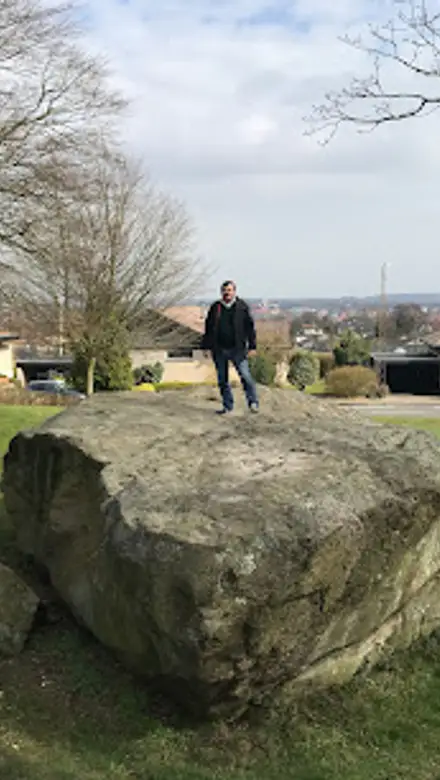
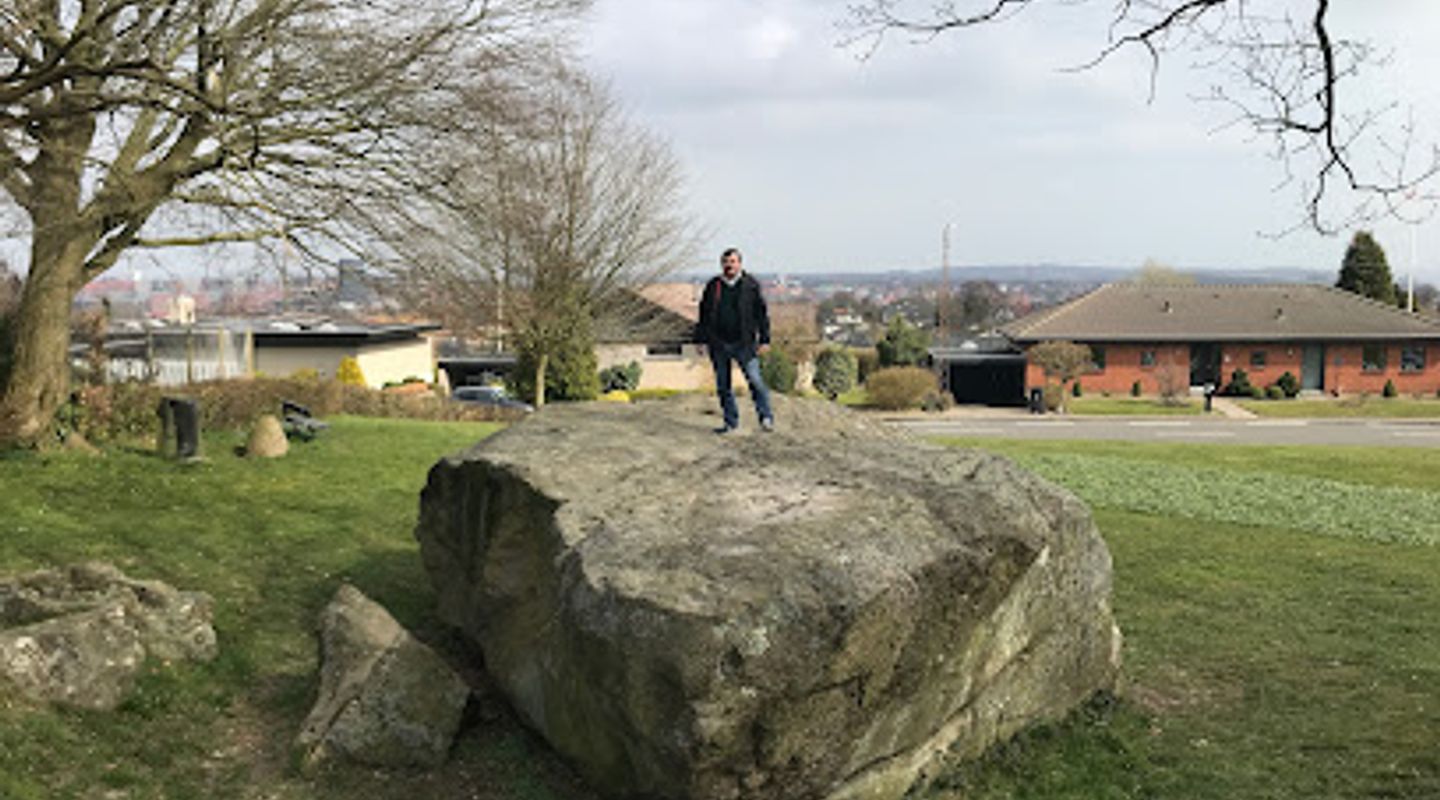
A solitary Ice Age boulder resting in the fields near Dybbøl Banke, Dybbølstenen quietly links deep geological time with South Jutland’s historic landscape.
Half-hidden in the fields near Sønderborg, Dybbølstenen is a striking glacial boulder that quietly links Denmark’s deep geological past with the historic landscape of Dybbøl Banke. Carried here by Ice Age glaciers and left standing in the rolling South Jutland countryside, this protected erratic stone offers a peaceful, low-key stop for anyone exploring the famous 1864 battlefield and the surrounding hills. Expect open skies, wind in the grass and a simple, contemplative encounter with deep time.
A brief summary to Dybbølstenen
- Sønderborg, 6400, DK
- Click to display
- Duration: 0.5 to 1 hours
- Free
-
 Outdoor
- Mobile reception: 4 out of 5

Know before you go
Hi, I'm Eve. Here are a few practical things to know before exploring Dybbølstenen.
- Wear waterproof footwear in wet seasons; access to the stone usually involves walking along field margins that can be muddy or uneven.
- Combine a short stop at Dybbølstenen with visits to Dybbøl Banke and Dybbøl Mill for a fuller picture of both natural and cultural history.
- Visit in early morning or late afternoon for softer light and more atmospheric photographs of the stone against the open sky.
Do you manage this location?
Take control to get all the benefits, like improved information, better appearance, and stronger visibility across AI-powered discovery. Learn more about listing your business on Evendo
Activate your presenceOther nearby places you may find interesting
The closest places of the same kind, if this one is not quite what you had in mind.
Explore Dybbølstenen on the Map
A handpicked selection of must-see spots near Dybbølstenen, mapped for you.
Getting There
-
Car from Sønderborg town centre
From central Sønderborg, driving to the Dybbøl area typically takes around 10–15 minutes, using local roads that wind through low hills and farmland. Parking is usually found near the Dybbøl Banke historic area or by small lay-bys on country lanes; expect short, unsigned walks of several hundred metres along field edges to reach the stone. There is no specific parking fee in the immediate rural surroundings, but observe any local signs and avoid blocking farm access.
-
Local bus and short countryside walk
Regional buses serving the Dybbøl and Sønderborg outskirts run at modest intervals during the day, with journey times from Sønderborg of about 15–25 minutes depending on the route. A standard single ticket within the local zone typically costs around 20–30 DKK. From the nearest bus stops on Dybbøl Banke or nearby village roads, expect an additional 15–25 minutes on foot along quiet lanes and farm tracks. Surfaces are mostly unpaved, so this option suits visitors comfortable with informal rural walking.
-
Bicycle from Sønderborg and surroundings
Cycling from Sønderborg to the Dybbøl area is a pleasant option, taking roughly 20–30 minutes each way along lightly trafficked country roads and signposted cycle routes. The terrain is gently hilly with some short climbs. There are no dedicated bike racks at the stone itself, so bring a lock and secure your bike to a fence or sign without obstructing access. This option is free aside from bicycle rental, which in Sønderborg generally ranges from about 100–200 DKK per day depending on the type of bike.
For the on-the-go comforts that matter to you
-
 Trash Bins
-
 Information Boards
-
 Seating Areas
Discover more about Dybbølstenen
An Ice Age Traveller in the Dybbøl Landscape
Dybbølstenen is a large glacial erratic – a boulder transported over long distances by moving ice and deposited as the ice sheet retreated at the end of the last Ice Age. Today it rests in gently undulating farmland near Sønderborg, its rounded form and weathered surface making it stand out from the softer shapes of the surrounding fields and hedgerows. To know it was once locked inside moving ice is to see the landscape differently: this quiet corner of South Jutland was once buried beneath hundreds of metres of ice.Unlike sculpted monuments or reconstructed ramparts nearby, Dybbølstenen is entirely natural. Its dimensions are modest compared with famous Scandinavian boulders, but at close range it dominates its immediate clearing. Lichens and patches of moss cling to its surface, tracing micro‑worlds on the stone while fine fractures and crystals hint at its original bedrock far to the north. It is both an object and a story – a tangible remnant of forces that shaped the entire region.Geological Story Written in Stone
Standing beside the boulder, you are effectively reading a short chapter of Danish geology. The stone’s mineral makeup differs from the local subsoil, showing that it was imported by the ice rather than formed in situ. Subtle colour variations – perhaps grey, speckled or faintly reddish depending on the light – reveal the type of ancient rock it once belonged to before glaciers tore it free.The fields around Dybbølstenen rest on a thick cover of glacial deposits, and the boulder helps make that abstract idea visible. It anchors big concepts – ice sheets, climate shifts, erosion – in something you can touch. Many such giants were once broken for building stone; the fact that this one remains gives a rare sense of the pre‑agricultural landscape that early inhabitants would have known. On a still day, with only birdsong and the rustle of crops, it is easy to imagine Stone Age people using such a landmark to navigate or gather.Quiet Counterpoint to the Battlefield Hills
Dybbøl and its heights are famous for the 1864 battle that helped redraw the Danish‑German border, and the nearby mill, redoubts and memorials carry that history vividly. Dybbølstenen offers a very different kind of contemplation. Where the mill tells a story of artillery fire and national symbolism, the boulder speaks in slower time scales, measured not in decades but in millennia.The setting is characteristically South Jutland: open fields, distant farm buildings and low horizons that glow in soft northern light. From the stone you may glimpse the slightly higher ground of Dybbøl Banke, tying geological and cultural landscapes together in a single view. The contrast between human fortifications and this unworked block of ancient rock is part of the site’s quiet appeal.A Small, Unhurried Stop in the Countryside
A visit to Dybbølstenen is brief but rewarding. There are no formal facilities at the stone itself, and that simplicity is part of the experience. You walk a short distance along field edges, the ground usually firm but potentially muddy in wet weather, and then the boulder suddenly appears ahead of you. There is time to circle it slowly, notice how its profile changes, run your fingers over smoothed facets and rough edges, and perhaps sit nearby for a few minutes.Because it is unsupervised and unfenced, this is a place for considerate behaviour: staying on existing tracks, avoiding damage to vegetation and leaving the stone exactly as you found it. Combined with the more structured museums and memorials on Dybbøl Banke, a pause here adds a different layer to a day in the Sønderborg area – one that foregrounds nature’s long memory as much as human history.Seasonal Moods and Photographic Moments
Dybbølstenen changes character with the seasons. In spring, new growth and bright green crops almost lap against its base, while skylarks provide a constant soundtrack overhead. Summer brings warmer air, deeper colours and long evenings when the stone casts an elongated shadow. In autumn, ploughed fields and low sun emphasise its form, and in winter a dusting of frost or snow can turn it into a monochrome sculpture.Photographers will find satisfying compositions here: the isolated boulder against big skies, combining leading lines of tracks or crop rows with the solid, simple geometry of the stone. Yet even without a camera, the site invites you to pause, breathe and feel the scale of time that brought this solitary block to rest in a Danish field.












Your all‑in‑one travel companion app
Explore expert travel guides, compare and book tours, experiences, hotels, and more—all from the palm of your hand. Download now for seamless trip planning wherever your wanderlust takes you.


Explore More of Sonderborg
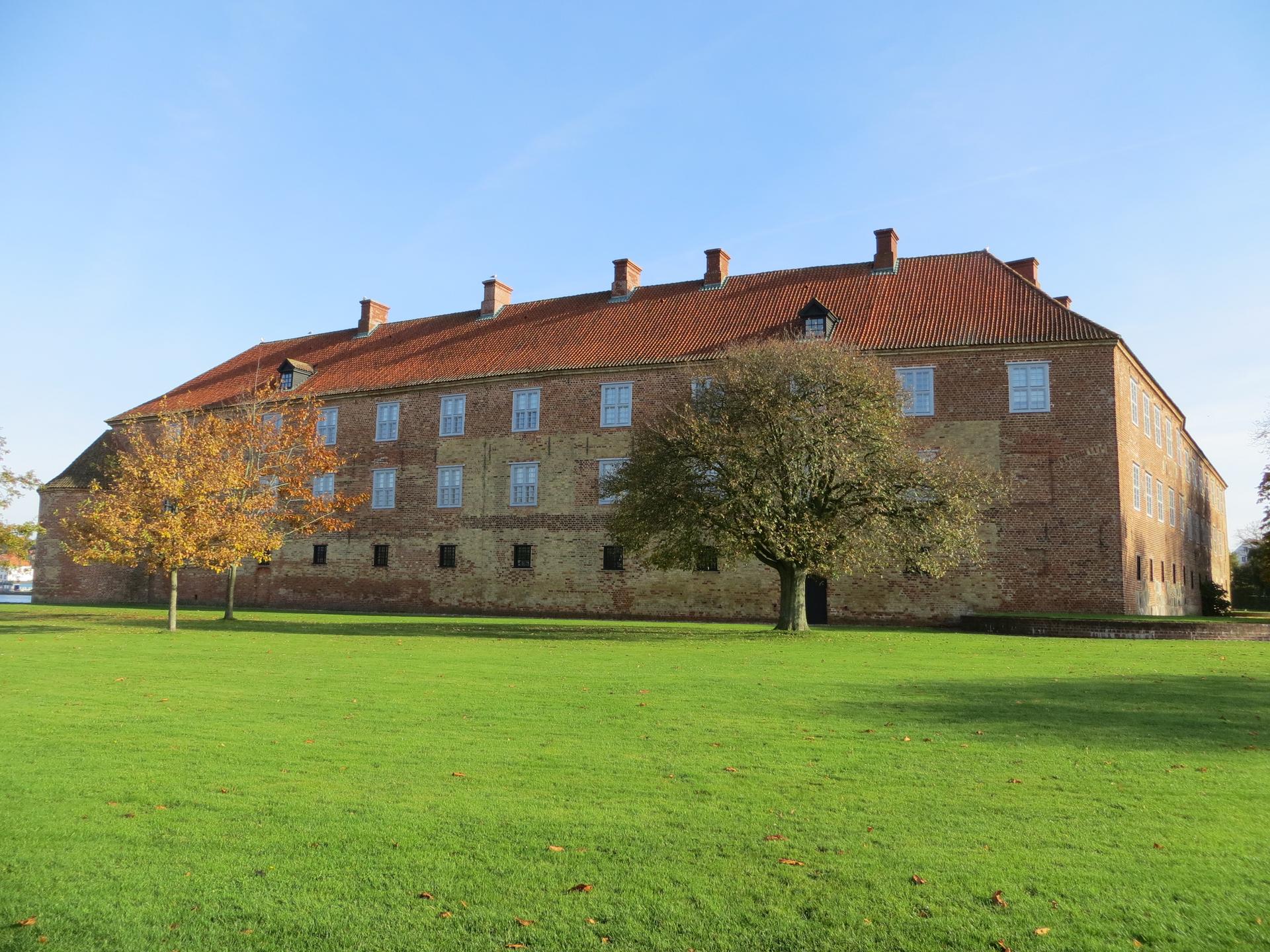
Looking beyond Dybbølstenen? Discover Sonderborg for broader travel guides, local hot-spots, and regional highlights.
Explore Sonderborg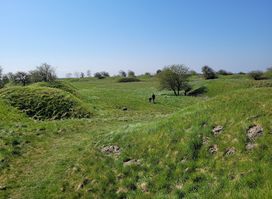
A modest reunification plaque on Dybbøl’s former German Redoubt X, linking the 1864 battlefield to the peaceful border changes of 1920 in a quiet, open landscape.

A modest stone on a Sønderborg side street commemorating three resistance fighters, offering a brief but powerful pause for reflection on Denmark’s wartime past.