

Saint Mark, Dominica Travel Guide
Discover Saint Mark in Dominica: A Paradise of Lush Forests, Stunning Waterfalls, and Rich Cultural Heritage Awaiting Your Exploration
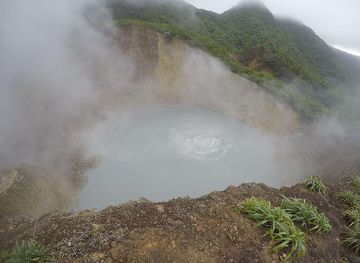
Saint Mark, located on the breathtaking island of Dominica, is a hidden gem for nature lovers and adventure seekers alike. This quaint parish, nestled between lush green mountains and the sparkling Caribbean Sea, offers an unparalleled experience of tranquility and natural beauty. The area is renowned for its unspoiled landscapes, including dense rainforests, cascading waterfalls, and pristine beaches. Visitors can explore the Morne Trois Pitons National Park, a UNESCO World Heritage site, which boasts the famous Boiling Lake, the second-largest hot spring in the world. Hiking trails abound, offering opportunities to witness diverse flora and fauna in their natural habitat. In addition to its natural wonders, Saint Mark has a rich cultural heritage. The friendly locals are always eager to share stories and traditions. Don't miss the chance to taste the local cuisine, which features fresh seafood, tropical fruits, and a delightful mix of Caribbean flavors. Whether you are looking to unwind or embark on an adventurous journey, Saint Mark in Dominica is sure to leave you with unforgettable memories.

Know before you go
Hi, I'm Eve. Here are a few practical things to know before exploring Saint Mark.
- Wear comfortable hiking shoes for exploring the numerous trails.
- Carry insect repellent to protect against mosquitoes in the rainforest.
- Try the local dish 'Callaloo', a delicious soup made from leafy greens.
- Visit the Boiling Lake early in the morning to avoid the crowds.
- Bring a waterproof camera for capturing the island's stunning waterfalls.
Top City Travel Guides in Saint Mark
The cities of Saint Mark, and the easiest places to base yourself.

Destinations in Saint Mark
Resorts, valleys and scenic spots worth a trip of their own.
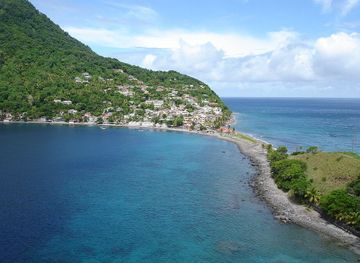


Explore Saint Mark: Things to Do, Places to Eat, Hotels & More
Handpicked recommendations for top attractions, local dining, accommodations, and more

Top Attractions & Sightseeing in Saint Mark
Top-rated picks
Best Attractions

Bubble Beach Spa
Experience ultimate relaxation at Bubble Beach Spa in Soufriere, where pristine beaches meet luxurious spa treatments amidst Caribbean beauty.

Tia's Hot Spa
Experience serenity at Tia's Hot Spa in Wotten Waven, where healing mineral waters and tranquil settings rejuvenate the body and soul.

Batibou Beach
Discover the tranquil beauty of Batibou Beach in Dominica, where golden sands meet crystal-clear waters and local flavors await.

Soufrière Bay Marine Reserve Headquarters
Explore the breathtaking Soufrière Bay Marine Reserve, a haven for snorkeling, diving, and nature walks in the heart of Dominica's pristine coastline.

Best landmarks in Saint Mark
Top-rated picks
Best Landmarks

Dominica Botanical Gardens
Discover Dominica's natural beauty at the Roseau Botanical Gardens, a verdant sanctuary showcasing exotic flora, iconic landmarks, and the island's commitment to conservation and recreation.

Emerald Pool
Discover Dominica's Emerald Pool: A mesmerizing waterfall and emerald-green pool nestled in the heart of the island's lush rainforest.

Trafalgar Falls
Discover Dominica's iconic twin waterfalls, Trafalgar Falls, a short rainforest hike to stunning views and geothermal hot springs.

Titou Gorge
Swim through a volcanic gorge to a hidden waterfall in Dominica's Morne Trois Pitons National Park, a Caribbean gem.

Best restaurants in Saint Mark
Top-rated picks
Best Restaurants

Keepin'It Real
Experience fresh seafood and vibrant Caribbean culture at Keepin'It Real on Toucari Beach.

Jungle Bay Dominica
Experience unparalleled luxury and nature at Jungle Bay Dominica – your perfect eco-friendly retreat.

Purple Turtle Beach Club
Experience the lively ambiance and exquisite flavors at Purple Turtle Beach Club in Portsmouth - where culinary delights meet stunning ocean views.

Lacou Melrose House
Discover the flavors of Dominica at Lacou Melrose House - a culinary gem in Roseau offering authentic Caribbean cuisine.

Best bars in Saint Mark
Top-rated picks
Best Bars

Purple Turtle Beach Club
Savor the taste of the Caribbean at Purple Turtle Beach Club, where fresh flavors meet breathtaking ocean views.

Coral Reef Bar & Restaurant
Experience the vibrant flavors of the Caribbean at Coral Reef Bar & Restaurant in Calibishie, where stunning ocean views meet delicious local cuisine.

Escape Bar & Grill
Experience the vibrant flavors of the Caribbean at Escape Bar & Grill in Roseau, a culinary gem offering delicious local dishes and tropical drinks.
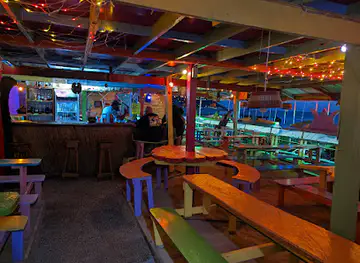
Hi Rise Beach Bar
Experience the vibrant atmosphere of Hi Rise Beach Bar in Roseau, where stunning views and delightful flavors await every visitor.

Best nightclubs in Saint Mark
Top-rated picks
Best Nightclubs

Ti Kwen Glo Cho
Discover Ti Kwen Glo Cho, where tranquility meets luxury in the heart of Dominica's tropical paradise, perfect for relaxation and rejuvenation.

Hi Rise Beach Bar
Experience the vibrant atmosphere and stunning views at Hi Rise Beach Bar, the perfect spot for food and relaxation in Roseau.

JRs Bar
Discover the lively charm of JRs Bar in Roseau, where great drinks, friendly vibes, and local music create unforgettable nights.

Kb's Sunflower Bar & Grill
Kb's Sunflower Bar & Grill: A Culinary Gem in Paix Bouche Offering Local Flavors and Warm Hospitality.

Best shops in Saint Mark
Top-rated picks
Best Shops

Fort Young Hotel and Dive Resort
Discover paradise at Fort Young Hotel and Dive Resort, where luxury meets adventure in the heart of Dominica's vibrant capital.

Titou Gorge
Explore the breathtaking Titou Gorge in Dominica, a serene haven of crystal-clear waters and lush tropical landscapes, perfect for adventure and relaxation.

Jungle Bay Dominica
Experience the perfect blend of luxury and nature at Jungle Bay Dominica, your ultimate Caribbean escape for relaxation and adventure.

S-Mart
Discover the heart of Roseau at S-Mart, your ultimate supermarket for local goods and essentials during your Dominican adventure.

Explore Saint Mark on the Map
A handpicked selection of must-see spots in Saint Mark, mapped for you.
Saint Mark Essentials
-
Saint Mark in Dominica is accessible via the Douglas-Charles Airport (DOM), which is the main international gateway to the island. From the airport, you can take a taxi or arrange for a shuttle service to Saint Mark. The drive typically takes around 1.5 to 2 hours. Alternatively, you can take a ferry from neighboring islands such as Guadeloupe or Martinique, arriving at the Roseau Ferry Terminal, followed by a taxi or bus ride to Saint Mark.
-
Saint Mark is a relatively small area, making it easy to explore on foot. For longer distances, local buses and minibuses (locally known as 'hurricanes') are available and affordable. Taxis are also an option and can be hired for short trips or day tours. Renting a car is another convenient choice, especially if you plan to explore more remote areas at your own pace.
-
The official currency of Dominica is the Eastern Caribbean Dollar (XCD). Credit cards are accepted in most hotels, restaurants, and larger shops, but it’s advisable to carry some cash for smaller establishments and local markets. ATMs are available in major towns, but it’s wise to withdraw sufficient cash before heading to more rural areas.
-
Saint Mark is generally safe for tourists, but it is always best to take standard precautions. Avoid walking alone at night in unfamiliar areas and keep an eye on your belongings in crowded places. While crime is relatively low, it's prudent to be cautious in less populated areas. Always use reputable transport services and avoid accepting rides from strangers.
-
In case of emergency, dial 999 for immediate assistance. The nearest police station and medical facilities can be found in the larger towns around Saint Mark. It is highly recommended to have travel insurance that covers medical emergencies. Pharmacies are available for minor health issues, and locals are usually helpful in guiding you to the nearest medical facility.
-
Fashion: Do dress modestly, especially when visiting religious sites. Avoid overly revealing clothing. Religion: Do respect local customs and traditions. When visiting churches, dress conservatively and remain quiet. Public Transport: Do be respectful and give up your seat to elderly passengers. Don’t eat or drink on public transport. Greetings: Do greet people with a friendly wave or a handshake. A smile goes a long way. Eating & Drinking: Do try local dishes and accept food offerings graciously. Don’t refuse hospitality, as it may be considered impolite.
-
To experience Saint Mark like a local, visit the local markets where you can buy fresh produce and traditional Dominican goods. Engage with locals; they are often friendly and willing to share stories about the area's history and culture. Don't miss the chance to explore the natural beauty of the area, including the scenic trails and waterfalls. For a unique experience, join a community event or festival to immerse yourself in the local culture.
When is the best time to visit Saint Mark?
Useful Local Phrases for Saint Mark
You don't need to speak the language perfectly. Even learning a few simple words can make conversations warmer—and locals usually appreciate the effort.
— Eve

Here are the phrases I use most often in Saint Mark. Try a few—you'll be surprised how far they go! 😊
❤️
-
- HelloBonjour
[bawn-zhoor] - GoodbyeAurevoir
[oh-reh-vwar] - YesWi
[wee] - NoNon
[noh] - Please/You're welcomeS'il vous plaît
[seel voo pleh] - Thank youMèsi
[meh-see] - Excuse me/SorryEskize mwen
[es-kee-zay mwen] - How are you?Kijan ou ye?
[kee-zhan oo yay] - Fine. And you?Byen. E ou?
[byen eh oo] - Do you speak English?Es ou pale Anglè?
[es oo pah-lay ahn-glay] - I don't understandMwen pa konprann
[mwen pah kon-prahn]
- HelloBonjour
-
- I'd like to see the menu, pleaseMwen ta renmen wè meni an, s'il vous plaît
[mwen tah ren-men weh meh-nee ahn, seel voo pleh] - I don't eat meatMwen pa manje vyann
[mwen pah mahn-zhe vee-ahn] - Cheers!Sante!
[sahn-tay] - I would like to pay, pleaseMwen ta renmen peye, s'il vous plaît
[mwen tah ren-men peh-yay, seel voo pleh]
- I'd like to see the menu, pleaseMwen ta renmen wè meni an, s'il vous plaît
-
- Help!Èd!
[ed] - Go away!Ale ale!
[ah-lay ah-lay] - Call the Police!Rele Polis la!
[reh-lay poh-lees lah] - Call a doctor!Rele yon doktè!
[reh-lay yon doh-teh] - I'm lostMwen pèdi
[mwen peh-dee] - I'm illMwen malad
[mwen mah-lahd]
- Help!Èd!
-
- I'd like to buy...Mwen ta renmen achte...
[mwen tah ren-men ah-shtay] - I'm just lookingMwen ap gade
[mwen ahp gah-day] - How much is it?Konbyen sa koute?
[kon-byen sah koo-tay] - That's too expensiveSa a twòp chè
[sah ah twop shay] - Can you lower the price?Es ou ka bese pri a?
[es oo kah beh-say pree ah]
- I'd like to buy...Mwen ta renmen achte...
-
- What time is it?Ki lè sa ye?
[kee leh sah yay] - It's one o'clockLi se yon lè
[lee seh yon leh] - Half past (10)Lè ki demi (10)
[leh kee deh-mee] - MorningMaten
[mah-ten] - AfternoonApre midi
[ah-pray mee-dee] - EveningSwa
[swah] - YesterdayYè
[yeh] - TodayJodi a
[zho-dee ah] - TomorrowDemain
[deh-man] - 1Yonn
[yohn] - 2De
[day] - 3Twa
[twah] - 4Katre
[ka-tree] - 5Senk
[sank] - 6Siz
[seez] - 7Sèt
[set] - 8Wi
[weet] - 9Nèf
[neff] - 10Dis
[dees]
- What time is it?Ki lè sa ye?
-
- Where's a/the...?Kote a/the...?
[koh-tay ah/the] - What's the address?Ki adrès la?
[kee ah-dress lah] - Can you show me (on the map)?Es ou ka montre mwen (sou kat la)?
[es oo kah mon-tray mwen (soo kaht lah)] - When's the next (bus)?Kilè pwochen (bis la)?
[kee-leh proh-shen (bees lah)] - A ticket (to ....)Yon tikè (pou ....)
[yon tee-kay (poo ....)]
- Where's a/the...?Kote a/the...?
History of Saint Mark
-
Saint Mark, like much of Dominica, was originally inhabited by the Kalinago people, an indigenous group known for their seafaring skills and warrior culture. The Kalinago called the island Wai‘tu kubuli, meaning 'Tall is her body', reflecting its mountainous terrain. They lived in harmony with nature and developed a sophisticated society long before European explorers arrived.
-
In the late 15th century, Christopher Columbus sighted the island during his second voyage in 1493. However, it wasn't until the 17th century that the French and British began to vie for control over Dominica. The French established settlements and brought enslaved Africans to work on plantations, significantly impacting the island's demographic and cultural landscape.
-
Throughout the 18th century, Saint Mark and the rest of Dominica were caught in the tug-of-war between the French and British. The island changed hands several times during the various conflicts, including the Seven Years' War (1756-1763) and the Napoleonic Wars (1803-1815). This period saw the construction of fortifications and the development of the plantation economy.
-
The British abolished slavery in 1834, leading to significant social and economic changes in Saint Mark. Formerly enslaved people sought new livelihoods, and many became small-scale farmers. This era also witnessed the rise of the peasant class and the decline of the plantation system, setting the stage for future social and economic developments.
-
Saint Mark's rich cultural tapestry is a blend of African, European, and indigenous influences. The Creole culture, which emerged from this melding, is evident in the area's language, music, dance, and cuisine. Festivals such as Creole Day and Carnival celebrate this vibrant heritage, showcasing traditional dress, food, and music, including the rhythms of calypso and reggae.
-
Saint Mark has faced numerous natural disasters, including hurricanes and volcanic activity, reflecting the island's location in a seismically active region. Despite these challenges, the community has shown remarkable resilience, rebuilding and adapting to the changing environment. This spirit of perseverance is a defining characteristic of the people of Saint Mark.
-
In recent decades, Saint Mark has seen efforts towards modernization and development, balanced with a strong commitment to environmental conservation. Initiatives to promote eco-tourism and protect natural resources, such as the Morne Trois Pitons National Park, a UNESCO World Heritage site, highlight the area's dedication to sustainable growth and the preservation of its unique natural heritage.
Neighbouring Regions of Saint Mark
The closest regions to Saint Mark, if you have time for more than one.

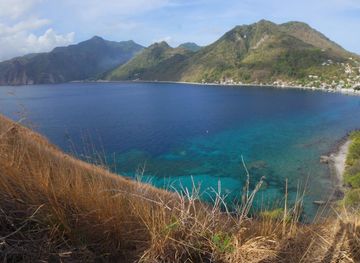


Your all‑in‑one travel companion app
Explore expert travel guides, compare and book tours, experiences, hotels, and more—all from the palm of your hand. Download now for seamless trip planning wherever your wanderlust takes you.


Explore More of Dominica
Looking beyond Saint Mark? Discover Dominica for broader travel guides, local hot-spots, and regional highlights.
Explore DominicaSaint Mark in Photos
Browse through our photo collection highlighting the charm and character of the destination.


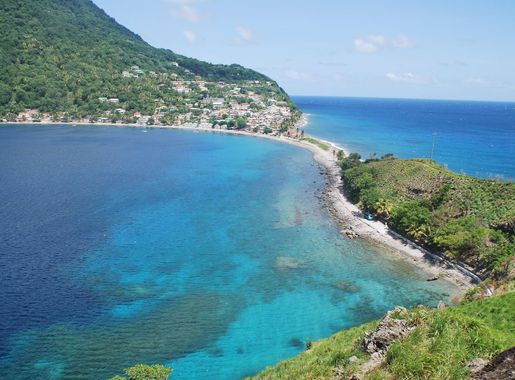


The Enchanting Beauty of Saint Mark, Dominica
Saint Mark, located on the breathtaking island of Dominica, is a hidden gem for nature lovers and adventure seekers alike. This quaint parish, nestled between lush green mountains and the sparkling Caribbean Sea, offers an unparalleled experience of tranquility and natural beauty. The area is renowned for its unspoiled landscapes, including dense rainforests, cascading waterfalls, and pristine beaches. Visitors can explore the Morne Trois Pitons National Park, a UNESCO World Heritage site, which boasts the famous Boiling Lake, the second-largest hot spring in the world. Hiking trails abound, offering opportunities to witness diverse flora and fauna in their natural habitat. In addition to its natural wonders, Saint Mark has a rich cultural heritage. The friendly locals are always eager to share stories and traditions. Don't miss the chance to taste the local cuisine, which features fresh seafood, tropical fruits, and a delightful mix of Caribbean flavors. Whether you are looking to unwind or embark on an adventurous journey, Saint Mark in Dominica is sure to leave you with unforgettable memories.