

Champagne Reef Travel Guide - Free Web & App
Your ultimate guide to Champagne Reef. Discover top landmarks, proposed trips, and local tips. Free on the web or via the Evendo companion app.


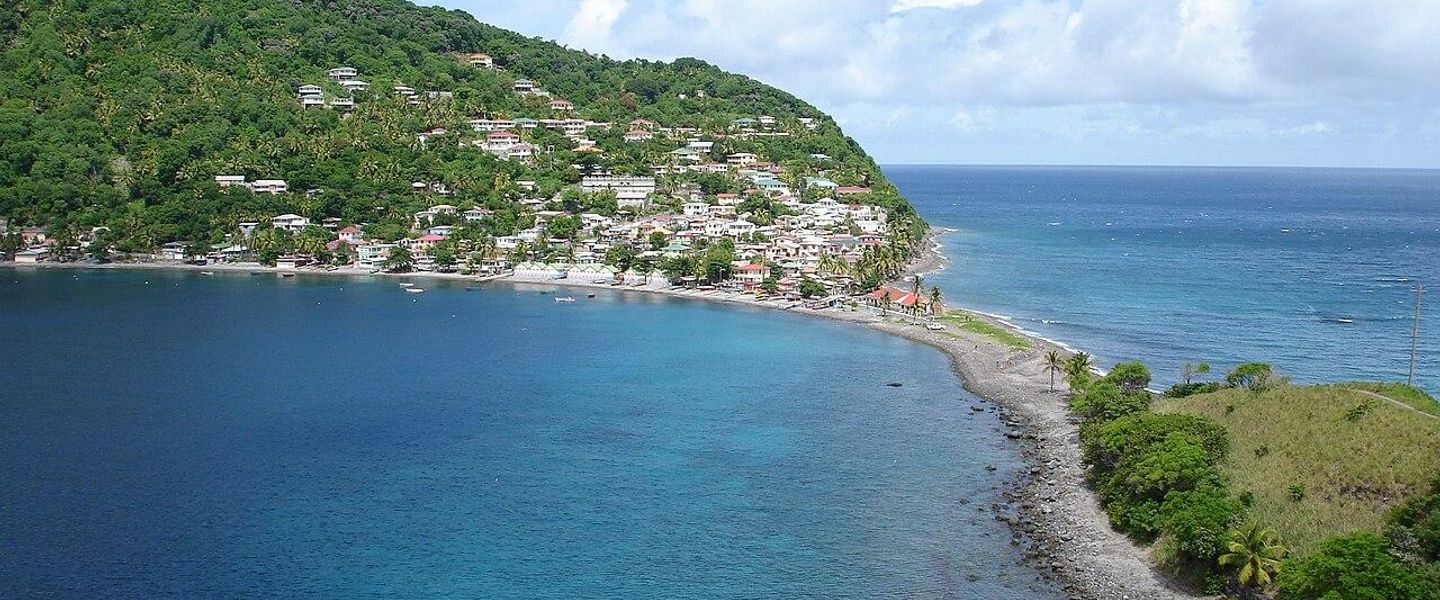


Champagne Reef in Dominica offers bubbling volcanic waters, coral reefs, tropical fish and guided snorkelling or diving near Soufriere and Scott’s Head.
Where the Sea Fizzes
Champagne Reef lies off Dominica’s south-west coast near the villages of Soufriere and Scott’s Head, within the wider Soufriere-Scott’s Head Marine Reserve. Its name comes from the steady streams of volcanic gases that rise through the seabed, making the clear Caribbean water appear to effervesce around swimmers and divers. The reef is close to shore, but the experience is distinctly marine: volcanic vents, coral growth, sponges, tropical fish and changing underwater textures combine in a compact yet geologically unusual site.Read more about Champagne Reef
Volcanic Coast and Marine Life
Soufriere and Scott’s Head
When is the best time to visit Champagne Reef?
Best: June–August · 29°C| Month | High (°C) | Rainfall (mm) |
|---|---|---|
| January | 28 | 150 |
| February | 28 | 130 |
| March | 28 | 120 |
| April | 29 | 110 |
| May | 29 | 100 |
| June (best) | 29 | 90 |
| July (best) | 29 | 80 |
| August (best) | 29 | 90 |
| September | 30 | 100 |
| October | 30 | 110 |
| November | 30 | 120 |
| December | 30 | 130 |
Getting to and around Champagne Reef
How to get there
Transportation
Best landmarks in Champagne Reef
Champagne Reef’s defining landmark is geological rather than architectural: volcanic gases escaping through the seabed create the famous underwater fizz. Its significance lies in the visible connection between Dominica’s active volcanic system and the surrounding Caribbean waters. The reef sits within the marine environment of Soufriere Bay, where coral growth and rocky volcanic seabed create a habitat for reef organisms. On land, Soufriere and Scott’s Head are the area’s principal cultural landmarks, representing small coastal communities shaped by fishing, maritime movement and the steep terrain of Dominica’s south-west peninsula. Scott’s Head’s prominent headland helps frame the bay and gives the coastline its distinctive profile. The associated hot-spring and geothermal features around Soufriere extend the area’s volcanic character beyond the water, although individual access conditions and facilities should be checked locally.
-
Beach
Champagne Beach
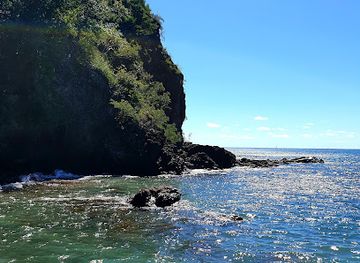
Experience Dominica's Champagne Beach: snorkel or dive in warm, bubbling waters amidst vibrant marine life and volcanic scenery.
Explore Champagne Reef on the map
Plan your trip on one map. See where the top attractions, landmarks, restaurants and hotels are, and book hotels and experiences in a few clicks.
Best hotels in Champagne Reef
Get your free copy of our complete guide to Champagne Reef, delivered straight to you.
Everything on this page, from attractions and restaurants to essentials and local phrases, in one PDF you can read offline, print or share.
Already have an account? Sign in
Your Champagne Reef guide is ready.
We'll send it to · Not you? Sign out

Getting your guide ready…
We are putting together a fresh copy of the Champagne Reef guide. This can take up to a minute.
This can take a few moments. If your browser asks, choose Allow so the download can start. You'll find the guide in your Downloads folder.
Nothing happened? Download it again
Sorry, the guide is taking longer than usual. Please try again in a minute, or get it by email instead.
Champagne Reef essentials
Currency and Payment
Safety
Emergency Situations
Do's and Don'ts
Local Tips
From Eve
Local phrases worth knowing
You don't need to get them perfect. A few words go a long way, and locals appreciate the effort.
Basics
| English | Local | Say it |
|---|---|---|
| Hello | Bonjou | [Bon-joo] |
| Goodbye | Orevwa | [O-rev-wa] |
| Yes | Wi | [Wee] |
| No | Non | [Non] |
| Please/You're welcome | Tanpri | [Tan-pree] |
| Thank you | Mèsi | [Meh-see] |
| Excuse me/Sorry | Eskize mwen | [Es-kee-zay mwen] |
| How are you? | Kijan ou ye? | [Kee-jan oo yay] |
| Fine. And you? | Byen. E ou? | [Byen. Ay oo?] |
| Do you speak English? | Eske ou pale angle? | [Es-kay oo pah-lay an-glay] |
| I don't understand | Mwen pa konprann | [Mwen pa con-pran] |
Eating & Drinking
| English | Local | Say it |
|---|---|---|
| I'd like to see the menu, please | Mwen ta renmen we meni a, tanpri | [Mwen ta ren-men way men-ee ah, tan-pree] |
| I don't eat meat | Mwen pa manje vyann | [Mwen pa manj vyan] |
| Cheers! | Chayè! | [Sha-yay] |
| I would like to pay, please | Mwen ta renmen peye, tanpri | [Mwen ta ren-men pay-yay, tan-pree] |
Emergencies
| English | Local | Say it |
|---|---|---|
| Help! | Ed! | [Ed] |
| Go away! | Ale! | [Ah-lay] |
| Call the Police! | Rele Polis! | [Ray-lay Po-lees] |
| Call a doctor! | Rele yon doktè! | [Ray-lay yon dok-tay] |
| I'm lost | Mwen pedi | [Mwen pay-dee] |
| I'm ill | Mwen malad | [Mwen ma-lad] |
Shopping
| English | Local | Say it |
|---|---|---|
| I'd like to buy... | Mwen ta renmen achte... | [Mwen ta ren-men ashtay] |
| I'm just looking | Mwen jis ap gade | [Mwen jees ap gah-day] |
| How much is it? | Konbyen li ye? | [Kohn-byen lee yay] |
| That's too expensive | Sa twò chè | [Sa twa chay] |
| Can you lower the price? | Ou ka ba pri? | [Oo ka bah pree] |
Time & Numbers
| English | Local | Say it |
|---|---|---|
| What time is it? | Ki lè li ye? | [Key lay lee yay] |
| It's one o'clock | Li senkè | [Lee sankay] |
| Half past (10) | Diven | [Dee-ven] |
| Morning | Maten | [Ma-ten] |
| Afternoon | Aprèmidi | [Ah-preh-mee-dee] |
| Evening | Aswè | [Ah-sway] |
| Yesterday | Yè | [Yay] |
| Today | Jodi a | [Joh-dee ah] |
| Tomorrow | Demen | [Day-men] |
| 1 | Yon | [Yohn] |
| 2 | De | [Day] |
| 3 | Twaz | [Twayz] |
| 4 | Kat | [Kaht] |
| 5 | Senk | [Sank] |
| 6 | Sis | [Sees] |
| 7 | Sèt | [Set] |
| 8 | Uit | [Weet] |
| 9 | Nèf | [Nef] |
| 10 | Dis | [Dees] |
Transport & Directions
| English | Local | Say it |
|---|---|---|
| Where's a/the...? | Kote...? | [Ko-tay] |
| What's the address? | Ki adres la ye? | [Key ad-res la yay] |
| Can you show me (on the map)? | Ou ka montre mwen (sou kat)? | [Oo ka mon-tray mwen (soo kaht)] |
| When's the next (bus)? | Ki lè pwochen (bis la)? | [Key lay pwosh-en (bees la)] |
| A ticket (to ....) | Yon tikè (pou ....) | [Yon tee-kay (poo)] |
History of Champagne Reef
A Volcanic Seabed
Champagne Reef is a result of Dominica’s continuing volcanic activity rather than a monument created by human settlement. Gases released from the submarine volcanic system rise through cracks in the seabed, producing the bubbles that define the site. The reef belongs to the island’s broader chain of geothermal features, which includes hot springs and fumarolic areas on land. This connection between land and sea explains why the south-western coast has long attracted interest from visitors wishing to see Dominica’s volcanic character in an accessible marine setting.
Kalinago and European Settlement
Before European colonisation, Dominica was inhabited by Indigenous peoples, including the Kalinago, whose knowledge and use of the island’s coasts, forests and waterways formed part of the region’s early human history. French and British competition later shaped Dominica’s colonial development, while small coastal communities grew around fishing, farming and maritime movement. Soufriere and Scott’s Head retain the modest settlement pattern characteristic of the island’s south-west coast, where daily life remains closely connected with the sea and surrounding volcanic terrain.
Fishing Coast and Village Life
The waters around Soufriere Bay and Scott’s Head have historically supported small-scale fishing and coastal travel. Local communities developed in a landscape where steep slopes limited large-scale settlement and where the sea provided both food and a route between bays. The area’s identity is therefore not based only on its underwater geology: it also reflects working coastal villages, traditional fishing activity and a long relationship between residents and the marine environment.
Marine Protection and Visitor Access
As interest in Dominica’s reefs, volcanic features and coastal biodiversity increased, the waters around Soufriere and Scott’s Head became associated with marine conservation and managed recreation. The Soufriere-Scott’s Head Marine Reserve was established to protect important marine habitats while supporting local livelihoods and tourism. Champagne Reef subsequently became one of Dominica’s best-known snorkelling and diving sites, with access commonly organised through local guides and operators familiar with conditions, conservation expectations and the wider reserve.
Champagne Reef in Photos
Browse through our photo collection highlighting the charm and character of the destination.
Neighbouring destination travel guides
The closest destinations to Champagne Reef, if you have time for more than one.
-

-

-

-

-


Swipe for more destinations
Explore more

Explore more of Saint Luke
Explore Saint Luke in Dominica for coastal village life, volcanic seascapes, marine excursions and easy access to the island’s south-west.
Explore Saint Luke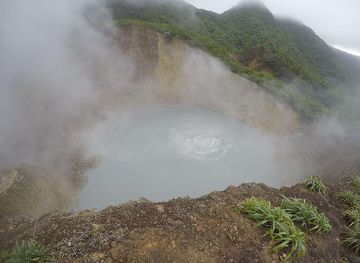
Explore more of Dominica
Discover Dominica: The Caribbean's Nature Island, where lush rainforests, volcanic landscapes, and vibrant culture await eco-tourists and adventure seekers.
Explore Dominica