

Scotts Head, Dominica Travel Guide
Discover Scotts Head in Dominica: A breathtaking destination where the Atlantic Ocean meets the Caribbean Sea, offering stunning views, rich history, and vibrant culture.
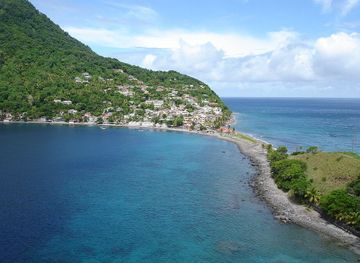
Scotts Head, located at the southern tip of Dominica, offers one of the most stunning natural views on the island. This small fishing village is where the Atlantic Ocean meets the Caribbean Sea, creating a unique and picturesque landscape. The beauty of Scotts Head lies not only in its incredible vistas but also in its rich history and vibrant local culture. Visitors to Scotts Head can explore the Scotts Head Marine Reserve, a protected area teeming with colorful marine life. Snorkeling and diving here are unforgettable experiences, with clear waters revealing a diverse underwater world. The village itself is charming, with friendly residents and traditional wooden houses adding to its appeal. For those who enjoy hiking, the Scotts Head peninsula offers several trails with breathtaking views. A short hike to the top of the headland rewards you with panoramic views of the village, the sea, and the surrounding coastline. History enthusiasts will appreciate the remnants of an old fort, offering a glimpse into the island's colonial past. Scotts Head is also known for its vibrant local festivals, where visitors can experience traditional music, dance, and cuisine. These events give tourists a chance to immerse themselves in the local culture and enjoy the warm hospitality of the Dominican people.

Know before you go
Hi, I'm Eve. Here are a few practical things to know before exploring Scotts Head.
- Visit early in the morning or late afternoon for the best light for photography and to avoid the midday heat.
- Bring your snorkeling gear to explore the Scotts Head Marine Reserve and witness the vibrant underwater life.
- Wear comfortable shoes for hiking to the top of the headland and exploring the trails.
- Check out local festivals for a truly authentic experience of Dominican culture and hospitality.
- Try the local seafood; it's fresh and often caught the same day by local fishermen.

Best landmarks in Scotts Head
Top-rated picks
Best Landmarks

Scotts Head Beach
Experience the Caribbean's only tied island: where the tranquil Caribbean Sea meets the wild Atlantic Ocean. A haven for diving, history, and natural beauty.

Scotts Head Bay
Discover Scotts Head Bay: Where Dominica's dramatic beauty, vibrant marine life, and rich history converge at the Caribbean's edge.

Scott's Head Cannon
Explore Dominica's history at Scott's Head Cannon, where the Caribbean Sea meets the Atlantic Ocean, offering stunning views and a glimpse into the past.

Best restaurants in Scotts Head
Top-rated picks
Best Restaurants

Chez Wen Cuisine
Discover authentic Caribbean seafood at Chez Wen Cuisine in Scott's Head - where every dish tells a story of freshness and flavor.

Lacou Melrose House
Experience authentic Dominican cuisine at Lacou Melrose House in Roseau – where every dish tells a story.

The Great Old House
Discover delightful local cuisine at The Great Old House, where every dish tells a story of Dominica's rich culinary heritage.

Teacher's Place
Discover the taste of authentic Caribbean cuisine at Teacher's Place in Soufriere - a culinary gem not to be missed!

Best shops in Scotts Head
Top-rated picks
Best Shops

Scott's Head Cannon
Discover the historical significance and stunning views at Scott's Head Cannon, a captivating landmark in Dominica's scenic landscape.

Duty Free Emporium
Discover unparalleled deals on luxury goods at Duty Free Emporium in Roseau, a must-visit for savvy shoppers seeking quality and value.

Boland's Mini Mart
Discover the charm of local shopping at Boland's Mini Mart in Grand Bay, where friendly service meets a variety of Dominican delights.

Scotts Head Bay
Explore the breathtaking Scotts Head Bay, a serene escape in Dominica featuring stunning beaches, vibrant marine life, and rich cultural history.

Explore Scotts Head on the Map
A handpicked selection of must-see spots in Scotts Head, mapped for you.
Scotts Head Essentials
-
Scotts Head is located on the southern tip of Dominica. The nearest international airport is Douglas-Charles Airport, approximately 50 kilometers away. From the airport, you can take a taxi or rent a car to Scotts Head. The journey typically takes around 1.5 hours by road. Alternatively, if you are arriving via cruise ship, the capital city of Roseau is about 10 kilometers away from Scotts Head. From Roseau, you can take a taxi or a local bus to reach Scotts Head.
-
Scotts Head is a small village, and many of its attractions are within walking distance. For longer trips, local taxis are readily available, but it's advisable to agree on a fare beforehand. Public buses (minibuses) operate within the area and connect to Roseau and other nearby villages. Renting a car is a convenient option for exploring the island at your own pace, but be aware that roads can be narrow and winding.
-
The official currency in Dominica is the Eastern Caribbean Dollar (XCD). Credit cards are accepted in some hotels, restaurants, and shops, but it is advisable to carry cash, especially in smaller establishments and rural areas like Scotts Head. ATMs are available in Roseau, so it is wise to withdraw sufficient cash before traveling to Scotts Head to ensure you have enough funds.
-
Scotts Head is generally a safe destination for tourists. However, like any travel destination, it is advisable to take standard precautions. Avoid walking alone at night in unfamiliar areas and keep an eye on your belongings in crowded places. While there are no specific high-crime areas targeting tourists in Scotts Head, it is always best to stay vigilant and aware of your surroundings.
-
In case of emergency, dial 999 for immediate assistance. The nearest medical facilities are in Roseau, which is approximately 10 kilometers away. It is recommended to have travel insurance that covers medical emergencies. For minor health issues, there are pharmacies in Roseau where you can purchase over-the-counter medications.
-
Fashion: Do dress modestly, especially when visiting religious sites. Avoid wearing revealing clothing. Religion: Do respect local customs and traditions. Always be respectful when visiting churches and other religious sites. Public Transport: Do be respectful and give up your seat to elderly passengers. Don't eat or drink on public transport. Greetings: Do greet people with a friendly 'Good day' or 'Hello'. A handshake is also common. Eating & Drinking: Do try local delicacies and accept food offerings graciously. Don't refuse hospitality, as it is considered impolite.
-
To experience Scotts Head like a local, visit the local markets where you can buy fresh produce and traditional goods. Engage with locals, as they are often friendly and willing to share stories about the village's history and culture. Don't miss hiking up to Scotts Head Peninsula for a stunning view of the Caribbean Sea and the Atlantic Ocean. For a unique experience, consider joining a local fishing trip or snorkeling in the pristine waters of the Scotts Head Marine Reserve.
When is the best time to visit Scotts Head?
Useful Local Phrases for Scotts Head
You don't need to speak the language perfectly. Even learning a few simple words can make conversations warmer—and locals usually appreciate the effort.
— Eve

Here are the phrases I use most often in Scotts Head. Try a few—you'll be surprised how far they go! 😊
❤️
-
- HelloWey yo dey
[wey yo dey] - GoodbyeSa ka fete
[sa ka fete] - YesWi
[wi] - NoNon
[non] - Please/You're welcomeTanpri
[tanpri] - Thank youMèsi
[meh-see] - Excuse me/SorryEksezi mwen/Ou dezole
[ek-seh-zi mwen/oo deh-zo-leh] - How are you?Kijan ou ye?
[ki-jan oo yay] - Fine. And you?Byen. E ou?
[byen. e oo?] - Do you speak English?Eske ou pale angle?
[es-keh oo pa-leh an-glay] - I don't understandMwen pa konprann
[mwen pa kon-pran]
- HelloWey yo dey
-
- I'd like to see the menu, pleaseMwen ta renmen wè meni a, tanpri
[mwen ta ren-men we me-nee ah, tan-pri] - I don't eat meatMwen pa manje vyann
[mwen pa man-jay vyann] - Cheers!Santé!
[san-tay] - I would like to pay, pleaseMwen ta renmen peye, tanpri
[mwen ta ren-men pay-yay, tan-pri]
- I'd like to see the menu, pleaseMwen ta renmen wè meni a, tanpri
-
- Help!Sekou!
[seh-koo] - Go away!Alé!
[ah-leh] - Call the Police!Rele la Polis!
[reh-leh la po-lees] - Call a doctor!Rele yon doktè!
[reh-leh yon dok-tay] - I'm lostMwen pedi
[mwen peh-dee] - I'm illMwen malad
[mwen mal-ad]
- Help!Sekou!
-
- I'd like to buy...Mwen ta renmen achte...
[mwen ta ren-men ach-tay] - I'm just lookingMwen jis gade
[mwen zhees gah-deh] - How much is it?Konbyen li ye?
[kon-byen lee yay] - That's too expensiveSa twò chè
[sa twah sheh] - Can you lower the price?Eske ou ka redwi pri a?
[es-keh oo ka reh-dwee pree ah]
- I'd like to buy...Mwen ta renmen achte...
-
- What time is it?Ki lè li ye?
[kee lay lee yay] - It's one o'clockLi senkè
[lee sen-kay] - Half past (10)Demi pase disè
[deh-mee pah-seh dee-zay] - MorningMaten
[mah-ten] - AfternoonApremidi
[ah-pre-mi-dee] - EveningSwadlè
[swahd-lay] - YesterdayYè
[yay] - TodayJodi a
[jo-dee ah] - TomorrowDemen
[de-men] - 1Yon
[yon] - 2De
[deh] - 3Twaz
[twaz] - 4Kat
[kaht] - 5Senk
[senk] - 6Sis
[sees] - 7Sèt
[set] - 8Uit
[weet] - 9Nèf
[nef] - 10Dis
[dees]
- What time is it?Ki lè li ye?
-
- Where's a/the...?Ki kote...?
[kee koh-teh] - What's the address?Kisa adres la ye?
[kee-sah ad-res la yay] - Can you show me (on the map)?Eske ou ka montre mwen (sou kat)?
[es-keh oo ka mon-tray mwen (soo kaht)] - When's the next (bus)?Ki lè pròchen (woutè)?
[kee lay proh-shen (woo-teh)] - A ticket (to ....)Yon bilè (pou ....)
[yon bee-leh (poo)]
- Where's a/the...?Ki kote...?
History of Scotts Head
-
Long before European colonization, the area now known as Scotts Head was inhabited by the Kalinago people. These indigenous inhabitants thrived in the region, utilizing its natural resources for food, shelter, and tools. They lived in a harmonious relationship with the environment, leaving behind archaeological evidence that reveals their sophisticated society and culture.
-
In the late 15th and early 16th centuries, European explorers began to arrive in the Caribbean. Christopher Columbus is often credited with the European discovery of Dominica in 1493. The arrival of the Europeans marked the beginning of significant changes for the island, including the introduction of new goods, cultures, and unfortunately, diseases that greatly impacted the indigenous population.
-
Throughout the 17th and 18th centuries, Dominica, including Scotts Head, was a focal point of conflict between the French and the British. Both colonial powers vied for control of the island due to its strategic location and natural resources. The Treaty of Paris in 1763 eventually ceded control of Dominica to the British, but the island was frequently contested and changed hands multiple times over the years.
-
One of the most notable historical events in Scotts Head was the Battle of Scott’s Head in 1778 during the American Revolutionary War. French forces, allied with the American revolutionaries, launched an attack on the British-held island of Dominica. The battle saw intense fighting around the Scotts Head area, with the French ultimately capturing the island. This event emphasized the strategic importance of Scotts Head in military history.
-
Fort Cachacrou, located on the promontory of Scotts Head, played a crucial role in the island's defense during colonial times. Constructed by the British in the 18th century, the fort provided a strategic vantage point to monitor and defend against naval incursions. Today, the remnants of Fort Cachacrou serve as a historical landmark, offering visitors a glimpse into the island's military past.
-
Scotts Head is not only a site of historical significance but also a vibrant cultural hub. The village is a testament to the enduring spirit and resilience of its inhabitants. Traditional fishing practices, music, dance, and local cuisine are integral parts of the community's daily life. The annual village feast and other cultural events celebrate the rich heritage and traditions passed down through generations.
-
The Scotts Head Marine Reserve is a testament to the area's natural beauty and ecological importance. Established to protect the rich marine biodiversity, the reserve is home to a variety of coral reefs, fish species, and other marine life. It is a popular destination for snorkeling and diving, attracting visitors from around the world who come to explore its underwater wonders.
Cities in Scotts Head
Browse our curated selection of top destinations, scenic points, and must-visit spots in the area.


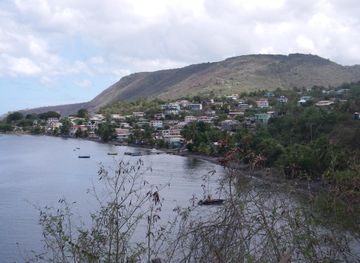

Neighbouring destination travel guides
Browse our curated selection of top destinations, scenic points, and must-visit spots in the area.



Your all‑in‑one travel companion app
Explore expert travel guides, compare and book tours, experiences, hotels, and more—all from the palm of your hand. Download now for seamless trip planning wherever your wanderlust takes you.


Explore More of Saint Mark

Looking beyond Scotts Head? Discover Saint Mark for broader travel guides, local hot-spots, and regional highlights.
Explore Saint MarkExplore More of Dominica
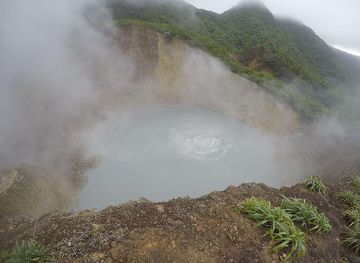
Looking beyond Scotts Head? Discover Dominica for broader travel guides, local hot-spots, and regional highlights.
Explore DominicaScotts Head in Photos
Browse through our photo collection highlighting the charm and character of the destination.


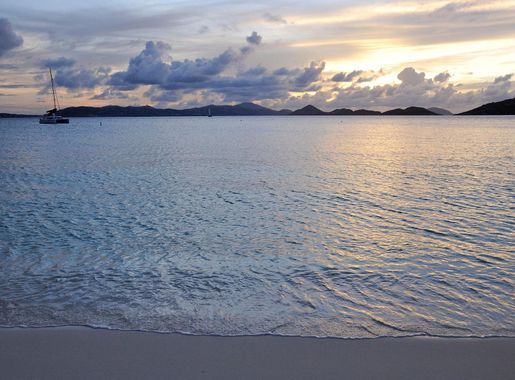




Scotts Head: Where the Atlantic Meets the Caribbean
Scotts Head, located at the southern tip of Dominica, offers one of the most stunning natural views on the island. This small fishing village is where the Atlantic Ocean meets the Caribbean Sea, creating a unique and picturesque landscape. The beauty of Scotts Head lies not only in its incredible vistas but also in its rich history and vibrant local culture. Visitors to Scotts Head can explore the Scotts Head Marine Reserve, a protected area teeming with colorful marine life. Snorkeling and diving here are unforgettable experiences, with clear waters revealing a diverse underwater world. The village itself is charming, with friendly residents and traditional wooden houses adding to its appeal. For those who enjoy hiking, the Scotts Head peninsula offers several trails with breathtaking views. A short hike to the top of the headland rewards you with panoramic views of the village, the sea, and the surrounding coastline. History enthusiasts will appreciate the remnants of an old fort, offering a glimpse into the island's colonial past. Scotts Head is also known for its vibrant local festivals, where visitors can experience traditional music, dance, and cuisine. These events give tourists a chance to immerse themselves in the local culture and enjoy the warm hospitality of the Dominican people.