

Gásadalur Travel Guide - Free Web & App
Your ultimate guide to Gásadalur. Discover top landmarks, proposed trips, and local tips. Free on the web or via the Evendo companion app.


Gásadalur in the Faroe Islands offers Múlafossur waterfall, basalt cliffs, quiet village walks and dramatic Vágar scenery beside the North Atlantic.
A Remote Valley on Vágar
Gásadalur is a small village on the western side of Vágar, one of the Faroe Islands’ principal islands. Set beneath steep mountains and above the North Atlantic, it is defined by a compact cluster of houses, treeless slopes, sea-facing cliffs and a powerful sense of geographical isolation. The valley’s most recognisable feature is Múlafossur, a waterfall that plunges directly towards the ocean, often carrying spray back over the cliff edge when winds blow in from the west.Read more about Gásadalur
Waterfalls, Cliffs and Island Views
From Isolation to Accessible Landmark
When is the best time to visit Gásadalur?
Best: June–August · 13–14°C| Month | High (°C) | Rainfall (mm) |
|---|---|---|
| January | 7 | 150 |
| February | 7 | 150 |
| March | 6 | 150 |
| April | 7 | 125 |
| May | 9 | 100 |
| June (best) | 13 | 100 |
| July (best) | 14 | 100 |
| August (best) | 14 | 100 |
| September | 13 | 125 |
| October | 11 | 150 |
| November | 9 | 150 |
| December | 8 | 150 |
Getting to and around Gásadalur
How to get there
Transportation
Best attractions in Gásadalur
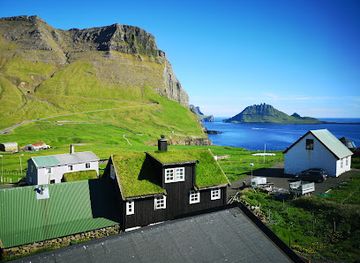
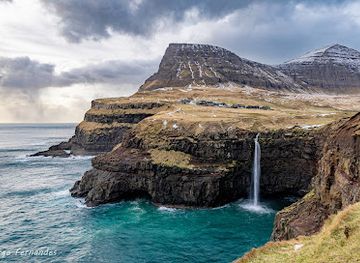
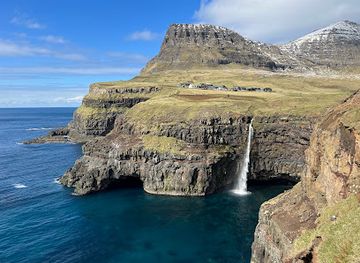
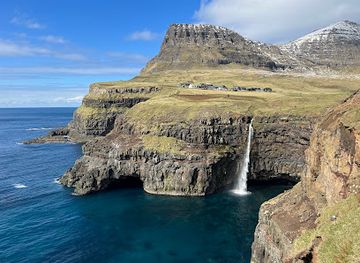
Múlafossur is Gásadalur’s defining attraction, dropping from the valley edge towards the Atlantic in a setting of dark basalt cliffs and open sea. The nearby village, with its small collection of traditional and modern homes, offers a close view of how a remote Faroese settlement is arranged beneath the mountains. Across the water, the sharp outline of Tindhólmur and its neighbouring sea stacks adds a distinctive coastal profile, particularly in clear weather. The surrounding slopes and shoreline provide opportunities for landscape photography, quiet walking and birdwatching from appropriate viewpoints, although the terrain is exposed and cliff edges require caution. Gásadalur also forms part of a wider Vágar itinerary: the historic village of Bøur lies nearby, while Sørvágur provides more substantial services and access to other island attractions. The old mountain route between Bøur and Gásadalur is an experience for prepared walkers rather than a conventional sightseeing path.
-
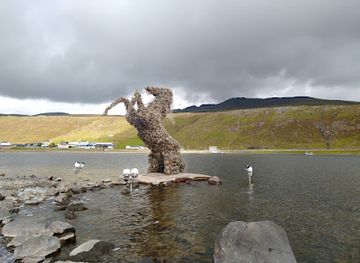
Sculpture
The Nix
Discover the captivating Nix sculpture on the Faroe Islands, where art, nature, and folklore intertwine along the scenic Sørvágsvatn lake.
Best landmarks in Gásadalur
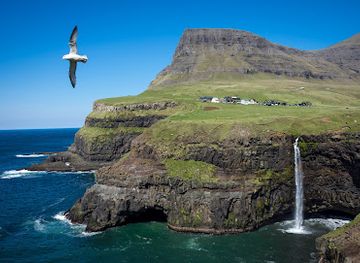
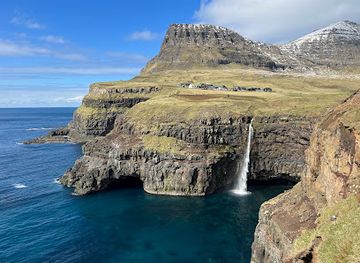
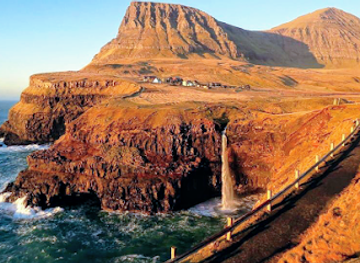
Múlafossur is Gásadalur’s principal natural landmark, a high waterfall that descends over the coastal cliff towards the North Atlantic and has become one of the most recognisable scenes on Vágar. The surrounding basalt mountains explain the valley’s dramatic structure, while the village itself is a cultural landmark: its compact settlement pattern reflects generations of pastoral life in a place once separated from neighbouring communities by difficult terrain. Offshore, Tindhólmur and its pointed islets form a memorable geographical marker visible from parts of the western coast. The Gásadalur Tunnel is a modern landmark of a different kind, representing the decisive change from a settlement reached chiefly by mountain path or sea to one connected by road since 2004.
-
Tourist attraction
Múlafossur Waterfall
Discover the stunning Múlafossur Waterfall in Gasadalur, Faroe Islands, where breathtaking natural beauty meets serene coastal views.
-
Scenic spot
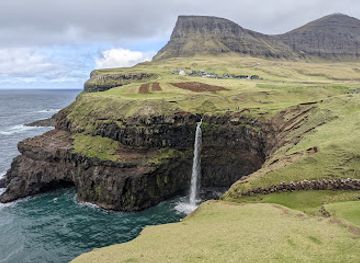
View on Mullafossur and Gasadalur village
Experience the breathtaking Mullafossur Waterfall and the serene Gasadalur village in the captivating Faroe Islands.
-
Brasserie
Gásadalsgarður
Experience the breathtaking beauty, rich culture, and delightful brasserie dining in the charming village of Gásadalur, Faroe Islands.
-
Tourist attraction
Skarðsáfossur
Discover the breathtaking Skarðsfossur waterfall in the Faroe Islands, a serene natural wonder surrounded by stunning landscapes and rich local culture.

Explore Gásadalur on the map
Plan your trip on one map. See where the top attractions, landmarks, restaurants and hotels are, and book hotels and experiences in a few clicks.
Best hotels in Gásadalur
Best restaurants in Gásadalur
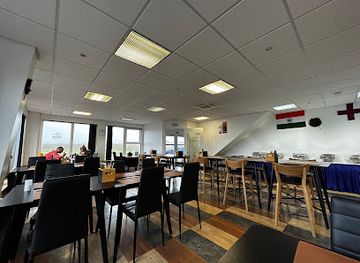
Gásadalur has very limited dining infrastructure, and visitors should not arrive expecting a choice of restaurants, cafés or shops within the village. Food is more readily found in the larger settlements of Vágar, particularly Sørvágur, while accommodation providers and small local businesses may sometimes offer arrangements that need to be confirmed in advance. The island’s food culture reflects Faroese reliance on the sea, sheep farming and imported provisions, with fish, lamb and other North Atlantic ingredients forming part of the wider regional culinary tradition. A self-catering plan is therefore practical for a visit to Gásadalur, especially for those combining the village with rural walks or scenic drives. Stocking up before travelling is sensible, and visitors should avoid relying on an unconfirmed service in this small and remote settlement.
-
Brasserie
Café Zorva
Experience authentic Faroese cuisine at Café Zorva, where local flavors meet stunning views in Sørvágur.
-
Restaurant
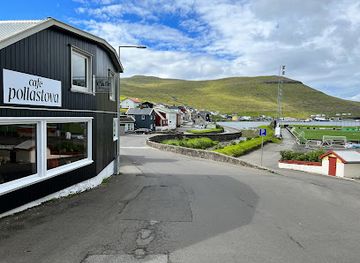
Resturant Cafe Pollastova
Experience authentic Faroese cuisine in a cozy setting at Restaurant Cafe Pollastova in Sørvágur.
-
Brasserie
Gásadalsgarður
Discover Gásadalsgarður: A Culinary Oasis with Stunning Views in Gasadalur, Faroe Islands.
-
Restaurant
Smiðjan
Experience authentic Faroese cuisine at Smiðjan in Miðvágur - where local flavors meet warm hospitality amidst stunning landscapes.
Best bars in Gásadalur
Gásadalur has no meaningful nightlife scene and is best suited to quiet evenings shaped by weather, landscape and the small-scale rhythm of village life. There is no established concentration of bars, nightclubs or entertainment venues, so visitors seeking a drink or a more social evening will generally need to use hospitality businesses in larger Faroese settlements, such as Sørvágur, or remain at their accommodation. Evenings in the valley can be atmospheric, with long summer light and changing cloud over the cliffs, but visitors should keep noise low and respect local residents. Traditional pubs and hotel bars elsewhere on Vágar provide a more realistic setting for informal conversation, although opening arrangements and availability vary.
-
Tourist attraction
Múlafossur Waterfall
Discover the breathtaking Múlafossur Waterfall in the Faroe Islands, where stunning nature meets serene tranquility, creating an unforgettable experience.
-
Scenic spot
View on Mullafossur and Gasadalur village
Experience the stunning beauty of Mullafossur Waterfall and Gasadalur Village, a top scenic spot in the Faroe Islands for nature lovers and explorers.
-
Brasserie
Café Zorva
Discover the culinary delights of Café Zorva, a charming brasserie in Sørvágur, Faroe Islands, offering a unique blend of local and international cuisine.
-
Restaurant
Resturant Cafe Pollastova
Experience authentic Faroese cuisine at Café Pollastova in Sørvágur, where local flavors and stunning views come together for an unforgettable dining experience.
Best nightclubs in Gásadalur
Gásadalur has no meaningful nightlife scene and is best suited to quiet evenings shaped by weather, landscape and the small-scale rhythm of village life. There is no established concentration of bars, nightclubs or entertainment venues, so visitors seeking a drink or a more social evening will generally need to use hospitality businesses in larger Faroese settlements, such as Sørvágur, or remain at their accommodation. Evenings in the valley can be atmospheric, with long summer light and changing cloud over the cliffs, but visitors should keep noise low and respect local residents. Traditional pubs and hotel bars elsewhere on Vágar provide a more realistic setting for informal conversation, although opening arrangements and availability vary.
-
Brasserie
Gásadalsgarður
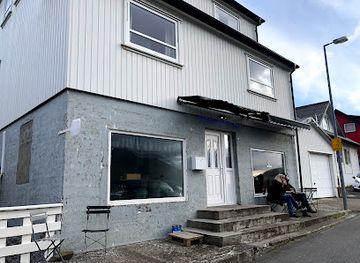
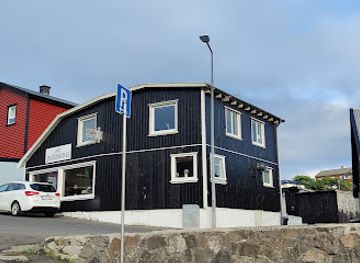
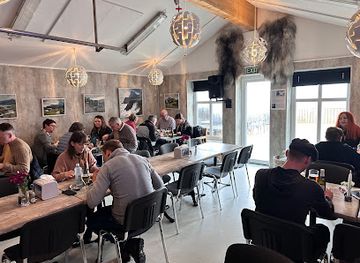
Experience authentic Faroese cuisine at Gásadalsgarður, a charming brasserie and guest house in the beautiful Gasadalur village.
-
Gift shop
Uanni
Discover the charm of Gásadalur at Uanni, your go-to gift shop for unique Faroese treasures and local artistry in the heart of the Faroe Islands.
Best shops in Gásadalur
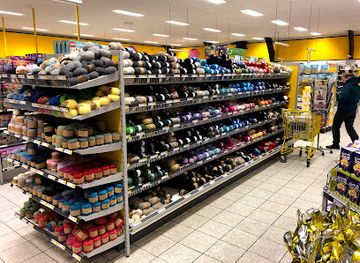
Shopping in Gásadalur is extremely limited, with no substantial retail area or dependable range of shops. Visitors should buy food, fuel, outdoor supplies and other essentials in larger Faroese settlements before driving into the western part of Vágar. Sørvágur is the most practical nearby service centre, while a broader selection of Faroese crafts, knitwear, art and regional food products is found in larger towns elsewhere in the islands. Locally made woollen goods, Faroese design and food products can provide meaningful souvenirs when purchased from established businesses, but availability varies by season and location. The village should be approached as a landscape and heritage destination rather than a shopping stop.
-
Scenic spot
View on Mullafossur and Gasadalur village
Experience the breathtaking beauty of Mullafossur Waterfall and Gasadalur Village, a must-visit scenic spot in the stunning Faroe Islands.
-
Grocery store
Bónus
Discover the charm of Bónus in Sandavágur, where affordability meets quality in the heart of the Faroe Islands.
-
Supermarket
FK Super Market
Explore the flavors of the Faroe Islands at FK Super Market, the local grocery destination in Miðvágur offering fresh produce and unique local products.
-
Grocery store
PE Sørvágur
Discover local flavors and essentials at PE Sørvágur, your charming grocery store in the heart of the Faroe Islands.
Get your free copy of our complete guide to Gásadalur, delivered straight to you.
Everything on this page, from attractions and restaurants to essentials and local phrases, in one PDF you can read offline, print or share.
Already have an account? Sign in
Your Gásadalur guide is ready.
We'll send it to · Not you? Sign out

Getting your guide ready…
We are putting together a fresh copy of the Gásadalur guide. This can take up to a minute.
This can take a few moments. If your browser asks, choose Allow so the download can start. You'll find the guide in your Downloads folder.
Nothing happened? Download it again
Sorry, the guide is taking longer than usual. Please try again in a minute, or get it by email instead.
Gásadalur essentials
Currency and Payment
Safety
Emergency Situations
Do's and Don'ts
Local Tips
From Eve
Local phrases worth knowing
You don't need to get them perfect. A few words go a long way, and locals appreciate the effort.
Basics
| English | Local | Say it |
|---|---|---|
| Hello | Halló | [hah-loh] |
| Goodbye | Farvæl | [far-vail] |
| Yes | Ja | [yuh] |
| No | Nei | [nay] |
| Please/You're welcome | Vælkomin | [vai-lkoh-min] |
| Thank you | Takk fyri | [tahk fuh-ree] |
| Excuse me/Sorry | Fyrirgev | [fuh-ree-gev] |
| How are you? | Hvussu hevur tú tað? | [hvoo-soo he-vur too tah] |
| Fine. And you? | Gott. Og tú? | [got oh too] |
| Do you speak English? | Talar tú enskt? | [tah-lar too enskt] |
| I don't understand | Eg skilji ikki | [ay shil-yee ih-kee] |
Eating & Drinking
| English | Local | Say it |
|---|---|---|
| I'd like to see the menu, please | Eg vil síggja menu, vænta so | [ay vil see-yah menu, vai-nta so] |
| I don't eat meat | Eg eta ikki kjøt | [ay eh-ta ih-kee chyut] |
| Cheers! | Skaal! | [skawl] |
| I would like to pay, please | Eg vil gjalda, vænta so | [ay vil yal-duh, vai-nta so] |
Emergencies
| English | Local | Say it |
|---|---|---|
| Help! | Hjálp! | [hyow-lp] |
| Go away! | Far burtur! | [far boor-tur] |
| Call the Police! | Ringið til Løgregluna! | [ring-eeth teel lur-gre-gluna] |
| Call a doctor! | Ringið til læknin! | [ring-eeth teel lek-neen] |
| I'm lost | Eg er týður | [ay air tee-dur] |
| I'm ill | Eg er sjúkur | [ay air shoo-kuhr] |
Shopping
| English | Local | Say it |
|---|---|---|
| I'd like to buy... | Eg vil keypa... | [ay vil key-pah] |
| I'm just looking | Eg bara titi | [ay bah-rah tee-tee] |
| How much is it? | Hvat kostar tað? | [kvat koh-stahr tah] |
| That's too expensive | Tað er ov dyrt | [tahr air ohv deert] |
| Can you lower the price? | Kann tú seta prís? | [kahn too se-tah prees] |
Time & Numbers
| English | Local | Say it |
|---|---|---|
| What time is it? | Hvat er klukkan? | [kvat air kloo-kan] |
| It's one o'clock | Tað er eitt | [tah air eyt] |
| Half past (10) | Hálvgert (10) | [howl-vyert (tayn)] |
| Morning | Morgun | [mor-goon] |
| Afternoon | Ettermiðdagur | [et-ter-mee-tha-ger] |
| Evening | Kvøld | [kvwold] |
| Yesterday | Í gjár | [ee gyowr] |
| Today | Í dag | [ee dah] |
| Tomorrow | Á morgun | [ow mor-goon] |
| 1 | Eitt | [eyt] |
| 2 | Tvær | [tver] |
| 3 | Tríggir | [tree-gee-er] |
| 4 | Fýra | [fear-ah] |
| 5 | Fimm | [feem] |
| 6 | Seks | [seks] |
| 7 | Sjey | [shay] |
| 8 | Átta | [ow-tah] |
| 9 | Ni | [nee] |
| 10 | Tíggju | [tee-gee-yoo] |
Transport & Directions
| English | Local | Say it |
|---|---|---|
| Where's a/the...? | Har er einn/hvussu...? | [hahr air ay-nn/hvoo-soo] |
| What's the address? | Hvat er adressan? | [kvat air ah-dress-an] |
| Can you show me (on the map)? | Kanstu vísa meg (á korti)? | [kahn-stoo vee-sah mayg (ow kohr-tee)] |
| When's the next (bus)? | Nær kemur næsta (buss)? | [nayr keh-mur nes-tah (boos)] |
| A ticket (to ....) | Eitt kort (til ....) | [eyt kort (teel)] |
History of Gásadalur
Basalt Foundations of the Valley
Gásadalur forms part of the Faroe Islands’ volcanic landscape, which was created from extensive basalt lava flows during the North Atlantic volcanic activity of the early Tertiary period. Repeated layers of hard basalt, later shaped by erosion and glacial processes, account for the island’s stepped mountains, narrow valleys and abrupt sea cliffs. In Gásadalur, streams descend from the uplands towards the coast, while the valley’s position behind high ridges gives the settlement its enclosed and remote character.
Settlement and Pastoral Life
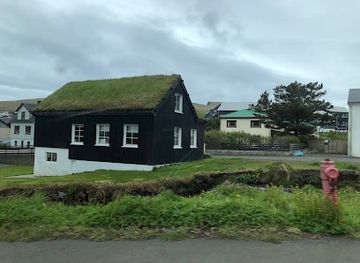
Gásadalur developed as a small Faroese farming settlement, with life traditionally centred on sheep husbandry and the careful use of limited land between mountain and sea. Its name is generally understood as meaning ‘Goose Valley’, reflecting the Scandinavian naming tradition found across the Faroe Islands. The settlement’s location made everyday communication and the movement of goods difficult, while the high surrounding mountains separated it from neighbouring communities on Vágar. Older turf-roofed buildings and the village’s compact form retain traces of this agrarian past.
The Mountain Path to Bøur
Before road access, the principal land connection with the outside world was the demanding route over the mountains to Bøur. The path was used for travel and the movement of supplies, but its exposed terrain and difficult weather made the journey arduous. Gásadalur could also be reached from the sea when conditions allowed. These constraints encouraged a small population and limited development, helping the village remain one of the more isolated inhabited places in the Faroes well into the modern period.
The Tunnel and Modern Visitors
The opening of the Gásadalur Tunnel in 2004 marked a major change in the settlement’s history by providing a direct road connection through the mountain. The tunnel improved everyday access and reduced the village’s dependence on the old footpath and sea approach, while Gásadalur’s population remained small. In the years since, Múlafossur and the surrounding landscape have become prominent symbols of Vágar’s scenery, bringing visitors but not transforming the settlement into a large resort or commercial centre.
Gásadalur in Photos
Browse through our photo collection highlighting the charm and character of the destination.
Cities in Gásadalur
The towns and cities of Gásadalur, and the easiest places to base yourself.
-

-


Swipe for more cities
Neighbouring destination travel guides
The closest destinations to Gásadalur, if you have time for more than one.
-

-

-

-

-


Swipe for more destinations
Explore more

Explore more of Vágar
Discover the wild beauty of Vágar in the Faroe Islands - a land of dramatic cliffs, tranquil lakes, and charming villages, perfect for nature enthusiasts and adventurers alike.
Explore Vágar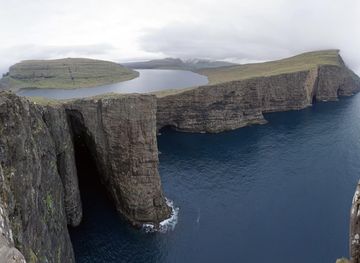
Explore more of Faroe Islands
Discover the Faroe Islands: A land of rugged beauty, rich history, and tranquil villages, perfect for nature lovers and adventurers seeking an off-the-beaten-path destination.
Explore Faroe Islands