

Free Fort Walton Beach Travel Guide & Mobile App
Plan your Fort Walton Beach trip with Evendo. Get free guides to top attractions, restaurants, hotels, and bars. Web access or download the mobile app.


Fort Walton Beach blends Emerald Coast beaches, Choctawhatchee Bay views, Native American heritage, family attractions and relaxed Florida waterfront culture.
Between Bay and Gulf
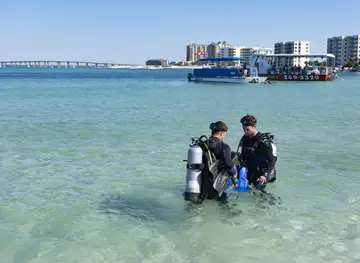
Fort Walton Beach occupies a compact stretch of Florida’s Emerald Coast, set between the broad waters of Choctawhatchee Bay and the Gulf of Mexico. Its best-known shoreline lies across the Brooks Bridge on Okaloosa Island, where pale sand and clear, shallow water shape the city’s relaxed seaside character. The mainland centre is more residential and practical, with marinas, waterfront parks, family attractions and local businesses spread around the bayfront and Santa Rosa Sound.Read more about Fort Walton Beach
Ancient Mounds and Coastal Memory
Seaside Recreation and Local Life
When is the best time to visit Fort Walton Beach?
Best: April, October–November · 22–28°C| Month | High (°C) | Rainfall (mm) |
|---|---|---|
| January | 19 | 127 |
| February | 20 | 127 |
| March | 23 | 152 |
| April (best) | 26 | 109 |
| May | 29 | 142 |
| June | 32 | 178 |
| July | 33 | 173 |
| August | 33 | 196 |
| September | 31 | 183 |
| October (best) | 28 | 109 |
| November (best) | 22 | 109 |
| December | 18 | 132 |
Getting to and around Fort Walton Beach
How to get there
Transportation
Best landmarks in Fort Walton Beach
Indian Temple Mound is Fort Walton Beach’s defining historic landmark, an imposing prehistoric earthwork that reflects the ceremonial importance of the area to the Native American communities associated with the Fort Walton culture. The adjoining Indian Temple Mound Museum adds archaeological context and preserves artefacts from the wider north-west Florida region. Nearby, the Camp Walton Schoolhouse Museum occupies an early twentieth-century school building and represents the community’s transition from a small coastal settlement to a modern city; the site also interprets the Civil War-era Camp Walton that gave the town its name. The Brooks Bridge is a practical and recognisable piece of local infrastructure, carrying traffic from the mainland to Okaloosa Island across Santa Rosa Sound. On the island, the Gulf-facing Boardwalk and beach frontage express the later tourism identity that developed alongside the older bayfront community.
-
Park
Fort Walton
Explore the beauty and history of Fort Walton Beach, a coastal gem offering stunning beaches, vibrant culture, and endless adventures.
10 min walk · 0.8 km from city centre
Explore Fort Walton Beach on the map
Plan your Fort Walton Beach trip on one map. See where the top attractions, landmarks, restaurants, bars and hotels are, find what's near where you're staying, and book hotels and experiences in a few clicks.
Best hotels in Fort Walton Beach
Best restaurants in Fort Walton Beach
Dining in Fort Walton Beach reflects its position between the Gulf and Choctawhatchee Bay, with seafood central to the local table. Grouper, shrimp, oysters, crab and locally sourced fish appear in casual waterfront restaurants, seafood houses and market-style settings, often alongside Southern sides such as hush puppies, coleslaw and grits. Restaurants around Okaloosa Island emphasise beach views and easy-going meals, while the mainland offers a wider spread of family-run eateries, cafés, bars and international options. Fried seafood remains a familiar coastal choice, but menus also include grilled fish, sandwiches, burgers and contemporary interpretations of regional ingredients. Breakfast cafés and ice-cream shops suit the city’s holiday rhythm, and seasonal catches can vary. Dining is generally informal, with outdoor seating particularly attractive around the sound and Gulf-facing areas; normal US tipping customs apply when table service is provided.
-
Restaurant
AJ's on the Bayou
Experience delightful seafood dishes at AJ's on the Bayou in Fort Walton Beach with stunning waterfront views.
18 min walk · 1.4 km from city centre
-
Seafood
Rick's Crab Trap
Discover fresh crab delights and coastal flavors at Rick's Crab Trap in Fort Walton Beach – your ultimate seafood destination!
15 min walk · 1.2 km from city centre
-
Country food restaurant
Mary's Kitchen
Experience the heartwarming flavors of southern comfort food at Mary's Kitchen in Fort Walton Beach - where every meal feels like home.
19 min walk · 1.5 km from city centre
-
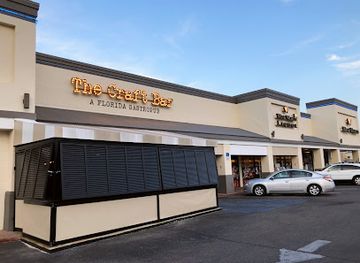
Gastropub
The Craft Bar - Fort Walton Beach
Discover the flavors of Fort Walton Beach at The Craft Bar – where gourmet meets casual dining in a lively gastropub setting.
18 min walk · 1.5 km from city centre
Best bars in Fort Walton Beach
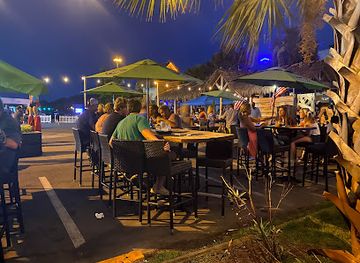
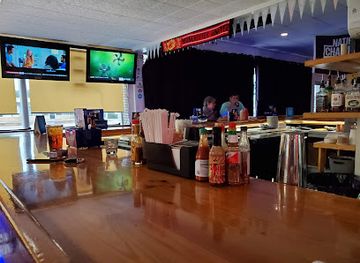
Fort Walton Beach has a relaxed evening scene shaped more by waterfront dining, live music and casual bars than by large nightclubs. Okaloosa Island is the principal holiday strip, with venues around the Boardwalk and beach areas where evenings may include drinks, sunset views and seasonal entertainment. On the mainland, bars and restaurants around the sound and central commercial areas offer sports viewing, local music and an easy-going social atmosphere. Live bands, acoustic performances and karaoke are more characteristic than a concentrated club district, while family-oriented attractions and waterfront walks provide alternatives to drinking. Nightlife can be busier during summer and holiday periods, but the city remains quieter than nearby Destin, whose entertainment areas are outside Fort Walton Beach. Visitors should carry valid identification and observe Florida alcohol laws, designated-driver expectations and venue-specific age restrictions.
-
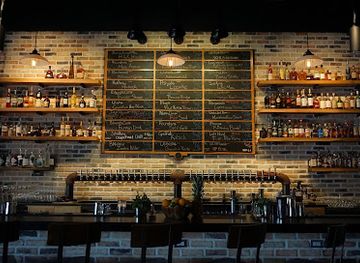
Gastropub
The Craft Bar - Fort Walton Beach
Discover the vibrant flavors of Fort Walton Beach at The Craft Bar, where gourmet meets casual in a charming gastropub setting.
18 min walk · 1.5 km from city centre
Best shops in Fort Walton Beach
Shopping in Fort Walton Beach is informal and coastal, with beachwear, souvenirs, fishing supplies, art, gifts and locally themed apparel more prominent than major-city fashion retail. The Okaloosa Island Boardwalk and nearby commercial areas provide convenient holiday shopping, while mainland streets and shopping centres offer everyday services, independent businesses and practical supplies. Visitors can browse regional food products, handmade gifts, nautical décor and Florida-inspired crafts, though the city is not chiefly known for a large traditional market or historic shopping quarter. Seafood markets and specialist outdoor retailers reflect the importance of fishing and life on the water. For a broader range of chain stores and larger retail complexes, the wider Emerald Coast provides alternatives in nearby Destin and surrounding communities. Shopping patterns are strongly seasonal, with beach districts most active during the main holiday periods.
-
Thrift store
Repeat Street Thrift Store
Uncover unique vintage treasures and sustainable finds at Repeat Street Thrift Store in Fort Walton Beach, a perfect spot for eco-conscious shoppers.
19 min walk · 1.5 km from city centre
-
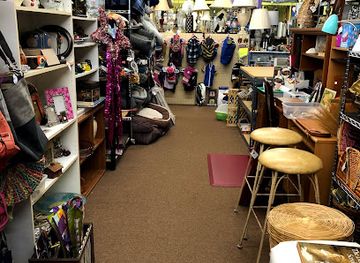
Thrift store
PAWS Thrift Shop
Explore PAWS Thrift Shop in Fort Walton Beach for a unique shopping experience filled with vintage finds, eclectic treasures, and a chance to support local animal welfare.
16 min walk · 1.3 km from city centre
-
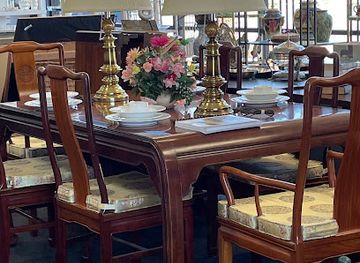
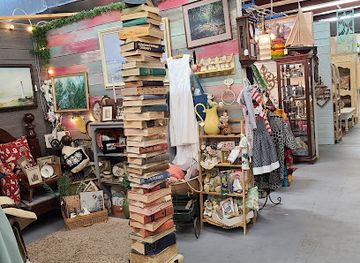
Flea market
DeFrance Antiques on Beal
Explore DeFrance Antiques in Fort Walton Beach for unique vintage finds and collectibles in a charming flea market setting.
12 min walk · 1.0 km from city centre
-
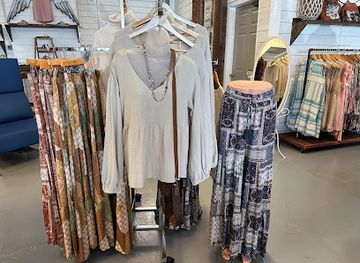
Clothing store
DeFrance Boutique and Home
Explore DeFrance Boutique and Home for unique clothing and accessories that reflect the charm of Fort Walton Beach, Florida, and enhance your wardrobe.
12 min walk · 1.0 km from city centre
Get your free copy of our complete guide to Fort Walton Beach, delivered straight to you.
Everything on this page, from attractions and restaurants to essentials and local phrases, in one PDF you can read offline, print or share.
Already have an account? Sign in
Your Fort Walton Beach guide is ready.
We'll send it to · Not you? Sign out

Getting your guide ready…
We are putting together a fresh copy of the Fort Walton Beach guide. This can take up to a minute.
This can take a few moments. If your browser asks, choose Allow so the download can start. You'll find the guide in your Downloads folder.
Nothing happened? Download it again
Sorry, the guide is taking longer than usual. Please try again in a minute, or get it by email instead.
Fort Walton Beach essentials
Currency and Payment
Safety
Emergency Situations
Do's and Don'ts
Local Tips
From Eve
Local phrases worth knowing
You don't need to get them perfect. A few words go a long way, and locals appreciate the effort.
Basics
| English | Local | Say it |
|---|---|---|
| Hello | Howdy | [haw-dee] |
| Goodbye | See ya later | [see yuh lay-tur] |
| Yes | Yep | [yep] |
| No | Nope | [nohp] |
| Please/You're welcome | Please/No problem | [pleez/no pro-blem] |
| Thank you | Thanks | [thanks] |
| Excuse me/Sorry | Pardon me/My bad | [par-dun me/my bad] |
| How are you? | How y'all doin'? | [how yawl doin'] |
| Fine. And you? | Fine. How 'bout you? | [fine. how bout yuh?] |
| Do you speak English? | Ya speak English? | [yah speak ing-glish?] |
| I don't understand | I'm lost | [ahm lost] |
Eating & Drinking
| English | Local | Say it |
|---|---|---|
| I'd like to see the menu, please | Can I check out the menu? | [kan eye chek out the menu?] |
| I don't eat meat | I'm vegetarian | [ahm veh-juh-tair-ee-an] |
| Cheers! | Cheers! | [cheers!] |
| I would like to pay, please | Can I settle up? | [kan eye set-ul up] |
Emergencies
| English | Local | Say it |
|---|---|---|
| Help! | Help! | [help!] |
| Go away! | Git! | [git!] |
| Call the Police! | Call the cops! | [call the cops!] |
| Call a doctor! | Call a doc! | [call a doc!] |
| I'm lost | I'm lost | [ahm lost] |
| I'm ill | I'm sick | [ahm sik] |
Shopping
| English | Local | Say it |
|---|---|---|
| I'd like to buy... | I wanna buy... | [ah wanna buy...] |
| I'm just looking | Just browsin' | [just brow-zin'] |
| How much is it? | How much? | [how much?] |
| That's too expensive | That's pricey | [that's pry-see] |
| Can you lower the price? | Can ya do a deal? | [kan yuh do a deal?] |
Time & Numbers
| English | Local | Say it |
|---|---|---|
| What time is it? | What time is it? | [what time is it?] |
| It's one o'clock | It's one | [its wun] |
| Half past (10) | Half past ten | [half past ten] |
| Morning | Morning | [mornin'] |
| Afternoon | Afternoon | [afternoon] |
| Evening | Evening | [evening] |
| Yesterday | Yesterday | [yester-day] |
| Today | Today | [to-day] |
| Tomorrow | Tomorrow | [to-mor-row] |
| 1 | One | [wun] |
| 2 | Two | [too] |
| 3 | Three | [three] |
| 4 | Four | [four] |
| 5 | Five | [five] |
| 6 | Six | [six] |
| 7 | Seven | [seven] |
| 8 | Eight | [eight] |
| 9 | Nine | [nine] |
| 10 | Ten | [ten] |
Transport & Directions
| English | Local | Say it |
|---|---|---|
| Where's a/the...? | Where's the...? | [wheres the...?] |
| What's the address? | What's the address? | [whats the address?] |
| Can you show me (on the map)? | Can you show me (on the map)? | [kan yuh show me (on the map)?] |
| When's the next (bus)? | When's the next (bus)? | [whens the next (bus)?] |
| A ticket (to ....) | A ticket (to ....) | [uh ticket (to ....)] |
History of Fort Walton Beach
Prehistoric Coastal Communities
Long before the modern city emerged, Native American communities occupied the shores and waterways of the Fort Walton Beach area. The region is associated with the Fort Walton culture, an archaeological tradition of the north-west Florida and surrounding Gulf Coast dating broadly from about AD 1000 to 1500. Its people cultivated crops, fished, hunted and traded, creating settlements linked by rivers and bays. Indian Temple Mound, in the present-day city centre, is one of the clearest surviving reminders of this period. The carefully constructed earthwork indicates a ceremonial and social centre rather than a natural hill, while artefacts displayed at the adjoining museum illustrate the wider networks and daily life of the prehistoric inhabitants.
Spanish Florida and Changing Powers
The coast around present-day Fort Walton Beach lay within the shifting sphere of Spanish Florida after European exploration of the Gulf region. Spanish influence was strongest around established mission and colonial centres elsewhere in the panhandle, while the local waterways remained shaped primarily by Native American communities and later settlement patterns. During the eighteenth and early nineteenth centuries, control of Florida passed through Spanish, British and American phases before the United States acquired the territory in 1821. These political changes altered land ownership and migration, but the bay, sound and Gulf continued to determine how people moved, fished and traded along the coast.
Camp Walton in the Civil War
In 1861, Confederate forces established Camp Walton near the old Indian Temple Mound to protect the coast and monitor approaches through Santa Rosa Sound during the American Civil War. The post was modest compared with larger military installations, but it gave the settlement the name from which Fort Walton Beach ultimately developed. The camp was abandoned as Confederate positions in the region changed, and little of its physical structure survives. Its location is remembered at the Camp Walton Schoolhouse Museum, where the story of the military post forms part of a broader account of local settlement and community life.
Settlement, Fishing and Timber
After the Civil War, the settlement grew slowly around the natural resources of the coast. Fishing, small-scale farming, timber and maritime activity supported families living beside the bay and sound, while the waterways connected the community with other settlements in north-west Florida. The arrival of better roads and improved transport gradually reduced its isolation. Local identity formed around a mixture of long-established residents, families connected with the sea and newcomers attracted by the climate and waterfront setting. What is now the city centre developed around this practical coastal economy, with commercial and civic buildings appearing alongside homes and working waterfront facilities.
Incorporation and the Resort Era
Fort Walton Beach was incorporated as a municipality in 1941, as improved roads, bridges and post-war prosperity began to change the north-west Florida coast. Tourism expanded as visitors travelled to the area for its beaches, fishing and warm climate, while nearby military installations and the wider growth of the Emerald Coast brought new employment and residents. The completion of the Brooks Bridge in the twentieth century strengthened access between the mainland and Okaloosa Island, helping beach tourism become central to the local economy. Modern Fort Walton Beach therefore combines an older bayfront settlement with a later seaside leisure landscape, while the mound and local museums preserve evidence of much earlier history.
Fort Walton Beach in Photos
Browse through our photo collection highlighting the charm and character of the destination.
Cities near Fort Walton Beach
The closest cities to Fort Walton Beach, if you have time for more than one stop.
-
-

-

-

-


Swipe for more cities
Explore more

Explore more of Florida
Discover Florida: A Sunshine State full of dazzling beaches, iconic theme parks, rich history, and stunning natural parks, offering endless adventures for every traveler.
Explore Florida