

Cours Mirabeau (Aix-en-Provence) Travel Guide - Free
Explore Cours Mirabeau in Aix-en-Provence with Evendo's free guide. Find the best shops, historic streets, restaurants, and gems on web or mobile.


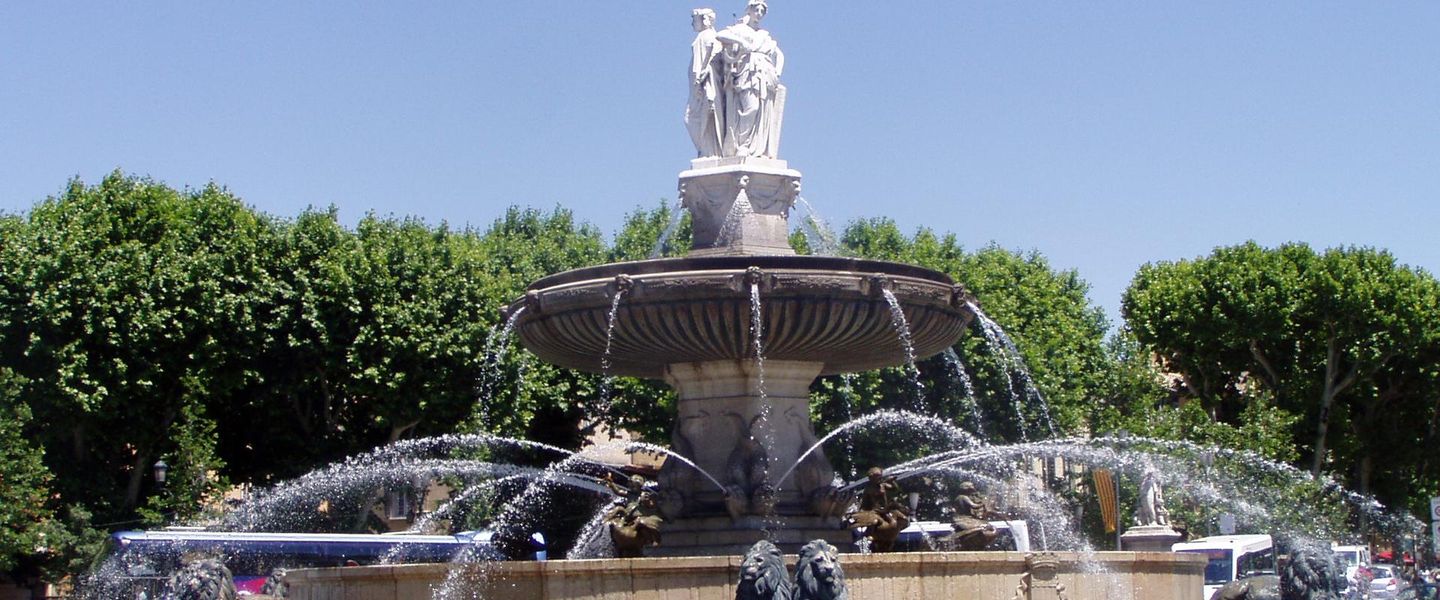


Cours Mirabeau in Aix-en-Provence pairs plane-tree shade, historic mansions, fountains, cafés and Provençal city life in France’s elegant spa town.
A Historic Axis Through Aix
Cours Mirabeau is Aix-en-Provence’s best-known urban promenade, a broad avenue linking the old town to the newer Quartier Mazarin. Created in the seventeenth century after the medieval ramparts were demolished, it was designed as a prestigious carriage route and remains the city’s most recognisable public space. Plane trees form a high green canopy above elegant façades, shaded pavements and café terraces, while a succession of fountains reflects Aix’s long relationship with water and thermal springs.Read more about Cours Mirabeau
Mansions, Cafés and Fountains
Everyday Life in the City Centre
Explore Cours Mirabeau on the map
A handpicked selection of must-see spots in Cours Mirabeau, mapped for you.
Best hotels in Cours Mirabeau
Best nightclubs in Cours Mirabeau
Evenings on Cours Mirabeau are generally sociable rather than club-focused, with café and restaurant terraces providing the main late-day activity beneath the illuminated plane trees. Historic cafés and contemporary bars along the avenue offer places for an apéritif, while the side streets of central Aix contain a wider selection of wine bars, pubs and small evening venues. The area around the Old Town, including streets near Place des Augustins, tends to provide more concentrated nightlife than the avenue itself, though it should not be confused geographically with Cours Mirabeau. There is no need to expect a large nightclub strip here: the appeal after dark lies in conversation, dining, seasonal cultural programming and an easy walk through the centre. Residential entrances and upper floors share the same buildings, so considerate voices and orderly departures matter late at night.
-
Night club
The Scat Club
Experience the vibrant nightlife and live music at The Scat Club, a must-visit night club in the heart of Aix-en-Provence.
1 min walk · 0.1 km from neighbourhood centre

Cours Mirabeau essentials
Getting There
Getting Around
Safety
Emergency Situations
Do's and Don'ts
Local Tips

From Eve
Local phrases worth knowing
You don't need to get them perfect. A few words go a long way, and locals appreciate the effort.
Basics
| English | Local | Say it |
|---|---|---|
| Hello | Bonjour | [bon-zhoor] |
| Goodbye | Au revoir | [oh ruh-vwahr] |
| Yes | Oui | [wee] |
| No | Non | [nohn] |
| Please/You're welcome | S'il vous plaît / De rien | [seel voo pleh / duh ryehn] |
| Thank you | Merci | [mehr-see] |
| Excuse me/Sorry | Excusez-moi / Désolé | [ehk-skew-zay mwa / day-zoh-lay] |
| How are you? | Comment ça va? | [koh-mohn sah vah] |
| Fine. And you? | Bien. Et vous? | [byen. ay voo] |
| Do you speak English? | Parlez-vous anglais? | [par-lay voo ahn-glay] |
| I don't understand | Je ne comprends pas | [zhuh nuh kohm-prahnd pah] |
Eating & Drinking
| English | Local | Say it |
|---|---|---|
| I'd like to see the menu, please | Je voudrais voir la carte, s'il vous plaît | [zhuh voo-dray vwahr lah kart, seel voo pleh] |
| I don't eat meat | Je ne mange pas de viande | [zhuh nuh mahnj pah duh vee-yahnd] |
| Cheers! | Santé! | [sahn-tay] |
| I would like to pay, please | Je voudrais payer, s'il vous plaît | [zhuh voo-dray pay-ay, seel voo pleh] |
Emergencies
| English | Local | Say it |
|---|---|---|
| Help! | Au secours! | [oh seh-coor] |
| Go away! | Allez-vous en! | [ah-lay voo zah] |
| Call the Police! | Appelez la police! | [ah-peh-lay lah poh-lees] |
| Call a doctor! | Appelez un médecin! | [ah-peh-lay uh meh-deh-sahn] |
| I'm lost | Je suis perdu | [zhuh swee pair-doo] |
| I'm ill | Je suis malade | [zhuh swee mah-lahd] |
Shopping
| English | Local | Say it |
|---|---|---|
| I'd like to buy... | Je voudrais acheter... | [zhuh voo-dray-ahsh tay...] |
| I'm just looking | Je regarde juste | [zhuh ruh-gahrd zhoost] |
| How much is it? | Combien ça coûte? | [kohm-byen sah koot] |
| That's too expensive | C'est trop cher | [say troh shayr] |
| Can you lower the price? | Pouvez-vous baisser le prix? | [poo-veh voo beh-say lay pree] |
Time & Numbers
| English | Local | Say it |
|---|---|---|
| What time is it? | Quelle heure est-il? | [kehl uhr ay-teel] |
| It's one o'clock | Il est une heure | [eel ay tun uhr] |
| Half past (10) | Dix heures et demie | [dees uhr ay duh-mee] |
| Morning | Matin | [ma-tahn] |
| Afternoon | Après-midi | [ah-pray mee-dee] |
| Evening | Soir | [swahr] |
| Yesterday | Hier | [yehr] |
| Today | Aujourd'hui | [oh-zhoor-dwee] |
| Tomorrow | Demain | [duh-man] |
| 1 | Un | [uhn] |
| 2 | Deux | [duh] |
| 3 | Trois | [twah] |
| 4 | Quatre | [kat] |
| 5 | Cinq | [sank] |
| 6 | Six | [sees] |
| 7 | Sept | [seht] |
| 8 | Huit | [weet] |
| 9 | Neuf | [nuf] |
| 10 | Dix | [dees] |
Transport & Directions
| English | Local | Say it |
|---|---|---|
| Where's a/the...? | Où est le/la...? | [oo eh luh/lah] |
| What's the address? | Quelle est l'adresse? | [kehl eh lah-dress] |
| Can you show me (on the map)? | Pouvez-vous me montrer (sur la carte)? | [poo-veh voo muh mohn-tray (surr lah kart)] |
| When's the next (bus)? | Quand est le prochain (bus)? | [kahn eh luh proh-shahn (bus)] |
| A ticket (to ....) | Un billet (pour ...) | [uhn bee-yay (poor)] |
History of Cours Mirabeau
Avenue Beyond the Ramparts
Cours Mirabeau was laid out in 1649 after Aix’s medieval walls were removed on the southern side of the expanding town. Its generous width reflected a new urban ideal: a formal promenade for carriages and pedestrians rather than a defensive boundary. The avenue connected the established medieval city with the developing Quartier Mazarin, where aristocratic and parliamentary families commissioned hôtels particuliers. Its creation helped shift Aix’s civic and social focus beyond the older centre and established the long, straight route that still structures the central city.
The Rise of the Hôtels Particuliers
During the seventeenth and eighteenth centuries, Cours Mirabeau became one of Aix’s most prestigious addresses. Wealthy families built or remodelled residences along the avenue, giving it the ordered façades, tall windows, sculpted doorways and wrought-iron details that distinguish it from the tighter medieval streets nearby. These hôtels particuliers were not simply decorative houses: they expressed the status of the city’s legal and administrative elite and contributed to Aix’s reputation as a centre of refined urban culture. Several remain significant architectural markers, even when their interiors are not open to the public.
Water, Thermal Springs and Fountains
Fountains became an essential part of the avenue’s identity because Aix grew around abundant underground and thermal water. The Fontaine des Neuf-Canons, installed in the eighteenth century, served practical as well as decorative purposes, while the Fontaine d’eau chaude is fed by naturally warm water and is characteristically covered in moss. At the eastern end, the Fontaine du Roi René commemorates René of Anjou, the fifteenth-century ruler closely associated with Provence. Together these fountains connect the grand promenade with Aix’s older reputation as a settlement shaped by springs.
Cafés and Modern Cultural Memory
From the nineteenth century onwards, Cours Mirabeau’s cafés and terraces made it a social meeting place as much as an architectural one. Les Deux Garçons, founded in 1792, became particularly associated with the intellectual life of Aix and with the young Paul Cézanne and Émile Zola, who knew one another in the city before their adult careers diverged. The avenue has since remained a meeting ground for residents, students and visitors, while its proximity to museums, galleries and the studios of Aix’s artistic heritage has reinforced its cultural importance.
Cours Mirabeau in Photos
Browse through our photo collection highlighting the charm and character of the destination.
Neighbourhoods near Cours Mirabeau
The closest neighbourhoods to Cours Mirabeau, if you have time for more than one stop.
-

-

-


Swipe for more neighbourhoods
Explore more
Explore more of Aix-en-Provence
Aix-en-Provence blends Cours Mirabeau elegance, Cézanne’s landscapes, Provençal markets and fountains with rich history and cultured city life in southern France.
Explore Aix-en-Provence