

Free Burgundy Travel Guide & Mobile App
Explore Burgundy with free travel guides. Discover regional history, expert tips, proposed trips, and audio guides on web or mobile app.


Explore Burgundy for grand crus, Romanesque abbeys, canal routes, historic towns and the wooded landscapes of eastern France.
Read more about Burgundy
When is the best time to visit Burgundy?
Best: June–August · 23–26°C| Month | High (°C) | Rainfall (mm) |
|---|---|---|
| January | 6 | 45 |
| February | 7 | 40 |
| March | 11 | 45 |
| April | 15 | 50 |
| May | 20 | 60 |
| June (best) | 23 | 55 |
| July (best) | 26 | 50 |
| August (best) | 25 | 55 |
| September | 22 | 60 |
| October | 16 | 65 |
| November | 10 | 55 |
| December | 6 | 50 |
Getting to and around Burgundy
How to get there
Transportation
Top city travel guides in Burgundy
The cities of Burgundy, and the easiest places to base yourself.
-

-

-


Swipe for more cities
Destinations in Burgundy
Resorts, valleys and scenic spots worth a trip of their own.
-

-

-


Swipe for more destinations
Best attractions in Burgundy
Burgundy's attractions range from major urban heritage to quiet rural landscapes. Dijon is a natural starting point for the Palace of the Dukes, medieval streets, museums and food markets, while Beaune combines the Hôtel-Dieu with access to the Côte de Beaune vineyards. Further south, the remains of Cluny Abbey and the Roman theatre and gates of Autun reveal different chapters of religious and imperial history. Vézelay and its basilica crown a hill above the Cure valley, and the château villages of Auxois provide walks through a highly legible medieval landscape. The Morvan Regional Natural Park changes the emphasis to forests, lakes, rivers and upland trails, with opportunities for walking, cycling, canoeing and wildlife watching. Canal towpaths, particularly around the Canal du Nivernais and Canal de Bourgogne, offer relatively gentle routes through farmland and market towns. Museums in Dijon, Nevers, Mâcon and smaller centres add collections on art, archaeology, ceramics and regional life, while vineyard domaines provide carefully organised introductions to Burgundy's soils and winemaking rather than a single, uniform wine-tourism experience.
-
Cultural landmark
Hôtel-Dieu Museum - Hospices de Beaune
Explore the rich history and stunning architecture of the Hôtel-Dieu Museum, a cultural landmark in Beaune, France, offering insights into the region's healthcare legacy.
-
Castle
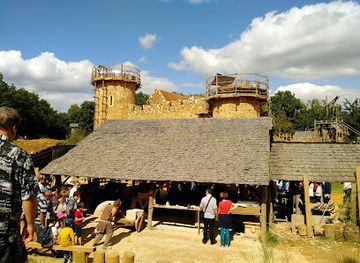
Guédelon Castle
Witness history in the making at Guédelon Castle, where a medieval fortress is being built from scratch using authentic 13th-century techniques and materials in the heart of Burgundy.
-
Tourist attraction
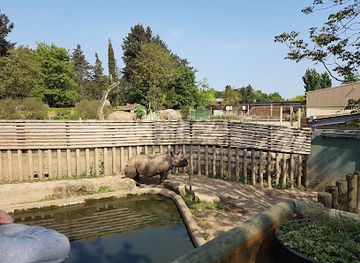
Touroparc Zoo
Experience the thrill of wildlife and amusement at Touroparc Zoo in Romanèche-Thorins, where adventure and education come together in a stunning natural setting.
-
Tourist attraction
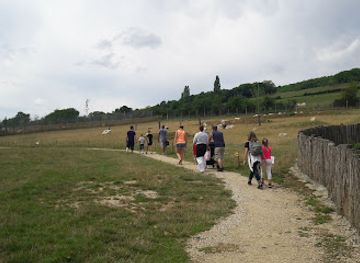
Parc de l'Auxois
Explore the beauty of nature and wildlife at Parc de l'Auxois, a serene park in Burgundy, perfect for families and outdoor enthusiasts.

Best landmarks in Burgundy
The Palace of the Dukes and the adjoining historic centre of Dijon represent Burgundy's ducal past through monumental civic architecture, medieval churches and carefully preserved streets. In Beaune, the Hôtel-Dieu is immediately recognisable for its patterned glazed roof and is important as a fifteenth-century charitable hospital as well as an architectural landmark. Vézelay Basilica dominates its hilltop settlement and is a major Romanesque monument associated with pilgrimage, while Cluny's surviving abbey buildings and archaeological remains evoke the scale of the medieval monastic complex. Autun's Roman theatre and Porte d'Arroux connect the modern town with Augustodunum, one of Roman Gaul's significant cities. The vineyards themselves form a cultural landscape of unusual precision: stone walls, village churches, clos boundaries and named parcels run along the Côte de Nuits and Côte de Beaune. Beyond the vineyards, the wooded ridges and lakes of the Morvan provide a natural counterpoint, while the medieval silhouettes of Châteauneuf and Semur-en-Auxois express the defensive and mercantile history of inland Burgundy.
-
Castle
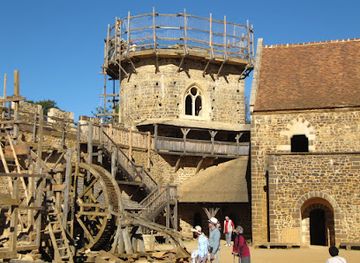
Guédelon Castle
Witness medieval history in the making at Guédelon Castle, where a 13th-century fortress is being built using authentic techniques and materials.
-
Museum
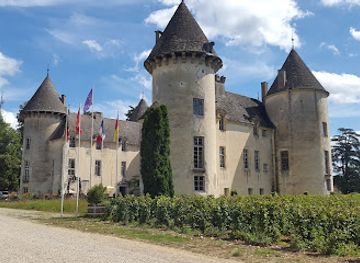
Chateau de Savigny-les-Beaune
Explore a 14th-century castle with world-class collections of aircraft, racing cars, and motorcycles in the heart of Burgundy's wine region.
-
Castle
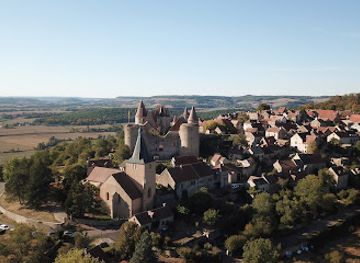
Château de Châteauneuf
Discover the enchanting Château de Châteauneuf, a historical castle in Burgundy, France, offering breathtaking views and rich cultural experiences.
-
Historical landmark
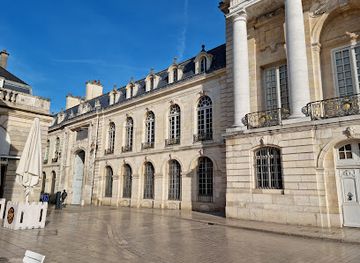
Palais des Ducs et des États de Bourgogne
Explore centuries of art and history at the Palais des Ducs, a symbol of Burgundy in Dijon, housing the Musée des Beaux-Arts and city hall.
Explore Burgundy on the map
Plan your trip on one map. See where the top cities, national parks and sights are, and book hotels and experiences in a few clicks.
Best hotels in Burgundy
Best restaurants in Burgundy
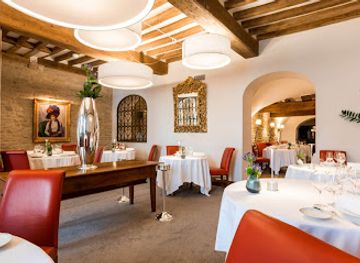
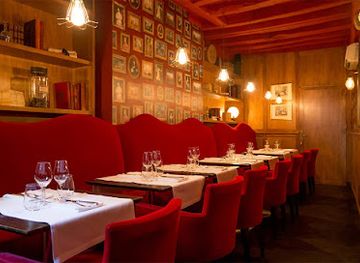
Burgundian dining is built around sturdy rural cooking, precise sauces and the produce of surrounding farms and vineyards. Classic dishes associated with the region include boeuf bourguignon, coq au vin, œufs en meurette and escargots de Bourgogne, while jambon persillé is a familiar speciality in the Saône and Côte-d'Or tradition. Charolais beef is closely linked with southern Burgundy, and local cheeses such as Époisses, often served in small portions because of its powerful character, complement the region's reds and whites. Dijon mustard, blackcurrant products, gingerbread and fruit tarts are useful market discoveries, though some are regional specialities within a broader French food culture rather than exclusively Burgundian inventions. Look for traditional brasseries, village auberges, bakery counters, contemporary restaurants and cellar-based tasting menus in the wine towns. Menus vary considerably by season, and markets in Dijon, Beaune, Chalon-sur-Saône, Mâcon and other town centres are good places to see how local households combine farm produce, freshwater fish, breads and cheese.
-
 Restaurant
Le Relais Bernard Loiseau
Experience exquisite French cuisine at Le Relais Bernard Loiseau – a Michelin-starred restaurant offering luxury accommodations and a serene spa retreat.
-
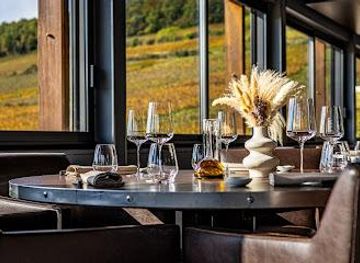
Haute French
Le Charlemagne
Michelin-starred haven blending Burgundian terroir with Asian finesse, panoramic vineyard views, and masterful wine pairings for an intimate gourmet escape.
-
French
Maison Lameloise
Discover the exquisite flavors of Maison Lameloise, a top-tier French fine dining experience nestled in beautiful Chagny.
-
French
L’Écrit'Vin
Experience authentic French cuisine at L’Écrit'Vin in Beaune, where tradition meets modern elegance amidst Burgundy's culinary landscape.
Best bars in Burgundy
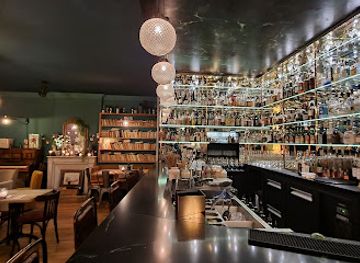
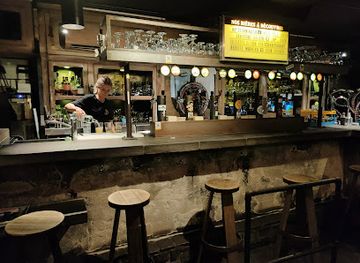
Burgundy's evening life is more closely connected with wine bars, cafés, traditional brasseries and village restaurants than with a large club scene. Dijon has the broadest choice, with students, residents and visitors filling bars around the historic centre and central squares, while Beaune's evening activity is shaped by cellar tastings, restaurants and wine-focused venues. In smaller wine towns, evenings generally end in a local café, hotel bar or dining room rather than a late-night district. Mâcon and Nevers provide additional urban choices, including live music and seasonal cultural programming, but opening arrangements change and should be checked locally. The region's breweries and wine producers also support tastings and informal gatherings, although these are commercial experiences rather than a substitute for everyday local life. Rural visitors should arrange transport in advance, especially after wine tastings, and should not assume that a village bar or restaurant will remain open late outside the busiest periods.
-
Cocktail bar
Monsieur Moutarde
Experience innovative cocktails and a lively atmosphere at Monsieur Moutarde, a must-visit cocktail bar in the heart of Dijon.
-
Pub
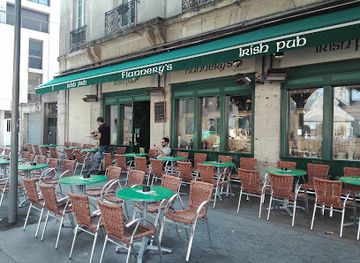
Flannery's
Discover the lively Flannery's Pub in Dijon, where great drinks and vibrant atmosphere create unforgettable nights.
-
Bar
Les Berthom
Experience the best local beers in a cozy atmosphere at Les Berthom, a must-visit bar in the heart of Dijon.
-
Fine Dining
L'O des Vignes
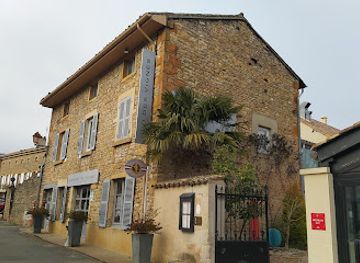
Experience exquisite French cuisine at L'O des Vignes in Fuissé, a fine dining bistro renowned for its local ingredients and superb wine selection.
Best nightclubs in Burgundy
Burgundy's evening life is more closely connected with wine bars, cafés, traditional brasseries and village restaurants than with a large club scene. Dijon has the broadest choice, with students, residents and visitors filling bars around the historic centre and central squares, while Beaune's evening activity is shaped by cellar tastings, restaurants and wine-focused venues. In smaller wine towns, evenings generally end in a local café, hotel bar or dining room rather than a late-night district. Mâcon and Nevers provide additional urban choices, including live music and seasonal cultural programming, but opening arrangements change and should be checked locally. The region's breweries and wine producers also support tastings and informal gatherings, although these are commercial experiences rather than a substitute for everyday local life. Rural visitors should arrange transport in advance, especially after wine tastings, and should not assume that a village bar or restaurant will remain open late outside the busiest periods.
-
Wine bar
Caveau de Saulx (Le Trou)
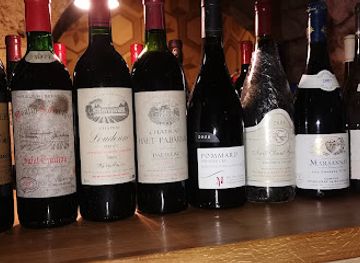
Explore the exquisite flavors of Burgundy wines at Caveau de Saulx, a charming wine bar in the heart of Dijon, perfect for enthusiasts and casual drinkers alike.
-
Disco club
Le Copacabana
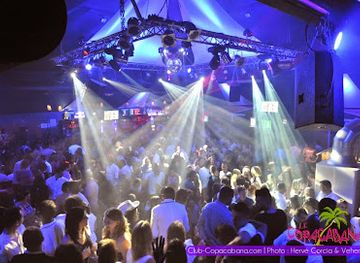
Dive into the electrifying nightlife of Beaune at Le Copacabana, the ultimate disco club experience with pulsating music and vibrant energy.
-
Night club
Le Beverly
Experience the vibrant nightlife of Dijon at Le Beverly, where great music, dancing, and friendly competition await you in a lively atmosphere.
-
Disco club
Black Pearl
Unleash your energy at Black Pearl, the ultimate disco club in Creancey - Pouilly-en-Auxois, where vibrant nightlife and unforgettable moments await.
Best shops in Burgundy
Shopping in Burgundy is strongest in historic town centres, covered markets and weekly food markets rather than in large retail complexes. Dijon is the main urban choice for mustard, gingerbread, blackcurrant products, specialist food shops, design-led boutiques and regional books, while Beaune offers wine merchants, delicatessens, ceramics and cellar-related gifts around its central streets. Visitors should compare provenance and transport arrangements before buying wine, particularly when purchasing directly from small domaines. Cluny, Autun, Vézelay and the market towns of the Saône-et-Loire provide independent shops, antiques, galleries and craft products, with selection varying according to the season. Burgundy is also associated with pottery and ceramics, especially in the wider southern region around Digoin, and with local cheeses, cured meats, honey and preserves. Canal towns and rural villages may have limited opening hours, so markets are often more dependable than browsing for a continuous shopping district. Choose food and craft items that can travel safely, and remember that some growers sell only by appointment or through specialist merchants.
-
Shopping mall
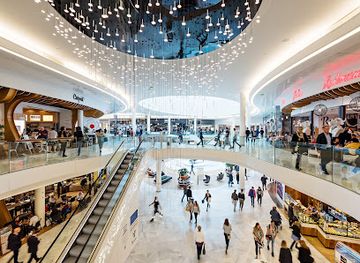
La Toison d'or
Discover a shopper's paradise at La Toison d'or in Dijon, featuring diverse retail, dining, and entertainment options for all.
-
Clothing store
Primark
Explore affordable fashion treasures at Primark in Dijon, where style meets budget-friendly shopping in a vibrant atmosphere.
-
Shopping mall
Marques Avenue Troyes
Explore Marques Avenue Troyes, a shopping paradise featuring designer outlets, children's apparel, and home goods, all in a scenic and family-friendly environment.
-
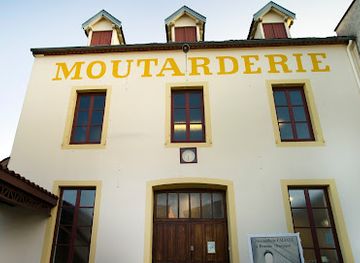
Food seasoning manufacturer
La Moutarderie Fallot
Discover the rich heritage of mustard-making at La Moutarderie Fallot, a delightful foodie attraction in the heart of Beaune.
Get your free copy of our complete guide to Burgundy, delivered straight to you.
Everything on this page, from attractions and restaurants to essentials and local phrases, in one PDF you can read offline, print or share.
Already have an account? Sign in
Your Burgundy guide is ready.
We'll send it to · Not you? Sign out

Getting your guide ready…
We are putting together a fresh copy of the Burgundy guide. This can take up to a minute.
This can take a few moments. If your browser asks, choose Allow so the download can start. You'll find the guide in your Downloads folder.
Nothing happened? Download it again
Sorry, the guide is taking longer than usual. Please try again in a minute, or get it by email instead.
Burgundy essentials
Currency and Payment
Safety
Emergency Situations
Do's and Don'ts
Local Tips
From Eve
Local phrases worth knowing
You don't need to get them perfect. A few words go a long way, and locals appreciate the effort.
Basics
| English | Local | Say it |
|---|---|---|
| Hello | Bonjour | [bohn-zhoor] |
| Goodbye | Au revoir | [oh ruh-vwahr] |
| Yes | Oui | [wee] |
| No | Non | [noh] |
| Please/You're welcome | S'il vous plaît / De rien | [seel voo pleh / deh ryen] |
| Thank you | Merci | [mehr-see] |
| Excuse me/Sorry | Excusez-moi / Désolé | [ehk-skew-zay mwah / day-zoh-lay] |
| How are you? | Comment ça va? | [koh-mohn sah vah] |
| Fine. And you? | Bien. Et vous? | [byan. eh voo] |
| Do you speak English? | Parlez-vous anglais? | [par-lay voo ahn-glay] |
| I don't understand | Je ne comprends pas | [zhuh nuh kohm-prahn pah] |
Eating & Drinking
| English | Local | Say it |
|---|---|---|
| I'd like to see the menu, please | Je voudrais voir le menu, s'il vous plaît | [zhuh voo-dray vwar luh meh-nu, seel voo pleh] |
| I don't eat meat | Je ne mange pas de viande | [zhuh nuh mahnzh pah duh vyahnd] |
| Cheers! | Santé! | [sahn-tay] |
| I would like to pay, please | Je voudrais payer, s'il vous plaît | [zhuh voo-dray pay-ay, seel voo pleh] |
Emergencies
| English | Local | Say it |
|---|---|---|
| Help! | Au secours! | [oh se-kur] |
| Go away! | Allez-vous-en! | [ah-lay voo-zahn] |
| Call the Police! | Appelez la police! | [ah-peh-lay lah poh-lees] |
| Call a doctor! | Appelez un docteur! | [ah-peh-lay uhn doh-kteur] |
| I'm lost | Je suis perdu | [zhuh swee pair-dyoo] |
| I'm ill | Je suis malade | [zhuh swee mah-lahd] |
Shopping
| English | Local | Say it |
|---|---|---|
| I'd like to buy... | Je voudrais acheter... | [zhuh voo-dray ah-sheh-tay] |
| I'm just looking | Je regarde juste | [zhuh ruh-gard zhoost] |
| How much is it? | C'est combien? | [seh kohm-byen] |
| That's too expensive | C'est trop cher | [seh troh shair] |
| Can you lower the price? | Pouvez-vous baisser le prix? | [poo-vay voo beh-say luh pree] |
Time & Numbers
| English | Local | Say it |
|---|---|---|
| What time is it? | Quelle heure est-il? | [kel uhr eh-teel] |
| It's one o'clock | Il est une heure | [eel eh ewn uhr] |
| Half past (10) | Dix heures et demie | [dees uhr eh duh-mee] |
| Morning | Matin | [mah-tahn] |
| Afternoon | Après-midi | [ah-preh mee-dee] |
| Evening | Soir | [swahr] |
| Yesterday | Hier | [ee-air] |
| Today | Aujourd'hui | [oh-zhoor-dwee] |
| Tomorrow | Demain | [duh-mahn] |
| 1 | Un | [uhn] |
| 2 | Deux | [duh] |
| 3 | Trois | [trwah] |
| 4 | Quatre | [kah-truh] |
| 5 | Cinq | [sank] |
| 6 | Six | [sees] |
| 7 | Sept | [set] |
| 8 | Huit | [weet] |
| 9 | Neuf | [nuhf] |
| 10 | Dix | [dees] |
Transport & Directions
| English | Local | Say it |
|---|---|---|
| Where's a/the...? | Où est un/une...? | [oo eh uhn/oon] |
| What's the address? | Quelle est l'adresse? | [kel eh luh-dress] |
| Can you show me (on the map)? | Pouvez-vous me montrer (sur la carte)? | [poo-vay voo muh mohn-tray (sur lah kart)] |
| When's the next (bus)? | Quand est le prochain (bus)? | [kahn eh luh proh-shen (boos)] |
| A ticket (to ....) | Un billet (pour ...) | [uhn bee-yay (poor ...)] |
History of Burgundy
Celtic and Gallo-Roman Burgundy
Before Roman rule, the area was inhabited by Celtic peoples, including the Aedui, whose important settlement at Bibracte stood on Mont Beuvray in the present-day Morvan. After the Roman conquest, Autun, founded as Augustodunum, became a major urban and educational centre. Its surviving theatre, gates and temple remains demonstrate the region's integration into the Roman world. Roads, agriculture and urban institutions established patterns that continued to influence settlement long after the western Roman Empire declined.
The Burgundian Kingdom and Early Christianity
Burgundian peoples established a kingdom in the Rhône and Saône region during the fifth century, creating the political name that would endure in different forms. Christianity spread through towns and rural communities, and later monasteries became important landowners, cultural centres and agents of agricultural development. Although modern Burgundy cannot be reduced to one uninterrupted political territory, the early medieval period laid foundations for the region's enduring association with monastic institutions and the Christian landscapes visible at places such as Autun and Vézelay.
Cluny and the Medieval Monastic Network
Founded in 910, the abbey of Cluny developed into one of medieval Europe's most influential monastic institutions. Its abbots promoted reform and governed a far-reaching network of dependent houses, while the successive abbey churches expressed an exceptional scale and ambition. Much of Cluny's great church was demolished after the French Revolution, but the surviving buildings, archaeological remains and museum presentations convey the site's importance. Other Burgundian monasteries and Romanesque churches reflect the wider religious and artistic influence associated with this period.
The Dukes of Burgundy
From the fourteenth to the fifteenth centuries, the Valois dukes of Burgundy built a powerful principality through inheritance, marriage, diplomacy and conquest. Their territories extended well beyond modern Burgundy into the Low Countries, but Dijon, Beaune and other regional towns benefited from their patronage. Dijon retains the Palace of the Dukes and the tombs of Philip the Bold and John the Fearless, while Beaune's Hôtel-Dieu reflects the wealth of the ducal administrative world. The death of Charles the Bold in 1477 allowed the French crown to absorb the duchy.
Vineyards, Trade and the Hospices of Beaune
Burgundy's vineyards were cultivated and organised over many centuries by monasteries, aristocratic estates, merchants and, later, a much wider body of landowners. The Hospices de Beaune, founded in 1443 by Nicolas Rolin and Guigone de Salins, possessed vineyards whose produce helped support the charitable hospital. Its colourful glazed roof and annual wine auction became enduring symbols of the region's connection between philanthropy, commerce and viticulture. The detailed division of vineyards into named climats reflects this long history of land ownership and cultivation.
Revolution, Departmental Change and Rural Society
The French Revolution ended monastic and aristocratic privileges, nationalised church property and transformed land ownership. Burgundy's present departments emerged from the reorganisation of France, while former abbeys and estates acquired new civic, industrial or agricultural uses. The nineteenth century brought improvements in roads, canals and railways, helping wine, livestock and manufactured goods reach wider markets. Rural society remained central, though migration and changing agricultural practices gradually altered many villages and market towns.
Modern Burgundy and the Recognition of Its Vineyards
In the twentieth and twenty-first centuries, Burgundy balanced agricultural change with the international growth of its wine reputation. The Morvan developed as a protected landscape and recreation area, while towns such as Dijon, Beaune, Mâcon and Nevers diversified through services, education, heritage and food industries. In 2015, the Climats, terroirs of Burgundy, covering vineyard parcels and associated settlements in the Côte de Nuits and Côte de Beaune, were added to the UNESCO World Heritage List. Their recognition emphasised the region's long relationship between geology, cultivation and human history.
Burgundy in Photos
Browse through our photo collection highlighting the charm and character of the destination.
Neighbouring regions of Burgundy
The closest regions to Burgundy, if you have time for more than one.
-

-

-

-

-


Swipe for more regions

