

Free Auvergne Travel Guide & Mobile App
Explore Auvergne with free travel guides. Discover regional history, expert tips, proposed trips, and audio guides on web or mobile app.


Explore Auvergne’s volcanic peaks, spa towns, medieval villages, regional cheeses and spacious mountain landscapes in central France.
Read more about Auvergne
When is the best time to visit Auvergne?
Best: June–August · 22–25°C| Month | High (°C) | Rainfall (mm) |
|---|---|---|
| January | 5 | 60 |
| February | 7 | 50 |
| March | 11 | 55 |
| April | 15 | 60 |
| May | 19 | 70 |
| June (best) | 22 | 60 |
| July (best) | 25 | 55 |
| August (best) | 25 | 60 |
| September | 21 | 65 |
| October | 16 | 70 |
| November | 10 | 65 |
| December | 7 | 60 |
Getting to and around Auvergne
How to get there
Transportation
Top city travel guides in Auvergne
The cities of Auvergne, and the easiest places to base yourself.
-

-


Swipe for more cities
Destinations in Auvergne
Resorts, valleys and scenic spots worth a trip of their own.
-

-

-

-

-

-


Swipe for more destinations
Best attractions in Auvergne
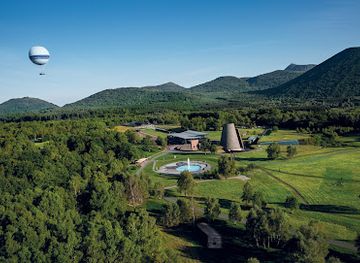
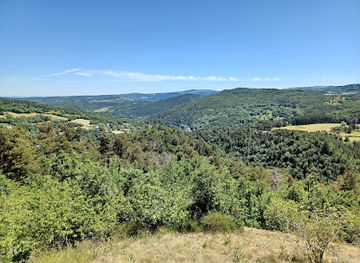
Auvergne's attractions are rooted in geology, highland landscapes and historic settlements rather than concentrated in a single resort. Around Clermont-Ferrand, the Chaîne des Puys offers marked walks across volcanic cones, while the nearby Vulcania visitor park explains the region's geological past through exhibitions and family-oriented experiences. The Monts Dore and Massif du Sancy provide walking, cycling and winter sports, with Le Mont-Dore and Super-Besse serving as practical mountain bases. The Auvergne Volcanoes Regional Nature Park extends across large portions of the uplands, where open pasture, forest, streams and traditional burons create opportunities for wildlife watching and scenic drives. Cantal's villages, including Salers and Tournemire, combine old stone architecture with access to plateau landscapes, while Haute-Loire is known for basalt formations, river valleys and the historic pilgrimage town of Le Puy-en-Velay. Vichy and Royat present a different experience through spa heritage, parks and nineteenth-century architecture. Museums, cutlery workshops in Thiers, rural markets and local cheese farms add cultural depth to the outdoor programme.
-
Amusement park
Vulcania
Explore the thrilling world of volcanoes and Earth science at Vulcania, France's premier amusement park, offering interactive exhibits, immersive experiences, and unforgettable adventures for all ages.
-
Tourist attraction
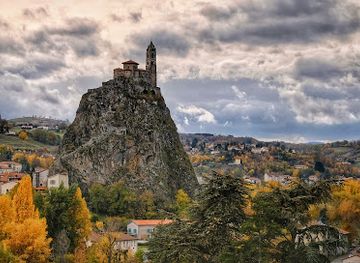
Rocher Saint-Michel d'Aiguilhe
Discover the Rocher Saint-Michel d'Aiguilhe, a stunning chapel perched atop a volcanic rock, offering breathtaking views and a journey through centuries of history and faith in the heart of France.
-
Tourist attraction
Grottes du Cornadore
Explore ancient Roman baths in the heart of France: Discover the Grottes du Cornadore in Saint-Nectaire, a unique blend of history, geology, and thermal springs.
-
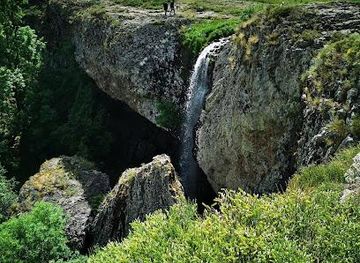
Waterfall
Cascade du Déroc
Explore the enchanting Cascade du Déroc in Nasbinals, a stunning waterfall surrounded by lush landscapes and breathtaking views.
Best landmarks in Auvergne
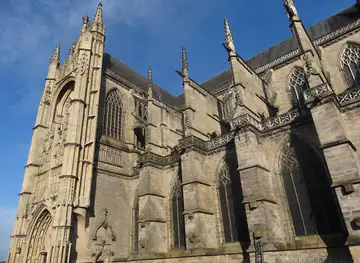
The Gothic cathedral of Notre-Dame-de-l'Assomption in Clermont-Ferrand is one of Auvergne's most recognisable buildings, its dark lava stone rising above a historic centre also marked by the Romanesque basilica of Notre-Dame-du-Port. The volcanic pinnacles of Le Puy-en-Velay create an equally distinctive skyline: the cathedral stands above the old town, while the Chapelle Saint-Michel d'Aiguilhe occupies a dramatic basalt needle and the statue of Notre-Dame de France crowns another volcanic outcrop. In the countryside, the rounded summits of the Puy de Dôme and the Monts Dore serve as major natural reference points, while the broad volcanic mass of the Puy de Sancy is the highest point in mainland France. Salers is notable for its dark volcanic-stone houses, carved doorways and compact historic streets, and the château of Murol commands a rocky position above the Sancy area. The spa architecture of Vichy, with its parks and grand nineteenth-century buildings, represents a different but important aspect of Auvergne's visual heritage. Together these places show how lava, pilgrimage, pastoral wealth and spa culture have shaped the region's landmarks.
-
Park
Auvergne Volcanoes Regional Natural Park
Discover France's largest volcanic park: hike ancient trails, explore diverse landscapes, and immerse yourself in Auvergne's natural beauty.
-
 Amusement park
Vulcania
Explore the thrilling world of volcanoes and Earth science at Vulcania, an unforgettable adventure for the whole family in the heart of France.
-
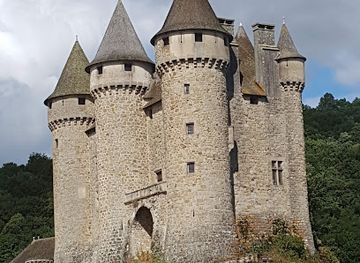
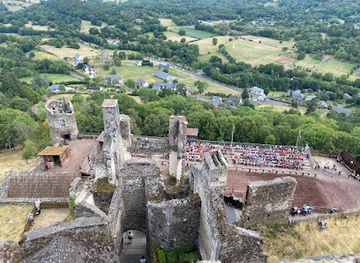
Castle
Murol Castle
Explore Murol Castle, a medieval fortress in Auvergne, France, offering historical insights, stunning views, and a glimpse into life in the Middle Ages.
-
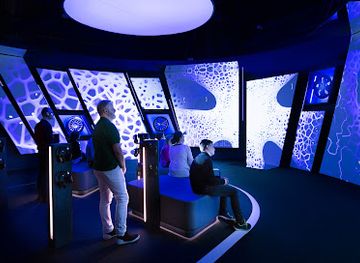
Museum
L'Aventure Michelin
Discover over 130 years of innovation at L'Aventure Michelin, exploring the history, technology, and cultural impact of the iconic Michelin brand.
Explore Auvergne on the map
Plan your trip on one map. See where the top cities, national parks and sights are, and book hotels and experiences in a few clicks.
Best hotels in Auvergne
Best restaurants in Auvergne
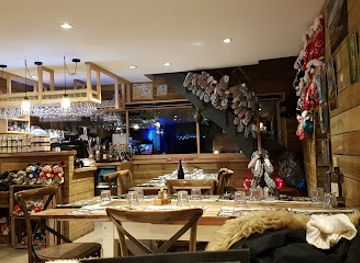
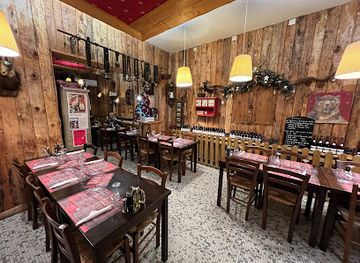
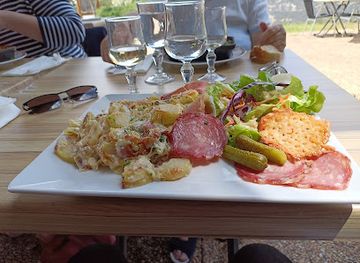
Auvergne's cooking reflects its cool uplands, pastoral farming and substantial rural cuisine. Cantal, Salers and Saint-Nectaire are among the best-known regional cheeses, while Fourme d'Ambert comes from the eastern part of the Auvergne tradition; they appear on cheeseboards, in salads and in dishes served by mountain inns. Aligot, a whipped potato and cheese preparation, is strongly associated with the Massif Central, while truffade combines potatoes with cheese and is especially familiar in Cantal and neighbouring highland areas. Lentils from Le Puy-en-Velay, cured meats, sausages and hearty soups are common regional products, and local beef and lamb feature on many traditional menus. Clermont-Ferrand and the larger towns offer contemporary restaurants alongside brasseries, cafés and bakeries. In the countryside, look for auberges, farm shops and markets rather than expecting late-night dining or extensive choice in every village. Vichy also has a long spa-town hospitality tradition, with pâtisserie and formal dining complementing everyday regional food.
-
Restaurant
Buron du Col de la Croix Morand
Discover authentic French flavors at Buron du Col de la Croix Morand, where culinary excellence meets breathtaking mountain scenery.
-
Restaurant
La Vieille Etable
Experience the charm of traditional French cuisine at La Vieille Etable in Mont-Dore - a culinary delight surrounded by breathtaking scenery.
-
Modern French
Le Bistrot d'à Côté
Experience the best of modern French cuisine at Le Bistrot d'à Côté - where tradition meets innovation in every dish.
-
French
Le Village Auvergnat
Savor authentic French cuisine in Orcines at Le Village Auvergnat – where tradition meets flavor in every dish.
Best bars in Auvergne
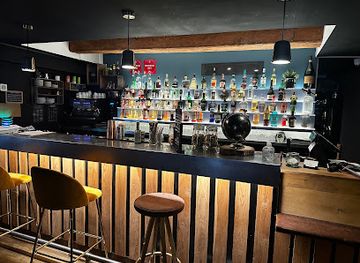
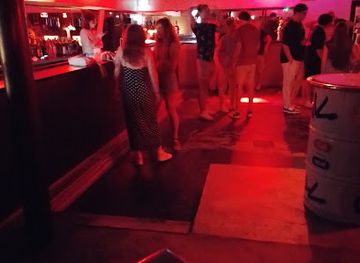
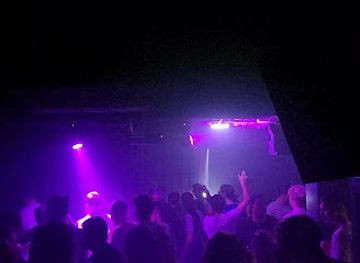
Evening life in Auvergne is concentrated in Clermont-Ferrand, whose student population supports a broader range of bars, live music rooms, cafés and late venues than most of the region. The historic centre and streets around the university areas are the main places to look for an evening out, although individual venues and opening arrangements change. In Le Puy-en-Velay, Vichy, Aurillac and other larger towns, nightlife generally centres on wine bars, brasseries, cafés, cultural performances and traditional pubs rather than a large club scene. Mountain resorts such as Le Mont-Dore and Super-Besse can become livelier during winter and summer holiday periods, while rural evenings are more likely to involve a village restaurant, inn or local event. Regional beers and French wines are widely available, and some producers offer tastings, but visitors should arrange a safe return from remote villages where taxis and late public transport may be limited.
-
Irish pub
The Still Irish Bar
Discover the heart of Irish culture at The Still Irish Bar in Clermont-Ferrand, offering cozy ambiance, hearty meals, and an extensive drink selection.
-
Bar
Les BerThoM
Experience the vibrant nightlife of Clermont-Ferrand at Les BerThoM, a bar that combines charm, great drinks, and a lively atmosphere.
-
Pub
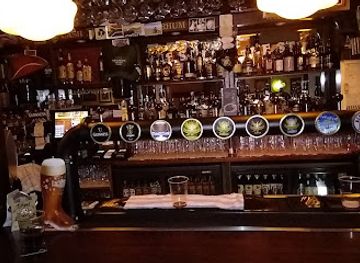
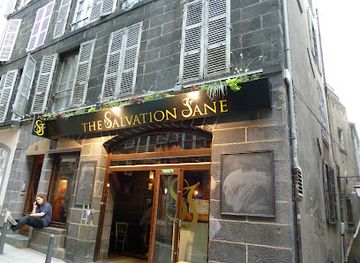
The Salvation Jane Pub
Discover the lively ambiance and unique craft beers at The Salvation Jane Pub in Clermont-Ferrand, a perfect spot for tourists seeking local culture.
-
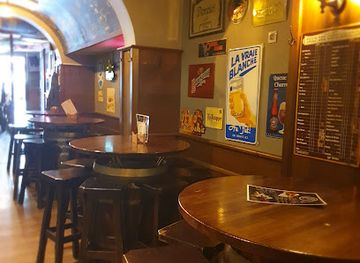
Beer hall
Delirium Café
Discover Delirium Café in Clermont-Ferrand, a vibrant beer hall offering an extensive selection of brews in a lively and welcoming atmosphere.

Best nightclubs in Auvergne
Evening life in Auvergne is concentrated in Clermont-Ferrand, whose student population supports a broader range of bars, live music rooms, cafés and late venues than most of the region. The historic centre and streets around the university areas are the main places to look for an evening out, although individual venues and opening arrangements change. In Le Puy-en-Velay, Vichy, Aurillac and other larger towns, nightlife generally centres on wine bars, brasseries, cafés, cultural performances and traditional pubs rather than a large club scene. Mountain resorts such as Le Mont-Dore and Super-Besse can become livelier during winter and summer holiday periods, while rural evenings are more likely to involve a village restaurant, inn or local event. Regional beers and French wines are widely available, and some producers offer tastings, but visitors should arrange a safe return from remote villages where taxis and late public transport may be limited.
-
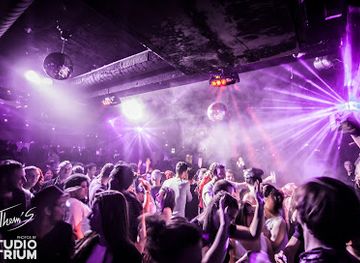
Disco club
Le them's
Dive into the vibrant nightlife at Le Them's, Clermont-Ferrand's must-visit disco club for an unforgettable party experience.
-
Night club
Bombshell
Discover Clermont-Ferrand's nightlife at Bombshell, an electrifying night club perfect for dancing, drinks, and unforgettable memories.
-
Disco club
Le Middle Night
Discover the electric nightlife of Clermont-Ferrand at Le Middle Night, the ultimate disco club for music lovers and party enthusiasts.
-
Disco club
One o One 101
Dive into the heart of Clermont-Ferrand's nightlife at One o One 101, where dance, music, and unforgettable moments await.

Best shops in Auvergne
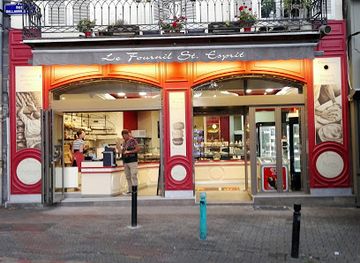
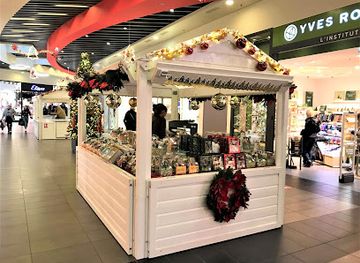
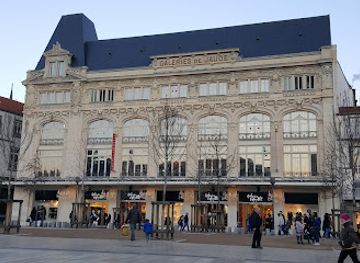
Shopping in Auvergne is strongest in market towns and historic centres rather than in large luxury districts. Clermont-Ferrand has the broadest choice of department stores, high-street brands, independent boutiques, bookshops and food retailers, while Vichy combines everyday shopping with pâtisseries, delicatessens and spa-town elegance. Le Puy-en-Velay is a useful place to look for regional food products, including green lentils, artisan confectionery and local cheeses, and markets across the region provide opportunities to buy cured meats, honey, preserves and seasonal produce directly from traders. Thiers is particularly associated with cutlery, and specialist workshops and shops reflect the town's long knife-making tradition. Rural villages and mountain resorts have smaller selections of crafts, woollens, pottery, maps and outdoor equipment. When buying cheese or other short-life produce, consider storage and transport, especially during warm weather; many market sellers can advise on packaging for a journey.
-
Shopping mall
Centre Jaude
Experience shopping, dining, and entertainment at Centre Jaude, the vibrant heart of Clermont-Ferrand's retail scene.
-
Shopping mall
La Galerie Nacarat
Discover the vibrant shopping experience at La Galerie Nacarat in Clermont-Ferrand, where fashion meets convenience in a stunning mall setting.
-
Department store
Galeries Lafayette Clermont
Discover the charm of Galeries Lafayette Clermont, a shopping paradise offering fashion, beauty, and unique finds in the heart of Clermont-Ferrand.
-
Supermarket
Market Commentry
Discover the flavors of Commentry at Market Commentry, a vibrant supermarket offering fresh produce, local delicacies, and unique culinary experiences.
Get your free copy of our complete guide to Auvergne, delivered straight to you.
Everything on this page, from attractions and restaurants to essentials and local phrases, in one PDF you can read offline, print or share.
Already have an account? Sign in
Your Auvergne guide is ready.
We'll send it to · Not you? Sign out

Getting your guide ready…
We are putting together a fresh copy of the Auvergne guide. This can take up to a minute.
This can take a few moments. If your browser asks, choose Allow so the download can start. You'll find the guide in your Downloads folder.
Nothing happened? Download it again
Sorry, the guide is taking longer than usual. Please try again in a minute, or get it by email instead.
Auvergne essentials
Currency and Payment
Safety
Emergency Situations
Do's and Don'ts
Local Tips
From Eve
Local phrases worth knowing
You don't need to get them perfect. A few words go a long way, and locals appreciate the effort.
Basics
| English | Local | Say it |
|---|---|---|
| Hello | Salut | [[sa.ly]] |
| Goodbye | Au revoir | [[o ʁə.vwaʁ]] |
| Yes | Oui | [[wi]] |
| No | Non | [[nɔ̃]] |
| Please/You're welcome | S'il vous plaît | [[sil vu plɛ]] |
| Thank you | Merci | [[mɛʁ.si]] |
| Excuse me/Sorry | Excusez-moi | [[ɛk.sky.ze mwa]] |
| How are you? | Comment ça va? | [[kɔ.mɑ̃ sa va]] |
| Fine. And you? | Bien. Et vous? | [[bjɛ̃ e vu]] |
| Do you speak English? | Parlez-vous anglais? | [[paʁ.le vu ɑ̃.ɡlɛ]] |
| I don't understand | Je ne comprends pas | [[ʒə nə kɔ̃.pʁɑ̃ pa]] |
Eating & Drinking
| English | Local | Say it |
|---|---|---|
| I'd like to see the menu, please | Je voudrais voir le menu, s'il vous plaît | [[ʒə vu.dʁɛ vwaʁ lə mə.ny sil vu plɛ]] |
| I don't eat meat | Je ne mange pas de viande | [[ʒə nə mɑ̃ʒ pa də vjɑ̃d]] |
| Cheers! | Santé! | [[sɑ̃.te]] |
| I would like to pay, please | Je voudrais payer, s'il vous plaît | [[ʒə vu.dʁɛ pe.je sil vu plɛ]] |
Emergencies
| English | Local | Say it |
|---|---|---|
| Help! | Au secours! | [[o sə.kur]] |
| Go away! | Allez-vous en! | [[a.le vu zɑ̃]] |
| Call the Police! | Appelez la police! | [[a.pe.le la pɔ.lis]] |
| Call a doctor! | Appelez un médecin! | [[a.pe.le ɛ̃ mɛ.dɛ.sɛ̃]] |
| I'm lost | Je suis perdu | [[ʒə sɥi pɛʁ.dy]] |
| I'm ill | Je suis malade | [[ʒə sɥi ma.lad]] |
Shopping
| English | Local | Say it |
|---|---|---|
| I'd like to buy... | Je voudrais acheter... | [[ʒə vu.dʁɛ aʃ.te]] |
| I'm just looking | Je regarde juste | [[ʒə ʁə.ɡaʁd ʒyst]] |
| How much is it? | C'est combien? | [[sɛ kɔ̃.bjɛ̃]] |
| That's too expensive | C'est trop cher | [[sɛ tʁo ʃɛʁ]] |
| Can you lower the price? | Pouvez-vous baisser le prix? | [[pu.ve vu be.se lə pʁi]] |
Time & Numbers
| English | Local | Say it |
|---|---|---|
| What time is it? | Quelle heure est-il? | [[kɛl œʁ ɛ.til]] |
| It's one o'clock | Il est une heure | [[il ɛ y.nœʁ]] |
| Half past (10) | Dix heures et demie | [[dis œʁ e də.mi]] |
| Morning | Matin | [[ma.tɛ̃]] |
| Afternoon | Après-midi | [[a.pʁɛ.mi.di]] |
| Evening | Soir | [[swaʁ]] |
| Yesterday | Hier | [[jɛʁ]] |
| Today | Aujourd'hui | [[o.ʒuʁ.dɥi]] |
| Tomorrow | Demain | [[də.mɛ̃]] |
| 1 | Un | [[œ̃]] |
| 2 | Deux | [[dø]] |
| 3 | Trois | [[tʁwa]] |
| 4 | Quatre | [[katʁ]] |
| 5 | Cinq | [[sɛ̃k]] |
| 6 | Six | [[sis]] |
| 7 | Sept | [[sɛt]] |
| 8 | Huit | [[ɥit]] |
| 9 | Neuf | [[nœf]] |
| 10 | Dix | [[dis]] |
Transport & Directions
| English | Local | Say it |
|---|---|---|
| Where's a/the...? | Où est un/une...? | [[u ɛ ɛ̃/yn]] |
| What's the address? | Quelle est l'adresse? | [[kɛl ɛ l.a.dʁɛs]] |
| Can you show me (on the map)? | Pouvez-vous me montrer (sur la carte)? | [[pu.ve vu mə mɔ̃.tʁe syʁ la kaʁt]] |
| When's the next (bus)? | Quand est le prochain (bus)? | [[kɑ̃ ɛ lə pʁo.ʃɛ̃ bys]] |
| A ticket (to ....) | Un billet (pour ....) | [[œ̃ bi.jɛ puʁ]] |
History of Auvergne
Gaulish Arverni and the Legacy of Vercingetorix
Much of present-day Auvergne corresponds to the territory of the Arverni, a powerful Gaulish people whose influence extended across central France before Roman conquest. Their most famous leader, Vercingetorix, organised resistance to Julius Caesar during the Gallic Wars and surrendered at Alesia in 52 BC, an event remembered in French national history. The Arverni centre at Gergovia, on a plateau south of Clermont-Ferrand, is associated with a major defeat inflicted on Caesar's army. Archaeological remains and interpretation at the site help explain the political importance of the region before Roman rule.
Roman Augustonemetum and Provincial Roads
The Romans established Augustonemetum on the site of modern Clermont-Ferrand, developing it as a regional centre connected to the wider imperial road network. Roman administration brought new forms of urban planning, commerce, agriculture and engineering, while settlements and routes grew in the surrounding valleys. The name combined Augustus with nemeton, a Celtic term associated with a sacred place, reflecting the layering of local and imperial cultures. Although later building has obscured much of the Roman city, excavated remains and the region's road patterns preserve evidence of its role in ancient central Gaul.
Medieval Auvergne and the Growth of Le Puy
During the medieval period, Auvergne was divided among powerful lords, bishops and monastic institutions, with Clermont and Le Puy developing distinct religious and political roles. Le Puy-en-Velay became an important pilgrimage centre, helped by its cathedral and its position on routes towards Santiago de Compostela. Castles, Romanesque churches and fortified settlements appeared across the uplands and valleys, including in the Cantal and around the Limagne plain. The region's fragmented authority explains the variety of architectural traditions visible in its villages, from volcanic-stone churches to defensive hilltop towns.
The House of Bourbon and the Duchy of Auvergne
Auvergne's medieval and early modern history was shaped by rival noble houses, including the Bourbons, whose power was centred farther north and later became central to the French monarchy. The duchy and county of Auvergne did not always correspond to the modern region, and control shifted through inheritance, royal intervention and political alliances. This complex history left a landscape of castles, seigneurial towns and ecclesiastical foundations. The incorporation of Auvergne more firmly into the French royal framework strengthened administrative links with the rest of the kingdom while preserving strong local identities.
Rural Economies, Cheese and Mountain Pastures
For centuries, Auvergne's economy relied heavily on pastoral farming, small-scale agriculture, forestry and trade between upland communities and market towns. Seasonal movement to high summer pastures supported the production of cheeses such as Cantal and Salers, traditionally made in stone burons before being matured elsewhere. The volcanic soils and plateau grasslands remain important to the region's agricultural identity. Rural life was often demanding, encouraging seasonal migration and later permanent movement towards towns, but buildings, field patterns, livestock breeds and food traditions still reveal the importance of mountain husbandry.
Volcanic Spa Towns and Nineteenth-Century Modernisation
From the eighteenth and particularly the nineteenth century, mineral springs helped transform places such as Vichy, Royat, Le Mont-Dore and Châtel-Guyon into fashionable spa destinations. Hotels, parks, bath establishments, theatres and ornate villas introduced a more formal urban style to landscapes otherwise dominated by farming and small towns. Railways made the region easier to reach and stimulated tourism, trade and industrial activity. Vichy became especially prominent among French spa towns, while the volcanic mountains increasingly attracted visitors for both health cures and emerging forms of leisure travel.
Industrial Change and the Modern Region
Industrialisation affected Auvergne unevenly. Clermont-Ferrand became associated with tyre manufacturing through Michelin, founded there in 1889, and developed into the region's major industrial and commercial city. Thiers maintained a long-established cutlery tradition, while coal, metalworking, textiles and food processing shaped other local economies. Railways and roads connected previously isolated valleys, yet many upland communities continued to face depopulation during the twentieth century. Contemporary Auvergne balances industrial and university life in its cities with agriculture, heritage tourism, outdoor recreation and protected landscapes in the countryside.
Auvergne in Photos
Browse through our photo collection highlighting the charm and character of the destination.
Neighbouring regions of Auvergne
The closest regions to Auvergne, if you have time for more than one.
-

-

-

-

-


Swipe for more regions
Explore more

Explore more of France
Explore France: A land of romance, history, and unparalleled beauty, from the iconic streets of Paris to the serene landscapes of Provence and the luxury of the French Riviera.
Explore France