

Méribel Travel Guide - Free Web & App
Your ultimate guide to Méribel. Discover top landmarks, proposed trips, and local tips. Free on the web or via the Evendo companion app.


Méribel, France combines Savoyard chalet architecture, Three Valleys skiing, mountain scenery, hiking trails and access to Courchevel and Les Menuires.
A Mountain Resort in the Tarentaise
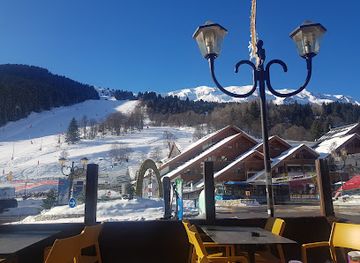
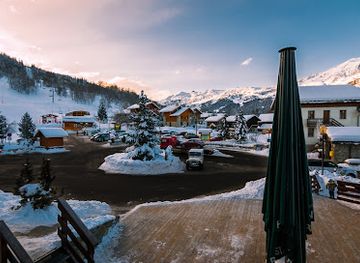
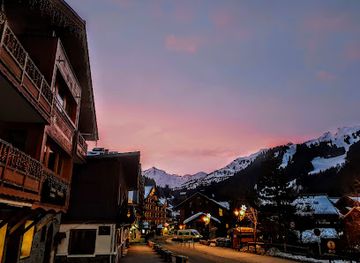
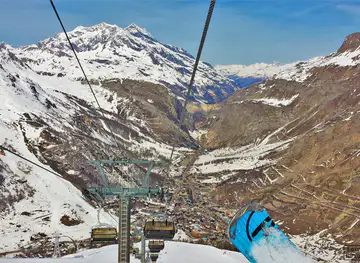
Méribel occupies the wooded middle section of the Vallée des Allues in France’s Savoie department, between Brides-les-Bains below and the high mountain passes leading towards Courchevel and Les Menuires. Rather than being a single compact town, it is a series of settlements and resort districts spread along the valley and slopes, including Les Allues, Méribel Village, Méribel Centre and Méribel-Mottaret. The setting combines larch and spruce forests, open alpine pastures, steep surrounding peaks and broad winter pistes.Read more about Méribel
Chalet Architecture and Local Character
Winter and Summer Landscapes
When is the best time to visit Méribel?
Best: July–September · 17–21°C| Month | High (°C) | Rainfall (mm) |
|---|---|---|
| January | 2 | 43 |
| February | 3 | 42 |
| March | 5 | 44 |
| April | 9 | 54 |
| May | 13 | 77 |
| June | 18 | 94 |
| July (best) | 21 | 89 |
| August (best) | 20 | 78 |
| September (best) | 17 | 70 |
| October | 12 | 61 |
| November | 7 | 56 |
| December | 4 | 47 |
Best attractions in Méribel
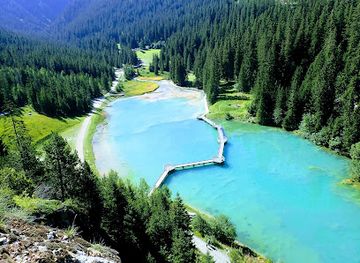
Méribel’s attractions are defined by the relationship between its villages, forests and high mountain slopes. Les Allues provides a historic starting point, with traditional buildings and the parish church giving context to the valley’s older community, while Méribel Village and Méribel Centre lead towards the resort’s main winter pistes. Méribel-Mottaret sits higher, close to extensive ski terrain and summer routes around the Plan de Tuéda area, where a high-altitude lake and surrounding conifer woodland create a quieter landscape. In winter, the Three Valleys lifts open access towards Courchevel, Les Menuires and Val Thorens, although those neighbouring resorts remain distinct destinations. During the warmer months, hiking paths and mountain-bike routes cross alpine pastures, woodland and ridges, with views towards the Vanoise mountains. The Doron des Allues valley and its hamlets are especially rewarding for visitors interested in the contrast between a planned international ski resort and a long-established Savoyard settlement pattern.
-
Tourist attraction
Les Menuires
Discover Les Menuires, the family-friendly gateway to the Three Valleys, offering world-class skiing, diverse activities, and stunning alpine scenery at an accessible price point.
-
Tourist attraction
Courchevel
Experience unparalleled luxury and world-class skiing in Courchevel, the crown jewel of the French Alps, offering an unforgettable alpine escape for every discerning traveler.
-
Tourist attraction
Les 3 Vallées
Experience the world's largest interconnected ski area in the French Alps, offering 600km of slopes, seven unique resorts, and guaranteed snow for an unforgettable winter adventure.
-
National reserve
Réserve naturelle nationale du plan de Tuéda
Discover the pristine beauty of the French Alps at Réserve Naturelle Nationale du Plan de Tuéda, a protected haven of lakes, forests, and glaciers near Méribel.
Best landmarks in Méribel
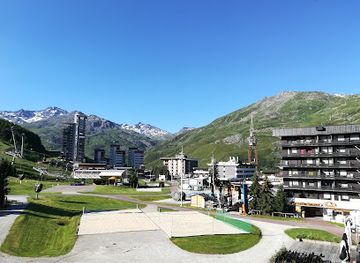
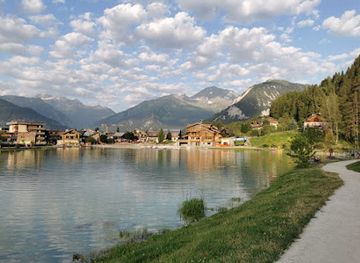
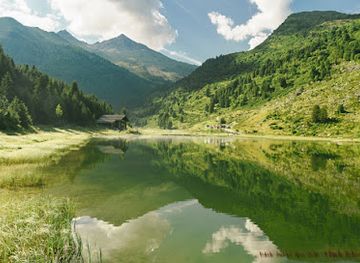
Méribel’s principal landmarks are as much landscapes as buildings. The Doron des Allues valley provides the geographical spine of the destination, rising from the historic village of Les Allues towards the high resort of Méribel-Mottaret. The church and traditional architecture of Les Allues represent the older Savoyard settlement, while the timber-and-stone chalet style of the resort reflects the design principles established during Méribel’s foundation in the 1930s. The surrounding peaks, forested slopes and alpine pastures form a changing natural landmark throughout the seasons, with the Plan de Tuéda area providing a notable high-altitude setting near Mottaret. The lifts and pistes are also significant in cultural and sporting terms, linking Méribel with the wider Three Valleys while preserving the distinction between the individual valleys and resort communities.
-
Ski resort
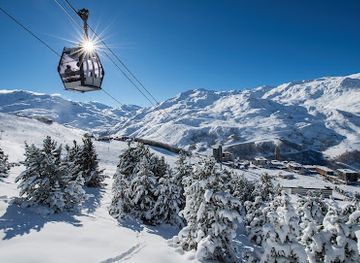
Les Menuires
Discover the enchanting Les Menuires, a premier ski resort in the French Alps offering diverse slopes, vibrant culture, and breathtaking mountain views.
-
Ski resort
Courchevel
Experience the luxury and adventure of Courchevel, the premier ski resort in the French Alps, with breathtaking slopes and vibrant après-ski culture.
-
Restaurant
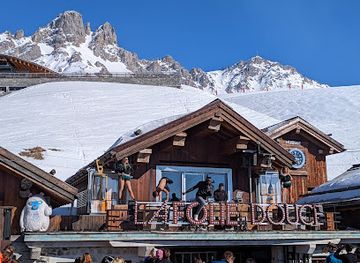
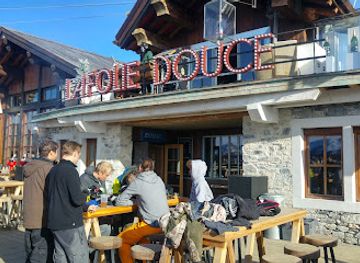
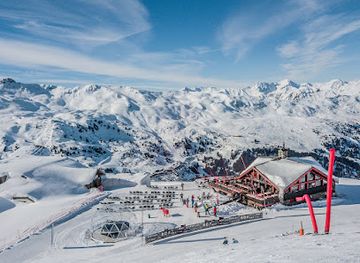
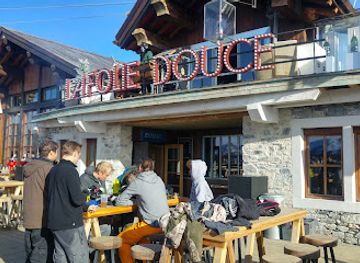
Restaurant d'altitude La Folie Douce Méribel-Courchevel
Experience the vibrant culinary scene and breathtaking views at La Folie Douce Méribel-Courchevel, where dining meets entertainment in the heart of the Alps.
-
National reserve
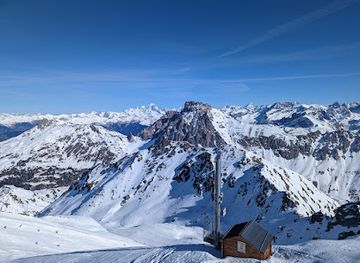
Réserve naturelle nationale du plan de Tuéda
Explore the stunning landscapes and rich biodiversity of Réserve Naturelle Nationale du Plan de Tuéda, a true Alpine paradise for nature lovers and adventurers.
Explore Méribel on the map
Plan your trip on one map. See where the top attractions, landmarks, restaurants and hotels are, and book hotels and experiences in a few clicks.
Best hotels in Méribel
Best restaurants in Méribel
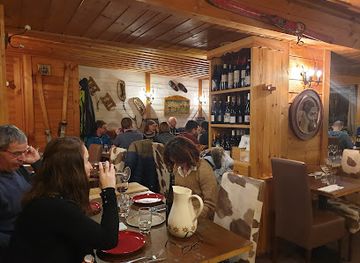
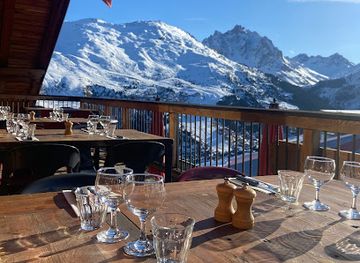
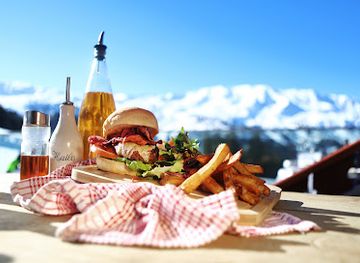
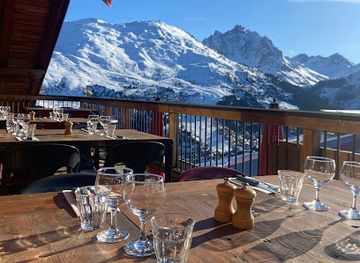
Dining in Méribel reflects both its Savoyard setting and its role as an international ski resort. In the villages and higher resort districts, visitors can find restaurants, cafés, hotel dining rooms and mountain establishments serving regional staples such as fondue, raclette, tartiflette, crozets and locally influenced Alpine dishes, alongside broader French and international menus. Cheese, potatoes, cured meats and mountain herbs remain central to the traditional food culture, while nearby Savoie is associated with wines including Apremont and Roussette. Options are concentrated in Méribel Centre, Mottaret, Méribel Village and Les Allues rather than spread evenly through the valley. In summer, some mountain dining venues and services operate seasonally, so visitors should check current arrangements before setting out. Moûtiers and Brides-les-Bains provide additional places to eat outside the resort, particularly for travellers approaching or leaving the valley.
-
Restaurant
Restaurant d'altitude La Folie Douce Méribel-Courchevel
Experience gourmet dining with breathtaking views at La Folie Douce Méribel-Courchevel - where culinary excellence meets vibrant entertainment in the heart of the Alps.
-
Restaurant
RESTAURANT LE ROK - Bistro D'Altitude
Savor exquisite French cuisine amidst stunning alpine views at Restaurant Le Rok in Méribel.
-
French
La Brizolee
Experience exquisite French cuisine paired with local brews at La Brizolee in Les Allues – your alpine culinary adventure awaits!
-
Restaurant
L'Arpasson
Experience authentic alpine dining at L'Arpasson in Les Allues - where local flavors meet breathtaking views.
Best bars in Méribel
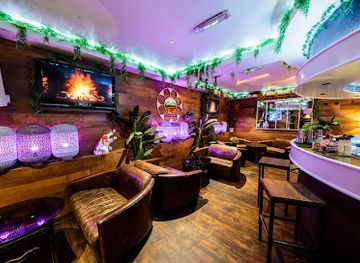
Méribel’s evening life is centred on après-ski venues, hotel lounges, village pubs and restaurants rather than a large nightclub district. Méribel Centre and Mottaret generally offer the greatest concentration of places for drinks after skiing, with a mixture of relaxed bars, live music when scheduled and late-evening socialising during the winter season. Les Allues and Méribel Village tend to have a quieter, more local atmosphere, suited to an unhurried drink or meal in a traditional setting. Evening options can be more limited in summer and in the smaller hamlets, when seasonal opening patterns influence what is available. Visitors seeking a broader town nightlife scene may find additional bars in the Tarentaise valley, but Méribel’s characteristic evenings remain tied to mountain hospitality, dining and the rhythm of outdoor activities.
-
Bar
Restaurant d'altitude La Folie Douce Méribel-Courchevel
Experience the fusion of gourmet dining and lively après-ski at La Folie Douce Méribel-Courchevel, a must-visit alpine hotspot.
-
Bar
Le Rond Point
Discover the perfect blend of alpine charm and culinary delights at Le Rond Point, your go-to bar and restaurant in Les Allues, France.
-
Bar
L'Arpasson
Experience the charm of L'Arpasson in Les Allues – a bar and restaurant perfect for savoring local cuisine and stunning mountain views.
-
Brasserie
La Terrasse du Village
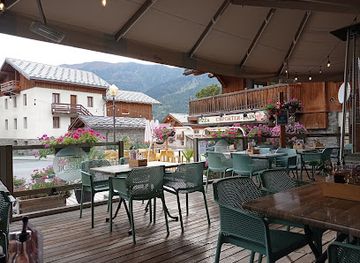
Discover the perfect blend of French and modern British cuisine at La Terrasse du Village in the stunning Les Allues, a dining experience not to be missed.
Best nightclubs in Méribel
Méribel’s evening life is centred on après-ski venues, hotel lounges, village pubs and restaurants rather than a large nightclub district. Méribel Centre and Mottaret generally offer the greatest concentration of places for drinks after skiing, with a mixture of relaxed bars, live music when scheduled and late-evening socialising during the winter season. Les Allues and Méribel Village tend to have a quieter, more local atmosphere, suited to an unhurried drink or meal in a traditional setting. Evening options can be more limited in summer and in the smaller hamlets, when seasonal opening patterns influence what is available. Visitors seeking a broader town nightlife scene may find additional bars in the Tarentaise valley, but Méribel’s characteristic evenings remain tied to mountain hospitality, dining and the rhythm of outdoor activities.
-
Bar
Jacks
Discover Jacks Bar in Les Allues – a lively spot for drinks, delicious food, and unforgettable moments in the heart of the French Alps.
-
Bar
Lodge Du Village
Experience the vibrant nightlife of Les Allues at Lodge Du Village, where live music and a welcoming atmosphere await every visitor.
-
Bar
Le Downtown
Experience the vibrant nightlife of Les Allues at Le Downtown, where drinks flow and friendships blossom in a cozy alpine setting.
-
Bar
BAR LE FIFTY 50
Discover the vibrant atmosphere of Bar Le Fifty 50, a cozy bar in Les Allues, perfect for relaxation and socializing after your alpine adventures.
Best shops in Méribel
Shopping in Méribel is concentrated in the resort districts rather than organised around a large traditional market town. Méribel Centre, Mottaret, Méribel Village and Les Allues provide practical shops and seasonal retail, including outdoor clothing and equipment, ski services, food shops, bakeries, gifts and selected local products. Visitors may find Savoie cheeses, cured meats, wines and other regional specialities in food retailers and markets, while craft and design goods often draw on the area’s timber, textile and chalet traditions. The range is shaped by the resort calendar, with more services operating during the main winter and summer seasons. For fuller everyday shopping and a broader selection of services, nearby Brides-les-Bains and Moûtiers are more substantial valley centres, outside Méribel’s immediate resort area.
-
Cheese shop
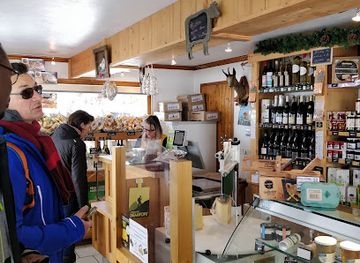
Coopérative laitière de Moutiers Méribel mussillon
Explore the rich dairy heritage of Meribel at Coopérative Laitière, where artisanal cheeses delight every palate in the heart of the Alps.
-
Ski rental service
INTERSPORT - MERIBEL 1600 Le Plateau
Discover the best ski and snowboard rental services at INTERSPORT - MERIBEL 1600, your gateway to unforgettable winter adventures in the stunning Meribel ski resort.
-
Supermarket
SPAR Supermarché
Discover the authentic flavors of the French Alps at SPAR Supermarché, where fresh produce meets Alpine charm.
-
Ski school
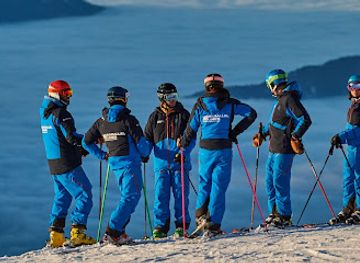
Parallel Lines Ski and Snowboard School
Experience the thrill of skiing and snowboarding in the stunning French Alps with expert guidance at Parallel Lines Ski and Snowboard School.
Get your free copy of our complete guide to Méribel, delivered straight to you.
Everything on this page, from attractions and restaurants to essentials and local phrases, in one PDF you can read offline, print or share.
Already have an account? Sign in
Your Méribel guide is ready.
We'll send it to · Not you? Sign out

Getting your guide ready…
We are putting together a fresh copy of the Méribel guide. This can take up to a minute.
This can take a few moments. If your browser asks, choose Allow so the download can start. You'll find the guide in your Downloads folder.
Nothing happened? Download it again
Sorry, the guide is taking longer than usual. Please try again in a minute, or get it by email instead.
Méribel essentials
Local Tips
From Eve
Local phrases worth knowing
You don't need to get them perfect. A few words go a long way, and locals appreciate the effort.
Basics
| English | Local | Say it |
|---|---|---|
| Hello | Bonjour | [bon-zhoor] |
| Goodbye | Au revoir | [oh ruh-vwahr] |
| Yes | Oui | [wee] |
| No | Non | [nohn] |
| Please/You're welcome | S'il vous plaît / De rien | [seel voo pleh / duh ryen] |
| Thank you | Merci | [mehr-see] |
| Excuse me/Sorry | Excusez-moi / Désolé | [ehk-skew-zay mwa / day-zoh-lay] |
| How are you? | Comment ça va? | [koh-mohn sah vah] |
| Fine. And you? | Bien. Et toi? | [byen. ay twah] |
| Do you speak English? | Parlez-vous anglais? | [par-lay voo zahn-glay] |
| I don't understand | Je ne comprends pas | [zhuh nuh kohm-prahnd pah] |
Eating & Drinking
| English | Local | Say it |
|---|---|---|
| I'd like to see the menu, please | Je voudrais voir la carte, s'il vous plaît | [zhuh voo-dray vwahr lah kart, seel voo pleh] |
| I don't eat meat | Je ne mange pas de viande | [zhuh nuh mahnj pah duh vyand] |
| Cheers! | Santé! | [sahn-tay] |
| I would like to pay, please | Je voudrais payer, s'il vous plaît | [zhuh voo-dray peh-yay, seel voo pleh] |
Emergencies
| English | Local | Say it |
|---|---|---|
| Help! | Au secours! | [oh suh-coor] |
| Go away! | Allez-vous en! | [ah-lay vooz ahn] |
| Call the Police! | Appelez la Police! | [ah-pay-lay lah poh-leece] |
| Call a doctor! | Appelez un médecin! | [ah-pay-lay uh may-duh-sahn] |
| I'm lost | Je suis perdu | [zhuh swee pair-doo] |
| I'm ill | Je suis malade | [zhuh swee mah-lahd] |
Shopping
| English | Local | Say it |
|---|---|---|
| I'd like to buy... | Je voudrais acheter... | [zhuh voo-dray zah-shey...] |
| I'm just looking | Je regarde juste | [zhuh ruh-gard zhew-stuh] |
| How much is it? | Combien ça coûte? | [kohm-byen sah koot] |
| That's too expensive | C'est trop cher | [say troh shair] |
| Can you lower the price? | Pouvez-vous baisser le prix? | [poo-veh voo beh-say luh pree] |
Time & Numbers
| English | Local | Say it |
|---|---|---|
| What time is it? | Quelle heure est-il? | [kel uhr ay-teel] |
| It's one o'clock | Il est une heure | [eel ay oon uhr] |
| Half past (10) | Dix heures et demie | [dees uhr ay duh-mee] |
| Morning | Matin | [mah-tahn] |
| Afternoon | Après-midi | [ah-pray mee-dee] |
| Evening | Soir | [swahr] |
| Yesterday | Hier | [ee-air] |
| Today | Aujourd'hui | [oh-zhoor-dwee] |
| Tomorrow | Demain | [duh-mahn] |
| 1 | Un | [uhn] |
| 2 | Deux | [duh] |
| 3 | Trois | [twah] |
| 4 | Quatre | [kah-truh] |
| 5 | Cinq | [sank] |
| 6 | Six | [sees] |
| 7 | Sept | [sett] |
| 8 | Huit | [weet] |
| 9 | Neuf | [nurf] |
| 10 | Dix | [dees] |
Transport & Directions
| English | Local | Say it |
|---|---|---|
| Where's a/the...? | Où se trouve...? | [oo suh troov] |
| What's the address? | Quelle est l'adresse? | [kel ay lah-dress] |
| Can you show me (on the map)? | Pouvez-vous me montrer (sur la carte)? | [poo-veh voo muh mohn-tray (sir lah kart)] |
| When's the next (bus)? | Quand est le prochain (bus)? | [kohn ay luh proh-shahn (boos)] |
| A ticket (to ....) | Un billet (pour ...) | [uhn bee-yay (poor)] |
History of Méribel
A Glacial Alpine Valley
The Vallée des Allues was shaped by the glaciers and rivers of the Tarentaise, leaving a steep-sided valley with wooded lower slopes, open pastures and high mountain terrain. Long before modern tourism, the geography determined where people could farm, travel and settle. The valley’s villages developed on more favourable terraces and slopes above the Doron des Allues, while summer grazing made use of higher alpine meadows. This environmental structure still explains Méribel’s dispersed settlement pattern and the transition from traditional villages to high-altitude resort districts.
Settlement and Savoyard Traditions
Les Allues and the surrounding hamlets grew within the historic cultural landscape of Savoie, where agriculture, livestock rearing and seasonal movement between valley settlements and mountain pastures shaped daily life. The parish church and older village buildings reflect the long-established community at the heart of the valley, while local wood-and-stone construction developed in response to climate, materials and alpine conditions. For centuries, the area remained a rural mountain community rather than a major commercial centre, connected to neighbouring valleys by difficult routes over mountain passes.
Peter Lindsay and the Birth of Méribel
The modern resort began in the late 1930s when Peter Lindsay, a Scottish former military officer and enthusiastic skier, recognised the valley’s potential for a ski station. Méribel opened in 1938, with its early development guided by a deliberate architectural approach that favoured local materials and chalet forms rather than an urban-style resort. The project was interrupted by the Second World War, but skiing returned afterwards and the resort gradually expanded. Its position between the Courchevel and Belleville valleys later gave it an important role in the creation of a much larger linked ski area.
Expansion and the Three Valleys
Post-war improvements in roads, accommodation and ski lifts transformed Méribel from a small, carefully planned station into an international mountain resort. Méribel-Mottaret was developed at a higher altitude, while links with Courchevel, Les Menuires and Val Thorens helped establish Les 3 Vallées as one of the world’s major interconnected ski domains. The resort also gained wider recognition when Méribel hosted ice hockey and other events during the 1992 Albertville Winter Olympics. Despite this expansion, planning controls and the continuing presence of the older villages have helped preserve a recognisably Savoyard architectural character.
Méribel in Photos
Browse through our photo collection highlighting the charm and character of the destination.
Neighbouring destination travel guides
The closest destinations to Méribel, if you have time for more than one.
-

-

-

-

-


Swipe for more destinations
Explore more

Explore more of Rhône-Alpes
Discover the stunning landscapes, historic cities, and world-class ski resorts of Rhône-Alpes, a French region that offers a perfect blend of nature and culture.
Explore Rhône-Alpes
Explore more of France
Explore France: A land of romance, history, and unparalleled beauty, from the iconic streets of Paris to the serene landscapes of Provence and the luxury of the French Riviera.
Explore France