

Comédie (Montpellier) Travel Guide - Free
Explore Comédie in Montpellier with Evendo's free guide. Find the best shops, historic streets, restaurants, and gems on web or mobile.


Comédie in Montpellier centres historic Place de la Comédie and the Écusson with cafés, trams, culture and easy walks through Montpellier city centre.
The Square at the Centre
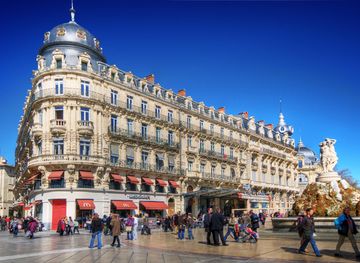
Place de la Comédie is Montpellier’s most recognisable public space and the natural meeting point between the historic Écusson, the railway station and the broad eastern extension of the city centre. Locals often call it l’Œuf, “the Egg”, a reference to the oval shape formed by the square and its surrounding buildings. At its centre, the Fontaine des Trois Grâces provides a sculptural focal point, while the Opéra Comédie closes the southern end with an ornate nineteenth-century façade. Trams cross the square, café terraces line its edges and pedestrians move continuously between the old town, the station and the Esplanade Charles-de-Gaulle.Read more about Comédie
From Historic Core to Civic Promenade
Street Life and Evening Atmosphere
Best attractions in Comédie
Place de la Comédie is the principal attraction, an expansive oval square whose café terraces, tram movements and central Fontaine des Trois Grâces make it one of Montpellier’s most recognisable urban scenes. The Opéra Comédie provides a grand architectural backdrop, while the square is also the natural starting point for exploring the Écusson’s historic lanes. Immediately east, the tree-lined Esplanade Charles-de-Gaulle offers a more spacious promenade and leads towards the Pavillon Populaire, a venue for photographic exhibitions, and the Corum cultural complex nearby. The western and northern approaches open into shopping streets, small squares and historic façades rather than a concentration of single-ticket sights. Gare Saint-Roch, at the southern edge, is primarily a transport hub but adds an important layer to the area’s modern identity. The best sightseeing experience here lies in observing how theatre, public transport, cafés and pedestrian movement share one central public space.
-
Promenade
Esplanade Charles-de-Gaulle
Discover the beauty and vibrancy of Esplanade Charles-de-Gaulle, a must-visit city park in Montpellier perfect for leisurely strolls and picnics.
4 min walk · 0.3 km from neighbourhood centre
-
Historical landmark
La Tour de la Babote
Explore La Tour de la Babote, a historical landmark in Montpellier, offering stunning views and a rich tapestry of the city's heritage and charm.
4 min walk · 0.3 km from neighbourhood centre
-
Fountain
Fountain of the Three Graces
Discover the Fountain of the Three Graces, a stunning landmark in Montpellier, where beauty and charm converge in a vibrant atmosphere.
2 min walk · 0.1 km from neighbourhood centre
-
Museum
Musée du Vieux Montpellier
Explore the captivating history of Montpellier at the Musée du Vieux Montpellier, a treasure trove of artifacts and stories from the past.
5 min walk · 0.4 km from neighbourhood centre


Best landmarks in Comédie
The defining landmark is the Opéra Comédie, whose monumental nineteenth-century frontage gives the square its formal southern focus and reflects Montpellier’s long association with theatrical and civic life. In the centre stands the Fontaine des Trois Grâces, a celebrated sculptural feature that has marked the square since the late eighteenth century and explains why many encounters with Comédie begin around the fountain. The oval plan of Place de la Comédie, known locally as l’Œuf, is itself a significant piece of urban form, framing views towards the Écusson and the station. Gare Saint-Roch, immediately to the south, represents the railway expansion that turned Comédie into a major arrival point. The Esplanade Charles-de-Gaulle, with its mature trees and cultural buildings, forms an important eastern continuation, although some landmarks along it are more accurately described as neighbouring the Comédie area.
-
Promenade
Esplanade Charles-de-Gaulle
Discover the beauty of Esplanade Charles-de-Gaulle, a vibrant promenade and city park in Montpellier, perfect for relaxation and cultural immersion.
4 min walk · 0.3 km from neighbourhood centre
-
Historical landmark
Arc de Triomphe
Discover the grandeur of Montpellier's Arc de Triomphe, a historical landmark that embodies the city's rich culture and stunning architecture.
10 min walk · 0.8 km from neighbourhood centre
-
Plaza
Esplanade de l’Europe
Explore the Esplanade de l'Europe in Montpellier, a vibrant plaza where history meets modern culture, perfect for relaxation and local cuisine.
14 min walk · 1.1 km from neighbourhood centre
-
Performing arts theater
Théâtre Le Point Comédie
Discover the vibrant performing arts scene at Théâtre Le Point Comédie in Montpellier, where laughter and creativity unite for unforgettable performances.
8 min walk · 0.7 km from neighbourhood centre


Explore Comédie on the map
A handpicked selection of must-see spots in Comédie, mapped for you.
Best hotels in Comédie
Best restaurants in Comédie
Dining around Comédie reflects its position between the station, the Écusson and Montpellier’s principal shopping streets. Brasseries and cafés cluster around Place de la Comédie, where terraces are suited to watching the constant movement across the square, while the streets leading north towards rue de la Loge offer a broader mix of French cooking, international food and informal meals. Rue Maguelone and the lanes near the station add further options, with the exact selection changing as businesses open and close. For a more market-oriented experience, Halles Laissac lies nearby but outside the core Comédie setting, and the Écusson’s food shops and restaurants continue north of the square. Visitors should distinguish the polished central terraces from smaller establishments in the old town, where dining rooms may be compact and menus more closely tied to regional produce and Mediterranean influences.
-
Italian
Casa Di Giorgio - Jean Jaurés Montpellier
Experience authentic Italian cuisine at Casa Di Giorgio in Montpellier—where every dish tells a story of Italy's rich culinary heritage.
4 min walk · 0.3 km from neighbourhood centre
-
Pizza
Pizza Papa
Experience authentic Italian cuisine at Pizza Papa in Montpellier—where every slice tells a story of flavor and tradition.
1 min walk · 0.1 km from neighbourhood centre
-
Restaurant
Les Bains de Montpellier
Experience fine dining at Les Bains de Montpellier—where exquisite French cuisine meets elegant ambiance.
3 min walk · 0.2 km from neighbourhood centre
-
French
Le Paresseur Restaurant | Montpellier Centre
Discover the flavors of French cuisine at Le Paresseur Restaurant in Montpellier, where organic ingredients meet culinary artistry.
5 min walk · 0.4 km from neighbourhood centre


Best bars in Comédie
Evenings in Comédie begin with café and brasserie terraces around the square, then disperse into the Écusson’s bars and the streets near the station. The area is better understood as a central nightlife gateway than as a dedicated club district: visitors can move on foot from an early drink at Comédie towards smaller bars in the historic centre, while the Opéra Comédie and nearby cultural venues provide a more formal evening programme when performances are scheduled. The square itself remains active because of transport, restaurants and people meeting, but its atmosphere is open and public rather than intimate. Noise levels and activity change from one street to the next, with residential entrances close to busy venues. Check current programmes and opening arrangements locally, since nightlife provision and events are subject to change.
-
Bar
Barberousse
Discover Barberousse, Montpellier's vibrant bar with a pirate twist, offering a lively atmosphere and an extensive drink selection for unforgettable nights.
1 min walk · 0.1 km from neighbourhood centre
-
Pub
Le Rebuffy
Discover the heart of Montpellier's nightlife at Le Rebuffy, the ideal pub for drinks, music, and unforgettable memories in a charming atmosphere.
7 min walk · 0.5 km from neighbourhood centre
-
 Bar
Grand Café Riche
Experience the vibrant atmosphere and exquisite flavors of Grand Café Riche, a beloved bar and restaurant in the heart of Montpellier.
2 min walk · 0.2 km from neighbourhood centre
-
Bar
La FaBRiK
Experience the vibrant nightlife of Montpellier at La FaBRiK, a lively bar known for its craft cocktails and eclectic ambiance.
1 min walk · 0.1 km from neighbourhood centre


Best nightclubs in Comédie
Evenings in Comédie begin with café and brasserie terraces around the square, then disperse into the Écusson’s bars and the streets near the station. The area is better understood as a central nightlife gateway than as a dedicated club district: visitors can move on foot from an early drink at Comédie towards smaller bars in the historic centre, while the Opéra Comédie and nearby cultural venues provide a more formal evening programme when performances are scheduled. The square itself remains active because of transport, restaurants and people meeting, but its atmosphere is open and public rather than intimate. Noise levels and activity change from one street to the next, with residential entrances close to busy venues. Check current programmes and opening arrangements locally, since nightlife provision and events are subject to change.
-
Night club
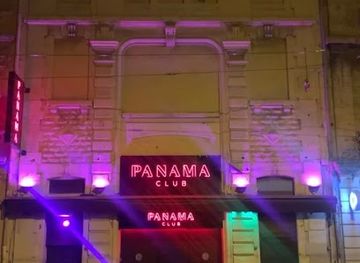
Le PANAMA CLUB
Discover the electrifying nightlife of Montpellier at Le PANAMA CLUB, where music, dance, and fun come together in a vibrant atmosphere.
4 min walk · 0.3 km from neighbourhood centre
-
Night club
PZ City Club
Experience the vibrant nightlife of Montpellier at PZ City Club, where music, dance, and excitement come alive every weekend.
13 min walk · 1.0 km from neighbourhood centre
-
Night club
Mélomane Club
Discover the electrifying nightlife of Montpellier at Mélomane Club, where music, dancing, and unforgettable experiences await.
7 min drive · 2.2 km from neighbourhood centre
-
Disco club
Le Fizz
Discover the electrifying nightlife of Montpellier at Le Fizz, a premier disco club offering vibrant music, dancing, and unforgettable experiences.
4 min walk · 0.3 km from neighbourhood centre


Best shops in Comédie
Shopping in Comédie is concentrated in the streets that radiate from the square rather than in a single enclosed centre. Rue de la Loge leads north into the Écusson and carries a mixture of established retail, fashion, cafés and side streets, while rue Maguelone and the approaches towards Gare Saint-Roch combine shops with services aimed at commuters and visitors. The lanes of the historic centre contain smaller independent businesses, specialist food shops and boutiques, although these belong to the wider Écusson as much as to Comédie itself. Nearby Halles Laissac offers a food-market setting outside the immediate square, with stalls and prepared foods that provide a more local retail rhythm than the central terraces. Comédie is therefore most useful for browsing central-city shops and using the surrounding streets as a transition between contemporary retail, the station quarter and the old town.
-
Department store
Galeries Lafayette
Explore the stylish world of Galeries Lafayette in Montpellier, where fashion, beauty, and home goods come together in a shopping paradise.
5 min walk · 0.4 km from neighbourhood centre
-
Gift shop
Flying Tiger Copenhagen Montpellier
Experience the charm of Flying Tiger Copenhagen Montpellier, where creativity meets affordability in a delightful gift shop.
4 min walk · 0.3 km from neighbourhood centre
-
Shoe store
Foot Locker
Explore the latest in footwear and fashion at Foot Locker Montpellier, where style and comfort meet in the heart of the city.
2 min walk · 0.2 km from neighbourhood centre
-
Gift shop
Paum's 34 - concept store éthique
Explore Paum's 34 in Montpellier for a unique shopping experience featuring ethical gifts, fashion accessories, and artisan-made leather goods.
6 min walk · 0.5 km from neighbourhood centre


Comédie essentials
Getting There
Getting Around
Safety
Emergency Situations
Do's and Don'ts
Local Tips

From Eve
Local phrases worth knowing
You don't need to get them perfect. A few words go a long way, and locals appreciate the effort.
Basics
| English | Local | Say it |
|---|---|---|
| Hello | Bonjour | [bon-zhoor] |
| Goodbye | Au revoir | [oh ruh-vwahr] |
| Yes | Oui | [wee] |
| No | Non | [nohn] |
| Please/You're welcome | S'il vous plaît / De rien | [seel voo pleh / duh ryehn] |
| Thank you | Merci | [mehr-see] |
| Excuse me/Sorry | Excusez-moi / Désolé | [ehk-kew-zay mwa / day-zoh-lay] |
| How are you? | Comment ça va? | [koh-moh sah vah] |
| Fine. And you? | Bien. Et vous? | [byehn. ay voo] |
| Do you speak English? | Parlez-vous anglais? | [par-lay voo ahn-glay] |
| I don't understand | Je ne comprends pas | [zhuh nuh kohm-prahnd pah] |
Eating & Drinking
| English | Local | Say it |
|---|---|---|
| I'd like to see the menu, please | Je voudrais voir la carte, s'il vous plaît | [zhuh voo-dray vwahr lah kart, seel voo pleh] |
| I don't eat meat | Je ne mange pas de viande | [zhuh nuh mahnj pah duh vyand] |
| Cheers! | Santé! | [sahn-tay] |
| I would like to pay, please | Je voudrais payer, s'il vous plaît | [zhuh voo-dray pay-ay, seel voo pleh] |
Emergencies
| English | Local | Say it |
|---|---|---|
| Help! | Au secours! | [oh suh-coor] |
| Go away! | Allez-vous en! | [ah-lay vooz ahn] |
| Call the Police! | Appelez la police! | [ah-pay-lay lah poh-lees] |
| Call a doctor! | Appelez un médecin! | [ah-pay-lay uh mayd-sahn] |
| I'm lost | Je suis perdu | [zhuh swee pair-doo] |
| I'm ill | Je suis malade | [zhuh swee mah-lahd] |
Shopping
| English | Local | Say it |
|---|---|---|
| I'd like to buy... | Je voudrais acheter... | [zhuh voo-dray zah-shtay...] |
| I'm just looking | Je regarde juste | [zhuh ruh-gahrd juhst] |
| How much is it? | Combien ça coûte? | [kohm-byehn sah koot] |
| That's too expensive | C'est trop cher | [say troh shair] |
| Can you lower the price? | Pouvez-vous baisser le prix? | [poo-veh voo bay-say luh pree] |
Time & Numbers
| English | Local | Say it |
|---|---|---|
| What time is it? | Quelle heure est-il? | [kel er ay-teel] |
| It's one o'clock | Il est une heure | [eel ay oon er] |
| Half past (10) | Dix et demie | [dees ay duh-mee] |
| Morning | Matin | [mah-tahn] |
| Afternoon | Après-midi | [ah-pray mee-dee] |
| Evening | Soir | [swahr] |
| Yesterday | Hier | [yehr] |
| Today | Aujourd'hui | [oh-zhoor dewee] |
| Tomorrow | Demain | [duh-mahn] |
| 1 | Un | [uhn] |
| 2 | Deux | [duh] |
| 3 | Trois | [trwah] |
| 4 | Quatre | [kahtr] |
| 5 | Cinq | [sank] |
| 6 | Six | [sees] |
| 7 | Sept | [set] |
| 8 | Huit | [weet] |
| 9 | Neuf | [nuhf] |
| 10 | Dix | [dees] |
Transport & Directions
| English | Local | Say it |
|---|---|---|
| Where's a/the...? | Où est...? | [oo ay...] |
| What's the address? | Quelle est l'adresse? | [kel ay lah-dress] |
| Can you show me (on the map)? | Pouvez-vous me montrer (sur la carte)? | [poo-veh voo muh mohn-tray (soor lah kart)] |
| When's the next (bus)? | Quand est le prochain (bus)? | [kahnd ay luh pro-shay (boos)] |
| A ticket (to ....) | Un billet (pour ....) | [uhn bee-yay (poor)] |
History of Comédie
The Medieval City’s Southern Edge
Comédie developed immediately outside or along the southern edge of Montpellier’s medieval core, whose historic streets are now generally identified with the Écusson. The area connected the old city with roads leading south towards the coast and later with the railway. Its position made it a threshold rather than an isolated settlement: movement between the central streets, suburban development and transport routes gradually gave the area greater civic importance. The square’s distinctive oval form reflects successive phases of urban planning rather than a single medieval foundation.
The Square Called l’Œuf
The space now known as Place de la Comédie took shape as Montpellier expanded beyond its older centre and created a more formal public setting south of the medieval streets. Its local nickname, l’Œuf, refers to the rounded plan formed by the buildings around the square. The name Comédie comes from the theatre that became its defining institution. The present Opéra Comédie, built in the late nineteenth century after an earlier theatre was destroyed by fire, gives the square its monumental southern frontage and remains one of the clearest expressions of Montpellier’s civic ambitions.
Railways and a New Southern Gateway
The arrival of the railway in the nineteenth century transformed the relationship between Comédie and the rest of Montpellier. Gare Saint-Roch, immediately south of the square, connected the city more efficiently with regional and national networks and encouraged hotels, commerce and denser development around the southern approach. Comédie consequently became both a theatrical and a transport address, linking the historic centre with travellers arriving by train. The station has been altered over time, but its location continues to shape the neighbourhood’s daily rhythm.
Modern Transport and Civic Renewal
During the twentieth and early twenty-first centuries, Comédie was repeatedly reshaped by changing ideas about mobility and public space. Tram infrastructure and the pedestrianisation of parts of the central area reinforced the square’s role as a meeting place and interchange, while the Esplanade and nearby cultural institutions extended the civic landscape eastwards. Restaurants, retail and services replaced or supplemented older commercial patterns, and the area became one of Montpellier’s principal visitor gateways. Its contemporary identity therefore combines historic-city access, theatre, transport, shopping and public events rather than belonging to one single period.
Comédie in Photos
Browse through our photo collection highlighting the charm and character of the destination.
Neighbourhoods near Comédie
The closest neighbourhoods to Comédie, if you have time for more than one stop.
-

-

-

-

-


Swipe for more neighbourhoods
Explore more
Explore more of Montpellier
Montpellier blends medieval lanes, Mediterranean culture, lively squares, grand university traditions and easy access to beaches, vineyards and Languedoc heritage.
Explore Montpellier