

Free El Serrat Travel Guide & Mobile App
Plan your El Serrat trip with Evendo. Get free guides to top attractions, restaurants, hotels, and bars. Web access or download the mobile app.


El Serrat, Andorra, offers mountain scenery, Romanesque heritage, Ordino culture, hiking near Sorteny and winter access to Arcalís, peaceful Pyrenean escapes.
Mountain Setting
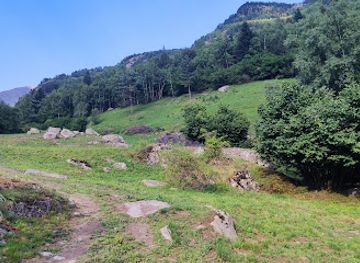
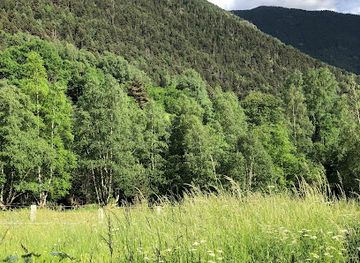
El Serrat stands at the northern end of Andorra’s Ordino valley, where the road narrows into a high Pyrenean landscape of steep slopes, pasture and rock. At around 1,500 metres above sea level, it is one of the country’s highest settled villages and has an atmosphere markedly different from the busier streets of Andorra la Vella. Traditional stone buildings, mountain hotels and scattered bordes—old rural structures once used for storing hay or sheltering livestock—line the valley beneath peaks that become snow-covered in winter.Read more about El Serrat
Heritage and Traditional Life
Gateway to the High Pyrenees
When is the best time to visit El Serrat?
Best: June–July, September · 26–29°C| Month | High (°C) | Rainfall (mm) |
|---|---|---|
| January | 4 | 70 |
| February | 5 | 60 |
| March | 9 | 50 |
| April | 15 | 40 |
| May | 20 | 30 |
| June (best) | 26 | 20 |
| July (best) | 29 | 10 |
| August | 29 | 10 |
| September (best) | 26 | 30 |
| October | 20 | 40 |
| November | 12 | 50 |
| December | 5 | 60 |
Getting to and around El Serrat
How to get there
Transportation
Best attractions in El Serrat
El Serrat’s principal attractions are its setting and its access to some of Andorra’s finest high-mountain landscapes. The village church of Sant Pere del Serrat gives the compact settlement a historic focus, while nearby Sorteny Nature Park offers marked walks through forests, meadows and alpine habitats, together with the Sorteny Botanical Garden, known for its collection of Pyrenean flora. The road towards Ordino–Arcalís leads into an increasingly austere landscape of steep slopes, high passes and winter-sport terrain. In summer, the upper Ordino valley is suited to hiking and nature observation; in winter, snow activities transform the same terrain. Visitors can also explore Ordino village farther down the valley, where traditional architecture and museums provide cultural context for the rural communities above it. El Serrat itself is less a museum of individual monuments than a living mountain settlement, with stone houses, bordes and pasture forming part of the attraction.
-
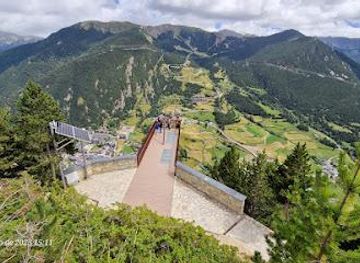
Observation deck
Mirador Roc Del Quer | Canillo
Experience breathtaking panoramic views from a suspended platform at Mirador Roc del Quer, a must-see architectural marvel in the Andorran Pyrenees.
21 min drive · 7.1 km from city centre
-
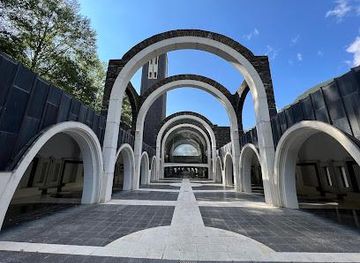
Catholic church
Sanctuary Basilica of Our Lady of Meritxell
Discover Andorra's spiritual heart at the Sanctuary Basilica of Our Lady of Meritxell, a blend of modern architecture and deep-rooted tradition.
25 min drive · 8.3 km from city centre
-
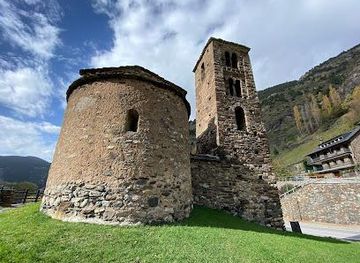
Catholic church
Sant Joan de Caselles Church
Discover Andorra's Romanesque heritage at Sant Joan de Caselles Church, a serene sanctuary with stunning architecture and historical significance.
23 min drive · 7.7 km from city centre
-
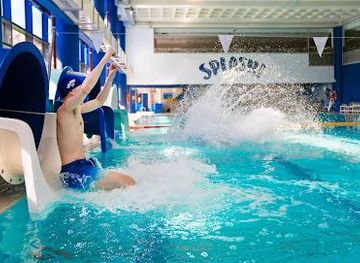
Ice skating rink
Palau de Gel d’Andorra
Experience sports, leisure, and relaxation at Palau de Gel d’Andorra, a versatile complex in Canillo with an Olympic ice rink and diverse activities.
23 min drive · 7.5 km from city centre
Best landmarks in El Serrat
Sant Pere del Serrat is the village’s principal built landmark, a modest church whose presence reflects the religious organisation of Andorra’s dispersed mountain communities. The traditional stone houses and bordes around the upper Ordino valley are equally important for understanding local architecture: these practical rural buildings were associated with livestock, haymaking and seasonal mountain work rather than aristocratic display. Beyond the village, the landscape itself becomes a defining landmark, particularly the high road and peaks towards Ordino–Arcalís. Sorteny Nature Park adds a different kind of cultural significance, preserving a landscape that has long supported pasture, forestry and seasonal movement. The broader parish of Ordino contains further examples of Andorran heritage, including historic churches and rural settlements, but El Serrat’s identity rests on the relationship between its small-scale buildings and the dramatic terrain surrounding them.
-
Observation deck
Mirador Roc Del Quer | Canillo
Experience breathtaking panoramic views from a suspended platform in the Andorran Pyrenees. A unique blend of art, engineering, and natural beauty.
21 min drive · 7.1 km from city centre
-
Hiking area
Ruta Canya de la Rabassa-Pla de Sorteny
Explore the stunning natural beauty of Andorra on the Ruta Canya de la Rabassa-Pla de Sorteny, a perfect hiking destination for all skill levels.
18 min walk · 1.4 km from city centre
-
Hiking area
Cascadas el Serrat
Discover the stunning waterfalls and scenic hiking trails of Cascadas el Serrat in the heart of the Andorran Pyrenees.
3 min walk · 0.2 km from city centre
-
Catholic church
Església de Sant Pere del Serrat
Discover the serene beauty and rich history of Església de Sant Pere del Serrat, a cultural landmark in the Andorran Pyrenees.
1 min walk · 0.1 km from city centre



Explore El Serrat on the map
Plan your El Serrat trip on one map. See where the top attractions, landmarks, restaurants, bars and hotels are, find what's near where you're staying, and book hotels and experiences in a few clicks.
Best hotels in El Serrat
Best restaurants in El Serrat
Dining in El Serrat reflects the hearty cuisine of Andorra’s mountain valleys rather than a large restaurant scene. Traditional dishes found in the wider Ordino area include trinxat, a preparation of potato, cabbage and pork, and escudella, a substantial winter soup or stew; grilled meats, sausages, mushrooms and mountain cheeses also suit the climate. Hotels and rural restaurants in the upper valley typically provide the most convenient meals, while Ordino and La Massana offer a broader choice of cafés and established restaurants. Look for borda-style dining elsewhere in Andorra, where former farm buildings provide a rustic setting for local specialities, but each establishment differs in its menu and opening pattern. Breakfasts and packed provisions are especially useful for walkers, as there are fewer food options once routes enter the protected mountain landscape.
-
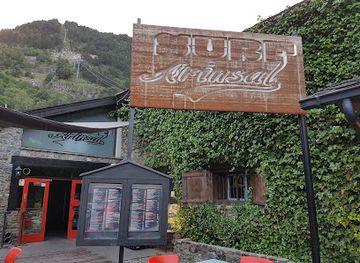
Argentinian
SURF ARINSAL- RESTAURANT & DISCOTECA
Experience the vibrant flavors of Argentina at Surf Arinsal in Andorra – where dining meets nightlife in an unforgettable atmosphere.
20 min drive · 6.8 km from city centre
-
Grill
Restaurant la Borda de la Coma
Discover authentic Andorran grill cuisine at Restaurant la Borda de la Coma in Ordino Arcalís - where every meal is a celebration of flavor and mountain beauty.
15 min drive · 4.9 km from city centre
-
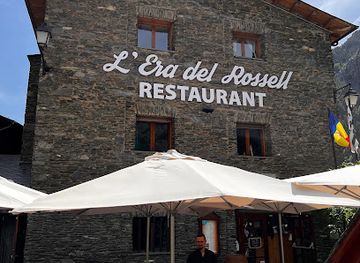
Restaurant
RESTAURANT BORDA L' ERA DEL ROSSELL
Experience authentic Andorran cuisine at Restaurant Borda L' Era del Rossell near Santuario de Meritxell - where tradition meets flavor.
25 min drive · 8.3 km from city centre
-
 Hotel
HotelHotel & SPA Bringué
Discover unparalleled luxury at Hotel & SPA Bringué in El Serrat - where comfort meets adventure amidst stunning Andorran landscapes.
1 min walk · 0.1 km from city centre

Best bars in El Serrat
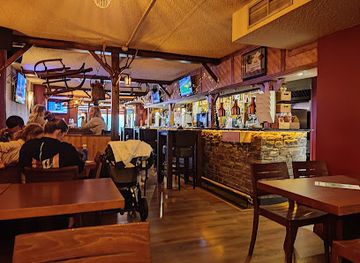
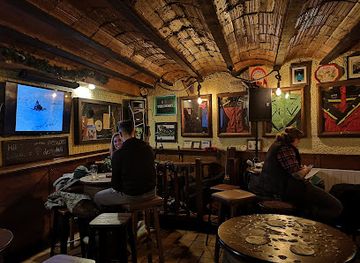
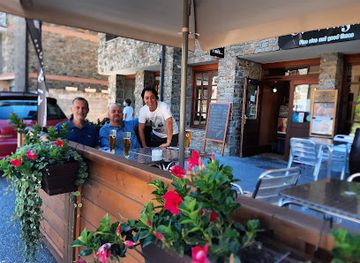
El Serrat has a quiet evening atmosphere rather than a dedicated nightlife district. Social life centres on hotel lounges, small bars and restaurants, where visitors may find a drink after walking or skiing, while the village streets become peaceful at night. For a wider choice of cafés, wine bars and late-evening venues, travellers generally head down the valley to Ordino, La Massana or Andorra la Vella. Seasonal winter activity can bring a livelier après-ski mood around the ski area, but El Serrat itself is better suited to relaxed dinners, mountain views and early starts than to clubs. Cultural evenings, including concerts and local events, are more likely to take place in larger parishes or the capital and vary according to the calendar.
-
Hotel
Hotel & SPA Bringué
Experience luxury and tranquility at Hotel & SPA Bringué in El Serrat, Andorra, perfect for families and nature lovers seeking adventure.
1 min walk · 0.1 km from city centre
-
English
Hunters Sports Bar & Grill
Experience the heart of English cuisine at Hunters Sports Bar & Grill in Arinsal, where comfort food meets a welcoming atmosphere.
20 min drive · 6.8 km from city centre
-
Irish pub
THE DERBY IRISH PUB
Discover the heart of Irish hospitality at The Derby Irish Pub in La Massana, where every visit feels like a homecoming.
20 min drive · 6.8 km from city centre
-
Bar
El Traguet I Mes
Experience the flavors of Andorra at El Traguet I Mes, a cozy bar and restaurant in Ordino offering exquisite tapas and local delicacies.
16 min drive · 5.3 km from city centre
Best nightclubs in El Serrat
El Serrat has a quiet evening atmosphere rather than a dedicated nightlife district. Social life centres on hotel lounges, small bars and restaurants, where visitors may find a drink after walking or skiing, while the village streets become peaceful at night. For a wider choice of cafés, wine bars and late-evening venues, travellers generally head down the valley to Ordino, La Massana or Andorra la Vella. Seasonal winter activity can bring a livelier après-ski mood around the ski area, but El Serrat itself is better suited to relaxed dinners, mountain views and early starts than to clubs. Cultural evenings, including concerts and local events, are more likely to take place in larger parishes or the capital and vary according to the calendar.
-
Night club
Marquès d'Erts
Discover the vibrant nightlife at Marquès d'Erts, La Massana's premier nightclub, featuring top DJs and an electrifying party atmosphere.
21 min drive · 7.0 km from city centre

Best shops in El Serrat
Shopping in El Serrat is limited and practical, centred on supplies, outdoor needs and purchases associated with a stay in the mountains rather than a concentration of boutiques. Visitors looking for a broader retail experience should travel to Ordino, La Massana or Andorra la Vella, where shops sell outdoor equipment, food products, wine, tobacco, fragrances and general goods. Traditional Andorran presents can include local cheeses, cured meats, honey and liqueurs, while craft shops and markets may offer ceramics, textiles or small handmade items depending on the season. The village’s most distinctive souvenirs are connected to the landscape—walking maps, botanical material from authorised retailers and locally produced food—rather than mass-market attractions. Opening patterns can be seasonal, so provisions for hikes are best arranged before setting out into the upper valley.
-
Tourist attraction
El Serrat
Discover El Serrat, a serene tourist attraction in Ordino, where stunning landscapes and rich culture create unforgettable memories.
1 min walk · 0.1 km from city centre
Get your free copy of our complete guide to El Serrat, delivered straight to you.
Everything on this page, from attractions and restaurants to essentials and local phrases, in one PDF you can read offline, print or share.
Already have an account? Sign in
Your El Serrat guide is ready.
We'll send it to · Not you? Sign out

Getting your guide ready…
We are putting together a fresh copy of the El Serrat guide. This can take up to a minute.
This can take a few moments. If your browser asks, choose Allow so the download can start. You'll find the guide in your Downloads folder.
Nothing happened? Download it again
Sorry, the guide is taking longer than usual. Please try again in a minute, or get it by email instead.
El Serrat essentials
Currency and Payment
Safety
Emergency Situations
Do's and Don'ts
Local Tips
From Eve
Local phrases worth knowing
You don't need to get them perfect. A few words go a long way, and locals appreciate the effort.
Basics
| English | Local | Say it |
|---|---|---|
| Hello | Hola | [oh-la] |
| Goodbye | Adéu | [ah-dey-oo] |
| Yes | Sí | [see] |
| No | No | [noh] |
| Please/You're welcome | Si us plau | [see oos plow] |
| Thank you | Gràcies | [grah-syes] |
| Excuse me/Sorry | Perdoni | [pehr-doh-nee] |
| How are you? | Com estàs? | [kohm ehs-tahs] |
| Fine. And you? | Bé. I tu? | [bey ee too] |
| Do you speak English? | Parles anglès? | [pahr-lehs ahn-glehs] |
| I don't understand | No entenc | [noh ehn-tehnk] |
Eating & Drinking
| English | Local | Say it |
|---|---|---|
| I'd like to see the menu, please | M'agradaria veure la carta, si us plau | [mah-grah-dyah veh-oo-reh lah kahr-tah see oos plow] |
| I don't eat meat | No menjo carn | [noh mehn-cho kahrn] |
| Cheers! | Salut! | [sah-loot] |
| I would like to pay, please | Voldria pagar, si us plau | [vohl-dree-ah pah-gahr see oos plow] |
Emergencies
| English | Local | Say it |
|---|---|---|
| Help! | Ajuda! | [ah-zhoo-dah] |
| Go away! | Ves-te'n! | [vehs-tehn] |
| Call the Police! | Truca a la policia! | [troo-kah ah lah poh-lee-see-ah] |
| Call a doctor! | Truca a un metge! | [troo-kah ah oon meht-zheh] |
| I'm lost | Estic perdut | [ehs-teek pehr-dooh] |
| I'm ill | Estic malalt | [ehs-teek mah-lahlt] |
Shopping
| English | Local | Say it |
|---|---|---|
| I'd like to buy... | Voldria comprar... | [vohl-dree-ah kohm-prahr] |
| I'm just looking | Només estic mirant | [noh-mehs ehs-teek mee-rahn] |
| How much is it? | Quant val? | [kahnnt vahl] |
| That's too expensive | Això és massa car | [ai-shoh ehs mah-sah kahr] |
| Can you lower the price? | Pots baixar el preu? | [pohts bai-shahr ehl preh-oo] |
Time & Numbers
| English | Local | Say it |
|---|---|---|
| What time is it? | Quina hora és? | [kee-nah oh-rah ehs] |
| It's one o'clock | És la una | [ehs lah oo-nah] |
| Half past (10) | Dos quarts de onze | [dohs kwahts deh ohn-zeh] |
| Morning | Matí | [mah-tee] |
| Afternoon | Tarda | [tahr-dah] |
| Evening | Vespre | [vehs-preh] |
| Yesterday | Ahir | [ah-eer] |
| Today | Avui | [ah-voo-ee] |
| Tomorrow | Demà | [deh-mah] |
| 1 | Un | [oon] |
| 2 | Dos | [dohs] |
| 3 | Tres | [trehs] |
| 4 | Quatre | [kwah-truh] |
| 5 | Cinc | [seenk] |
| 6 | Sis | [sees] |
| 7 | Set | [set] |
| 8 | Vuit | [vweet] |
| 9 | Nou | [noh] |
| 10 | Deu | [deh-oo] |
Transport & Directions
| English | Local | Say it |
|---|---|---|
| Where's a/the...? | On és un/el...? | [ohn ehs oon/ehl] |
| What's the address? | Quina és l'adreça? | [kee-nah ehs lah-dreh-sah] |
| Can you show me (on the map)? | Em pots ensenyar (al mapa)? | [ehm pohts ehn-sehn-yahr ahl mah-pah] |
| When's the next (bus)? | Quan és el proper (autobús)? | [kahn ehs ehl proh-pehr ow-toh-boos] |
| A ticket (to ....) | Un bitllet (a ....) | [oon bee-yeht ah] |
History of El Serrat
A Settlement Shaped by High Pastures
El Serrat developed within the traditional settlement pattern of Andorra’s high valleys, where communities combined small-scale farming, livestock rearing and seasonal use of mountain pastures. The upper Ordino valley offered summer grazing and access to woodland, but its steep terrain and severe winters limited permanent agriculture. Houses and farm buildings were therefore closely tied to practical needs: shelter, storage and the movement of animals between valley floors and higher slopes. The village’s location near the headwaters of the Valira del Nord made it part of a wider network of paths leading towards mountain passes and neighbouring valleys.
Ordino’s Medieval Valley Community
Throughout the medieval period, El Serrat belonged to the social and religious world of the Ordino valley, one of Andorra’s historic communities. Andorra’s distinctive political structure grew from medieval agreements between the Bishop of Urgell and the Counts of Foix, whose shared sovereignty later evolved into the co-principality. Although El Serrat was never a major political centre, its inhabitants were affected by the same communal arrangements governing land, water, forests and pasture. The parish church tradition, local paths and dispersed rural buildings reflect a settlement culture in which religious and agricultural life were closely connected.
Rural Economy and Mountain Craft
For several centuries, the upper Ordino valley remained predominantly rural. Livestock, haymaking, forestry and limited cultivation structured the annual calendar, while ironworking and other mountain industries contributed to Andorra’s older economy in the wider region. Seasonal movement was essential: animals were taken to high pastures in summer and brought back to more sheltered ground before winter. The bordes and stone farmhouses associated with the valley belong to this agricultural landscape. Sant Pere del Serrat, the village church, provides a visible reminder of the religious institutions that served these small and scattered communities.
Roads, Mobility and the Arrival of Tourism
Modern road building gradually connected El Serrat more securely with Ordino and the rest of Andorra, reducing the isolation imposed by terrain and snow. As access improved during the twentieth century, the economic emphasis shifted from subsistence activities towards hospitality, mountain recreation and services for visitors. The development of winter sports at Ordino–Arcalís brought new importance to the upper valley, while improved roads also made hiking and summer excursions more practical. Houses and agricultural structures were adapted or joined by accommodation, yet the village retained its compact scale and high-mountain character.
Protected Landscapes and Contemporary Identity
In recent decades, conservation has become an important part of the valley’s identity. Sorteny Nature Park protects a mountain environment noted for its alpine plant life, varied habitats and walking routes, linking El Serrat with a wider culture of landscape stewardship. Today the village stands at the meeting point of old rural traditions, nature-based tourism and winter sport. Its history is not represented by grand urban monuments but by the continuity of settlement, pasture, church, road and mountain landscape that characterises the northern reaches of Ordino parish.
Travel experiences inspired by this city
-
 12 Day Trip
Family Trekking Escape in Aigüestortes i Estany de Sant Maurici
Family hiking in Spain’s Aigüestortes i Estany de Sant Maurici: alpine lakes, scenic trails, refugios, and Catalan mountain cuisine—tips from a Nepali chef.
12 Day Trip
Family Trekking Escape in Aigüestortes i Estany de Sant Maurici
Family hiking in Spain’s Aigüestortes i Estany de Sant Maurici: alpine lakes, scenic trails, refugios, and Catalan mountain cuisine—tips from a Nepali chef.
 12 Aug 2026
By Rama Thapa -
 9 Day Trip
Exploring the Majestic Pyrenees: A Hiking Adventure with My Wife
Join us as we embark on a thrilling hiking adventure in the Pyrenees Mountains, discovering breathtaking landscapes and hidden gems with my wife.
9 Day Trip
Exploring the Majestic Pyrenees: A Hiking Adventure with My Wife
Join us as we embark on a thrilling hiking adventure in the Pyrenees Mountains, discovering breathtaking landscapes and hidden gems with my wife.
 5 Mar 2026
By Giorgos Georgiou -
 9 Day Trip
A Solo Retreat in Aigüestortes National Park
Discover the serene beauty of Aigüestortes National Park on a solo journey, exploring stunning landscapes and finding inspiration in nature.
9 Day Trip
A Solo Retreat in Aigüestortes National Park
Discover the serene beauty of Aigüestortes National Park on a solo journey, exploring stunning landscapes and finding inspiration in nature.
 15 Oct 2025
By Maria Bakker -
 8 Day Trip
Solo Adventure in Aigüestortes National Park
Explore the breathtaking landscapes of Aigüestortes National Park on a solo journey, embracing nature and photography in the heart of Spain.
8 Day Trip
Solo Adventure in Aigüestortes National Park
Explore the breathtaking landscapes of Aigüestortes National Park on a solo journey, embracing nature and photography in the heart of Spain.
 10 Oct 2025
By Daniel Young -
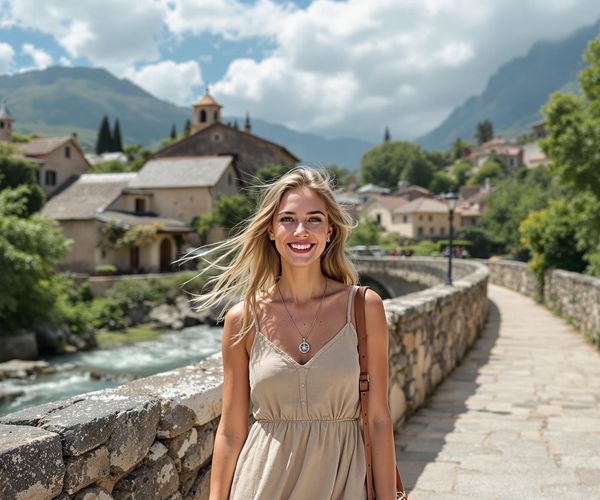 13 Day Trip
Solo Adventure in Aigüestortes: Embracing Nature's Splendor
Explore the captivating landscapes of Aigüestortes i Estany de Sant Maurici National Park on a solo adventure, reconnecting with nature in the heart of the Pyrenees.
13 Day Trip
Solo Adventure in Aigüestortes: Embracing Nature's Splendor
Explore the captivating landscapes of Aigüestortes i Estany de Sant Maurici National Park on a solo adventure, reconnecting with nature in the heart of the Pyrenees.
 5 Jul 2025
By Frida Kristiansen
Swipe for more travel diaries
El Serrat in Photos
Browse through our photo collection highlighting the charm and character of the destination.
Cities near El Serrat
The closest cities to El Serrat, if you have time for more than one stop.
-

-

-

-

-


Swipe for more cities
Explore more
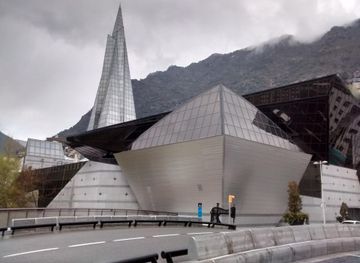
Explore more of Andorra
Explore Andorra: A mountain paradise offering stunning landscapes, world-class skiing, tax-free shopping, and rich cultural experiences in the heart of the Pyrenees.
Explore Andorra