

Free Mtskheta-Mtianeti Travel Guide & Mobile App
Explore Mtskheta-Mtianeti with free travel guides. Discover regional history, expert tips, proposed trips, and audio guides on web or mobile app.


Explore Mtskheta-Mtianeti for Georgia’s ancient churches, Aragvi valleys, Caucasus mountains, ski slopes and historic Military Highway.
Read more about Mtskheta-Mtianeti
When is the best time to visit Mtskheta-Mtianeti?
Best: June–August · 23–27°C| Month | High (°C) | Rainfall (mm) |
|---|---|---|
| January | 2 | 30 |
| February | 2 | 32 |
| March | 6 | 35 |
| April | 13 | 40 |
| May | 18 | 45 |
| June (best) | 23 | 50 |
| July (best) | 27 | 55 |
| August (best) | 26 | 50 |
| September | 20 | 45 |
| October | 15 | 40 |
| November | 8 | 35 |
| December | 3 | 30 |
Getting to and around Mtskheta-Mtianeti
How to get there
Transportation
Top city travel guides in Mtskheta-Mtianeti
The cities of Mtskheta-Mtianeti, and the easiest places to base yourself.
-

-
-

-


Swipe for more cities
Destinations in Mtskheta-Mtianeti
Resorts, valleys and scenic spots worth a trip of their own.
-

-


Swipe for more destinations
Best attractions in Mtskheta-Mtianeti
Mtskheta-Mtianeti offers an unusually broad range of attractions along a single northbound corridor. In Mtskheta, the principal draw is the concentration of early and medieval Christian monuments, including Svetitskhoveli Cathedral, Jvari Monastery and Samtavro Monastery. The Aragvi valley adds the fortified churches of Ananuri, the waterscapes around the Zhinvali Reservoir and riverside settlements associated with mountain cuisine. Further north, Gudauri provides winter skiing and summer mountain views, while Stepantsminda is a base for excursions towards Gergeti, the Tergi valley and the highlands around Mount Kazbek. Walkers can explore routes near Juta and Truso when conditions allow, with alpine scenery, meadows, mineral springs and remote villages. The region also suits visitors interested in photography, birdwatching, church architecture, historic roads and traditional stone-and-timber buildings. These experiences are not interchangeable: Mtskheta is compact and cultural, the central valleys are suited to historic road trips, and the high Caucasus demands more preparation, time and respect for weather.
-
Bridge
Bridge of Peace
A modern pedestrian bridge in Tbilisi, Georgia, known for its unique design, LED lighting, and panoramic views of the city's landmarks.
-
Tourist attraction
Rike Park
A modern park in Tbilisi's heart, offering gardens, art, and a cable car to Narikala Fortress, connected to the old town by the Bridge of Peace.
-
Cultural center
Fabrika Tbilisi
Explore Tbilisi's vibrant culture at Fabrika, a unique urban space blending Soviet history with modern art, food, and community.
-
Tourist attraction
Ananuri Fortress Complex
Explore Ananuri Fortress: A historic Georgian castle with stunning architecture and panoramic views of the Zhinvali Reservoir.


Best landmarks in Mtskheta-Mtianeti
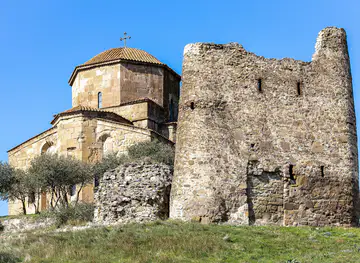
Svetitskhoveli Cathedral in Mtskheta is the region’s foremost religious and architectural landmark, a major medieval church occupying the site associated with Georgia’s Christian foundation. Above the town, Jvari Monastery crowns a hill at the meeting of the Mtkvari and Aragvi, creating one of the most recognisable views in the country. Samtavro Monastery completes Mtskheta’s principal sacred landscape. Further north, Ananuri’s fortified walls and churches stand above the Zhinvali Reservoir, combining defensive architecture with a dramatic valley setting. In the highlands, the Gergeti Trinity Church is a powerful visual symbol of Stepantsminda, positioned on a mountainside beneath the Greater Caucasus. The Darial Gorge is a natural and historic landmark where the Tergi cuts through the mountains towards the northern frontier, while the winding road and high pass around Gudauri express the enduring importance of the Georgian Military Highway. Together these places show the region’s progression from ancient capital to strategic mountain corridor.
-
Bridge
Bridge of Peace
Discover the Bridge of Peace in Tbilisi, a breathtaking architectural gem symbolizing harmony and connection in the heart of Georgia's capital.
-
Cathedral
Svetitskhoveli Cathedral
Explore the iconic Svetitskhoveli Cathedral, a UNESCO World Heritage Site in Mtskheta, showcasing stunning architecture and rich Georgian history.
-
Historical landmark
Ananuri Fortress Complex
Discover the Ananuri Fortress Complex, a historical landmark offering stunning views, rich heritage, and captivating architecture along the Aragvi River.
-
Historical landmark
Uplistsikhe
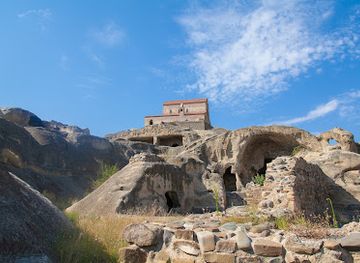
Explore Uplistsikhe, an ancient rock-hewn town in Georgia, where history and stunning natural beauty converge in a breathtaking landscape.


Explore Mtskheta-Mtianeti on the map
Plan your trip on one map. See where the top cities, national parks and sights are, and book hotels and experiences in a few clicks.
Best hotels in Mtskheta-Mtianeti
Best restaurants in Mtskheta-Mtianeti
Dining in Mtskheta-Mtianeti moves from urban-style cafés in Mtskheta to roadside restaurants, family guesthouses and mountain eateries along the Aragvi and Tergi valleys. The region is particularly associated with northern Georgian cooking, including khinkali, pleated dumplings filled with meat and broth, as well as khachapuri, grilled meats, lobio, eggplant with walnuts, fresh herbs and seasonal vegetables. Pasanauri and the wider Aragvi corridor are well known stopping points for dumplings, while Stepantsminda and Gudauri offer Georgian dishes alongside food aimed at ski and trekking visitors. Guesthouse meals may include homemade preserves, cheese, bread and locally produced spirits, although the quality and range vary between establishments. Georgia’s wine culture is national rather than specific to this mountain region, but wine, beer and chacha are widely available. In rural areas, dining times can be less predictable and menus more limited, so a substantial meal before a long mountain excursion is sensible.
-
Georgian
Salobie
Experience the best of traditional Georgian cuisine at Salobie – where every dish tells a story.
-
Georgian
Georgian House
Experience authentic Georgian cuisine at Georgian House in Old Tbilisi - a culinary journey through rich flavors and local traditions.
-
Restaurant
Lolita
Experience modern Georgian cuisine at Lolita in Old Tbilisi – where tradition meets innovation in every bite.
-
Georgian
Barbarestan
Experience authentic Georgian cuisine at Barbarestan in Tbilisi - where tradition meets modernity in every delicious bite.


Best bars in Mtskheta-Mtianeti
Nightlife in Mtskheta-Mtianeti is generally social and food-centred rather than club-oriented. Mtskheta has cafés, wine-focused venues and restaurants where evenings tend to finish earlier than in Tbilisi. Along the Georgian Military Highway, traditional restaurants and guesthouses provide places for conversation, while Gudauri has the region’s most developed après-ski scene, with hotel bars, casual venues and seasonal music during the winter. Stepantsminda offers a modest selection of bars and restaurants, but its evening character is primarily shaped by guesthouse hospitality, views and early starts for mountain excursions. In remote valleys, nightlife is limited to shared meals and local gatherings, and opening arrangements can change outside the main travel seasons. Visitors should not expect a continuous club district; evenings are better suited to Georgian food, wine, mountain air and conversation.
-
Cultural center
Fabrika Tbilisi
Discover the vibrant cultural scene at Fabrika Tbilisi, where history meets creativity in a dynamic urban space.
-
Bar
Cafe Stamba
Experience the vibrant fusion of Georgian flavors and modern charm at Cafe Stamba, a top bar and cafe in Old Tbilisi.
-
Restaurant
Varazi Beer House
Experience the vibrant atmosphere and delicious flavors at Varazi Beer House in the heart of Old Tbilisi, where craft beer meets traditional Georgian cuisine.
-
Restaurant
Tsiskvili in Mtskheta
Experience the essence of Georgian cuisine at Tsiskvili in Mtskheta, where traditional flavors meet stunning views in a cozy atmosphere.


Best nightclubs in Mtskheta-Mtianeti
Nightlife in Mtskheta-Mtianeti is generally social and food-centred rather than club-oriented. Mtskheta has cafés, wine-focused venues and restaurants where evenings tend to finish earlier than in Tbilisi. Along the Georgian Military Highway, traditional restaurants and guesthouses provide places for conversation, while Gudauri has the region’s most developed après-ski scene, with hotel bars, casual venues and seasonal music during the winter. Stepantsminda offers a modest selection of bars and restaurants, but its evening character is primarily shaped by guesthouse hospitality, views and early starts for mountain excursions. In remote valleys, nightlife is limited to shared meals and local gatherings, and opening arrangements can change outside the main travel seasons. Visitors should not expect a continuous club district; evenings are better suited to Georgian food, wine, mountain air and conversation.
-
Karaoke bar
Bamboo
Experience Tbilisi's vibrant nightlife at Bamboo, the ultimate karaoke bar where you can sing your heart out and enjoy delicious drinks in a lively atmosphere.
-
Night club
Bassiani
Experience the vibrant nightlife at Bassiani, Tbilisi's premier night club, known for its electrifying atmosphere and top-notch electronic music.
-
Night club
KHIDI CLUB 中 კლუბი ხიდი
Experience the vibrant nightlife of Tbilisi at KHIDI Club, where electrifying music and unforgettable moments await you.
-
Disco club
The Bank Club
Experience Tbilisi's vibrant nightlife at The Bank Club, where energetic music and a stylish atmosphere come together for unforgettable nights.



Best shops in Mtskheta-Mtianeti
Shopping in Mtskheta-Mtianeti is concentrated in Mtskheta, the larger settlements along the highway and resort areas rather than in extensive retail districts. Mtskheta’s visitor-oriented streets offer Georgian religious souvenirs, textiles, ceramics, wine, honey, preserves, churchkhela and small craft items, alongside ordinary local shops. Markets and roadside stalls in the Aragvi valley may sell seasonal fruit, mountain honey, cheese, dried produce and homemade spirits, although availability depends on the season and seller. Gudauri and Stepantsminda have practical outdoor and winter-sports services, but their retail choice is narrower and prices can reflect the resort setting. In rural areas, buy directly from established producers where possible, check food labelling and carry cash. The most regionally meaningful purchases are edible products and locally made crafts rather than mass-produced replicas of Georgian monuments.
-
Shopping mall
Tbilisi Mall
Experience the ultimate shopping and entertainment destination at Tbilisi Mall, where modern design meets local culture in the heart of Georgia.
-
City park
Rike Park
Discover the charm of Rike Park, a lush urban retreat in Tbilisi, adorned with stunning views, artistic installations, and local delights.
-
Shopping mall
Galleria Tbilisi
Discover the vibrant Galleria Tbilisi, where modern shopping meets the rich culture of Georgia in a stunning architectural setting.
-
Tourist attraction
Dry Bridge Market
Explore the Dry Bridge Market in Tbilisi, a vibrant flea market brimming with antiques, local art, and authentic Georgian culture.


Get your free copy of our complete guide to Mtskheta-Mtianeti, delivered straight to you.
Everything on this page, from attractions and restaurants to essentials and local phrases, in one PDF you can read offline, print or share.
Already have an account? Sign in
Your Mtskheta-Mtianeti guide is ready.
We'll send it to · Not you? Sign out

Getting your guide ready…
We are putting together a fresh copy of the Mtskheta-Mtianeti guide. This can take up to a minute.
This can take a few moments. If your browser asks, choose Allow so the download can start. You'll find the guide in your Downloads folder.
Nothing happened? Download it again
Sorry, the guide is taking longer than usual. Please try again in a minute, or get it by email instead.
Mtskheta-Mtianeti essentials
Currency and Payment
Safety
Emergency Situations
Do's and Don'ts
Local Tips
From Eve
Local phrases worth knowing
You don't need to get them perfect. A few words go a long way, and locals appreciate the effort.
Basics
| English | Local | Say it |
|---|---|---|
| Hello | Hello | [Hello] |
| Goodbye | Goodbye | [Goodbye] |
| Yes | Yes | [Yes] |
| No | No | [No] |
| Please/You're welcome | Please/You're welcome | [Please/You're welcome] |
| Thank you | Thank you | [Thank you] |
| Excuse me/Sorry | Excuse me/Sorry | [Excuse me/Sorry] |
| How are you? | How are you? | [How are you?] |
| Fine. And you? | Fine. And you? | [Fine. And you?] |
| Do you speak English? | Do you speak English? | [Do you speak English?] |
| I don't understand | I don't understand | [I don't understand] |
Eating & Drinking
| English | Local | Say it |
|---|---|---|
| I'd like to see the menu, please | I'd like to see the menu, please | [I'd like to see the menu, please] |
| I don't eat meat | I don't eat meat | [I don't eat meat] |
| Cheers! | Cheers! | [Cheers!] |
| I would like to pay, please | I would like to pay, please | [I would like to pay, please] |
Emergencies
| English | Local | Say it |
|---|---|---|
| Help! | Help! | [Help!] |
| Go away! | Go away! | [Go away!] |
| Call the Police! | Call the Police! | [Call the Police!] |
| Call a doctor! | Call a doctor! | [Call a doctor!] |
| I'm lost | I'm lost | [I'm lost] |
| I'm ill | I'm ill | [I'm ill] |
Shopping
| English | Local | Say it |
|---|---|---|
| I'd like to buy... | I'd like to buy... | [I'd like to buy...] |
| I'm just looking | I'm just looking | [I'm just looking] |
| How much is it? | How much is it? | [How much is it?] |
| That's too expensive | That's too expensive | [That's too expensive] |
| Can you lower the price? | Can you lower the price? | [Can you lower the price?] |
Time & Numbers
| English | Local | Say it |
|---|---|---|
| What time is it? | What time is it? | [What time is it?] |
| It's one o'clock | It's one o'clock | [It's one o'clock] |
| Half past (10) | Half past (10) | [Half past (10)] |
| Morning | Morning | [Morning] |
| Afternoon | Afternoon | [Afternoon] |
| Evening | Evening | [Evening] |
| Yesterday | Yesterday | [Yesterday] |
| Today | Today | [Today] |
| Tomorrow | Tomorrow | [Tomorrow] |
| 1 | 1 | [1] |
| 2 | 2 | [2] |
| 3 | 3 | [3] |
| 4 | 4 | [4] |
| 5 | 5 | [5] |
| 6 | 6 | [6] |
| 7 | 7 | [7] |
| 8 | 8 | [8] |
| 9 | 9 | [9] |
| 10 | 10 | [10] |
Transport & Directions
| English | Local | Say it |
|---|---|---|
| Where's a/the...? | Where's a/the...? | [Where's a/the...?] |
| What's the address? | What's the address? | [What's the address?] |
| Can you show me (on the map)? | Can you show me (on the map)? | [Can you show me (on the map)?] |
| When's the next (bus)? | When's the next (bus)? | [When's the next (bus)?] |
| A ticket (to ....) | A ticket (to ....) | [A ticket (to ....)] |
History of Mtskheta-Mtianeti
Mtskheta and the Kingdom of Iberia
Mtskheta was the capital and principal political centre of the ancient eastern Georgian kingdom of Iberia, occupying a strategic position where the Mtkvari and Aragvi valleys meet. Archaeological evidence from the wider settlement area extends far back into prehistory, while the city’s location connected routes across the Caucasus. Its royal, religious and commercial importance made it one of the foundations of Georgian state history. The surviving archaeological remains, early churches and medieval monuments reflect layers of settlement rather than a single historical period.
The Adoption of Christianity in the Fourth Century
Georgia’s conversion to Christianity is traditionally associated with King Mirian III and Saint Nino in the early fourth century, with Mtskheta as the central setting. The royal conversion established the city as the country’s foremost ecclesiastical centre and shaped the development of Georgian Christian architecture and literature. The Svetitskhoveli Cathedral, Jvari Monastery and Samtavro Monastery preserve later architectural expressions of this tradition. They form the core of the Historical Monuments of Mtskheta, recognised by UNESCO for their religious and architectural significance.
Medieval Churches, Monasteries and Mountain Communities
During the medieval period, the valleys north of Mtskheta connected the Georgian lowlands with communities and passes in the Greater Caucasus. Churches and monasteries served both religious and social purposes, while fortified settlements protected routes and local estates. Mountain regions such as Khevi and Khevsureti developed distinctive architectural forms and customary institutions within the broader Georgian world. The landscapes around the Aragvi and Tergi rivers still contain towers, sanctuaries and villages that reflect the interaction between central authority and highland communities.
The Aragvi Eristavis and Ananuri
The Aragvi valley was closely associated with the Eristavi, a powerful hereditary princely family whose influence extended across parts of the region. Ananuri became their principal fortified complex and remained important during the early modern period, when Georgia was divided among competing kingdoms and pressured by neighbouring empires. Its churches, defensive walls and carved decoration illustrate the political and artistic life of eastern Georgia from the sixteenth to the eighteenth centuries. The complex overlooking the Zhinvali Reservoir is one of the clearest surviving reminders of this regional power.
The Georgian Military Highway
The route through the Darial Gorge and across the Caucasus became increasingly important to the Russian Empire after its annexation of eastern Georgia in the early nineteenth century. Improved as a military and transport road, it linked Tbilisi with Vladikavkaz across the mountains and altered the strategic importance of settlements along the way. The modern highway follows this historic corridor through Ananuri, Pasanauri, Gudauri and Stepantsminda. Its bridges, passes and roadside monuments are part of a longer history of trade, armies and movement between Georgia and the North Caucasus.
Soviet Modernisation and Contemporary Mountain Tourism
During the Soviet period, roads, hydropower infrastructure and organised tourism reshaped the region. The construction of the Zhinvali Reservoir changed the lower Aragvi valley, while mountain resorts and holiday facilities expanded around Gudauri and other accessible highland areas. Since Georgia regained independence, Mtskheta’s heritage has become a major cultural destination and Gudauri has developed into an important ski resort. Trekking, guesthouses and adventure tourism have also grown around Stepantsminda, although remote mountain communities continue to face the practical challenges of seasonal access and limited infrastructure.
Mtskheta-Mtianeti in Photos
Browse through our photo collection highlighting the charm and character of the destination.
Neighbouring regions of Mtskheta-Mtianeti
The closest regions to Mtskheta-Mtianeti, if you have time for more than one.
-

-

-

-

-


Swipe for more regions
Explore more

Explore more of Georgia
Discover Georgia: A vibrant mix of ancient history, stunning landscapes, and warm hospitality at the crossroads of Europe and Asia.
Explore Georgia