

Free Khevsureti Travel Guide & Mobile App
Explore Khevsureti with free travel guides. Discover regional history, expert tips, proposed trips, and audio guides on web or mobile app.


Khevsureti offers Georgia’s high Caucasus landscapes, fortified villages, remote hiking routes and enduring mountain traditions.
Read more about Khevsureti
When is the best time to visit Khevsureti?
Best: June–August · 19–21°C| Month | High (°C) | Rainfall (mm) |
|---|---|---|
| January | 1 | 30 |
| February | 1 | 35 |
| March | 5 | 40 |
| April | 9 | 50 |
| May | 15 | 60 |
| June (best) | 19 | 70 |
| July (best) | 21 | 60 |
| August (best) | 20 | 50 |
| September | 16 | 40 |
| October | 11 | 35 |
| November | 5 | 30 |
| December | 3 | 30 |
Getting to and around Khevsureti
How to get there
Transportation
Destinations in Khevsureti
Resorts, valleys and scenic spots worth a trip of their own.

Swipe for more destinations
Best attractions in Khevsureti
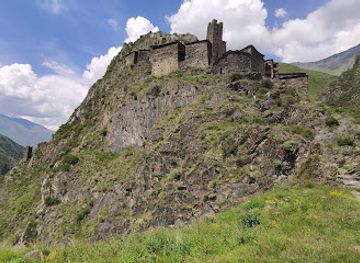
Khevsureti’s attractions are inseparable from its mountain geography. The fortified village of Shatili is the region’s defining cultural sight, with tightly packed stone houses and towers lining the Andaki valley. Mutso offers a more austere settlement of towers, terraces and restored structures on a steep slope, while Barisakho provides a useful introduction to the region’s valleys and local life. Around Roshka, hiking routes lead towards the Abudelauri lakes, whose changing colours and alpine setting are among Khevsureti’s best-known natural features. Other routes cross high passes, follow rivers and connect scattered villages, but conditions vary considerably. The experience is primarily one of walking, landscape observation and historic interpretation rather than a collection of formal museums or commercial attractions. Visitors interested in architecture can study village towers, shrines, churches and traditional houses; those seeking outdoor activity can pursue day walks, multi-day treks and mountain photography. The region’s remoteness also gives it value for observing highland ecology, though wildlife should never be approached or fed. Local guides can explain routes, customary practices and the meaning of places that are easy to misunderstand when viewed only as ruins.
-
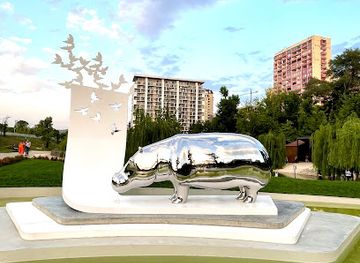
City park
Mziuri Park
Escape to Tbilisi's Mziuri Park: A green oasis with walking paths, playgrounds, and a social cafe for a refreshing retreat.
-
National park
Tusheti National Park
Discover Tusheti National Park: Georgia's hidden gem with stunning landscapes, ancient traditions, and thrilling adventures in the Caucasus Mountains.
-
Castle
Mutso-castle
Explore Mutso Castle, a medieval fortress in the Georgian mountains, offering stunning views and a glimpse into the region's rich history and culture.
-
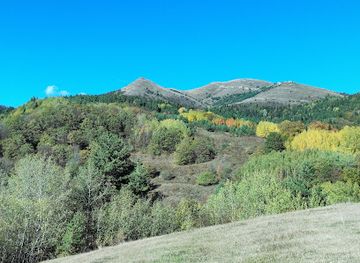
National park
Algeti's National Park
Discover Georgia's natural beauty: Hiking, wildlife, and historical sites await in Algeti National Park, a quick escape from Tbilisi.

Best landmarks in Khevsureti
Shatili is Khevsureti’s most recognisable landmark: a dense stone settlement in which residential buildings, towers and defensive passages rise together above the Andaki River. Its appearance records the practical demands of a frontier mountain society rather than the design of a single monumental fortress. Mutso, positioned on a steep rocky slope, is another essential landmark, with clustered towers, terraces and surviving domestic structures forming a dramatic historic silhouette. The Datvisjvari Pass is a geographical landmark as well as a route, marking the difficult transition into the high valleys and offering an immediate sense of Khevsureti’s isolation. Around Roshka, the Abudelauri lakes provide a natural counterpoint to the built heritage, set beneath high Caucasus slopes and reached on foot. Small shrines, village churches, burial grounds and isolated towers throughout the region are also important, although many are fragile or locally sacred. Their significance is best understood with local guidance and without treating every historic structure as an accessible monument.
-
Bridge
Bridge of Peace
Discover the Bridge of Peace in Tbilisi, a stunning architectural gem that connects the past with the present in Georgia's vibrant capital.
-
Historical landmark
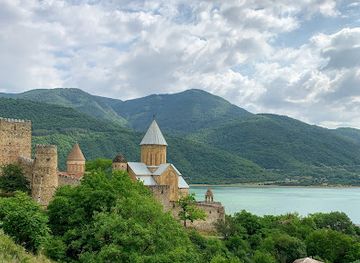
Ananuri Fortress Complex
Discover the rich history and stunning beauty of Ananuri Fortress Complex, an iconic landmark in Georgia's breathtaking landscape.
-
Orthodox church
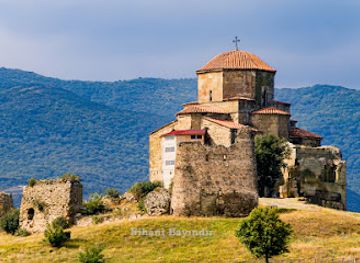
Jvari Monastery
Explore Jvari Monastery, a stunning 6th-century Orthodox church offering breathtaking views and a glimpse into Georgia's rich spiritual heritage.
-
Tourist attraction
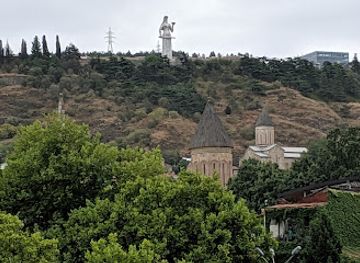
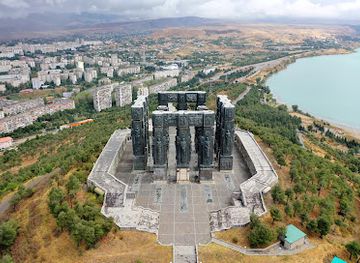
Chronicles of Georgia
Discover the Chronicles of Georgia, a monumental tribute to the nation's history nestled in Tbilisi, offering breathtaking views and rich cultural insights.
Explore Khevsureti on the map
Plan your trip on one map. See where the top cities, national parks and sights are, and book hotels and experiences in a few clicks.
Best hotels in Khevsureti
Best restaurants in Khevsureti
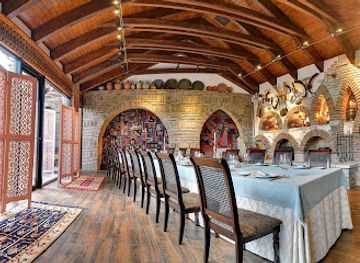
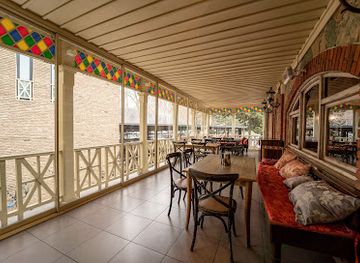
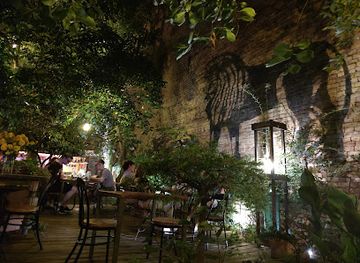
Khevsureti has no substantial restaurant scene, and dining is generally provided by family-run guesthouses or small local kitchens. Meals are likely to be based on familiar Georgian staples adapted to mountain conditions: fresh bread, khinkali, beans, potatoes, dairy products, meat, seasonal vegetables and preserves. Khevsur food traditions are associated with practical ingredients suited to a remote pastoral economy rather than elaborate urban dining. In the higher valleys, menus may be limited and dependent on supplies brought in from elsewhere, so visitors should confirm whether breakfast and dinner are available when booking accommodation. Barisakho and larger settlements on the approach offer the best chance of finding basic provisions, while remote villages may have no shop or café. Carrying snacks, water and food for delays is sensible. The value of eating in Khevsureti lies in the hospitality and local setting: a simple meal beside a stone tower or mountain valley can reveal more about the region’s way of life than a formal menu.
-
Georgian
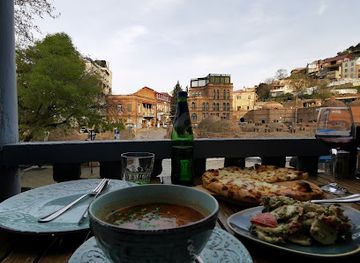
Restaurant Usakhelouri
Discover authentic Georgian flavors at Restaurant Usakhelouri in Old Tbilisi, where tradition meets modern culinary excellence.
-
Georgian
Ethno Tsiskvili
Discover authentic Georgian flavors and vibrant cultural performances at Ethno Tsiskvili in Tbilisi.
-
Georgian
Georgian House
Experience authentic Georgian cuisine at Georgian House in Tbilisi – a delightful blend of tradition and taste awaits you.
-
Georgian
Shavi Lomi
Savor authentic Georgian flavors at Shavi Lomi in Tbilisi's charming Old Town - a culinary gem waiting to be discovered.
Best bars in Khevsureti
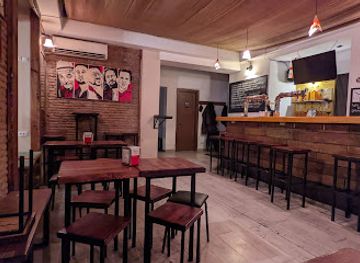
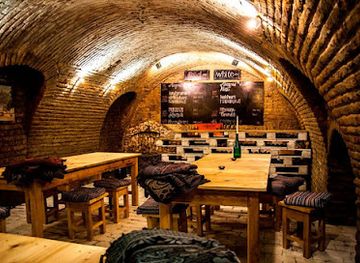
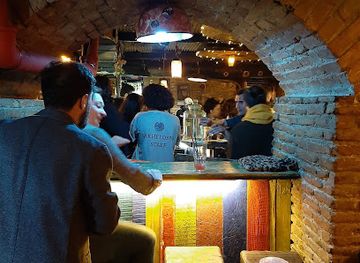
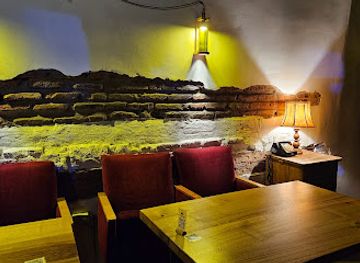
Khevsureti has no conventional nightclub circuit, and evening life centres on guesthouses, family meals and conversation rather than late opening venues. In Barisakho, Shatili and other inhabited settlements, visitors may share a table with hosts or fellow hikers, sometimes accompanied by Georgian wine, chacha or locally prepared drinks, but drinking should not be treated as the main attraction. There are no dependable bar districts, and remote accommodation may have limited supplies. Clear mountain nights, traditional stories and the quiet of the valleys are more characteristic of the region after dark than amplified entertainment. Anyone driving the following morning should avoid alcohol, particularly given the demanding roads. In peak summer, guesthouses can feel sociable because hikers converge on the same small settlements, while outside the main season much of Khevsureti becomes exceptionally quiet.
-
Bar
Black Dog Bar
Discover the lively atmosphere of Black Dog Bar in Old Tbilisi - an ideal spot for affordable drinks and local culture.
-
Bar
Warszawa
Discover the lively spirit of Tbilisi at Bar Warszawa, a favorite bar in the heart of Old Tbilisi offering delightful drinks and a vibrant atmosphere.
-
Bar
Sakhelosno BAR
Experience the vibrant nightlife at Sakhelosno BAR in Tbilisi, where fun, affordable drinks, and dancing await you!
-
Cocktail bar
Chacha Time
Discover Chacha Time in Tbilisi, a cocktail bar where creativity meets tradition, offering an unforgettable drinking experience in the heart of Georgia.
Best nightclubs in Khevsureti
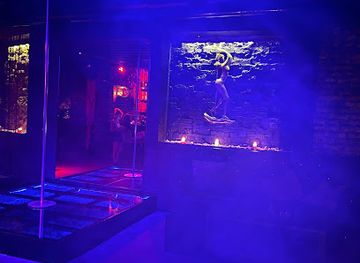
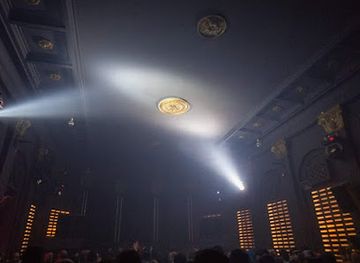
Khevsureti has no conventional nightclub circuit, and evening life centres on guesthouses, family meals and conversation rather than late opening venues. In Barisakho, Shatili and other inhabited settlements, visitors may share a table with hosts or fellow hikers, sometimes accompanied by Georgian wine, chacha or locally prepared drinks, but drinking should not be treated as the main attraction. There are no dependable bar districts, and remote accommodation may have limited supplies. Clear mountain nights, traditional stories and the quiet of the valleys are more characteristic of the region after dark than amplified entertainment. Anyone driving the following morning should avoid alcohol, particularly given the demanding roads. In peak summer, guesthouses can feel sociable because hikers converge on the same small settlements, while outside the main season much of Khevsureti becomes exceptionally quiet.
-
Adult entertainment club
Night Life
Experience the electrifying night life of Tbilisi at this top adult entertainment club, where live music and dancing come alive until dawn.
-
Night club
Night Office
Discover the lively nightlife of Tbilisi at Night Office, where vibrant music and thrilling ambiance await every night.
-
Night club
Safe Night Club
Discover the pulse of Tbilisi's nightlife at Safe Night Club, where great music and a lively atmosphere await every night.
-
Night club
Mtkvarze
Discover the electrifying nightlife of Tbilisi at Mtkvarze, a premier night club along the picturesque Mtkvari River, perfect for dancing and socializing.


Best shops in Khevsureti
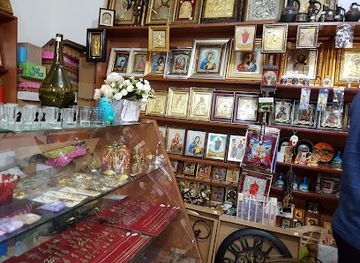
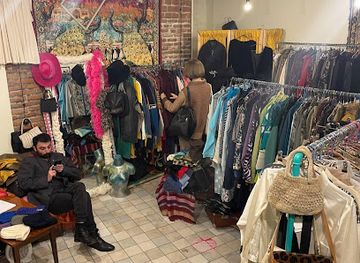
Shopping in Khevsureti is limited and practical rather than retail-focused. Barisakho and other larger settlements on the approach may provide basic provisions, while remote villages have few or no shops and cannot be relied upon for last-minute supplies. The most meaningful purchases are usually products offered through guesthouses or local households, such as honey, preserves, woollen items or other seasonal produce, although availability varies and visitors should not assume that every settlement has a regular market. Khevsur cultural identity is also associated with distinctive textiles, embroidery, jewellery and traditional dress, but genuinely locally made pieces are not available everywhere; ask about provenance rather than buying mass-produced items presented as regional craft. For a wider choice of Georgian food products, handicrafts, books and outdoor equipment, shop in Tbilisi or another major Georgian town before travelling into the mountains. Take only durable goods from the region and avoid removing archaeological material, stones or historic objects.
-
Shopping mall
Karvasla
Experience the vibrant shopping scene at Karvasla, Kutaisi's premier shopping mall, offering diverse shops, dining, and entertainment options.
-
Gift shop
Friday Night • პარასკევი ღამე
Explore Friday Night in Tbilisi – a treasure trove of unique gifts, holistic supplies, and spiritual items for memorable souvenirs.
-
Vintage clothing store
Vintylator Vintage Shop
Explore the charm of vintage fashion at Vintylator Vintage Shop in Tbilisi, where timeless pieces and unique styles await every fashion lover.
-
Souvenir store
Ethnodesign
Explore Ethnodesign: The ultimate destination for authentic Georgian crafts and souvenirs in the heart of Old Tbilisi.


Get your free copy of our complete guide to Khevsureti, delivered straight to you.
Everything on this page, from attractions and restaurants to essentials and local phrases, in one PDF you can read offline, print or share.
Already have an account? Sign in
Your Khevsureti guide is ready.
We'll send it to · Not you? Sign out

Getting your guide ready…
We are putting together a fresh copy of the Khevsureti guide. This can take up to a minute.
This can take a few moments. If your browser asks, choose Allow so the download can start. You'll find the guide in your Downloads folder.
Nothing happened? Download it again
Sorry, the guide is taking longer than usual. Please try again in a minute, or get it by email instead.
Khevsureti essentials
Currency and Payment
Safety
Emergency Situations
Do's and Don'ts
Local Tips
From Eve
Local phrases worth knowing
You don't need to get them perfect. A few words go a long way, and locals appreciate the effort.
Basics
| English | Local | Say it |
|---|---|---|
| Hello | Hello | [Heh-loh] |
| Goodbye | Goodbye | [Good-bye] |
| Yes | Yes | [Yes] |
| No | No | [No] |
| Please/You're welcome | Please/You're welcome | [Pleez/Yer wel-kum] |
| Thank you | Thank you | [Thank yoo] |
| Excuse me/Sorry | Excuse me/Sorry | [Ex-kyoos mee/So-ree] |
| How are you? | How are you? | [How ar yoo?] |
| Fine. And you? | Fine. And you? | [Fine. And yoo?] |
| Do you speak English? | Do you speak English? | [Do yoo speek In-glish?] |
| I don't understand | I don't understand | [I dont un-der-stand] |
Eating & Drinking
| English | Local | Say it |
|---|---|---|
| I'd like to see the menu, please | I'd like to see the menu, please | [I'd lyk to see the men-yoo, pleez] |
| I don't eat meat | I don't eat meat | [I dont eet meet] |
| Cheers! | Cheers! | [Cheerz] |
| I would like to pay, please | I would like to pay, please | [I wood lyk to pay, pleez] |
Emergencies
| English | Local | Say it |
|---|---|---|
| Help! | Help! | [Help] |
| Go away! | Go away! | [Go a-way] |
| Call the Police! | Call the Police! | [Call the Po-lees] |
| Call a doctor! | Call a doctor! | [Call a dok-ter] |
| I'm lost | I'm lost | [I'm lost] |
| I'm ill | I'm ill | [I'm il] |
Shopping
| English | Local | Say it |
|---|---|---|
| I'd like to buy... | I'd like to buy... | [I'd lyk to buy...] |
| I'm just looking | I'm just looking | [I'm just luk-ing] |
| How much is it? | How much is it? | [How much iz it?] |
| That's too expensive | That's too expensive | [That's too eks-pen-siv] |
| Can you lower the price? | Can you lower the price? | [Can yoo lo-er the prys?] |
Time & Numbers
| English | Local | Say it |
|---|---|---|
| What time is it? | What time is it? | [What tym iz it?] |
| It's one o'clock | It's one o'clock | [It's wun o'clock] |
| Half past (10) | Half past (10) | [Half past ten] |
| Morning | Morning | [Morn-ing] |
| Afternoon | Afternoon | [Af-ter-noon] |
| Evening | Evening | [Eve-ning] |
| Yesterday | Yesterday | [Yes-ter-day] |
| Today | Today | [To-day] |
| Tomorrow | Tomorrow | [To-mor-row] |
| 1 | 1 | [One] |
| 2 | 2 | [Two] |
| 3 | 3 | [Three] |
| 4 | 4 | [Four] |
| 5 | 5 | [Five] |
| 6 | 6 | [Six] |
| 7 | 7 | [Seven] |
| 8 | 8 | [Eight] |
| 9 | 9 | [Nine] |
| 10 | 10 | [Ten] |
Transport & Directions
| English | Local | Say it |
|---|---|---|
| Where's a/the...? | Where's a/the...? | [Where's a/the...?] |
| What's the address? | What's the address? | [What's the ad-dress?] |
| Can you show me (on the map)? | Can you show me (on the map)? | [Can yoo show mee (on the map)?] |
| When's the next (bus)? | When's the next (bus)? | [When's the next (bus)?] |
| A ticket (to ....) | A ticket (to ....) | [A ti-ket (to ....)] |
History of Khevsureti
Early Highland Communities and Sacred Landscapes
Khevsureti’s high valleys were settled by mountain communities whose economy combined small-scale agriculture, livestock keeping, hunting and seasonal movement between elevations. Archaeological evidence and surviving material culture indicate long interaction between the northern Caucasus and the Georgian lowlands, although the region’s early history is not documented in the same detail as that of Georgia’s major urban centres. Stone shrines, burial places and defensive settlements preserve traces of a worldview in which Christianity coexisted with older local customs. The difficult terrain encouraged dispersed communities with strong local identities and traditions of mutual defence.
Christian Georgia and Highland Custom
Khevsureti became part of the cultural and political world of medieval Georgia while retaining a distinctive highland social order. Georgian Orthodox Christianity influenced village churches, crosses and religious calendars, but local customary law and sacred practices remained important in everyday life. Authority was often exercised through clan relationships, elders and community assemblies rather than through urban institutions. The region’s oral poetry, songs, weapon traditions and formal dress developed within this setting. Its position between the Georgian lowlands and the northern Caucasus also gave Khevsureti strategic importance beyond its small population.
Fortified Villages of the Medieval and Early Modern Era
Settlements such as Shatili and Mutso took their recognisable form through centuries of insecurity, local rivalry and strategic exposure. Houses were built close together and linked with towers, passageways and defensive positions, allowing residents to protect people, animals and provisions within a compact settlement. Mutso’s steep site and Shatili’s dense stone architecture show how construction adapted to narrow valleys and limited agricultural land. These communities were not isolated from Georgian history, but their distance from the lowlands meant that local defence and customary authority remained especially significant.
Khevsureti within Imperial and Georgian Political Change
From the nineteenth century, expanding Russian imperial administration increasingly incorporated the highland districts into a more centralised political system. Roads, officials and new administrative arrangements gradually altered older patterns of authority, although access remained difficult. During the short-lived Democratic Republic of Georgia after 1918 and the subsequent Soviet period, Khevsureti became part of wider state projects affecting borders, land use and local government. The region’s frontier position also made movement and settlement politically sensitive, particularly in valleys close to the northern border.
Depopulation and the Survival of Mountain Heritage
The Soviet period brought major social and demographic change. Limited agricultural opportunity, difficult communications and state policies encouraging movement towards lower and more accessible areas contributed to the decline of several highland settlements. Some villages were abandoned or occupied only seasonally, while buildings and defensive towers deteriorated. At the same time, Khevsureti’s architecture, language traditions, textiles and oral culture attracted the attention of Georgian ethnographers and heritage specialists. The surviving settlements therefore represent both a continuation of local life and the physical record of a major mountain depopulation.
Contemporary Khevsureti and Responsible Mountain Tourism
Since Georgia’s independence, Khevsureti has become better known to hikers, cultural travellers and visitors seeking remote landscapes, while remaining one of the country’s least accessible regions. Restoration at places such as Mutso has helped protect important historic fabric, but tourism remains seasonal and infrastructure is modest. Modern guesthouses, local guiding and trekking routes provide new income, yet the region continues to face fragile roads, severe weather and a small resident population. Contemporary travel here depends on balancing access with conservation and respect for communities whose heritage is still part of daily life.
Khevsureti in Photos
Browse through our photo collection highlighting the charm and character of the destination.
Neighbouring regions of Khevsureti
The closest regions to Khevsureti, if you have time for more than one.
-

-

-

-

-


Swipe for more regions
Explore more

Explore more of Georgia
Discover Georgia: A vibrant mix of ancient history, stunning landscapes, and warm hospitality at the crossroads of Europe and Asia.
Explore Georgia