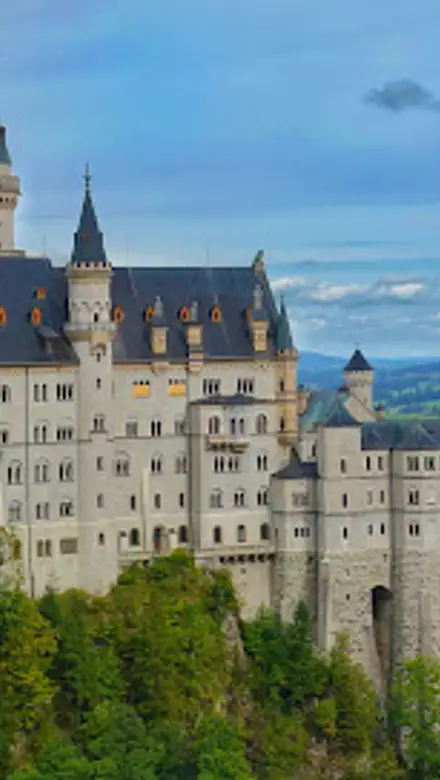
Neuschwanstein Castle Travel Guide
Free Guide: Experience the fairytale allure of Neuschwanstein Castle, King Ludwig II's masterpiece, nestled in the Bavarian Alps, a testament to romanticism and architectural grandeur.


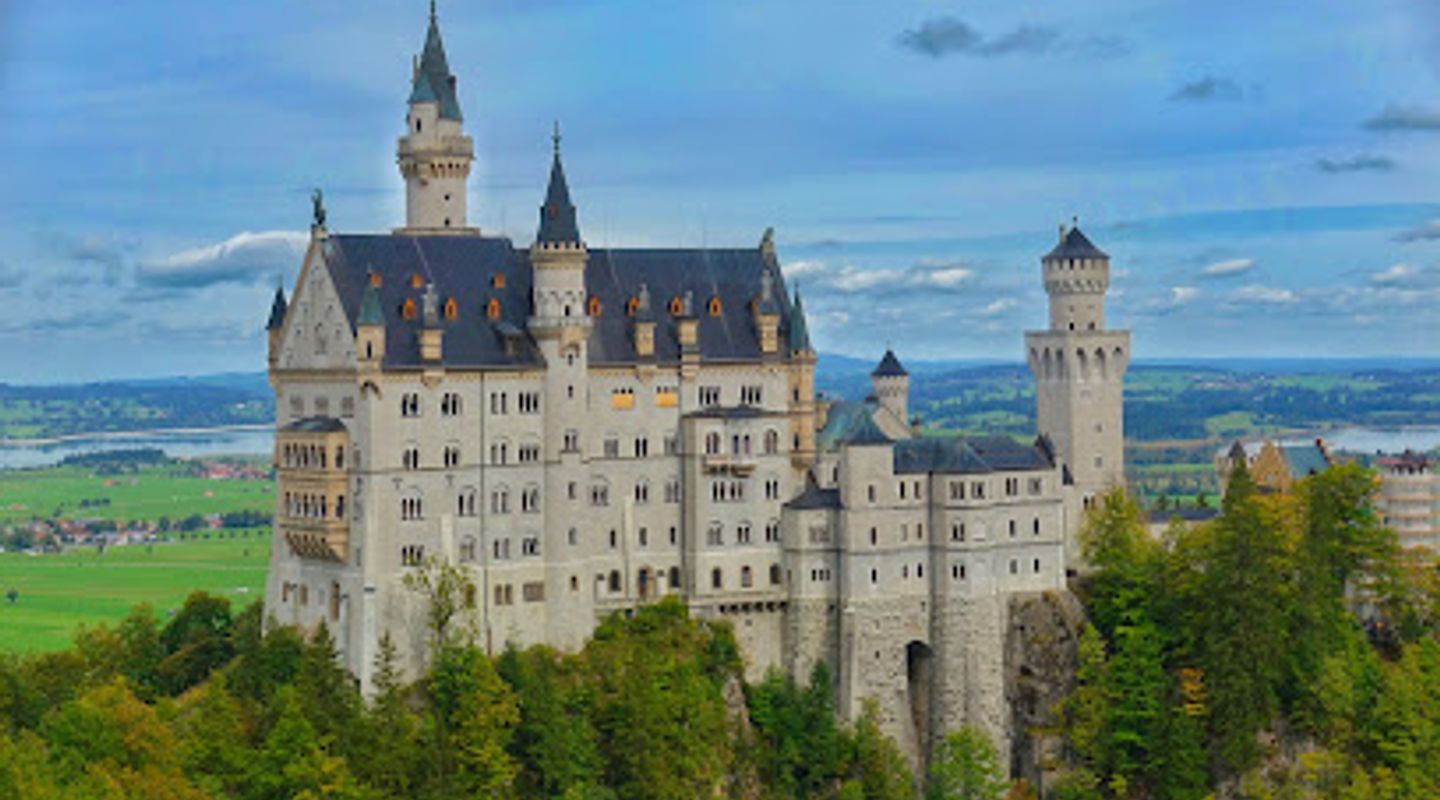
A brief summary of Neuschwanstein Castle
Experience the fairytale allure of Neuschwanstein Castle, King Ludwig II's masterpiece, nestled in the Bavarian Alps, a testament to romanticism and architectural grandeur.
Nestled in the Bavarian Alps, Neuschwanstein Castle is a breathtaking 19th-century Romanesque Revival palace commissioned by King Ludwig II of Bavaria. Often dubbed the "Fairytale King," Ludwig envisioned the castle as a personal refuge and a tribute to the medieval legends and the operas of Richard Wagner. Construction began in 1869, but was never fully completed due to Ludwig's untimely death. Today, Neuschwanstein stands as one of Germany's most iconic landmarks, drawing millions of visitors each year with its stunning architecture, opulent interiors, and dramatic mountain setting. The castle offers guided tours showcasing its lavishly decorated rooms, including the Throne Hall, Singer's Hall, and Ludwig's private chambers. Prepare to be transported to a world of fantasy and romance as you explore this architectural masterpiece. Booking tickets in advance is highly recommended, as they often sell out, especially during peak season. Be aware that photography is not allowed inside the castle.
Opening hours
- Every day9 am–6 pm
Opening hours as listed on the venue’s Google Business Profile. Hours can change for services and special events, so check with the venue before you go.
- Address
- Neuschwansteinstraße 20, 87645 Schwangau
- Phone
- Website
Getting there
Walking
Shuttle Bus
Horse-Drawn Carriage
Parking
Discover more about Neuschwanstein Castle
Overview
Neuschwanstein Castle, a breathtaking testament to King Ludwig II's romantic vision, stands proudly amidst the Bavarian Alps. Often referred to as the "Fairytale Castle," it embodies the eccentric king's passion for medieval legends and the operatic works of Richard Wagner. Construction commenced in 1869, intended to create a private retreat and a homage to a bygone era. However, the castle remained unfinished at the time of Ludwig's mysterious death in 1886. Ludwig II, often called "Mad King Ludwig," ascended the throne in 1864. His reign was marked by a deep fascination with the medieval world and a desire to recreate its grandeur. He spent much of his childhood at Hohenschwangau Castle, a neo-Gothic palace that fueled his imagination. After losing much of his power due to political shifts, Ludwig sought solace in his artistic pursuits, pouring his resources into building extravagant castles, with Neuschwanstein being the most ambitious. The castle's design draws inspiration from various sources, including the Wartburg Castle in Eisenach and the operas of Richard Wagner. Christian Jank, a scene painter, created the initial designs, which were then translated into architectural plans by Eduard Riedel. The result is a unique blend of Romanesque, Gothic, and Byzantine architectural elements, creating a fantastical and awe-inspiring structure. Neuschwanstein was intended to have over 200 rooms, but only a fraction were completed. The interiors are lavishly decorated with intricate murals, ornate furniture, and state-of-the-art technology for the time. Highlights include: * **The Throne Hall:** A grand, unfinished hall designed to resemble a Byzantine church. It features stunning mosaics and a massive chandelier. * **The Singer's Hall:** Inspired by the Wartburg's Hall of Song, this room was intended for musical performances and features elaborate frescoes depicting scenes from Wagnerian operas. * **Ludwig's Private Chambers:** These rooms offer a glimpse into the king's personal life, with opulent furnishings, hand-painted walls, and hidden passages. * **The artificial cave (Grotto):** Inspired by Wagner's Tannhäuser, this provided a secluded, fantastical space within the castle. Despite its medieval appearance, Neuschwanstein incorporated modern conveniences, including running water, central heating, and flushing toilets. Ludwig was determined to combine the romance of the past with the comforts of the present. Tragically, Ludwig II only lived in Neuschwanstein for a few months before he was declared insane and deposed. His death remains shrouded in mystery, and the castle was opened to the public shortly after. Today, Neuschwanstein attracts over 1.5 million visitors annually, making it one of Germany's most popular tourist destinations. Visiting Neuschwanstein is an unforgettable experience. The castle's dramatic setting, combined with its fairytale architecture and opulent interiors, transports visitors to a world of fantasy and romance. However, it's essential to plan your visit carefully: * **Tickets:** Purchase tickets online in advance to avoid long queues and ensure entry. Tickets are timed, so arrive promptly for your tour. * **Tours:** Guided tours are the only way to see the castle's interiors. Tours are available in German and English, with audio guides in other languages. * **Photography:** Photography is not allowed inside the castle. * **Accessibility:** The castle is located on a steep hill, and there are many stairs inside. While there is an elevator, it has limited capacity and requires advance reservation. The path to the castle can be challenging for those with mobility issues. * **Time:** Allow at least 3 hours for your visit, including travel time to and from the castle. Beyond the castle itself, the surrounding area offers stunning natural beauty. The Marienbrücke (Queen Mary's Bridge) provides breathtaking views of Neuschwanstein and the Pöllat Gorge. Hohenschwangau Castle, where Ludwig II spent his childhood, is also worth a visit. Neuschwanstein Castle stands as a testament to the power of imagination and the enduring appeal of fairytale romance. It is a must-see destination for anyone visiting Bavaria and a reminder of the eccentric king who dared to dream on a grand scale. While the castle is visually stunning year-round, consider visiting during the shoulder seasons (April-May or September-October) for pleasant weather and fewer crowds. Be aware that the castle is closed on January 1st, December 24th, 25th, and 31st. Neuschwanstein's legacy extends far beyond its physical presence. It has inspired countless artists, writers, and filmmakers, most notably Walt Disney, whose Sleeping Beauty Castle was directly influenced by Neuschwanstein. The castle continues to capture the imagination of people around the world, solidifying its place as a symbol of beauty, romance, and the enduring power of dreams. Despite being incomplete, Neuschwanstein offers a captivating glimpse into the mind of King Ludwig II and his unwavering belief in the power of art and beauty. It is a place where fantasy becomes reality and where visitors can escape the ordinary and immerse themselves in a world of wonder. Even though Ludwig only lived in the castle for a short time, his vision lives on through the millions of visitors who come to admire his creation each year. Neuschwanstein is more than just a castle; it is a symbol of Bavaria, of Germany, and of the human desire to create beauty in the world. Visiting Neuschwanstein is a journey back in time, a step into a fairytale, and an experience that will stay with you long after you leave. It is a place where history, art, and nature come together to create something truly magical. Whether you are a history buff, an architecture enthusiast, or simply someone who loves fairytales, Neuschwanstein Castle is sure to leave you spellbound. It is a place where dreams come to life and where the imagination knows no bounds. So, plan your visit, book your tickets, and prepare to be transported to the enchanting world of Neuschwanstein Castle. You won't be disappointed.
Evendo Review Centre
 Google
Guest reviews
Explore Neuschwanstein Castle on the map
A handpicked selection of must-see spots near Neuschwanstein Castle, mapped for you.
Get your free copy of our complete guide to Neuschwanstein Castle, delivered straight to you.
Everything on this page, from opening hours and how to get there to Eve’s tips and the best time to go, in one PDF you can read offline, print or share.
Already have an account? Sign in
Your Neuschwanstein Castle guide is ready.
We'll send it to · Not you? Sign out

Getting your guide ready…
We are putting together a fresh copy of the Neuschwanstein Castle guide. This can take up to a minute.
This can take a few moments. If your browser asks, choose Allow so the download can start. You'll find the guide in your Downloads folder.
Nothing happened? Download it again
Sorry, the guide is taking longer than usual. Please try again in a minute, or get it by email instead.
Unlock the best of Neuschwanstein Castle
Skip-the-line tickets, guided tours with entry, and walking tours of the area, booked in a few clicks.


Other nearby places you may find interesting
The closest places of the same kind, if this one is not quite what you had in mind.
-
-
-

-
-


Swipe for more places
More to explore near Neuschwanstein Castle

 Best experiences near Neuschwanstein Castle
 Best hotels near Neuschwanstein Castle
 Best landmarks near Neuschwanstein Castle
 Best attractions near Neuschwanstein Castle
 Best shops near Neuschwanstein Castle
 Best restaurants near Neuschwanstein Castle
 Best bars near Neuschwanstein Castle
Do you manage this location?
Take control to get all the benefits, like improved information, better appearance, and stronger visibility across AI-powered discovery.
Explore more

Explore more of Bavaria
Discover Bavaria: A magical region in Germany with fairy-tale castles, medieval towns, and breathtaking alpine landscapes.
Explore Bavaria
Explore more of Germany
Experience Germany: where history meets innovation, and urban energy blends with natural beauty. Discover diverse cultures, delicious cuisine, and stunning landscapes.
Explore Germany