

Rudolf Virchow Monument Travel Guide
Free Guide: A neoclassical monument in Berlin-Mitte honoring Rudolf Virchow, the father of modern pathology, and his contributions to medicine, public health, and social reform.


A brief summary of Rudolf Virchow Monument
A neoclassical monument in Berlin-Mitte honoring Rudolf Virchow, the father of modern pathology, and his contributions to medicine, public health, and social reform.
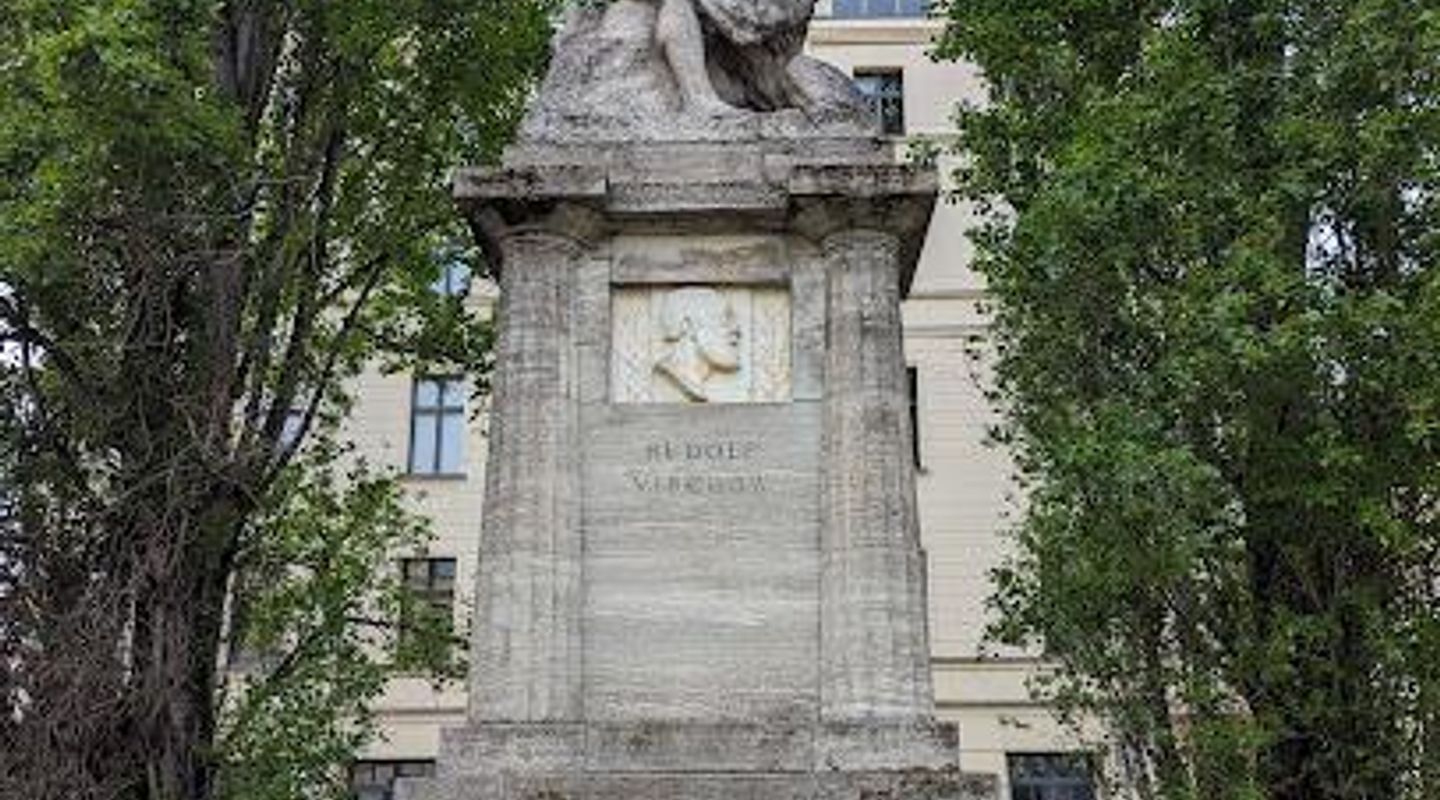
The Rudolf Virchow Monument in Berlin-Mitte stands as a neoclassical tribute to Rudolf Virchow, a towering figure in 19th-century medicine, politics, and public health. Created by Fritz Klimsch between 1906 and 1910, the muscular limestone statue depicts Virchow, often hailed as the 'father of modern pathology,' in a pose embodying his relentless pursuit of knowledge and his commitment to social reform. Located on Karlplatz, the monument serves as a reminder of Virchow's groundbreaking contributions to cellular pathology, his advocacy for public health initiatives, and his role as a prominent voice in German political life. The monument is not only a celebration of Virchow's scientific achievements but also a symbol of Berlin's rich intellectual and cultural history, attracting visitors interested in medicine, history, and art. Its central location makes it easily accessible and a worthwhile stop for those exploring the city's historical heart.
Opening hours
- Every dayOpen 24 hours
Opening hours as listed on the venue’s Google Business Profile. Hours can change for services and special events, so check with the venue before you go.
- Address
- Reinhardtstraße 40, 10117 Berlin
Getting there
Public Transport
Taxi/Ride-Share
Driving
Discover more about Rudolf Virchow Monument
Overview
The Rudolf Virchow Monument, situated on Karlplatz in Berlin-Mitte, is a compelling testament to the life and legacy of Rudolf Virchow (1821-1902), a physician, anthropologist, pathologist, prehistorian, biologist, writer, editor, and politician. Best known as the 'father of modern pathology,' Virchow's contributions to medicine and public health have had a lasting impact on society. The monument, crafted by Fritz Klimsch in the neoclassical style between 1906 and 1910, serves as a visual representation of Virchow's intellectual prowess and his dedication to improving the lives of others. Virchow's impact extends far beyond the realm of medicine. He is also recognized as the founder of social medicine, advocating for the idea that medicine is a social science and that politics is simply medicine on a grand scale. His work on the typhus epidemic in Upper Silesia in 1847-1848 led him to develop his ideas on social medicine and politics after witnessing the victims and their poverty. This experience shaped his belief that social and economic factors play a crucial role in public health. The monument itself is a striking work of art. The muscular limestone statue depicts Virchow in a pose that exudes strength and determination. The figure atop the pedestal is an allegorical representation of mankind's struggle against disease, symbolizing Virchow's tireless efforts to combat illness and improve public health. The monument's neoclassical style reflects the era in which Virchow lived and worked, a time of great scientific and intellectual advancement. Karlplatz, where the monument stands, provides a fitting backdrop for this tribute to Virchow. The square is located in the heart of Berlin-Mitte, a district known for its historical and cultural significance. The monument is surrounded by other notable landmarks, including the Charité hospital, where Virchow once worked. This proximity to other important institutions underscores Virchow's central role in Berlin's medical and intellectual community. Visiting the Rudolf Virchow Monument offers a unique opportunity to reflect on the life and work of a remarkable individual. Virchow's contributions to cellular pathology revolutionized the way we understand disease. His work laid the foundation for modern medical research and treatment. He was the first to develop a systematic method of autopsy based on his knowledge of cellular pathology. Virchow was the first to describe and name diseases such as leukemia, embolism, thrombosis, chordoma, and ochronosis. He coined biological terms including chromatin, parenchyma, neuroglia, agenesis, osteoid, amyloid degeneration, and spina bifida. Beyond his scientific achievements, Virchow was a passionate advocate for social justice. He believed that everyone, regardless of their social or economic status, deserved access to quality healthcare. His work on the typhus epidemic in Upper Silesia led him to conclude that poverty and social inequality were major contributors to disease. As a result, he became a vocal advocate for social reform, using his platform to raise awareness about the importance of public health initiatives. Virchow's political career further demonstrates his commitment to social justice. He served as a member of the Berlin City Council and the Prussian Parliament, using his position to advocate for policies that would improve the lives of ordinary citizens. He was a strong proponent of public education, sanitation, and healthcare, believing that these were essential for creating a healthy and prosperous society. The Rudolf Virchow Monument is more than just a statue; it is a symbol of Virchow's enduring legacy. It serves as a reminder of the importance of scientific inquiry, social justice, and public service. By visiting this monument, you can gain a deeper appreciation for the life and work of a man who dedicated his life to improving the health and well-being of others. While at Karlplatz, take some time to explore the surrounding area. The Charité hospital, located nearby, is one of the oldest and most prestigious hospitals in Germany. It has a rich history of medical innovation and is still a leading center for medical research and treatment. The Deutsches Theater, also located in the vicinity, is one of Berlin's most important theaters, known for its innovative and thought-provoking productions. The Rudolf Virchow Monument is a must-see destination for anyone interested in medicine, history, or social justice. It is a powerful reminder of the importance of using our knowledge and skills to make the world a better place. The monument is a testament to the enduring legacy of a man who dedicated his life to improving the health and well-being of others. His contributions to medicine, science, and society continue to inspire us today. Visiting the Rudolf Virchow Monument is a chance to connect with the past and to reflect on the values that are most important to us. It is an opportunity to learn about a remarkable individual who made a profound difference in the world. The monument is a reminder that we all have the power to make a positive impact on society, and that by working together, we can create a healthier and more just world for all. The monument is easily accessible by public transportation, making it a convenient destination for visitors to Berlin. Whether you are a medical professional, a history buff, or simply someone who is interested in learning more about the world, the Rudolf Virchow Monument is sure to leave a lasting impression. It is a place where you can reflect on the past, consider the present, and imagine a better future. As you stand before the Rudolf Virchow Monument, take a moment to appreciate the beauty of the sculpture and the significance of the man it commemorates. Let the monument serve as a reminder of the importance of knowledge, compassion, and social justice. And let it inspire you to make your own contribution to creating a healthier and more just world.
Evendo Review Centre
 Google
Guest reviews
Explore Rudolf Virchow Monument on the map
A handpicked selection of must-see spots near Rudolf Virchow Monument, mapped for you.
Get your free copy of our complete guide to Rudolf Virchow Monument, delivered straight to you.
Everything on this page, from opening hours and how to get there to Eve’s tips and the best time to go, in one PDF you can read offline, print or share.
Already have an account? Sign in
Your Rudolf Virchow Monument guide is ready.
We'll send it to · Not you? Sign out

Getting your guide ready…
We are putting together a fresh copy of the Rudolf Virchow Monument guide. This can take up to a minute.
This can take a few moments. If your browser asks, choose Allow so the download can start. You'll find the guide in your Downloads folder.
Nothing happened? Download it again
Sorry, the guide is taking longer than usual. Please try again in a minute, or get it by email instead.
Unlock the best of Rudolf Virchow Monument
Skip-the-line tickets, guided tours with entry, and walking tours of the area, booked in a few clicks.

Other nearby places you may find interesting
The closest places of the same kind, if this one is not quite what you had in mind.
-
-
-
-
-


Swipe for more places
More to explore near Rudolf Virchow Monument
-
 Best experiences near Rudolf Virchow Monument
-
 Best hotels near Rudolf Virchow Monument
-
 Best landmarks near Rudolf Virchow Monument
-
 Best attractions near Rudolf Virchow Monument
-
 Best shops near Rudolf Virchow Monument
-
 Best restaurants near Rudolf Virchow Monument
-
 Best bars near Rudolf Virchow Monument


Do you manage this location?
Take control to get all the benefits, like improved information, better appearance, and stronger visibility across AI-powered discovery.
Explore more

Explore more of Brandenburg
Discover Brandenburg: Explore a region rich in history, culture, and natural beauty, featuring stunning landscapes, historic sites, and vibrant cultural experiences.
Explore Brandenburg
Explore more of Germany
Experience Germany: where history meets innovation, and urban energy blends with natural beauty. Discover diverse cultures, delicious cuisine, and stunning landscapes.
Explore Germany
