

Free Pomerania Travel Guide & Mobile App
Explore Pomerania with free travel guides. Discover regional history, expert tips, proposed trips, and audio guides on web or mobile app.


Explore German Pomerania for Baltic islands, brick Gothic towns, lagoon landscapes, historic harbours and nature-rich coastal journeys.
Read more about Pomerania
When is the best time to visit Pomerania?
Best: June–August · 22–24°C| Month | High (°C) | Rainfall (mm) |
|---|---|---|
| January | 2 | 40 |
| February | 3 | 35 |
| March | 7 | 40 |
| April | 12 | 45 |
| May | 18 | 50 |
| June (best) | 22 | 55 |
| July (best) | 24 | 60 |
| August (best) | 23 | 60 |
| September | 18 | 55 |
| October | 14 | 50 |
| November | 8 | 45 |
| December | 3 | 40 |
Getting to and around Pomerania
How to get there
Transportation
Top city travel guides in Pomerania
The cities of Pomerania, and the easiest places to base yourself.

Swipe for more cities
Destinations in Pomerania
Resorts, valleys and scenic spots worth a trip of their own.
-

-


Swipe for more destinations
Best attractions in Pomerania
German Pomerania's attractions range from Hanseatic town centres to beaches, forests and wetlands. Stralsund provides the strongest concentration of urban heritage, with museums, churches and the Deutsches Meeresmuseum forming a substantial cultural programme, while Greifswald combines university life, art collections, harbour walks and the atmospheric remains of Eldena Abbey. Rügen offers the broadest variety of outdoor experiences: Jasmund National Park protects beech woodland and the famous chalk coast, while the island's resorts, cycle routes and inland villages create a different rhythm from the busy seafronts. On Usedom, sandy beaches and resort architecture contrast with quieter lagoon shores. The Peene valley, the Darß-Zingst area outside the core historic Pomeranian focus, and the Szczecin Lagoon landscape are important for paddling, birdwatching and low-impact nature travel; the latter is a cross-border area and should not be confused with a single German destination. Peenemünde adds a serious layer of military and scientific history, and smaller towns such as Wolgast, Anklam and Ueckermünde reward visitors interested in churches, harbours and regional architecture.
-
Tourist attraction
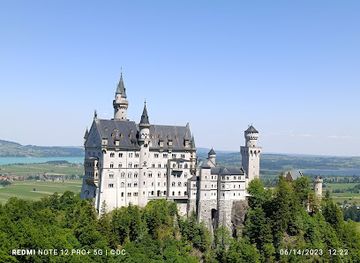
Neuschwanstein Castle
Explore the fairy tale wonder of Neuschwanstein Castle, a stunning blend of history, architecture, and natural beauty in the Bavarian Alps.
-
Tourist attraction
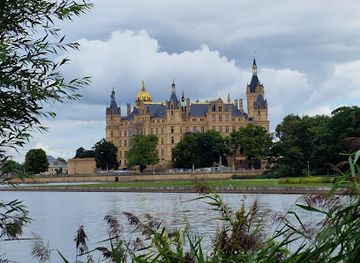
Schwerin Castle
Explore the stunning Schwerin Castle, a fairytale palace surrounded by enchanting gardens and rich history, perfect for an unforgettable visit in Northern Germany.
-
Tourist attraction
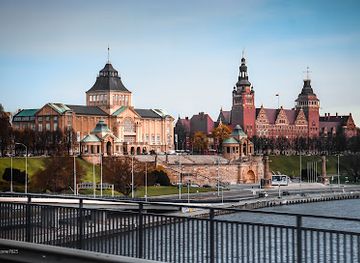
Wały Chrobrego
Experience the historical allure and scenic beauty of Wały Chrobrego, Szczecin's iconic promenade along the Oder River.
-
Tourist attraction
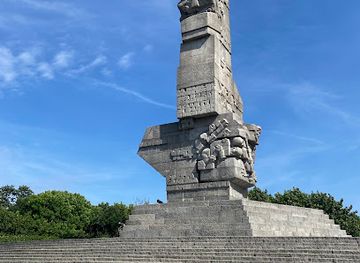
Westerplatte
Explore Westerplatte in Gdańsk, a historical site that marks the beginning of World War II, offering scenic views and deep insights into history.
Best landmarks in Pomerania
Stralsund's historic centre is the region's most prominent architectural landmark, with the soaring brick Gothic churches of St Nicholas and St Mary, the former civic buildings around the Old Market and rows of merchants' houses expressing the city's Hanseatic wealth. Greifswald's market square and churches provide a related but more intimate urban composition, while the ruins of Eldena Abbey on the edge of the city are especially significant for both medieval history and their association with the Romantic painter Caspar David Friedrich. On Rügen, the white chalk cliffs and beech forests of Jasmund form a defining natural landmark, although viewpoints and cliff conditions change over time. Cape Arkona marks the island's exposed northern headland with lighthouses, military remains and dramatic coastal geography. The Granitz Hunting Lodge, set among woodland in the southeast, represents the nineteenth-century aristocratic landscape of the island. Peenemünde's former military research landscape is a landmark of a different kind: its importance lies in the evidence it preserves of wartime technology, coercion and the destructive history of rocket development.
-
Historical place
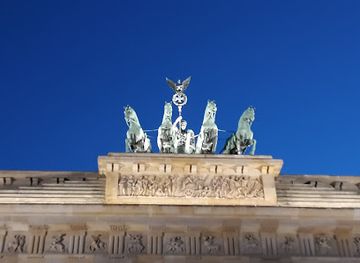
Brandenburg Gate
Discover the historical significance and architectural beauty of the Brandenburg Gate, an iconic symbol of unity in the heart of Berlin.
-
Castle
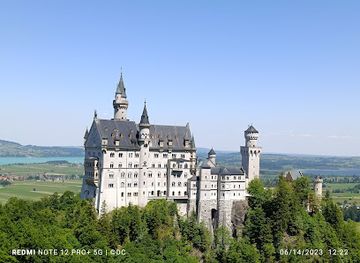
Neuschwanstein Castle
Discover the enchanting Neuschwanstein Castle, a stunning fairytale fortress nestled in the Bavarian Alps, rich in history and breathtaking views.
-
Castle
Malbork Castle
Explore the grandeur of Malbork Castle, a UNESCO World Heritage site in Poland, and immerse yourself in medieval history and breathtaking architecture.
-
Cathedral
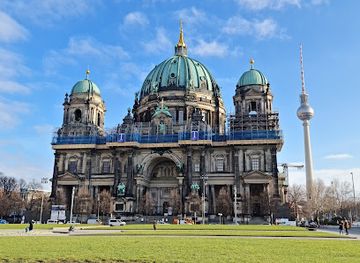
Berlin Cathedral
Explore the architectural splendor of Berlin Cathedral, an iconic landmark showcasing stunning Baroque design and breathtaking views of the city.

Explore Pomerania on the map
Plan your trip on one map. See where the top cities, national parks and sights are, and book hotels and experiences in a few clicks.
Best hotels in Pomerania
Best restaurants in Pomerania
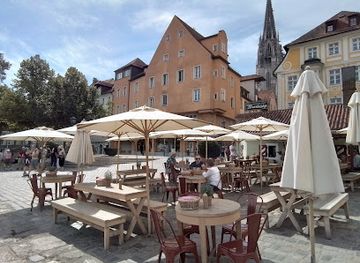
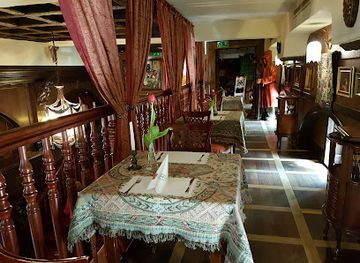
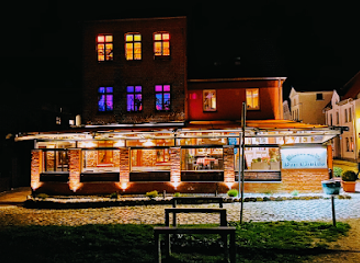
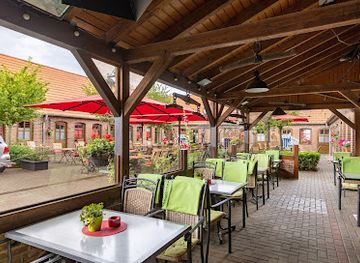
Dining in German Pomerania is closely connected with the Baltic coast and its inland farming traditions. Fish appears in many forms, from herring and cod to smoked fish and locally caught eel, with harbour kiosks, simple fish restaurants and more elaborate coastal dining all contributing to the regional food culture. Potatoes, cabbage, root vegetables, pork and seasonal game reflect northern German cooking, while cakes, pastries and substantial café breakfasts suit the cool maritime climate. Rügen and Usedom also have restaurants centred on resort dining, whereas villages and market towns tend to offer traditional inns, bakeries and straightforward regional menus. Look for smoked specialities, locally made preserves, sea-buckthorn products and seasonal produce, while remembering that exact availability depends on the fishing season and business. Vegetarian choices are increasingly common, especially in Stralsund and Greifswald, but rural menus can be narrower. Beer, fruit drinks and non-alcoholic options are widely available, and tap water is normally safe to drink.
-
Bavarian restaurant
Historische Wurstkuchl
Discover authentic Bavarian cuisine at Historische Wurstkuchl, Germany's oldest sausage kitchen nestled along the scenic Danube River.
-
European
Restauracja Domek Kata
Discover the flavors of Europe and Poland at Restauracja Domek Kata in Kołobrzeg - a culinary gem by the sea.
-
Italian
Ristorante Don Camillo
Experience authentic Italian cuisine at Ristorante Don Camillo in Malchow—where every dish tells a story of tradition and flavor.
-
German
Zur Schmiede Landhotel & Gasthof
Discover authentic German cuisine and cozy accommodations at Zur Schmiede Landhotel & Gasthof in Göhren-Lebbin.
Best bars in Pomerania
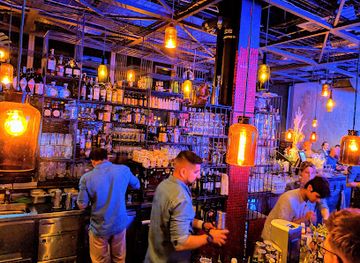
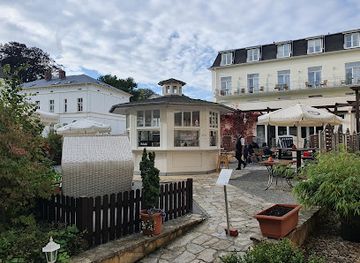
Evening life in German Pomerania is shaped more by historic pubs, harbour restaurants, hotel bars and seasonal resort venues than by a large nightclub circuit. Stralsund and Greifswald have the broadest choice, with student-oriented bars, traditional beer houses, cafés that remain open into the evening and occasional live-music or cultural events. On Rügen and Usedom, seaside resorts become livelier during the summer, when promenades, beach bars and restaurant terraces extend the evening, although the atmosphere is generally more relaxed than in Germany's major cities. Smaller towns such as Wolgast and Ueckermünde tend to close earlier and rely on local pubs, inns and community events. Breweries and regional drinks can be explored without making alcohol the focus of a visit. Outside the resorts, plan evening transport carefully, as late services may be limited and taxis can be less readily available in rural areas.
-
Bar
Monkey Bar
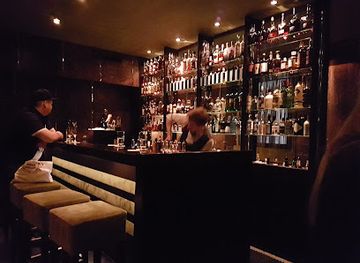
Discover Monkey Bar, Berlin's trendy cocktail bar with stunning skyline views, inventive drinks, and a vibrant atmosphere for unforgettable nights.
-
Brewpub
Usedomer Brauhaus
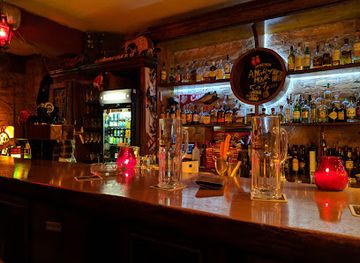
Discover Usedomer Brauhaus: A delightful brewpub in Heringsdorf offering fresh beer, local cuisine, and a charming atmosphere by the Baltic Sea.
-
Bar
Le Lion • Bar de Paris
Discover the luxury of Le Lion • Bar de Paris, Hamburg's premier destination for exquisite cocktails and elegant ambiance.
-
Bar
Badfish Bar
Discover the vibrant nightlife at Badfish Bar, a must-visit cocktail bar and pub in Berlin’s Pankow district, where great drinks and a lively atmosphere await.
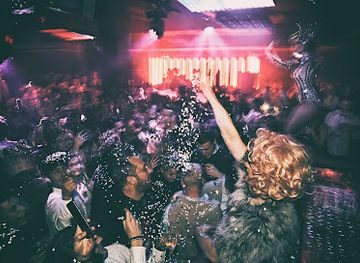
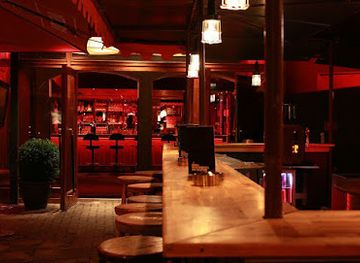
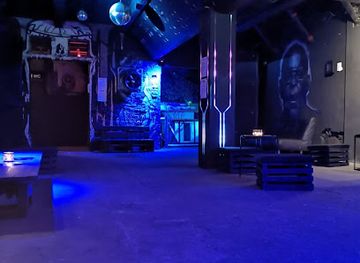
Best nightclubs in Pomerania
Evening life in German Pomerania is shaped more by historic pubs, harbour restaurants, hotel bars and seasonal resort venues than by a large nightclub circuit. Stralsund and Greifswald have the broadest choice, with student-oriented bars, traditional beer houses, cafés that remain open into the evening and occasional live-music or cultural events. On Rügen and Usedom, seaside resorts become livelier during the summer, when promenades, beach bars and restaurant terraces extend the evening, although the atmosphere is generally more relaxed than in Germany's major cities. Smaller towns such as Wolgast and Ueckermünde tend to close earlier and rely on local pubs, inns and community events. Breweries and regional drinks can be explored without making alcohol the focus of a visit. Outside the resorts, plan evening transport carefully, as late services may be limited and taxis can be less readily available in rural areas.
-
Disco club
Hafenbar Berlin
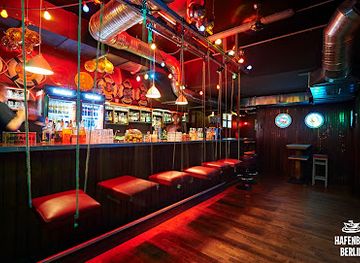
Experience the vibrant nightlife of Berlin at Hafenbar, a disco club and dance restaurant where music and cocktails flow until dawn.
-
Night club
P1 Club
Discover the pulse of Munich's nightlife at P1 Club, where electrifying music, exquisite drinks, and vibrant energy converge for an unforgettable experience.
-
Disco club
EuleXO - Braunschweig
Experience the vibrant nightlife of Braunschweig at EuleXO, a disco club where the music never stops and the dance floor is always alive with energy.
-
Night club
VOID Club
Dive into the pulsating nightlife at VOID Club, Berlin's hotspot for music, dance, and vibrant energy, capturing the essence of the city's club culture.
Best shops in Pomerania
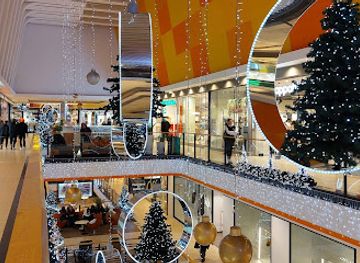
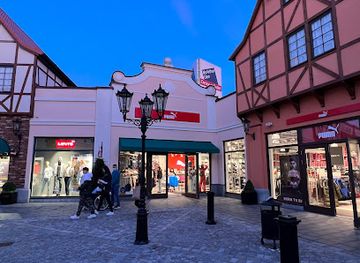
Shopping in German Pomerania centres on market squares, pedestrian streets, seaside promenades and regional food rather than large luxury districts. Stralsund and Greifswald offer the widest selection of independent bookshops, galleries, clothing shops, cafés and practical retailers, with historic town centres providing the most atmospheric setting. Rügen and Usedom's resorts sell maritime souvenirs, local artwork, ceramics, textiles, beach goods and products made with sea-buckthorn, as well as food from regional producers. Farmers' markets and weekly markets in larger towns are useful for bread, preserves, smoked fish, seasonal fruit and vegetables, although their days and scale vary. Look for Baltic-themed crafts and local photography, but distinguish genuinely regional products from generic seaside merchandise. Smaller inland towns are better for bakeries, everyday provisions and traditional shops than for extensive browsing. In rural areas, opening hours may be shorter, and cash remains useful at some stalls and small independent businesses.
-
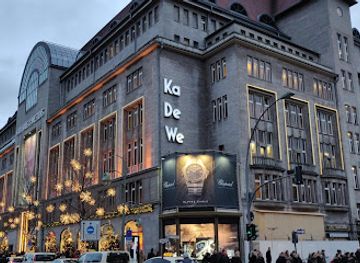
Shopping mall
KaDeWe - Kaufhaus des Westens
Explore the grandeur of KaDeWe in Berlin, Europe's largest department store, where luxury meets local culture in an unforgettable shopping experience.
-
Shopping mall
Galaxy Centrum
Explore Galaxy Centrum, Szczecin's leading shopping mall and amusement center, where shopping meets entertainment in a vibrant atmosphere!
-
Shopping mall
Galeria Kaskada
Experience shopping, dining, and entertainment at Galeria Kaskada, Szczecin's premier shopping destination offering a taste of local culture and lifestyle.
-
Outlet mall
Designer Outlet Neumünster
Discover unbeatable discounts and a wide array of brands at Designer Outlet Neumünster, a shopping haven for every fashion lover.

Get your free copy of our complete guide to Pomerania, delivered straight to you.
Everything on this page, from attractions and restaurants to essentials and local phrases, in one PDF you can read offline, print or share.
Already have an account? Sign in
Your Pomerania guide is ready.
We'll send it to · Not you? Sign out

Getting your guide ready…
We are putting together a fresh copy of the Pomerania guide. This can take up to a minute.
This can take a few moments. If your browser asks, choose Allow so the download can start. You'll find the guide in your Downloads folder.
Nothing happened? Download it again
Sorry, the guide is taking longer than usual. Please try again in a minute, or get it by email instead.
Pomerania essentials
Currency and Payment
Safety
Emergency Situations
Do's and Don'ts
Local Tips
From Eve
Local phrases worth knowing
You don't need to get them perfect. A few words go a long way, and locals appreciate the effort.
Basics
| English | Local | Say it |
|---|---|---|
| Hello | Hallo | [Hah-loh] |
| Goodbye | Auf Wiedersehen | [Owf Veed-er-zay-en] |
| Yes | Ja | [Yah] |
| No | Nein | [Nyn] |
| Please/You're welcome | Bitte | [Bit-teh] |
| Thank you | Danke | [Dahn-keh] |
| Excuse me/Sorry | Entschuldigung | [Ent-shool-dee-goong] |
| How are you? | Wie geht's? | [Vee gates] |
| Fine. And you? | Gut. Und dir? | [Goot. Oond deer] |
| Do you speak English? | Sprechen Sie Englisch? | [Shpreck-en Zee Eng-lish?] |
| I don't understand | Ich verstehe nicht | [Ish fer-shtay-eh nikht] |
Eating & Drinking
| English | Local | Say it |
|---|---|---|
| I'd like to see the menu, please | Ich hätte gerne die Speisekarte, bitte | [Ish het-teh gair-neh dee Shpy-zeh-kar-teh, bit-teh] |
| I don't eat meat | Ich esse kein Fleisch | [Ish ess-eh kyn Flysh] |
| Cheers! | Prost! | [Prohst] |
| I would like to pay, please | Ich möchte bezahlen, bitte | [Ish murk-teh beh-tsahl-en, bit-teh] |
Emergencies
| English | Local | Say it |
|---|---|---|
| Help! | Hilfe! | [Hil-feh] |
| Go away! | Geh weg! | [Gay vek] |
| Call the Police! | Rufen Sie die Polizei! | [Roof-en Zee dee Poh-lee-tsai] |
| Call a doctor! | Rufen Sie einen Arzt! | [Roof-en Zee eye-nen Artst] |
| I'm lost | Ich habe mich verlaufen | [Ish hah-beh mikh fer-lau-fen] |
| I'm ill | Ich bin krank | [Ish bin krank] |
Shopping
| English | Local | Say it |
|---|---|---|
| I'd like to buy... | Ich möchte ... kaufen | [Ish murk-teh ... kau-fen] |
| I'm just looking | Ich schaue nur | [Ish shau-eh noor] |
| How much is it? | Wie viel kostet es? | [Vee feel kost-et es?] |
| That's too expensive | Das ist zu teuer | [Das ist tsoo toy-er] |
| Can you lower the price? | Könnten Sie den Preis senken? | [Kurn-ten Zee den Pryce zen-ken] |
Time & Numbers
| English | Local | Say it |
|---|---|---|
| What time is it? | Wie spät ist es? | [Vee shpaet ist es?] |
| It's one o'clock | Es ist ein Uhr | [Es ist ine Oor] |
| Half past (10) | Halb (10) | [Halb (10)] |
| Morning | Morgen | [Mor-gen] |
| Afternoon | Nachmittag | [Nach-mit-tag] |
| Evening | Abend | [Ah-bent] |
| Yesterday | Gestern | [Ges-tern] |
| Today | Heute | [Hoy-teh] |
| Tomorrow | Morgen | [Mor-gen] |
| 1 | eins | [Eyns] |
| 2 | zwei | [Ts-vye] |
| 3 | drei | [Dry] |
| 4 | vier | [Feer] |
| 5 | fünf | [Fünf] |
| 6 | sechs | [Zex] |
| 7 | sieben | [Zee-ben] |
| 8 | acht | [Acht] |
| 9 | neun | [Noyn] |
| 10 | zehn | [Tsayn] |
Transport & Directions
| English | Local | Say it |
|---|---|---|
| Where's a/the...? | Wo ist ein/das ...? | [Vo ist ine/das ...?] |
| What's the address? | Wie ist die Adresse? | [Vee ist dee Ah-dress-eh?] |
| Can you show me (on the map)? | Könnten Sie mir (auf der Karte) zeigen? | [Kurn-ten Zee meer (owf der Kar-teh) tsigh-en?] |
| When's the next (bus)? | Wann kommt der nächste (Bus)? | [Vahn komt der nay-sh-teh (Boos)?] |
| A ticket (to ....) | Ein Ticket (nach ...) | [Ine Ti-ket (nahkh ...)] |
History of Pomerania
Early Slavic Pomerania
After the migration period, West Slavic communities settled along the southern Baltic coast, river valleys and lagoon shores. Their settlements formed the basis of the duchy later known as Pomerania, a name generally connected with the coastal location of the land. Trading centres developed around waterways and sheltered inlets, linking the region to Scandinavia, the German lands and other Baltic communities. Archaeological evidence and surviving place names preserve this early layer, although much of the medieval landscape was later transformed by Christianisation, colonisation and urban development.
Christianisation and the Griffin Dukes
From the twelfth century, Christian missions and political consolidation reshaped Pomerania. The Griffin dynasty ruled the duchy for centuries, while monasteries and bishoprics helped establish new religious and administrative structures. German-speaking settlers arrived alongside existing Slavic populations, bringing new town institutions, agricultural practices and forms of law. Abbeys such as Eldena near Greifswald and churches in Stralsund, Greifswald and other towns remain visible reminders of this period. The medieval duchy was politically divided at times but retained a lasting regional identity.
The Hanseatic Baltic Towns
Stralsund and Greifswald became important members of the Hanseatic trading network, which connected northern European ports through commerce in grain, timber, fish, salt and manufactured goods. Their prosperity produced substantial brick Gothic churches, town halls, defensive works and merchants' houses. Stralsund's position on the Strelasund gave it particular strategic and commercial importance, while Greifswald benefited from its harbour and later university. The towns' surviving historic cores show how Baltic trade influenced urban form and tied Pomerania to a wider European economy.
Swedish Pomerania and the Thirty Years' War
The Thirty Years' War brought severe disruption to Pomerania, and the 1648 Peace of Westphalia divided the former duchy between Sweden and Brandenburg-Prussia. Western Pomerania, including Stralsund and the island of Rügen, became Swedish territory for almost two centuries, although control shifted during later conflicts. Swedish Pomerania was strategically important because of its ports and position on the southern Baltic. The period left political and architectural traces, while repeated wars, taxation and military occupation affected towns and rural communities profoundly.
Prussian Rule and Nineteenth-Century Change
Most of the German part of Pomerania came under Prussian administration during the eighteenth century, and the province was integrated more firmly into the Prussian state. Roads, ports, agricultural estates and later railways connected inland districts with the Baltic coast. Seaside tourism developed during the nineteenth century, particularly on Rügen and Usedom, where bathing resorts acquired promenades, piers and villas. At the same time, rural Pomerania remained strongly shaped by large estates, fishing and agriculture. These contrasting economic patterns are still apparent between resort towns, historic ports and inland villages.
War, Division and Border Change after 1945
The end of the Second World War transformed Pomerania. The border between Germany and Poland moved westwards, and most of historic Pomerania became part of Poland, while the western section remained in the Soviet occupation zone and later East Germany. Population displacement and resettlement altered the social composition of towns and villages. Stralsund, Greifswald, the islands and the coastal military zone developed within the German Democratic Republic, while access to some areas was restricted. The modern German region must therefore be understood as one part of a historic landscape divided by a twentieth-century border.
Industrial Heritage and Post-Reunification Tourism
The twentieth century brought shipbuilding, naval activity, fishing and military technology to the coast. Peenemünde became the site of the German Army's wartime rocket programme, developed through forced labour and linked to weapons production; its museum now addresses this history and its consequences. After German reunification, shipyards and other industries faced major economic change, while tourism, conservation and heritage restoration became increasingly important. The rehabilitation of Stralsund and Greifswald, the protection of Rügen's landscapes and the growth of cycling and nature tourism reflect this contemporary transition.
Pomerania in Photos
Browse through our photo collection highlighting the charm and character of the destination.
Neighbouring regions of Pomerania
The closest regions to Pomerania, if you have time for more than one.
-

-

-

-

-


Swipe for more regions
Explore more

Explore more of Germany
Experience Germany: where history meets innovation, and urban energy blends with natural beauty. Discover diverse cultures, delicious cuisine, and stunning landscapes.
Explore Germany