

Free Ahanta Travel Guide & Mobile App
Explore Ahanta with free travel guides. Discover regional history, expert tips, proposed trips, and audio guides on web or mobile app.


Explore Ahanta in western Ghana for surf beaches, fishing towns, Atlantic forts, forest paths and the remote coastal setting of Cape Three Points.
Read more about Ahanta
When is the best time to visit Ahanta?
Best: December–February · 31°C| Month | High (°C) | Rainfall (mm) |
|---|---|---|
| January (best) | 31 | 15 |
| February (best) | 31 | 20 |
| March | 32 | 30 |
| April | 32 | 55 |
| May | 32 | 70 |
| June | 31 | 90 |
| July | 31 | 110 |
| August | 31 | 100 |
| September | 31 | 80 |
| October | 31 | 60 |
| November | 31 | 40 |
| December (best) | 31 | 25 |
Getting to and around Ahanta
How to get there
Transportation
Destinations in Ahanta
Resorts, valleys and scenic spots worth a trip of their own.
-

-

-


Swipe for more destinations
Best attractions in Ahanta
Ahanta’s attractions are shaped by the meeting of Atlantic coastline, forested hinterland and a long history of regional and overseas trade. Busua provides the most established beach setting, with opportunities for surfing, coastal walks and relaxed time by the water, while nearby fishing communities offer a more everyday view of the shore. Dixcove is important for its harbour atmosphere and Fort Metal Cross, and Butre combines a small coastal settlement with the remains of Fort Batenstein. The approaches to these places pass through palms, farms and densely green countryside rather than an uninterrupted resort strip. Cape Three Points offers a more remote excursion, with rural tracks, broad coastal views and the geographical distinction of being Ghana’s southernmost point. Walking, birdwatching and nature-based exploration are best arranged with local advice, particularly away from main roads. The forts are not simply photogenic ruins: they introduce the political and commercial history of the Ahanta coast and the wider Atlantic world. Visitors should allow for basic facilities and changing road conditions, especially at less-developed beaches and inland sites.
-
 Resort hotel
Busua Beach Resort
Discover the beauty of Busua Beach Resort, a coastal paradise in Ghana, where relaxation meets adventure by the stunning Atlantic Ocean.
-
Recreation center
DRC (Deon Recreational Centre)
Experience leisure and excitement at DRC, a premier recreational center in Lashibi, perfect for families and friends to enjoy vibrant activities.
-
Resort hotel
Lou Moon Resort - Eco Luxury
Discover the ultimate eco-luxury experience at Lou Moon Resort in Axim, Ghana, where breathtaking ocean views meet sustainable elegance.
-
Historical landmark
Fetish Priest Statue
Explore the Fetish Priest Statue in Sekondi-Takoradi, a captivating historical landmark showcasing Ghana's rich cultural heritage and traditions.


Best landmarks in Ahanta
Fort Metal Cross at Dixcove is Ahanta’s most recognisable historic structure, standing above the coastal settlement and harbour as a reminder of British fort-building and the commercial rivalries of the Gold Coast. Its position makes the relationship between fortified trade, maritime access and local political authority particularly clear. At Butre, the remains of Fort Batenstein occupy a green coastal setting and represent the earlier Dutch phase of European involvement in the area. Both forts are best understood as parts of a wider African-European history rather than as isolated colonial monuments. Cape Three Points provides a contrasting natural landmark: the southernmost point of Ghana, reached through a rural landscape of palms, farms and forest before the land opens towards the Gulf of Guinea. The coast itself, with its long beaches, surf and working fishing harbours, is an important geographical marker of Ahanta’s identity. The settlements around these landmarks matter as much as the structures, because they show that the forts and coastline remain connected to living communities rather than existing only as archaeological scenery.
-
Historical landmark
Cape Coast Castle
Discover the poignant history of Cape Coast Castle, a UNESCO World Heritage site, where the stories of the past resonate through its walls and beautiful coastal views.
-
Museum
Kwame Nkrumah Memorial Park & Mausoleum
Explore the legacy of Kwame Nkrumah, Ghana's first president, at this Accra memorial park featuring a mausoleum, museum, and serene gardens, a tribute to independence.
-
Castle
Elmina Castle
Explore the rich history of Elmina Castle, a UNESCO World Heritage Site and a poignant reminder of Ghana's colonial past, set along the beautiful coast.
-
National park
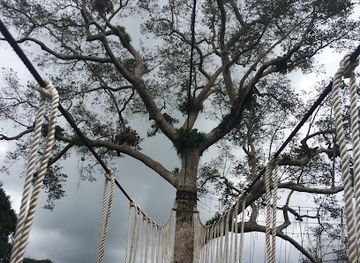
Kakum National Park
Experience the thrill of walking amidst the treetops on the famed canopy walkway and immerse yourself in the heart of Ghana's tropical rainforest at Kakum National Park, a haven for nature lovers.

Explore Ahanta on the map
Plan your trip on one map. See where the top cities, national parks and sights are, and book hotels and experiences in a few clicks.
Best hotels in Ahanta
Best restaurants in Ahanta
Dining in Ahanta is closely connected to the coast and to Ghanaian home-style cooking rather than to a formal restaurant circuit. Fresh or smoked fish commonly appears with banku, kenkey, rice, fried plantain, yam, cassava or a pepper-rich stew, while soups and sauces vary according to household and local availability. Around Busua, visitors find a mixture of small Ghanaian eateries, hotel restaurants, cafés and informal beachside food, with more choice than in smaller settlements. Dixcove and other fishing communities offer simple meals whose availability may depend on the day’s catch and trading activity. Palm products, tropical fruit and locally sourced vegetables are part of the wider food landscape. Menus in rural areas can be limited, so flexibility is useful and advance notice helps when staying in smaller guesthouses. Ghanaian drinks, including malt beverages and locally available beers, are widely encountered, while water should be purchased sealed or treated appropriately.
-
Restaurant
Anaji choice restaurant
Experience authentic Ghanaian flavors at Anaji Choice Restaurant in Takoradi – where every meal tells a story.
-
African
Chez Clarisse Mama Africa
Discover the rich flavors of West Africa at Chez Clarisse Mama Africa, a must-visit dining destination in Accra.
-
Restaurant
JUST FREDDIES
Discover Just Freddies in Adenta - where delicious pizza meets vibrant Ghanaian hospitality.
-
Restaurant
MEET AND EAT
Savor the flavors of Ghana at Meet and Eat – where culinary traditions meet modern dining in Tema.


Best bars in Ahanta
Evening life in Ahanta is concentrated around Busua and the larger coastal settlements rather than organised around a major nightclub district. Guesthouses, beach hotels, local drinking spots and small restaurants provide places for conversation, music and informal gatherings, while traditional pubs and bars are more common than dedicated late-night clubs. Busua may have a livelier seasonal atmosphere, especially when surfers and domestic visitors are present, but opening arrangements and entertainment change. In Dixcove, Butre and smaller communities, evenings are generally quieter and shaped by local social life, meals and the sound of the coast. Visitors should ask about transport before staying out late, as rural taxis and shared vehicles may be unavailable after dark. Drinking is not necessary to experience Ahanta’s evening culture; a meal, a walk in a well-lit area or locally arranged music can be a more appropriate way to spend the night.
-
Bar
Sky Bar 25 Restaurant and Bar
Experience breathtaking views and exquisite cuisine at Sky Bar 25, Accra's premier rooftop bar and restaurant, perfect for unforgettable evenings.
-
Cocktail bar
TROPICANA lounge
Experience the lively atmosphere and exquisite cocktails at TROPICANA Lounge, the premier cocktail bar in Tema, Ghana.
-
Grill
Aborigines Pub
Discover a vibrant dining experience at Aborigines Pub, where delicious grills meet local culture in the heart of Accra.
-
Bar
Oak Lounge
Discover the vibrant atmosphere of Oak Lounge in Adenta, where locals and tourists unite over delightful drinks and lively entertainment.


Best nightclubs in Ahanta
Evening life in Ahanta is concentrated around Busua and the larger coastal settlements rather than organised around a major nightclub district. Guesthouses, beach hotels, local drinking spots and small restaurants provide places for conversation, music and informal gatherings, while traditional pubs and bars are more common than dedicated late-night clubs. Busua may have a livelier seasonal atmosphere, especially when surfers and domestic visitors are present, but opening arrangements and entertainment change. In Dixcove, Butre and smaller communities, evenings are generally quieter and shaped by local social life, meals and the sound of the coast. Visitors should ask about transport before staying out late, as rural taxis and shared vehicles may be unavailable after dark. Drinking is not necessary to experience Ahanta’s evening culture; a meal, a walk in a well-lit area or locally arranged music can be a more appropriate way to spend the night.
-
Disco club
Plot 7
Experience the electrifying nightlife of Accra at Plot 7, a disco club that promises unforgettable moments filled with music, dance, and local culture.
-
Night club
Twist Night Club
Discover Accra's nightlife at Twist Night Club, a lively venue with great music and drinks, perfect for unforgettable nights out.
-
Disco club
Octapuz lounge and night club
Experience the vibrant nightlife of Accra at Octapuz Lounge and Night Club, where music, dance, and culture come alive.
-
Night club
Kavalli @ Night
Dive into the energetic nightlife of Accra at Kavalli @ Night, where music, dance, and vibrant culture unite for an unforgettable experience.


Best shops in Ahanta
Shopping in Ahanta is practical and locally rooted, with small provision shops, market stalls and informal trading serving coastal communities rather than large retail centres. Busua offers the broadest visitor-oriented selection, including beachwear, basic supplies, locally made crafts and souvenirs, while markets and roadside sellers in larger settlements are useful for fruit, snacks and household goods. Fresh fish and smoked fish are important local products, although visitors should buy them through appropriate vendors and consider storage and preparation arrangements. Ghanaian textiles, beads, carved items and woven goods can appear in local trading areas, but quality and provenance vary, so ask respectfully about how an item was made. Regional food products, including dried or smoked ingredients, may be easier to carry than fresh produce. Takoradi, outside Ahanta, provides substantially more formal retail choice and is a practical place to obtain specialist supplies before travelling west. Bargaining should be polite and limited to settings where it is clearly customary.
-
Shopping mall
Achimota Mall
Discover Achimota Mall: Accra's premier shopping destination featuring a blend of local and international brands, dining options, and entertainment.
-
Shopping mall
West Hills Mall
Discover the essence of shopping and entertainment at West Hills Mall, the largest mall in Ghana, where vibrant culture meets modern retail.
-
Shopping mall
Kumasi City Mall
Discover the vibrant shopping, dining, and entertainment options at Kumasi City Mall, a premier destination in Ghana's cultural capital.
-
Market
AGONA NKWANTA MARKET
Discover the heart of local culture at Agona Nkwanta Market, a vibrant hub of commerce and community in Ghana.


Get your free copy of our complete guide to Ahanta, delivered straight to you.
Everything on this page, from attractions and restaurants to essentials and local phrases, in one PDF you can read offline, print or share.
Already have an account? Sign in
Your Ahanta guide is ready.
We'll send it to · Not you? Sign out

Getting your guide ready…
We are putting together a fresh copy of the Ahanta guide. This can take up to a minute.
This can take a few moments. If your browser asks, choose Allow so the download can start. You'll find the guide in your Downloads folder.
Nothing happened? Download it again
Sorry, the guide is taking longer than usual. Please try again in a minute, or get it by email instead.
Ahanta essentials
Currency and Payment
Safety
Emergency Situations
Do's and Don'ts
Local Tips
From Eve
Local phrases worth knowing
You don't need to get them perfect. A few words go a long way, and locals appreciate the effort.
Basics
| English | Local | Say it |
|---|---|---|
| Hello | Ete sɛn | [Eh-teh sen] |
| Goodbye | Nante yie | [Nahn-teh yee-eh] |
| Yes | Aane | [Ah-neh] |
| No | Daabi | [Dah-bee] |
| Please/You're welcome | Mepa wo kyɛw | [Meh-pah wo cheh] |
| Thank you | Medase | [Meh-dah-seh] |
| Excuse me/Sorry | Kafra | [Kah-frah] |
| How are you? | Wo ho te sɛn? | [Woh hoh teh sen?] |
| Fine. And you? | Mekɔ yie. Na wo nso? | [Meh-koh yee-eh. Nah woh n-so?] |
| Do you speak English? | Woka Borɔfo? | [Woh-kah Boh-roh-foh?] |
| I don't understand | Mente ase | [Men-teh ah-seh] |
Eating & Drinking
| English | Local | Say it |
|---|---|---|
| I'd like to see the menu, please | Mepɛ sɛ mehwɛ menu no, please | [Meh-peh seh meh-hweh meh-noo noh, please] |
| I don't eat meat | Medi abɔdeɛ | [Meh-dee ah-boh-deh] |
| Cheers! | Nsa to! | [Nsah toh!] |
| I would like to pay, please | Mepɛ sika no, please | [Meh-peh see-kah noh, please] |
Emergencies
| English | Local | Say it |
|---|---|---|
| Help! | Boa me! | [Boh-ah meh!] |
| Go away! | Kɔ pɛ | [Koh peh] |
| Call the Police! | Frɛ ɔmanpanyin! | [Fre oh-mahn-pah-nyin!] |
| Call a doctor! | Frɛ dɔkita! | [Fre doh-kee-tah!] |
| I'm lost | Meda hɔ | [Meh-dah hoh] |
| I'm ill | Medi ɔyare | [Meh-dee oh-yah-reh] |
Shopping
| English | Local | Say it |
|---|---|---|
| I'd like to buy... | Mepɛ sɛ mɛtɔ... | [Meh-peh seh meh-taw...] |
| I'm just looking | Merehwɛ nkuto | [Meh-reh-hweh nkoo-toh] |
| How much is it? | Ɛyɛ dɛn? | [Eh-yeh dehn?] |
| That's too expensive | Ɛyɛ sika kɛse | [Eh-yeh see-kah keh-seh] |
| Can you lower the price? | Wobɛyɛ sika no ase? | [Woh-beh-yeh see-kah noh ah-seh?] |
Time & Numbers
| English | Local | Say it |
|---|---|---|
| What time is it? | Dɛn na ɛyɛ? | [Dehn nah eh-yeh?] |
| It's one o'clock | Ɛyɛ ɔkɔtɔ | [Eh-yeh oh-koh-toh] |
| Half past (10) | Nkyɛmu mu (10) | [Nkyay-moo moo (10)] |
| Morning | Anɔpa | [Ah-noh-pah] |
| Afternoon | Awia | [Ah-wee-ah] |
| Evening | Anɔpa anadwo | [Ah-noh-pah ah-nah-joh] |
| Yesterday | Ɛnnɛ | [Eh-neh] |
| Today | Ɛnnɛ | [Eh-neh] |
| Tomorrow | Mmerɛ da | [Mm-eh-reh dah] |
| 1 | Baako | [Bah-koh] |
| 2 | Mmienu | [Mmee-eh-noo] |
| 3 | Mmienu | [Mmee-eh-noo] |
| 4 | Anan | [Ah-nahn] |
| 5 | Num | [Noom] |
| 6 | Nsia | [Nsee-ah] |
| 7 | Nson | [Nsohn] |
| 8 | Nkyɛn | [Nkyen] |
| 9 | Nkyɛn | [Nkyen] |
| 10 | Dɔnhwere | [Dohn-hweh-reh] |
Transport & Directions
| English | Local | Say it |
|---|---|---|
| Where's a/the...? | Ɛhe na ...? | [Eh-heh nah ...?] |
| What's the address? | Dɛn na ɔman no? | [Dehn nah oh-mahn noh?] |
| Can you show me (on the map)? | Wobɛda me ho adi (ɔmap) | [Woh-beh-dah meh hoh ah-dee (oh-map)] |
| When's the next (bus)? | Bɛn na ɔkwan no bɛba? | [Behn nah oh-kwahn noh beh-bah?] |
| A ticket (to ....) | Tiket (kɔ ...) | [Tee-ket (koh ...)] |
History of Ahanta
Early Ahanta States and Coastal Trade
The Ahanta are an Akan-speaking people whose traditional homeland lies along Ghana’s western coastal belt and its forested hinterland. Before European forts were built, Ahanta political communities controlled land, resources and trading relationships linking the coast with the interior. Gold, foodstuffs and other goods moved through regional networks, while the coast connected local rulers to wider Atlantic commerce. European accounts often described these relationships through their own commercial priorities, but the emergence of forts did not replace African authority. Ahanta states remained important political actors, negotiating, trading and sometimes resisting foreign powers.
European Forts on the Ahanta Coast
From the seventeenth century onward, European powers established fortified trading stations along the western coast. Fort Batenstein at Butre was built by the Dutch in the seventeenth century, while the British later developed Fort Metal Cross at Dixcove. These structures supported commerce and military influence, but depended on African political conditions, local suppliers and coastal intermediaries. Their surviving walls, elevated positions and harbour views reveal the strategic geography of the coast, while also recalling the coercive Atlantic trading system in which European forts participated.
The Ahanta War and Badu Bonsu II
Nineteenth-century Ahanta history was marked by conflict with expanding European authority. Ahanta ruler Badu Bonsu II resisted Dutch interference and was captured and executed in 1838 after a period of confrontation. The episode became a powerful symbol of Ahanta political resistance and the unequal relationship between European colonial power and African states. It also illustrates how disputes over trade, jurisdiction and sovereignty were becoming part of a broader struggle for control of the Gold Coast. The story remains important in local historical memory and in discussions of colonial-era justice and representation.
From Dutch Influence to British Colonial Rule
The Dutch presence on the Gold Coast ended in 1872, when their possessions were transferred to Britain, strengthening British control over the western coastal forts and surrounding trade. Ahanta territory was subsequently drawn into the administrative structures of the British Gold Coast. Colonial rule altered taxation, political authority, transport and commercial systems, while traditional institutions continued to shape community life. Fort Metal Cross and other coastal remains therefore belong to more than one historical phase: African statecraft, European rivalry and the consolidation of British colonial power.
Independence and the Modern Western Coast
Ghana’s independence in 1957 brought the former Gold Coast into a new national political framework, while Ahanta communities retained their cultural identity within modern administrative districts of the Western Region. The coastal economy continued to combine fishing, farming, trading and small-scale commerce. In recent decades, beaches around Busua and the historic forts at Dixcove and Butre have attracted increasing visitor interest, alongside growing attention to surfing and nature-based travel. Tourism remains only one part of the regional economy, and the working life of coastal communities continues to define Ahanta’s character.
Ahanta in Photos
Browse through our photo collection highlighting the charm and character of the destination.
Neighbouring regions of Ahanta
The closest regions to Ahanta, if you have time for more than one.
-

-
-

-
-


Swipe for more regions
Explore more

Explore more of Ghana
Discover Ghana: A vibrant blend of rich history, stunning landscapes, and warm hospitality in the heart of West Africa.
Explore Ghana