

Free Ga-Adangbe Travel Guide & Mobile App
Explore Ga-Adangbe with free travel guides. Discover regional history, expert tips, proposed trips, and audio guides on web or mobile app.


Explore Ga-Adangbe in Ghana through Accra’s coastal heritage, Ga and Adangme traditions, lagoons, beaches, wildlife and the Volta estuary.
Read more about Ga-Adangbe
When is the best time to visit Ga-Adangbe?
Best: November–January · 31–32°C| Month | High (°C) | Rainfall (mm) |
|---|---|---|
| January (best) | 32 | 18 |
| February | 33 | 20 |
| March | 34 | 50 |
| April | 34 | 70 |
| May | 33 | 120 |
| June | 31 | 140 |
| July | 30 | 150 |
| August | 30 | 130 |
| September | 30 | 110 |
| October | 31 | 50 |
| November (best) | 32 | 20 |
| December (best) | 31 | 15 |
Getting to and around Ga-Adangbe
How to get there
Transportation
Top city travel guides in Ga-Adangbe
The cities of Ga-Adangbe, and the easiest places to base yourself.
-

-

-


Swipe for more cities
Destinations in Ga-Adangbe
Resorts, valleys and scenic spots worth a trip of their own.
-

-

-

-

-

-


Swipe for more destinations
Best attractions in Ga-Adangbe
Ga-Adangbe’s attractions range from historic Accra to wetlands and coastal communities east of the capital. In Ga Mashie, walking tours introduce James Town, Ussher Town, fishing activity, colonial buildings and the layered history of Accra’s oldest urban districts. Osu’s Christiansborg area and the forts associated with the coast provide important, though often sombre, insight into European commerce, colonial power and the history of enslavement. Accra’s beaches and contemporary cultural spaces add a more modern dimension, while markets and neighbourhood food stalls offer encounters with everyday city life. East of Accra, Prampram and Ningo combine coastal scenery with fishing and rural settlements, and the Shai Hills landscape provides guided wildlife and outdoor experiences in savannah country. Around Ada, boat excursions explore the Volta estuary, islands, lagoons and mangrove habitats, while Songor Lagoon is notable for birdlife, salt production and the relationship between conservation and local livelihoods. The region rewards a varied itinerary: its strongest experiences are not concentrated in a single resort or monument but spread across urban heritage, living culture, wildlife, waterways and the working coast.
-
Nature preserve
Shai-Hills Resource Reserve
Discover the breathtaking landscapes and diverse wildlife at Shai-Hills Resource Reserve, an unmissable gem for nature lovers in Ghana.
-
Shopping mall
Oxford Street Mall Osu
Explore the bustling Oxford Street Mall in Osu, Accra, where shopping, dining, and cultural experiences come together in a vibrant atmosphere.
-
Tourist attraction
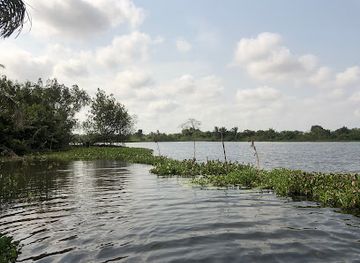
Songor Lagoon Protected Area
Explore the natural beauty of Songor Lagoon Protected Area, a serene oasis teeming with wildlife and stunning landscapes in Ayonukope, Ghana.
-
Food and drink
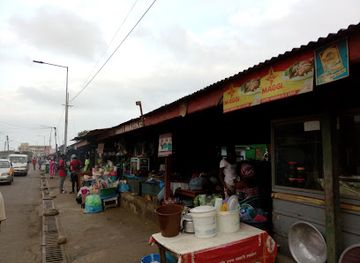
Osu Night Market
Discover the vibrant flavors and cultural richness of Osu Night Market, a must-visit culinary destination in Accra, Ghana.

Best landmarks in Ga-Adangbe
The most recognisable historic landmarks of Ga-Adangbe stand along Accra’s old coastal and civic core. Ussher Fort and Fort James in the Jamestown and Ussher Town area are reminders of the fortified trading system that shaped the coast, while Christiansborg, commonly known as Osu Castle, reflects Danish, British and later Ghanaian political history. Their significance includes the difficult history of Atlantic commerce and enslavement, not simply their architecture. Jamestown Lighthouse is a prominent visual marker of Accra’s fishing quarter, although access arrangements may vary. Independence Square, with the Black Star monument and ceremonial spaces, represents Ghana’s emergence as an independent state and Accra’s continuing national importance. Further east, the broad landscape of Songor Lagoon is a natural and cultural landmark, shaped by salt production, bird habitats and community use rather than by a single monumental structure. The lower Volta and Atlantic meeting near Ada Foah provides another defining geographical landmark, where estuary channels, sandbanks and coastal waters demonstrate the region’s dependence on rivers, lagoons and the sea.
-
 Resort hotel
Aqua Safari Resort
Discover the enchanting Aqua Safari Resort in Big Ada, Ghana, where luxury meets adventure on the stunning Atlantic coast.
-
Architecture firm
IDARKCONSULT LTD
Explore the innovative architectural designs at IDARKCONSULT LTD in Aburi, a stunning blend of modernity and nature in Ghana.
-
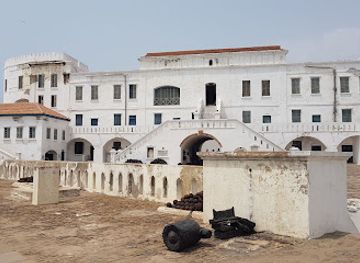
Historical landmark
Cape Coast Castle
Discover the profound history of Cape Coast Castle, a UNESCO World Heritage Site that reveals Ghana's significant role in the transatlantic slave trade.
-
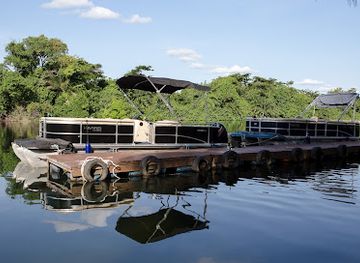
Resort hotel
The Royal Senchi Hotel and Resort
Experience unparalleled luxury and serenity on the Volta River at The Royal Senchi Hotel and Resort, Ghana's premier destination for relaxation, adventure, and unforgettable memories.
Explore Ga-Adangbe on the map
Plan your trip on one map. See where the top cities, national parks and sights are, and book hotels and experiences in a few clicks.
Best hotels in Ga-Adangbe
Best restaurants in Ga-Adangbe
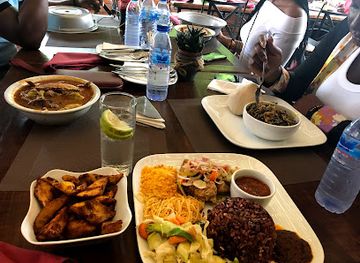
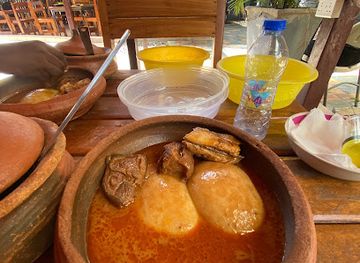
Food in Ga-Adangbe is closely connected with the coast, maize cultivation, markets and Ghanaian household cooking. Kenkey, a fermented maize staple, is commonly served with fried or grilled fish, hot pepper sauce and fresh vegetables, while banku, soups, stews and rice dishes are also widely available. Around Accra and the coastal settlements, seafood is a natural focus, although menus vary from simple roadside grills to contemporary restaurants serving Ghanaian and international food. Markets and chop bars provide useful introductions to everyday flavours, while cafés and restaurants in Accra offer more polished settings. In Ada and other coastal communities, ask locally about seasonal fish and lagoon-area produce rather than assuming that every establishment has the same menu. Bottled or treated water is the safer choice for visitors, and food is best selected from busy vendors where ingredients are cooked thoroughly and turnover is high. Local drinks and fruit are widely available, but commercial claims about regional origins should be treated carefully because many foods are shared across Ghana.
-
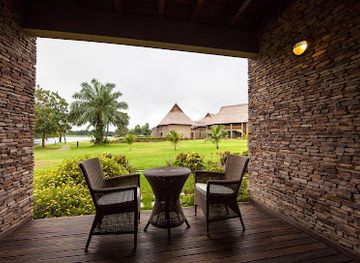
Resort hotel
The Royal Senchi Hotel and Resort
Discover luxury and relaxation at The Royal Senchi Hotel and Resort on the banks of Ghana's picturesque Volta River.
-
West African
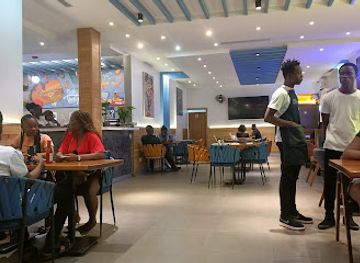
The Buka Restaurant, Osu, Accra
Experience authentic West African cuisine at The Buka Restaurant in Accra's lively Osu district - where every meal tells a story.
-
Restaurant
Dimaensa Restaurant
Discover Dimaensa Restaurant in Accra – where local flavors meet modern cuisine in a vibrant dining setting.
-
Restaurant
B2B Ghana | Breakfast To Breakfast
Experience authentic Ghanaian flavors at B2B Ghana, where every meal tells a story of culture and tradition.
Best bars in Ga-Adangbe
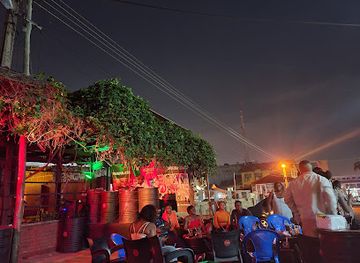
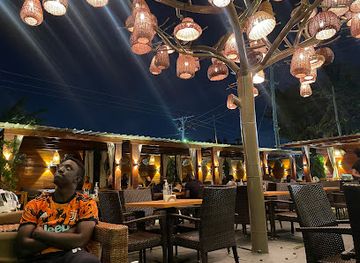
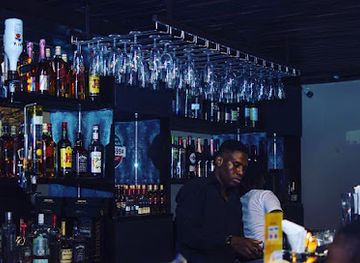
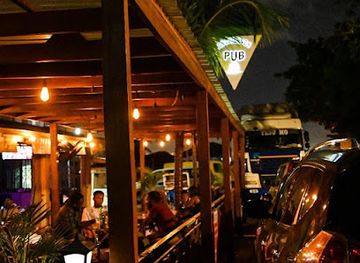
Nightlife is most varied in Accra, where Osu, Labone, East Legon and other metropolitan districts offer restaurants, lounges, live music, cocktail venues and clubs, although the character of these areas changes with traffic, events and business openings. Ga Mashie and the coastal districts have a stronger connection to bars, music, fishing communities and informal evening social life, but visitors should be guided by local advice after dark. In Prampram, Ningo and Ada, evenings generally centre on guesthouse restaurants, beachside venues, local drinking spots and occasional music rather than a large, permanent club circuit. Ghanaian highlife, hiplife and newer popular styles may be heard across the region, alongside international music. Visitors should arrange transport before going out, especially outside Accra, and should not assume that a beach venue provides safe swimming or secure late-night access. Breweries, fruit drinks and non-alcoholic options are widely available for those who prefer not to drink.
-
Grill
The Republic Bar & Grill
Discover the heart of Accra's nightlife at The Republic Bar & Grill, where delicious grill dishes meet vibrant local culture.
-
Lounge
Exhale Lounge
Experience the vibrant nightlife of Accra at Exhale Lounge, where chic ambiance meets expertly crafted cocktails and live entertainment.
-
Bar
Ramies Pub & Lounge
Experience the vibrant nightlife at Ramies Pub & Lounge in Accra, where delicious drinks and local flavors come together in a lively atmosphere.
-
Grill
Aborigines Pub
Experience the vibrant flavors of Accra at Aborigines Pub, a top destination for grill lovers and cultural enthusiasts alike.
Best nightclubs in Ga-Adangbe
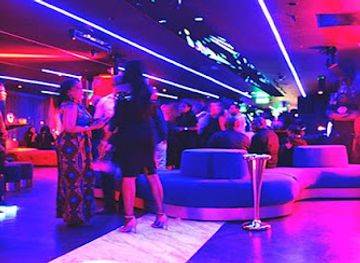
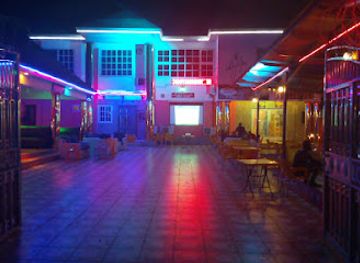
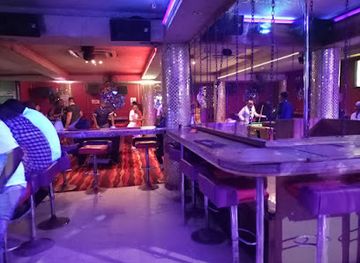
Nightlife is most varied in Accra, where Osu, Labone, East Legon and other metropolitan districts offer restaurants, lounges, live music, cocktail venues and clubs, although the character of these areas changes with traffic, events and business openings. Ga Mashie and the coastal districts have a stronger connection to bars, music, fishing communities and informal evening social life, but visitors should be guided by local advice after dark. In Prampram, Ningo and Ada, evenings generally centre on guesthouse restaurants, beachside venues, local drinking spots and occasional music rather than a large, permanent club circuit. Ghanaian highlife, hiplife and newer popular styles may be heard across the region, alongside international music. Visitors should arrange transport before going out, especially outside Accra, and should not assume that a beach venue provides safe swimming or secure late-night access. Breweries, fruit drinks and non-alcoholic options are widely available for those who prefer not to drink.
-
Night club
Twist Night Club
Twist Night Club: Where Accra's Nightlife Comes Alive with Music, Dancing, and Unforgettable Moments.
-
Disco club
Octapuz lounge and night club
Dive into the vibrant nightlife at Octapuz Lounge and Night Club, Accra's premier disco destination for unforgettable nights out.
-
Night club
Kavalli @ Night
Experience the vibrant nightlife of Accra at Kavalli @ Night, where music, dancing, and delicious cocktails come together for an unforgettable evening.
-
Night club
Hotgossip Night Club
Discover Accra's vibrant nightlife at Hotgossip Night Club, where music, dance, and fun create unforgettable memories in the heart of the city.

Best shops in Ga-Adangbe
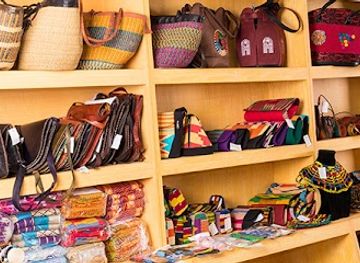
Shopping in Ga-Adangbe ranges from Accra’s extensive urban retail scene to market trading and locally produced goods in coastal and inland communities. Osu, central Accra and major commercial districts offer clothing, fabrics, jewellery, books, art, food products and everyday goods, while open markets provide a more direct view of Ghanaian commerce. Ga Mashie and the wider city are useful places to look for prepared foods, textiles and locally made crafts, though product quality and prices vary. Around Prampram, Ningo and Ada, shopping is more closely tied to fresh produce, fish, salt, woven items and small local markets than to formal retail centres. Art galleries and craft shops in Accra provide better opportunities for documented purchases and packaging, especially for visitors buying artworks or carved objects. Bargaining is common in many informal markets but is not expected everywhere; establish the price politely and carry cash in smaller denominations. Check customs rules before buying wildlife products, antiquities or materials made from protected species, and choose locally made goods with clear provenance where possible.
-
Resort hotel
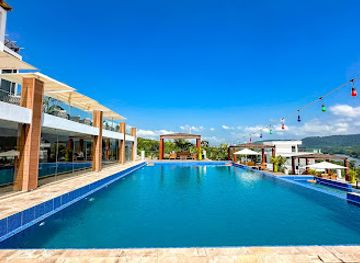
BridgeView Resort
Discover relaxation and natural beauty at BridgeView Resort near Akosombo Dam, a perfect escape for travelers seeking tranquility and adventure.
-
Gift shop
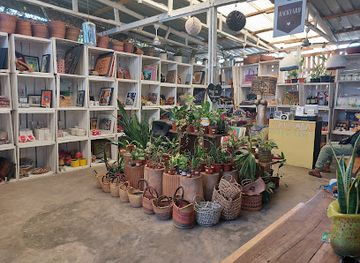
The Shop Accra
Discover the essence of Ghanaian culture through unique gifts and local crafts at The Shop Accra, a must-visit destination for travelers.
-
Clothing store
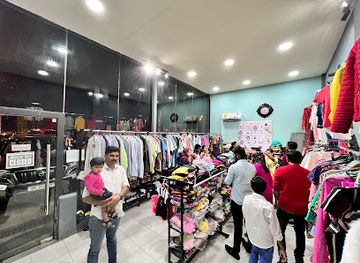
FAA Shoppings (Indian & Western Dress Store/Indian Boutique)
Explore FAA Shoppings in Accra for a unique blend of Indian and Western fashion, offering exquisite clothing and accessories for every taste.
-
Clothing store
AHOOM-African Heritage Outlet & Online Mall
Experience the vibrant culture of Africa at AHOOM - your destination for authentic clothing and handcrafted treasures in Accra.
Get your free copy of our complete guide to Ga-Adangbe, delivered straight to you.
Everything on this page, from attractions and restaurants to essentials and local phrases, in one PDF you can read offline, print or share.
Already have an account? Sign in
Your Ga-Adangbe guide is ready.
We'll send it to · Not you? Sign out

Getting your guide ready…
We are putting together a fresh copy of the Ga-Adangbe guide. This can take up to a minute.
This can take a few moments. If your browser asks, choose Allow so the download can start. You'll find the guide in your Downloads folder.
Nothing happened? Download it again
Sorry, the guide is taking longer than usual. Please try again in a minute, or get it by email instead.
Ga-Adangbe essentials
Currency and Payment
Safety
Emergency Situations
Do's and Don'ts
Local Tips
From Eve
Local phrases worth knowing
You don't need to get them perfect. A few words go a long way, and locals appreciate the effort.
Basics
| English | Local | Say it |
|---|---|---|
| Hello | Oyiwa | [Oh-yee-wah] |
| Goodbye | Nante yie | [Nahn-teh yee-eh] |
| Yes | Aane | [Ah-neh] |
| No | Daa | [Dah] |
| Please/You're welcome | Mepa wo kyɛw | [Meh-pah woh cheh] |
| Thank you | Medasi | [Meh-dah-see] |
| Excuse me/Sorry | Mepa wo kyɛw | [Meh-pah woh cheh] |
| How are you? | Wo ho te sɛn? | [Woh hoh teh sen?] |
| Fine. And you? | Me ho yɛ, na wo nso? | [Meh hoh yeh, nah woh n-soh?] |
| Do you speak English? | Wopɛ sɛ woka Borɔfo? | [Woh-peh seh woh-kah Bor-oh-foh?] |
| I don't understand | Mente ase | [Men-teh ah-seh] |
Eating & Drinking
| English | Local | Say it |
|---|---|---|
| I'd like to see the menu, please | Mepɛ sɛ mihu abɔdin no, mepa wo kyɛw | [Meh-peh seh mee-hoo ah-boh-deen noh, meh-pah woh cheh] |
| I don't eat meat | Mennye abɔdeɛ | [Men-nyeh ah-boh-deh] |
| Cheers! | Nokware! | [Noh-kwa-reh] |
| I would like to pay, please | Mepɛ sɛ mɛtɔ, mepa wo kyɛw | [Meh-peh seh meh-taw, meh-pah woh cheh] |
Emergencies
| English | Local | Say it |
|---|---|---|
| Help! | Boa me! | [Boh-ah meh!] |
| Go away! | Kɔ ntɛm! | [Koh n-tehm!] |
| Call the Police! | Frɛ ɔmanpanyin! | [Freh oh-mahn-pah-nyin!] |
| Call a doctor! | Frɛ dɔkita! | [Freh doh-kee-tah!] |
| I'm lost | Meda hɔ | [Meh-dah hoh] |
| I'm ill | Meda yare | [Meh-dah yah-reh] |
Shopping
| English | Local | Say it |
|---|---|---|
| I'd like to buy... | Mepɛ sɛ mɛtɔ... | [Meh-peh seh meh-taw...] |
| I'm just looking | Merehwɛ nkutoo | [Meh-reh-hweh nkoo-toh] |
| How much is it? | Ɛyɛ sɛn? | [Eh-yeh sen?] |
| That's too expensive | Ɛyɛ dɔɔso | [Eh-yeh doh-oh-soh] |
| Can you lower the price? | Wobɛtumi asɛe sika no? | [Woh-beh-too-mee ah-seh eh see-kah noh?] |
Time & Numbers
| English | Local | Say it |
|---|---|---|
| What time is it? | Dɛn na ɛyɛ? | [Den nah eh-yeh?] |
| It's one o'clock | Ɛyɛ dɔnhwere baako | [Eh-yeh dohn-hweh-reh bah-koh] |
| Half past (10) | Dɔnhwere mmienu | [Dohn-hweh-reh mmee-eh-noo] |
| Morning | Anɔpa | [Ah-noh-pah] |
| Afternoon | Awia | [Ah-wee-ah] |
| Evening | Anadwo | [Ah-nah-joh] |
| Yesterday | Ɔkyena | [Oh-cheh-nah] |
| Today | Ɛnnɛ | [Eh-neh] |
| Tomorrow | Ɔkyena | [Oh-cheh-nah] |
| 1 | Baako | [Bah-koh] |
| 2 | Mmienu | [Mmee-eh-noo] |
| 3 | Mmienu | [Mmee-eh-noo] |
| 4 | Nan | [Nahn] |
| 5 | Num | [Noom] |
| 6 | Nkyɛn | [Nkyen] |
| 7 | Nson | [Nsohn] |
| 8 | Nwɔtwe | [Nwoh-tweh] |
| 9 | Nkyɛn | [Nkyen] |
| 10 | Dɔkɛ | [Doh-keh] |
Transport & Directions
| English | Local | Say it |
|---|---|---|
| Where's a/the...? | Ɔhe na ... wɔ? | [Oh-heh nah ... woh?] |
| What's the address? | Dɛn na ɛyɛ adwuma no? | [Den nah eh-yeh ah-dwoo-mah noh?] |
| Can you show me (on the map)? | Wobɛtumi akyerɛ me (wɔ mappa no)? | [Woh-beh-too-mee ah-chyeh-reh meh (woh mah-pah noh)?] |
| When's the next (bus)? | Nnɛ na ɛbɛba (bɔs) no? | [Nneh nah eh-beh-bah (bohs) noh?] |
| A ticket (to ....) | Kɔtɔ (kɔ ....) | [Koh-taw (koh ....)] |
History of Ga-Adangbe
Early Ga and Adangme Settlement
The coastal plains, lagoons and river valleys of south-eastern Ghana have supported human settlement, farming, fishing and salt production for centuries. Ga and Adangme communities developed through movements and regrouping across the Accra plains, the lower Volta area and adjoining inland districts. Oral traditions preserve accounts of migration, settlement founders and relationships between stools, clans and traditional authorities, while archaeological evidence shows the longer history of habitation along the coast. These traditions are not a single simple origin story: different communities maintain their own accounts and identities, which remain important to public life and landholding.
Coastal Trade before Colonial Rule
Before European forts dominated the coast, local communities participated in regional trade linking fishing settlements, inland producers and commercial centres. Salt from coastal lagoons, fish, food crops and other goods moved between the shore and the interior, while the lower Volta provided an important transport corridor. Ga coastal settlements became increasingly involved in Atlantic commerce from the fifteenth century onwards, and contact with European merchants brought new materials, religions, political pressures and forms of warfare. Local rulers and merchant families were active participants in these changing networks rather than passive bystanders.
European Forts and the Atlantic Coast
European powers built and occupied fortified trading posts along the Accra coast from the seventeenth century. Fort James and Ussher Fort, associated with James Town and Ussher Town, and Christiansborg in Osu were part of a contested coastal system involving British, Dutch and Danish interests. The forts served commerce, administration and military purposes, and they also form part of the history of enslavement and the Atlantic slave trade. Their presence altered local political and economic relationships, while the surrounding Ga settlements continued to develop as fishing, trading and urban communities.
Accra and the Gold Coast Capital
Accra became increasingly important under British rule and was established as the capital of the Gold Coast in the nineteenth century. Its port-related commerce, administration, schools, churches and expanding migrant population transformed the coastal settlement into a major West African city. Ga communities experienced land pressure and changing authority as colonial institutions expanded, while roads and later rail connections strengthened links with inland markets. The urban districts around Jamestown, Ussher Town, Osu and adjoining areas retain buildings and street patterns that reflect this period of rapid change.
National Independence and Modern Accra
Ghana’s independence in 1957, led by Kwame Nkrumah’s government, gave Accra a central role in the political history of modern Africa. Independence Square and the wider civic landscape express the importance of the capital in the new nation, while the city continued to attract people from across Ghana and beyond. Expansion eastwards incorporated formerly separate settlements into a growing metropolitan area, creating new pressures on roads, beaches, wetlands and customary land. The Ga-Adangbe homeland today is therefore both a historic cultural region and part of one of Ghana’s fastest-changing urban and peri-urban zones.
Homowo and Continuing Cultural Renewal
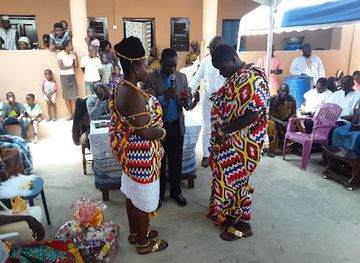
Homowo remains one of the best-known expressions of Ga cultural identity. The festival recalls the overcoming of famine and includes a sequence of traditional observances, communal meals, music and public processions whose form differs between Ga traditional areas. Adangme communities maintain their own festivals, ceremonies and oral histories, and contemporary cultural life also includes popular music, religious gatherings, craft, food enterprises and community associations. These traditions have adapted to urbanisation and migration rather than surviving as museum pieces, making festival seasons important occasions for understanding local authority, memory and belonging.
Ga-Adangbe in Photos
Browse through our photo collection highlighting the charm and character of the destination.
Neighbouring regions of Ga-Adangbe
The closest regions to Ga-Adangbe, if you have time for more than one.
-

-

-

-

-


Swipe for more regions
Explore more

Explore more of Ghana
Discover Ghana: A vibrant blend of rich history, stunning landscapes, and warm hospitality in the heart of West Africa.
Explore Ghana