

Free Western North Region Travel Guide & Mobile App
Explore Western North Region with free travel guides. Discover regional history, expert tips, proposed trips, and audio guides on web or mobile app.


Explore Western North Region for Ghanaian forest landscapes, cocoa country, Sefwi heritage, wildlife and market-town culture.
Read more about Western North Region
When is the best time to visit Western North Region?
Best: December–February · 30–31°C| Month | High (°C) | Rainfall (mm) |
|---|---|---|
| January (best) | 30 | 20 |
| February (best) | 31 | 30 |
| March | 32 | 40 |
| April | 32 | 50 |
| May | 32 | 60 |
| June | 31 | 70 |
| July | 30 | 80 |
| August | 30 | 90 |
| September | 30 | 80 |
| October | 31 | 70 |
| November | 31 | 60 |
| December (best) | 30 | 50 |
Getting to and around Western North Region
How to get there
Transportation
Best attractions in Western North Region
Western North's attractions are concentrated in forest landscapes, rural culture and the everyday economies of cocoa and gold rather than in a large collection of formal visitor sites. Bia National Park and the adjoining Bia Resource Reserve are the region's principal nature destinations, protecting Upper Guinea forest habitat and offering possibilities for guided walks, birdwatching and wildlife observation when conditions and official access permit. Krokosua Hills and other forest reserves add ecological interest, although facilities, roads and permissions vary. Sefwi Wiawso provides the clearest introduction to the region's traditional and administrative identity, while Bibiani and other market towns reveal the commercial links created by cocoa farming and mining. Visitors interested in living culture can arrange respectful introductions to local chiefs, craft workers or farming communities, particularly when public festivals or durbars are taking place. Rural roads offer changing views of farms, shade trees and forest margins, but independent exploration away from settlements is not advisable. The region is best approached as a destination for guided nature visits, cultural learning and slower overland travel rather than a conventional sightseeing circuit.
-
Tourist attraction
Nzulezo-Stilt Village Tour
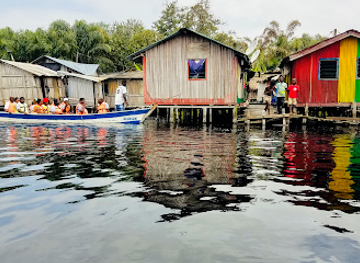
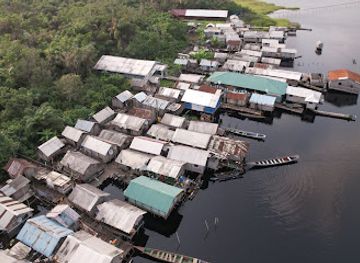
Discover the unique Nzulezo Stilt Village in Ghana, a UNESCO site where culture meets nature on tranquil Amansuri Lake.
-
Tourist attraction
Nzulezo - The Village on Stilts
Discover the enchanting stilt village of Nzulezo in Ghana, where culture meets nature in a breathtaking lakeside setting.
-
Tourist attraction
Ankasa Game Reserve & Nini-Suhien National Park
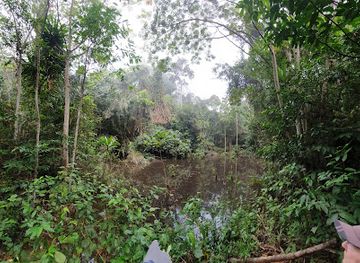
Explore the breathtaking Ankasa Game Reserve & Nini-Suhien National Park, a paradise for wildlife enthusiasts and nature lovers in Ghana.
-
Market
Dwenase Market
Discover the charm of Dwenase Market in Wiawso, where local culture, fresh produce, and handmade crafts come together in a vibrant atmosphere.

Best landmarks in Western North Region
Bia National Park and the Bia Resource Reserve are Western North's most important natural landmarks, representing protected remnants of the region's once more extensive forest and the landscape associated with the Bia River. Their significance is ecological rather than architectural, and access should be arranged through authorised channels. Sefwi Wiawso's traditional and administrative importance is expressed through its public institutions, town setting and links with the Sefwi paramountcy, although palace access is governed by local protocol rather than ordinary sightseeing. Bibiani is a landmark of a different kind: its identity has been shaped by the long association between western Ghana, gold extraction and commercial town development. Across the region, cocoa farms, forest edges and broad red-earth roads form a recognisable cultural landscape, showing how agriculture and conservation coexist uneasily. Traditional festival grounds and palace precincts may also become important visual and symbolic landmarks during public ceremonies, but visitors should treat them as living cultural spaces and seek permission before entering or photographing them.
-
Historical landmark
Cape Coast Castle
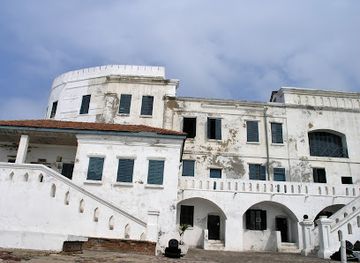
Experience the poignant history of Cape Coast Castle, a must-visit landmark reflecting Ghana's past and resilience.
-
Museum
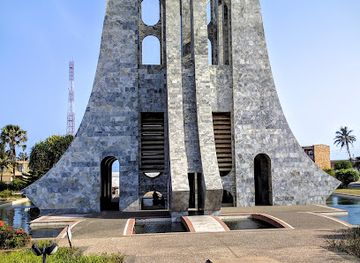
Kwame Nkrumah Memorial Park & Mausoleum
Explore the historical and cultural significance of Kwame Nkrumah Memorial Park & Mausoleum in Accra, a tribute to Ghana's independence and heritage.
-
Castle
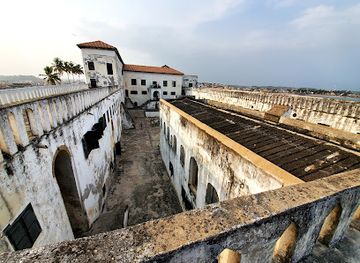
Elmina Castle
Explore Elmina Castle, a UNESCO World Heritage Site in Ghana, and delve into the poignant history of the transatlantic slave trade amidst stunning coastal views.
-
National park
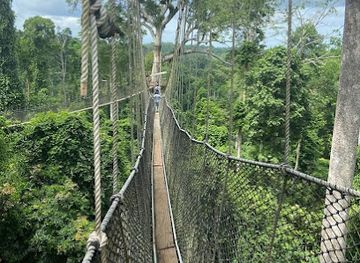
Kakum National Park
Explore the breathtaking Kakum National Park in Ghana, featuring lush rainforests, diverse wildlife, and an exhilarating canopy walkway experience.
Explore Western North Region on the map
Plan your trip on one map. See where the top cities, national parks and sights are, and book hotels and experiences in a few clicks.
Best hotels in Western North Region
Best restaurants in Western North Region
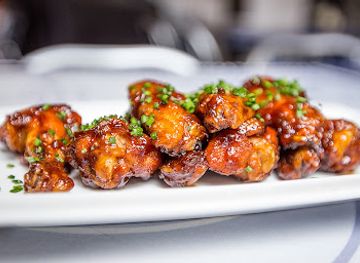
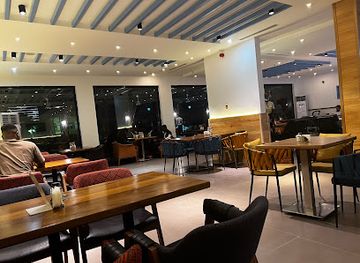
Dining in Western North is generally informal and local, with chop bars, roadside kitchens, market stalls and modest restaurants supplying filling Ghanaian meals. Expect dishes such as fufu with soup, banku, rice dishes, yam, plantain, beans and grilled or stewed chicken and fish, with recipes and accompaniments varying between cooks and communities. Plantain, cassava and other crops grown in the forest zone are common on local tables, while cocoa is an important agricultural product even though visitors are more likely to encounter it as beans or a drink than as elaborate confectionery. Sefwi Wiawso and Bibiani offer the broadest choice of eateries, while smaller towns and rural areas may have limited evening service. Markets are useful for fruit, snacks and simple cooked food, but visitors should choose busy stalls with good food turnover and drink treated water. Hotels and guesthouses may provide more familiar continental options, though advance notice is sensible outside the larger centres.
-
Turkish
Bosphorus Restaurant & Cafe
Experience authentic Turkish cuisine at Bosphorus Restaurant & Cafe in Accra - where every dish tells a story.
-
West African
The Buka Restaurant, Osu, Accra
Discover authentic West African cuisine at The Buka Restaurant in Osu, Accra - where every meal tells a story.
-
Restaurant
Frankie's Foods and Rooms
Experience the essence of Ghanaian cuisine at Frankie's Foods and Rooms in Accra, where every meal tells a story.
-
Restaurant
B2B Ghana | Breakfast To Breakfast
Experience the best breakfast in Accra at B2B Ghana - where local flavors meet international cuisine in a vibrant setting.

Best bars in Western North Region
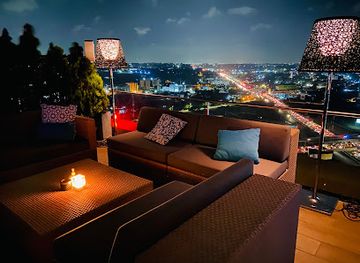
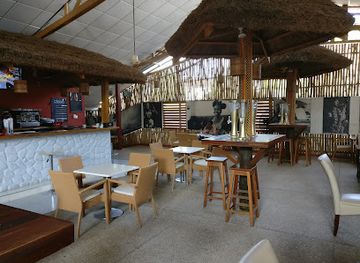
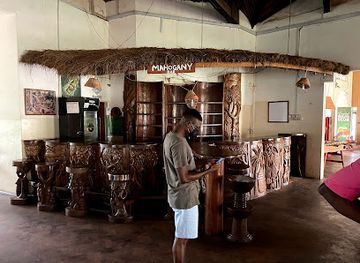
Evening life in Western North is centred on neighbourhood drinking spots, small bars, chop bars, hotel lounges and social gatherings rather than a major nightclub circuit. Sefwi Wiawso and Bibiani have the greatest concentration of places to meet friends, listen to recorded music and watch football, while Enchi and other market towns offer a smaller, more local scene. Ghanaian beer, soft drinks and spirits are commonly available, and some venues serve simple food alongside drinks. In rural districts, evenings become quiet early and entertainment may depend on community events, church activities or occasional live music rather than advertised programmes. There is little reason to expect a dense late-night scene near forest reserves, so arrange transport back to accommodation in advance and avoid walking on unlit roads after dark. Hospitality is often social, but alcohol is not necessary to participate in local evening life.
-
Grill
The Republic Bar & Grill
Experience the vibrant flavors of Accra at The Republic Bar & Grill, where local cuisine meets lively ambiance in a unique setting.
-
Bar
Sky Bar 25 Restaurant and Bar
Discover unmatched views and exquisite flavors at Sky Bar 25 in Accra—a top-tier destination for food and nightlife lovers.
-
Bar
The Gold Coast Restaurant & Cocktail Bar
Experience the vibrant flavors of Ghana at The Gold Coast Restaurant & Cocktail Bar, where seafood meets fine dining in an inviting atmosphere.
-
Bar
Samartex Management Club House
Discover the vibrant atmosphere of Samartex Management Club House, a local bar in Samreboi serving refreshing drinks and live music.

Best nightclubs in Western North Region
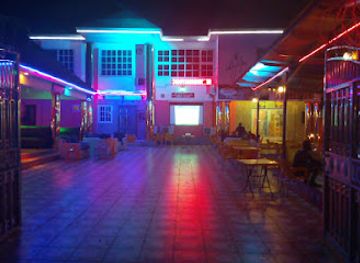
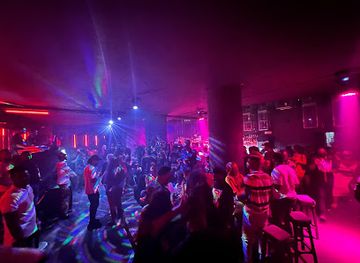
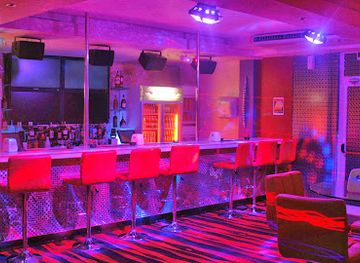
Evening life in Western North is centred on neighbourhood drinking spots, small bars, chop bars, hotel lounges and social gatherings rather than a major nightclub circuit. Sefwi Wiawso and Bibiani have the greatest concentration of places to meet friends, listen to recorded music and watch football, while Enchi and other market towns offer a smaller, more local scene. Ghanaian beer, soft drinks and spirits are commonly available, and some venues serve simple food alongside drinks. In rural districts, evenings become quiet early and entertainment may depend on community events, church activities or occasional live music rather than advertised programmes. There is little reason to expect a dense late-night scene near forest reserves, so arrange transport back to accommodation in advance and avoid walking on unlit roads after dark. Hospitality is often social, but alcohol is not necessary to participate in local evening life.
-
Night club
Twist Night Club
Dive into the vibrant nightlife of Accra at Twist Night Club, where electrifying music and a lively atmosphere create an unforgettable experience.
-
Disco club
Octapuz lounge and night club
Discover the vibrant nightlife of Accra at Octapuz Lounge and Night Club, your destination for music, dancing, and unforgettable fun.
-
Night club
KRUNA The Club
Immerse yourself in Accra's lively nightlife at KRUNA The Club, where electrifying music and vibrant energy create unforgettable memories.
-
Night club
Hotgossip Night Club
Discover the pulse of Accra's nightlife at Hotgossip Night Club, where music, dance, and local culture come alive in an unforgettable setting.

Best shops in Western North Region
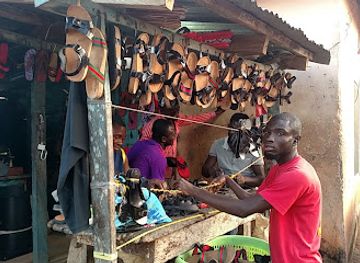
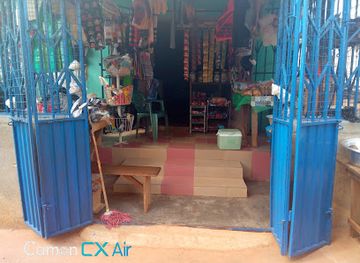
Shopping in Western North is primarily practical and local, with market towns supplying food, clothing, household goods, sandals, mobile-phone services and transport needs. Sefwi Wiawso and Bibiani offer the widest choice of shops and market stalls, while smaller settlements are more focused on weekly or periodic trading. Visitors can look for fresh plantain, cassava, fruit, spices and other produce from the forest-farming zone, as well as packaged cocoa products where available. Small gifts may include locally made baskets, beads, fabrics or carved items, but quality and availability vary, so buy directly from craftspeople or reputable sellers when possible. There is no single luxury shopping district or large arts market defining the region. Bargaining may be acceptable in open markets but is not expected everywhere, particularly in fixed-price shops. Do not buy wildlife products, freshly cut forest materials or minerals whose legal origin is unclear.
-
Shoe store
Anelka Shoe Factory
Explore the artistry of handcrafted footwear at Anelka Shoe Factory in Akontombra, where every shoe is a unique expression of Ghanaian culture.
-
 Shopping mall
Methodist New Shops
Explore Methodist New Shops in Enchi for a unique blend of shopping, local culture, and delicious Ghanaian cuisine in a vibrant marketplace.
-
Supermarket
Auntie Yaa Sika Store
Explore Auntie Yaa Sika Store in Camp, Ghana - your ultimate destination for local groceries and unique souvenirs.
-
Shopping mall
ADOM NO NTI Provision Store
Explore local flavors and unique products at ADOM NO NTI Provision Store in Wiawso, a vibrant shopping destination reflecting Ghanaian culture.
Get your free copy of our complete guide to Western North Region, delivered straight to you.
Everything on this page, from attractions and restaurants to essentials and local phrases, in one PDF you can read offline, print or share.
Already have an account? Sign in
Your Western North Region guide is ready.
We'll send it to · Not you? Sign out

Getting your guide ready…
We are putting together a fresh copy of the Western North Region guide. This can take up to a minute.
This can take a few moments. If your browser asks, choose Allow so the download can start. You'll find the guide in your Downloads folder.
Nothing happened? Download it again
Sorry, the guide is taking longer than usual. Please try again in a minute, or get it by email instead.
Western North Region essentials
Currency and Payment
Safety
Emergency Situations
Do's and Don'ts
Local Tips
From Eve
Local phrases worth knowing
You don't need to get them perfect. A few words go a long way, and locals appreciate the effort.
Basics
| English | Local | Say it |
|---|---|---|
| Hello | Hello | [Hello] |
| Goodbye | Goodbye | [Goodbye] |
| Yes | Yes | [Yes] |
| No | No | [No] |
| Please/You're welcome | Please/You're welcome | [Please/You're welcome] |
| Thank you | Thank you | [Thank you] |
| Excuse me/Sorry | Excuse me/Sorry | [Excuse me/Sorry] |
| How are you? | How are you? | [How are you?] |
| Fine. And you? | Fine. And you? | [Fine. And you?] |
| Do you speak English? | Do you speak English? | [Do you speak English?] |
| I don't understand | I don't understand | [I don't understand] |
Eating & Drinking
| English | Local | Say it |
|---|---|---|
| I'd like to see the menu, please | I'd like to see the menu, please | [I'd like to see the menu, please] |
| I don't eat meat | I don't eat meat | [I don't eat meat] |
| Cheers! | Cheers! | [Cheers!] |
| I would like to pay, please | I would like to pay, please | [I would like to pay, please] |
Emergencies
| English | Local | Say it |
|---|---|---|
| Help! | Help! | [Help!] |
| Go away! | Go away! | [Go away!] |
| Call the Police! | Call the Police! | [Call the Police!] |
| Call a doctor! | Call a doctor! | [Call a doctor!] |
| I'm lost | I'm lost | [I'm lost] |
| I'm ill | I'm ill | [I'm ill] |
Shopping
| English | Local | Say it |
|---|---|---|
| I'd like to buy... | I'd like to buy... | [I'd like to buy...] |
| I'm just looking | I'm just looking | [I'm just looking] |
| How much is it? | How much is it? | [How much is it?] |
| That's too expensive | That's too expensive | [That's too expensive] |
| Can you lower the price? | Can you lower the price? | [Can you lower the price?] |
Time & Numbers
| English | Local | Say it |
|---|---|---|
| What time is it? | What time is it? | [What time is it?] |
| It's one o'clock | It's one o'clock | [It's one o'clock] |
| Half past (10) | Half past (10) | [Half past (10)] |
| Morning | Morning | [Morning] |
| Afternoon | Afternoon | [Afternoon] |
| Evening | Evening | [Evening] |
| Yesterday | Yesterday | [Yesterday] |
| Today | Today | [Today] |
| Tomorrow | Tomorrow | [Tomorrow] |
| 1 | 1 | [1] |
| 2 | 2 | [2] |
| 3 | 3 | [3] |
| 4 | 4 | [4] |
| 5 | 5 | [5] |
| 6 | 6 | [6] |
| 7 | 7 | [7] |
| 8 | 8 | [8] |
| 9 | 9 | [9] |
| 10 | 10 | [10] |
Transport & Directions
| English | Local | Say it |
|---|---|---|
| Where's a/the...? | Where's a/the...? | [Where's a/the...?] |
| What's the address? | What's the address? | [What's the address?] |
| Can you show me (on the map)? | Can you show me (on the map)? | [Can you show me (on the map)?] |
| When's the next (bus)? | When's the next (bus)? | [When's the next (bus)?] |
| A ticket (to ....) | A ticket (to ....) | [A ticket (to ....)] |
History of Western North Region
Early Akan settlement and the Sefwi states
The forested country now called Western North has long been inhabited by Akan-speaking communities, including the Sefwi. Political authority developed through chiefly states, stools and networks of allegiance rather than through a single centralised kingdom covering the whole modern region. Farming, forest resources and trade supported settlement, while gold deposits gave the area wider economic importance. Traditional institutions remain significant today: chiefs and queen mothers continue to participate in customary law, land matters, festivals and public ceremonies, although they operate alongside Ghana's modern administrative system.
Gold, trade and regional connections
Gold was worked in parts of the western forest zone long before the creation of modern Ghana. Its value connected inland communities to wider Akan and Atlantic trading networks, while routes through the forest linked settlements with markets to the south and north. Gold was not the region's only economic foundation: food cultivation, forest products and later cocoa were equally important to local livelihoods. The continuing presence of mines around Bibiani illustrates how an older extractive tradition became part of a modern industrial economy, with benefits and environmental challenges.
Colonial rule and the Gold Coast frontier
During the late nineteenth and early twentieth centuries, the territory was incorporated into the British Gold Coast after a period in which European powers and African states competed for influence. Colonial administration altered systems of taxation, transport, courts and land management, while local chiefs retained important customary roles. Roads and administrative stations strengthened links with coastal and inland towns. The boundaries imposed by colonial government did not erase Sefwi political and cultural identities, but they helped create the administrative geography from which Ghana's later regions developed.
The rise of cocoa farming
Cocoa became one of the defining forces in the forest belt during the twentieth century. Farmers cleared and cultivated suitable land, often combining cocoa with food crops during the establishment of new farms. The crop generated commercial opportunities, encouraged migration and helped expand settlements and trading centres across Sefwi country. Cocoa remains visible in the landscape and economy of Western North, although farmers face familiar pressures including ageing trees, disease, changing rainfall and the need to protect forest and soil resources.
Independence and changing administration
After Ghana's independence in 1957, the area was administered within changing regional and district structures. New roads, schools, health facilities and district offices gradually tied its settlements more closely to national institutions, while traditional authorities continued to shape cultural life. Western North Region was created in 2019 from the former Western Region, with Sefwi Wiawso selected as its capital. The new regional framework reflects the area's distinct geography, Sefwi identity and administrative needs rather than the creation of a separate historical nation.
Forest conservation and modern resource pressures
The twentieth century also brought formal protection for important forests, including Bia National Park and the adjoining Bia Resource Reserve. These areas form part of a wider effort to conserve Upper Guinea forest habitats, which have been reduced by farming, logging, roads and settlement. At the same time, cocoa expansion and gold mining continue to support livelihoods and local commerce. Western North therefore embodies a continuing negotiation between economic development, customary land use and the protection of biodiversity, a theme that visitors can observe across its rural landscapes.
Western North Region in Photos
Browse through our photo collection highlighting the charm and character of the destination.
Neighbouring regions of Western North Region
The closest regions to Western North Region, if you have time for more than one.
-

-

-

-

-


Swipe for more regions
Explore more

Explore more of Ghana
Discover Ghana: A vibrant blend of rich history, stunning landscapes, and warm hospitality in the heart of West Africa.
Explore Ghana