

Heraklion, Greece Travel Guide
Discover Heraklion, the vibrant capital of Crete, where ancient history meets modern culture. Explore Minoan ruins, savor local cuisine, and enjoy stunning coastal views.
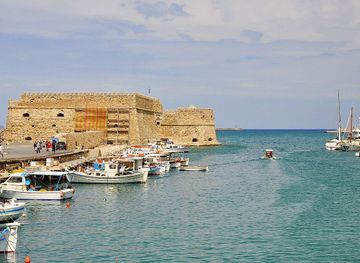
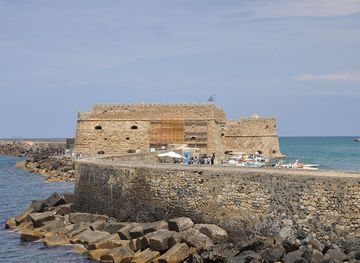
Heraklion, the capital of Crete, is a city that seamlessly blends ancient history with modern allure. Located on the island's northern coast, Heraklion serves as a cultural and economic hub, offering visitors a wealth of experiences. From exploring the remnants of the Minoan civilization to savoring local cuisine, there is something for everyone in this dynamic city. One of the must-visit landmarks in Heraklion is the Palace of Knossos. This archaeological site is the largest Bronze Age archaeological site on Crete and is considered Europe's oldest city. Walking through its ruins, you can almost hear the whispers of ancient Minoan culture. The Heraklion Archaeological Museum, one of the most important museums in Greece, complements this experience by housing artifacts that span over 5,500 years of Cretan history. Heraklion's Venetian harbor and fortress are other historical gems that should not be missed. The Koules Fortress, standing guard over the harbor, offers spectacular views of the sea and the city. Stroll along the harbor to find a range of cafes and restaurants where you can enjoy fresh seafood while watching boats bob in the water. Modern Heraklion is equally captivating. The city boasts vibrant markets, bustling squares, and a lively nightlife. The pedestrian-friendly streets and squares, such as Lion Square with its iconic Morosini Fountain, are perfect for leisurely walks. Don't forget to explore the local shops and boutiques that offer unique Cretan products, from olive oil to handcrafted jewelry. For those interested in nature, Heraklion offers easy access to beautiful beaches and scenic landscapes. The nearby village of Archanes, set amidst vineyards and olive groves, provides an idyllic escape. Whether you're a history buff, a foodie, or a nature lover, Heraklion has something to offer.

Know before you go
Hi, I'm Eve. Here are a few practical things to know before exploring Heraklion.
- Visit the Palace of Knossos early in the morning to avoid the crowds and the heat.
- Try local dishes such as dakos, kalitsounia, and Cretan cheese at traditional tavernas.
- Take a walk in the old town area to see Venetian architecture and explore hidden alleys.
- Bring comfortable walking shoes as many attractions are best explored on foot.
- Check local schedules for cultural events and festivals that often take place in summer.



Explore Heraklion: Things to Do, Places to Eat, Hotels & More
Handpicked recommendations for top attractions, local dining, accommodations, and more

Best attractions in Heraklion
Top-rated picks
Best Attractions

Knossos Palace
Discover the ancient wonders of Knossos Palace, the heart of Minoan civilization, and immerse yourself in the rich history of Crete.

Heraklion Archaeological Museum
Explore the rich history of Crete at the Heraklion Archaeological Museum, home to extensive Minoan artifacts and captivating exhibits.

CRETAquarium Thalassokosmos
Explore the mesmerizing underwater world at CRETAquarium Thalassokosmos in Heraklion, Crete, where marine wonders await every visitor.

Morosini Fountain
Discover the historical charm of Morosini Fountain in Heraklion, an architectural masterpiece surrounded by vibrant city life.

Best landmarks in Heraklion
Top-rated picks
Best Landmarks

Natural History Museum of Crete
Discover the rich biodiversity and geological history of Crete at the Natural History Museum, a must-visit attraction for all nature enthusiasts.

Church of Agios Minas
Discover the architectural beauty and serene ambiance of the Church of Agios Minas, a historic Greek Orthodox cathedral in Heraklion, Crete.

Saint Titus Herakleion Holy Orthodox Cathedral Church
Explore the rich heritage and stunning beauty of Saint Titus Cathedral, a highlight of Heraklion's spiritual and cultural landscape.

Historical Museum of Crete
Explore the rich history of Crete at the Historical Museum of Crete, where ancient artifacts and cultural stories come to life.

Best restaurants in Heraklion
Top-rated picks
Best Restaurants

Peskesi
Discover authentic Cretan cuisine at Peskesi in Heraklion – where every dish tells a story.
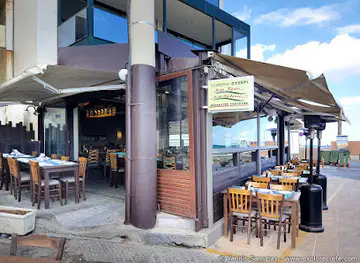
A Little Wine A Little Sea
Experience exquisite Mediterranean cuisine at 'A Little Wine A Little Sea', where fresh seafood meets traditional Greek flavors in Heraklion.
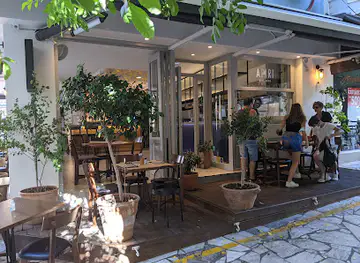
Apiri greek_eatery
Experience authentic Mediterranean flavors at Apiri Greek Eatery in Heraklion - where tradition meets modern cuisine.

KOUZEINERI
Discover KOUZEINERI in Heraklion: A delightful fusion of traditional Greek cuisine and modern flair awaits you.

Best bars in Heraklion
Top-rated picks
Best Bars

Utopia
Discover Utopia in Heraklion, where chocolate dreams come true and every bite is a delicious adventure amidst a cozy atmosphere.
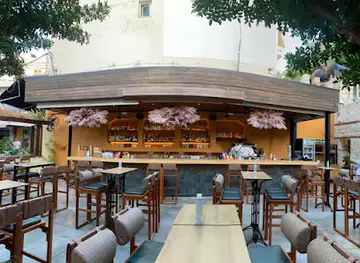
Xalavro Open Bar
Experience the vibrant atmosphere and creative cocktails at Xalavro Open Bar, a must-visit spot in Heraklion, Greece.
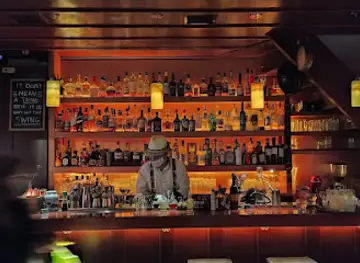
Swing Thing
Experience the vibrant nightlife of Heraklion at Swing Thing, a cocktail bar where expert mixology meets a lively atmosphere.

Polytechneio Cafe
Polytechneio Cafe in Heraklion offers a vibrant atmosphere, delightful drinks, and a taste of local culture, perfect for unwinding after exploring Crete.

Best nightclubs in Heraklion
Top-rated picks
Best Nightclubs

2elve Club
Discover the energetic nightlife of Heraklion at 2elve Club, featuring creative cocktails and a lively atmosphere for an unforgettable night out.

The Island Of Desire
Dive into the vibrant nightlife of Heraklion at The Island of Desire, where unforgettable dance experiences await in a pulsating atmosphere.

Sabbia
Experience the vibrant nightlife at Sabbia, Heraklion's premier disco club, where music, dancing, and unforgettable memories await.

Bofor Music Stage
Experience the electrifying nightlife at Bofor Music Stage, Heraklion's premier night club where vibrant music meets an energetic atmosphere.

Best shops in Heraklion
Top-rated picks
Best Shops

Talos Plaza
Discover Talos Plaza, a vibrant shopping mall in Heraklion, offering a mix of local and international brands, dining, and entertainment experiences.

Nike Factory Store Crete
Shop the latest in athletic apparel and footwear at Nike Factory Store Crete, where quality meets affordability in a vibrant shopping environment.

Botano
Explore Botano in Lístaros, Greece, your destination for premium herbs, spices, and natural wellness products in a charming atmosphere.

Bershka
Discover the latest trends in fashion at Bershka in Heraklion, where style meets affordability for all fashion enthusiasts.

Explore Heraklion on the Map
A handpicked selection of must-see spots in Heraklion, mapped for you.
Heraklion Essentials
-
Heraklion is the capital of Crete and is well-connected by air and sea. The Heraklion International Airport 'Nikos Kazantzakis' (HER) receives numerous domestic and international flights daily. Alternatively, you can arrive by ferry from Piraeus (Athens) or other Aegean islands at the Port of Heraklion, which is one of the busiest ports in Greece.
-
Heraklion offers various transportation options. The city center is compact and walkable. For longer distances, public buses operated by KTEL are reliable and cover most parts of the city and island. Taxis are readily available and relatively inexpensive. Car rentals are also a popular option, especially for exploring the island at your own pace. Biking is less common due to the hilly terrain and traffic, but some areas have bike rentals.
-
The official currency in Greece is the Euro (EUR). Credit and debit cards are widely accepted in hotels, restaurants, and shops. ATMs are plentiful throughout Heraklion, but it's advisable to carry some cash, especially for smaller establishments or in more remote areas. Tipping is customary but not obligatory; rounding up the bill or leaving a small tip is appreciated.
-
Heraklion is generally a safe city for tourists. However, petty crimes like pickpocketing can occur, particularly in crowded areas such as the central market and bus stations. Avoid poorly lit areas at night and keep an eye on your belongings. Always use registered taxis and avoid accepting rides from strangers. The area around the old port can be sketchy at night, so exercise caution.
-
In case of an emergency, dial 112, the European emergency number, for immediate assistance. Heraklion has several hospitals and medical facilities, including the University Hospital of Heraklion. Pharmacies are widely available and usually open from early morning until late evening. It is advisable to carry your European Health Insurance Card (EHIC) if you are from an EU country, or have travel insurance that covers medical emergencies.
-
Fashion: Do dress modestly when visiting religious sites; avoid overly revealing clothes. Religion: Do respect local customs; cover your shoulders and knees when entering churches and monasteries. Public Transport: Do validate your bus ticket upon boarding; don’t forget to carry small change. Greetings: Do greet with a handshake and say 'Kalimera' (Good morning) or 'Kalispera' (Good evening). Eating & Drinking: Do try local dishes like moussaka and souvlaki; don’t rush through meals as dining is a leisurely affair.
-
To experience Heraklion like a local, visit the central market on 1866 Street for fresh produce and local delicacies. Spend an evening at a traditional taverna to enjoy live music and Cretan cuisine. Don’t miss the opportunity to explore the nearby archaeological sites, including Knossos Palace. For a unique experience, take a walk along the Venetian Walls for panoramic views of the city.
When is the best time to visit Heraklion?
Useful Local Phrases for Heraklion
You don't need to speak the language perfectly. Even learning a few simple words can make conversations warmer—and locals usually appreciate the effort.
— Eve

Here are the phrases I use most often in Heraklion. Try a few—you'll be surprised how far they go! 😊
❤️
-
- HelloΓεια σας
[Yah sas] - GoodbyeΑντίο
[Adio] - YesΝαι
[Ne] - NoΌχι
[Ochi] - Please/You're welcomeΠαρακαλώ
[Parakalo] - Thank youΕυχαριστώ
[Efharisto] - Excuse me/SorryΣυγγνώμη
[Signomi] - How are you?Πώς είσαι;
[Pos ise;] - Fine. And you?Καλά. Εσύ;
[Kala. Esi;] - Do you speak English?Μιλάτε Αγγλικά;
[Milate Agglika;] - I don't understandΔεν καταλαβαίνω
[Den katalaveno]
- HelloΓεια σας
-
- I'd like to see the menu, pleaseΘα ήθελα να δω το μενού, παρακαλώ
[Tha ithela na do to menou, parakalo] - I don't eat meatΔεν τρώω κρέας
[Den troo kreas] - Cheers!ΥΓΕΙΑ!
[Yia] - I would like to pay, pleaseΘα ήθελα να πληρώσω, παρακαλώ
[Tha ithela na plirosso, parakalo]
- I'd like to see the menu, pleaseΘα ήθελα να δω το μενού, παρακαλώ
-
- Help!Βοήθεια!
[Voithia!] - Go away!Φύγε!
[Fige!] - Call the Police!Καλέστε την Αστυνομία!
[Kaleste tin Astinomia!] - Call a doctor!Καλέστε ένα γιατρό!
[Kaleste ena giatro!] - I'm lostΈχω χαθεί
[Eho hathi] - I'm illΕίμαι άρρωστος
[Eimai arrostos]
- Help!Βοήθεια!
-
- I'd like to buy...Θα ήθελα να αγοράσω...
[Tha ithela na agoraso...] - I'm just lookingΑπλά κοιτάω
[Apla kitao] - How much is it?Πόσο κοστίζει;
[Poso kostizi;] - That's too expensiveΑυτό είναι πολύ ακριβό
[Afto ine poli akribo] - Can you lower the price?Μπορείτε να μειώσετε την τιμή;
[Borite na meioste tin timi;]
- I'd like to buy...Θα ήθελα να αγοράσω...
-
- What time is it?Τι ώρα είναι;
[Ti ora ine;] - It's one o'clockΕίναι μία ώρα
[Ine mia ora] - Half past (10)Μισή (10)
[Misi (dekka)] - MorningΠρωί
[Proi] - AfternoonΑπόγευμα
[Apoyefma] - EveningΒράδυ
[Vradi] - YesterdayΧθες
[Hthes] - TodayΣήμερα
[Simera] - TomorrowΑύριο
[Avrio] - 1Ένα
[Ena] - 2Δύο
[Dio] - 3Τρία
[Tria] - 4Τέσσερα
[Tessera] - 5Πέντε
[Pente] - 6Έξι
[Exi] - 7Εφτά
[Efta] - 8Οχτώ
[Ochto] - 9Εννιά
[Ennia] - 10Δέκα
[Deka]
- What time is it?Τι ώρα είναι;
-
- Where's a/the...?Πού είναι ένας/η...;
[Pou ine enas/i...;] - What's the address?Ποια είναι η διεύθυνση;
[Pia ine i diefthinsi;] - Can you show me (on the map)?Μπορείτε να μου δείξετε (στο χάρτη);
[Borite na mou dixete (sto charti);] - When's the next (bus)?Πότε είναι το επόμενο (λεωφορείο);
[Pote ine to epomeno (leoforeio);] - A ticket (to ....)Ένα εισιτήριο (προς ....)
[Ena isitirio (pros ....)]
- Where's a/the...?Πού είναι ένας/η...;
History of Heraklion
-
Heraklion is most famously associated with the Minoan civilization, which thrived from approximately 2700 to 1450 BCE. The nearby palace of Knossos, believed to be Europe's oldest city, serves as a significant archaeological site. Excavations led by Sir Arthur Evans in the early 20th century revealed a complex of grand structures, frescoes, and artifacts that provide a glimpse into Minoan life. The legend of the Minotaur and the Labyrinth is also linked to Knossos, adding a mythological dimension to its historical importance.
-
Following the decline of the Minoans, the region that would become Heraklion saw the rise of various Greek city-states. During the Classical and Hellenistic periods, from around the 5th to the 1st century BCE, the area was influenced by the broader cultural and political developments of ancient Greece. Although less prominent than other Greek cities, Heraklion’s strategic location on Crete made it an important hub for trade and military activities.
-
Heraklion came under Roman control in 67 BCE and subsequently became part of the Byzantine Empire. The city, known as Heracleum during Roman times, continued to serve as an important port and administrative center. The Byzantine period, lasting until the 9th century, saw the construction of early Christian basilicas and other religious structures, many of which have left their mark on the city's architectural landscape.
-
In the early 9th century, Heraklion was conquered by Arab forces who renamed the city Chandax (or Khandaq). The Arabs fortified the city with robust walls and a deep moat, transforming it into a significant center of trade and piracy. This period lasted until 961 CE, when Byzantine forces recaptured the city under the leadership of Nikephoros Phokas. The Arab influence is still evident in the city's layout and some architectural remnants.
-
The Venetians took control of Heraklion in 1204, renaming it Candia. This period marked a time of significant growth and architectural development. The Venetians constructed the massive Fortress of Koules at the entrance to the harbor, along with other fortifications and public buildings. The period also saw the flourishing of arts and culture, with the city becoming a hub for the Cretan Renaissance. The influence of Venetian architecture can still be seen in Heraklion’s old town.
-
Heraklion fell to the Ottoman Empire in 1669 after a prolonged siege that lasted more than 20 years, one of the longest in history. Under Ottoman rule, the city experienced significant demographic and cultural changes. Many churches were converted into mosques, and the cityscape was altered to reflect Ottoman architectural styles. The Ottoman influence is still visible in various buildings and the city’s urban layout.
-
Heraklion was incorporated into the modern Greek state in 1913 following the Balkan Wars and the eventual collapse of Ottoman rule. The 20th century brought significant changes, including economic development, urban expansion, and modernization. Heraklion played a role in the resistance during World War II and has since developed into a vibrant city that balances its rich historical legacy with contemporary life.
Travel experiences inspired by this city


Cities near Heraklion
The closest cities to Heraklion, if you have time for more than one stop.


Your all‑in‑one travel companion app
Explore expert travel guides, compare and book tours, experiences, hotels, and more—all from the palm of your hand. Download now for seamless trip planning wherever your wanderlust takes you.


Heraklion in Photos
Browse through our photo collection highlighting the charm and character of the destination.


Heraklion: A Gateway to Crete's Rich History and Vibrant Culture
Heraklion, the capital of Crete, is a city that seamlessly blends ancient history with modern allure. Located on the island's northern coast, Heraklion serves as a cultural and economic hub, offering visitors a wealth of experiences. From exploring the remnants of the Minoan civilization to savoring local cuisine, there is something for everyone in this dynamic city. One of the must-visit landmarks in Heraklion is the Palace of Knossos. This archaeological site is the largest Bronze Age archaeological site on Crete and is considered Europe's oldest city. Walking through its ruins, you can almost hear the whispers of ancient Minoan culture. The Heraklion Archaeological Museum, one of the most important museums in Greece, complements this experience by housing artifacts that span over 5,500 years of Cretan history. Heraklion's Venetian harbor and fortress are other historical gems that should not be missed. The Koules Fortress, standing guard over the harbor, offers spectacular views of the sea and the city. Stroll along the harbor to find a range of cafes and restaurants where you can enjoy fresh seafood while watching boats bob in the water. Modern Heraklion is equally captivating. The city boasts vibrant markets, bustling squares, and a lively nightlife. The pedestrian-friendly streets and squares, such as Lion Square with its iconic Morosini Fountain, are perfect for leisurely walks. Don't forget to explore the local shops and boutiques that offer unique Cretan products, from olive oil to handcrafted jewelry. For those interested in nature, Heraklion offers easy access to beautiful beaches and scenic landscapes. The nearby village of Archanes, set amidst vineyards and olive groves, provides an idyllic escape. Whether you're a history buff, a foodie, or a nature lover, Heraklion has something to offer.
Explore More of Mount Parnassus
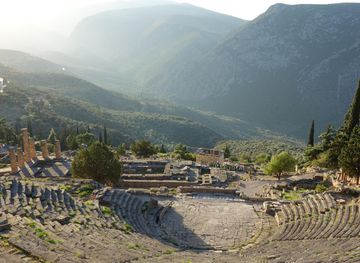
Looking beyond Heraklion? Discover Mount Parnassus for broader travel guides, local hot-spots, and regional highlights.
Explore Mount ParnassusExplore More of Greece
Looking beyond Heraklion? Discover Greece for broader travel guides, local hot-spots, and regional highlights.
Explore Greece